
Written by: Ellie Pranckevicius, FNP-BC, Aesthetic Nurse Practitioner & Aesthetic Injector | Facial Restoration & Regenerative Injectable Specialist, Mirror Plastic Surgery
Key Takeaways
- GHK-Cu exists in a largely unregulated market, so provider selection directly affects product quality, dosing accuracy, and safety.
- Legitimate providers include functional medicine physicians, medspas, telehealth clinics, and plastic surgery practices with concierge care, each offering different oversight and personalization.
- Always verify active state medical or nursing licenses, board certifications, and disciplinary history before scheduling an appointment.
- During consultation, confirm that the provider requires baseline lab testing, uses accredited 503A or 503B compounding pharmacies, and supplies batch-specific Certificates of Analysis.
- At Mirror Plastic Surgery, Ellie Pranckevicius, FNP-BC, delivers concierge-level GHK-Cu therapy with lab-guided protocols, rigorous batch testing, and 24/7 patient support.
Step 1: Compare Your GHK-Cu Provider Options
Choosing the right setting for GHK-Cu therapy shapes your experience, level of oversight, and results. Each provider type offers distinct strengths.
Functional Medicine Physicians focus on root-cause, holistic care and often have advanced training in peptide protocols through organizations like the Institute for Functional Medicine (IFM) or the American Academy of Anti-Aging Medicine (A4M). They typically order comprehensive lab work and spend significant consultation time. Many emphasize systemic wellness, so they may place less emphasis on purely aesthetic goals such as skin texture or tone.
MedSpas And Aesthetic Clinics offer convenience and aesthetic expertise, often combining GHK-Cu with microneedling or other skin treatments. Oversight varies widely. Some medspas operate with minimal medical direction. For safety, verify who actually oversees your treatment, whether a physician, nurse practitioner, or physician assistant, and confirm their peptide-specific experience.
Telehealth Clinics expand your options geographically and can provide flexible access to care. Legitimate telehealth providers conduct thorough medical intake, order labs, and prescribe through licensed compounding pharmacies. Telehealth peptide prescribing is legal in most U.S. states when a valid patient-provider relationship is established. This relationship typically involves medical intake, labs, and a synchronous consultation. Therefore, verify that the provider holds an active license in your state and that they establish a genuine patient-provider relationship, not just a questionnaire and a payment form.
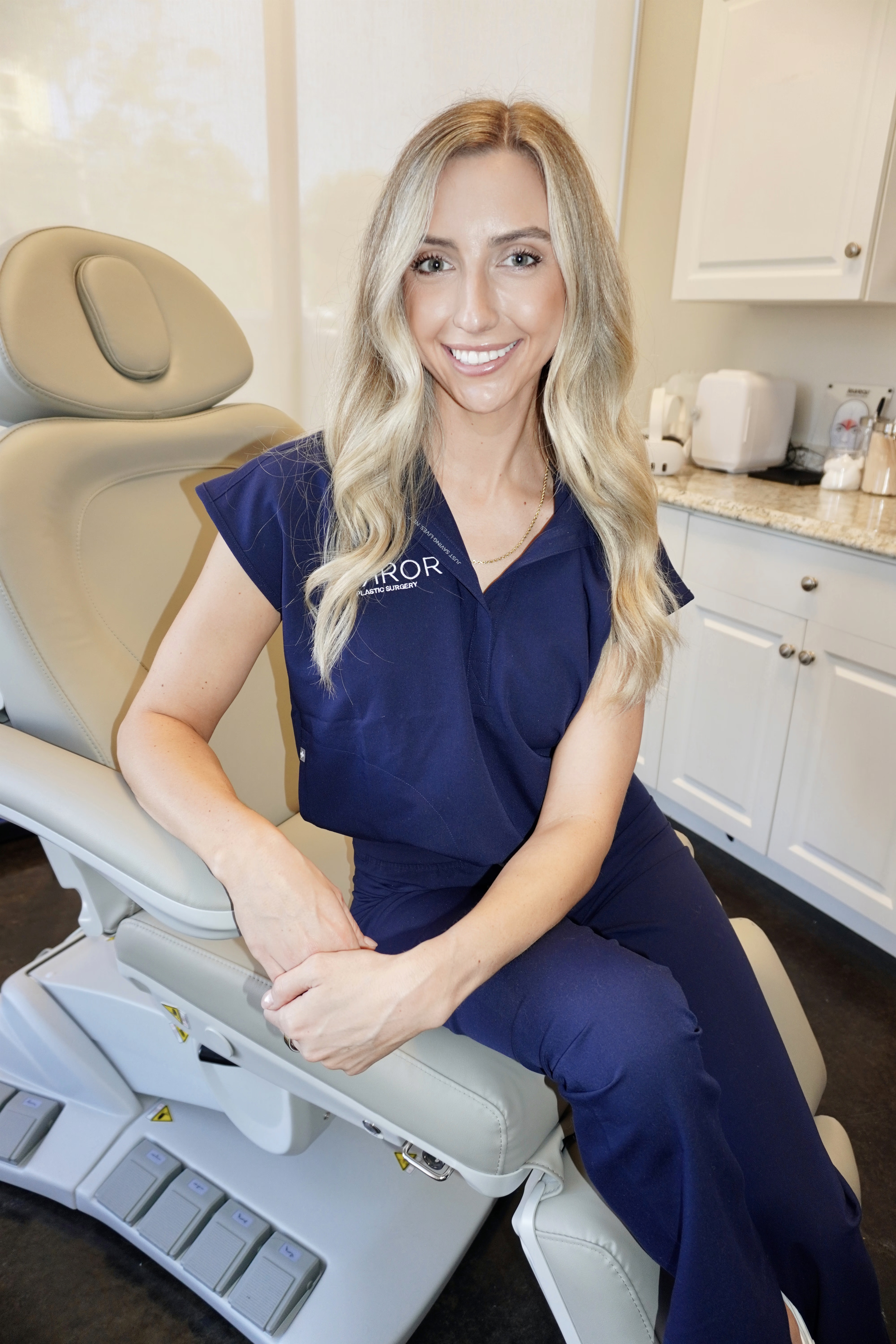
Plastic Surgery Practices With Concierge Care offer highly personalized, comprehensive evaluation. At Mirror Plastic Surgery, peptide therapy is led by Ellie Pranckevicius, FNP-BC, who conducts 30–60 minute consultations, reviews or orders in-depth lab panels, and provides ongoing 24/7 support. This concierge model tailors your GHK-Cu protocol to your unique physiology and health goals.
Step 2: Verify Credentials Before Your First Appointment
No formal board certification exists for a “peptide specialist.” The realistic minimum credential is an active, unrestricted medical or nursing license in your state. Use this verification checklist before booking.
- State Medical or Nursing License: Every U.S. state maintains a public license lookup tool. Confirm the provider’s license is active, unrestricted, and valid in your state, or that a telehealth practitioner holds a license in your state. A provider who cannot be verified through their state board represents a hard stop regardless of website claims.
- Board Certification: Look for board certification in relevant fields such as family medicine, dermatology, plastic surgery, or emergency medicine. Nurse practitioners can be excellent peptide providers when they hold board certification, such as FNP-BC, and have advanced clinical experience.
- Advanced Training: Training from organizations like A4M, IFM, or ACAM signals engagement with evidence-based peptide pharmacology literature, although it does not guarantee quality.
- DEA Registration (If Applicable): If the provider co-prescribes controlled substances alongside peptides, they must hold an active DEA registration, which you can verify through the DEA Diversion Control Division public tool.
- Disciplinary History: Review state board websites for disciplinary actions or malpractice settlements to understand any past issues.
Step 3: Key Questions To Ask During Your Consultation
A legitimate first peptide consultation functions as a medical evaluation, not a sales pitch. Arrive prepared with focused questions that clarify safety, experience, and expectations.
- “What Is Your Experience With GHK-Cu Specifically?” Look for clear, specific experience with GHK-Cu protocols rather than vague familiarity with peptides in general.
- “Do You Require Lab Testing Before Starting?” For GHK-Cu, baseline testing should include serum copper and ceruloplasmin levels plus a comprehensive metabolic panel. A provider who skips labs entirely before prescribing injectables signals a red flag.
- “What Peptides Do You Recommend And Why?” The answer should reflect your goals, medical history, and lab results. Scripted, one-size-fits-all recommendations suggest a sales-driven model.
- “How Do You Source Your Peptides?” The provider should name their compounding pharmacy and describe their quality assurance process in plain language.
- “Can You Provide A Certificate Of Analysis (COA)?” A legitimate COA is batch-specific, tied to the lot number on your vial, and includes identity testing by HPLC or mass spectrometry, purity above 98%, sterility per USP 71, and endotoxin levels below USP limits.
- “What Is Your Follow-Up Protocol?” Ongoing monitoring protects your safety and investment. At Mirror Plastic Surgery, Ellie Pranckevicius provides 24/7 text access for questions and scheduled telemedicine follow-ups.
- “What Results Can I Realistically Expect?” Providers should describe typical timelines and ranges of response without guarantees. Injectable skin results typically show subtle changes at 2–3 weeks, visible fine line and texture changes at 6–8 weeks, and full results over 2–3 cycles, roughly 4–6 months.1
Schedule a consultation with Ellie to experience a visit centered on education, honest assessment, and a protocol tailored to your goals.
Step 4: Know What Your GHK-Cu Investment Covers
Understanding cost components helps you compare providers and avoid unsafe “bargain” options. Each patient at Mirror Plastic Surgery receives a personalized quote during consultation.
- Consultation Fees: Initial consultations range from $150–$400 for in-person visits and $99–$250 for telehealth.
- Laboratory Testing: Baseline blood work adds $100–$600 depending on panel comprehensiveness. For GHK-Cu, serum copper and ceruloplasmin testing play a central role.
- Peptide Vials: All-in telehealth programs that bundle consultation, prescription, compounded injectable GHK-Cu, and monitoring typically cost $130–$350 per month.
Quality and safety should guide every pricing decision. Research-grade GHK-Cu vials sold online for research use only range from roughly $19.99 to $89.99 per vial. These products lack sterility testing, quality assurance, and medical oversight and are not legal for human use in the United States.
Step 5: Spot Red Flags In GHK-Cu Offers
The unregulated peptide market carries real risk, so clear warning signs deserve immediate attention. Walk away from any provider who shows these behaviors.
- Sells GHK-Cu Without A Prescription Or Consultation. This setup represents a sales transaction, not telemedicine.
- Skips Lab Work Entirely. Baseline testing is non-negotiable for safe peptide therapy.
- Cannot Name Their Compounding Pharmacy Or Provide A COA. If they cannot document quality, they do not have it.
- Claims FDA Approval For Injectable GHK-Cu. GHK-Cu is not FDA-approved as a drug for any medical indication. A provider who claims approval either misunderstands regulations or misrepresents them.
- Pushes Unnecessary Stacks Or Makes Unrealistic Promises. Your protocol should reflect your needs and goals rather than a sales quota.
- Prices Far Below Market Rates. Research-grade peptides are not manufactured to sterile injectable standards and are not legal for human use in the U.S. Legitimate compounding, sterility testing, and third-party analysis add real cost.
The FDA has issued warning letters to peptide vendors for exactly these practices. On March 31, 2026, the FDA issued seven peptide-vendor warning letters in a single-day sweep, citing intended-use evidence from website language, product bundling, and vendor-operated community forums.
Step 6: Confirm Peptide Quality And Pharmacy Sourcing
The compounding pharmacy often functions as the hidden variable in peptide safety. A well-credentialed prescriber who uses an unaccredited compounder still exposes you to risk. You need to evaluate both the practitioner and the pharmacy.
When reviewing a compounding pharmacy, confirm these quality markers.
- 503A Or 503B Registration: 503A pharmacies compound patient-specific prescriptions and are regulated by state pharmacy boards. In contrast, 503B outsourcing facilities are FDA-registered and subject to current Good Manufacturing Practice (cGMP) requirements. For sterile injectables, a 503B facility generally offers higher sterility assurance.
- Certificate Of Analysis (COA): A legitimate COA is batch-specific and must include identity confirmation by HPLC or mass spectrometry, purity of 98% or greater, endotoxin (LAL) testing below USP limits, sterility testing confirming no microbial growth, a lot number matching the vial, and potency within 90–110% of stated dose.
- PCAB Accreditation: Pharmacy Compounding Accreditation Board accreditation signals adherence to rigorous quality standards and ongoing audits.
At Mirror Plastic Surgery, peptides are sourced from reputable providers who undergo rigorous batch testing, which supports product quality, purity, and accurate dosing. This safeguard matters because peptides are not FDA-regulated drugs.
Important Safety And Eligibility Considerations
Candidacy Factors: GHK-Cu does not suit every patient. Contraindications include Wilson’s disease or any copper metabolism disorder, pregnancy and breastfeeding, active malignancy, and concurrent use of penicillamine or trientine. A thorough medical evaluation helps rule out interactions and hidden risks.
Regulatory Context: On April 22, 2026, the FDA removed injectable GHK-Cu from its Category 2 list of the 503A Bulks List after nominations were withdrawn, and the FDA’s published position states that removal does not render these bulk drug substances eligible for compounding under section 503A. The Pharmacy Compounding Advisory Committee is scheduled to discuss GHK-Cu’s potential inclusion on the 503A Bulks List before the end of February 2027. This evolving landscape makes it crucial to work with a provider who tracks legal and safety standards closely.
Realistic Expectations: GHK-Cu results are subjective and vary significantly by individual.1 Visible skin improvements typically require 8–12 weeks of consistent use, with full results emerging over 2–3 cycles, roughly 4–6 months.1 Many patients benefit from maintenance protocols to sustain gains.
Your Provider Vetting Checklist
Use this quick checklist when evaluating any GHK-Cu provider.
- Choose a medically supervised provider rather than an online seller or research-chemical vendor.
- Verify credentials and state licenses through official state board websites.
- Confirm that the provider orders baseline lab testing, including serum copper, ceruloplasmin, and a metabolic panel.
- Ask about personalized protocols tailored to your health profile and goals.
- Ensure peptides come from a licensed 503A or 503B compounding pharmacy.
- Request a batch-specific Certificate of Analysis (COA).
- Confirm that the provider offers follow-up care and ongoing monitoring.
- Approach extremely low prices or guaranteed outcomes with caution.
Beyond GHK-Cu: How Peptides Fit Into Your Wellness Plan
GHK-Cu often functions as one piece of a broader wellness and aesthetic strategy. At Mirror Plastic Surgery, GHK-Cu is frequently combined with BPC-157 and TB-500 in the “Glow Stack,” a protocol that targets systemic inflammation, melasma, and collagen production for improved skin, hair, and nail health.
Peptide therapy reflects a growing trend in personalized, concierge medicine that addresses inflammation, autoimmune conditions, weight management, and energy. Related topics worth exploring include peptide stacks for skin health, post-surgical recovery with peptides, and the role of NAD+ in cellular energy and healthy aging. Discuss a comprehensive peptide plan with Ellie to see how these tools can support your specific goals.
Frequently Asked Questions
Is GHK-Cu Therapy FDA-Approved?
GHK-Cu is not FDA-approved as a drug for any medical indication. It has historically been available through licensed compounding pharmacies with a valid prescription, but the regulatory landscape continues to evolve. As noted earlier, the FDA removed injectable GHK-Cu from the 503A Bulks List in April 2026, and the Pharmacy Compounding Advisory Committee will revisit its status in early 2027. Working with a provider who monitors these regulatory changes in real time supports both safety and legal compliance.
How Long Before I See Results From GHK-Cu?
Injectable GHK-Cu protocols typically require 4–6 weeks of sustained use before measurable changes appear.1 Visible skin improvements often emerge at 6–8 weeks, with full results over 2–3 cycles, roughly 4–6 months.1 Topical formulations usually require at least 8–12 weeks. Results vary significantly by individual based on genetics, lifestyle, dosing consistency, and peptide quality. Many patients need maintenance protocols to sustain benefits over time, and a qualified provider will set realistic expectations during your initial consultation.
What Are The Side Effects Of GHK-Cu?
GHK-Cu has a favorable safety profile at standard doses. The most commonly reported side effects are injection-site reactions such as mild redness and transient stinging, which typically resolve quickly. Copper accumulation with chronic high-dose injection remains a theoretical risk, so baseline and periodic serum copper and ceruloplasmin monitoring are recommended during any extended injectable protocol. Individuals with Wilson’s disease or other copper metabolism disorders should avoid GHK-Cu. Patients on medications such as penicillamine or trientine should also avoid concurrent use. A thorough medical evaluation before starting therapy offers the best protection against individual risk factors.
How Do I Know If A Provider Is Legitimate?
Verification starts with their state medical or nursing license through the official state board website. Confirm that they require baseline lab testing before prescribing, ask which compounding pharmacy they use, and request a batch-specific Certificate of Analysis. Ensure they offer a structured follow-up and monitoring plan. A provider who cannot be verified through their state board, skips labs, cannot name their pharmacy, or cannot produce a COA with sterility and endotoxin data falls short of an acceptable standard of care. An appointment that moves from intake to prescription in under 15 minutes without labs also signals a red flag.
What Happens If I Stop GHK-Cu Treatment?
Stopping GHK-Cu gradually reduces its benefits over time, similar to pausing any health regimen. Collagen production and skin improvements drift toward baseline as the peptide’s influence on gene expression and fibroblast activity fades. For patients using GHK-Cu to manage systemic inflammation or support tissue repair, the underlying condition often returns to its prior state. Many patients benefit from structured maintenance protocols to sustain results. Your provider should discuss long-term planning, including cycling schedules and washout periods, during your initial consultation.
Your Path To Safe, Effective GHK-Cu Therapy
Safe GHK-Cu therapy becomes achievable when you follow a clear framework. By comparing provider options, verifying credentials, asking targeted questions, and confirming pharmacy quality, you can move through an unregulated market with greater confidence. Effective treatment depends on personalized care, documented product quality, and consistent follow-up.
At Mirror Plastic Surgery, Ellie Pranckevicius, FNP-BC, provides concierge-level peptide therapy with lab-guided protocols, peptides sourced from providers with rigorous batch testing, and 24/7 support throughout your journey. Whether you seek skin rejuvenation, inflammation management, or broader systemic wellness, Ellie will design a protocol tailored to your unique goals.
Start your medically supervised GHK-Cu journey with Ellie and take the first step toward safe, effective peptide therapy you can trust.
This article is for educational purposes only and does not constitute medical advice. GHK-Cu and other peptides are not FDA-regulated drugs, and treatment should only occur under the supervision of a qualified, licensed healthcare provider. Consult your provider before starting any new therapy.
Mirror Plastic Surgery | 780 4th Ave S, St. Petersburg, FL 33701 | 727-361-6515 | hello@mirrorplasticsurgery.com
1 Results may vary from person to person. Editorial content, before and after images, and patient testimonials do not constitute a guarantee of specific results.
Peptide therapy is intended for wellness and optimization purposes and is not prescribed to diagnose, treat, cure, or prevent disease unless specifically stated. Many peptides are not FDA-approved and may be used off-label. Some have limited long-term safety data, with a potential for unknown risks, complications, or desensitization with prolonged use.