
Written by: Ellie Pranckevicius, FNP-BC, Aesthetic Nurse Practitioner & Aesthetic Injector | Facial Restoration & Regenerative Injectable Specialist, Mirror Plastic Surgery | Last updated: July 10, 2026
What You Will Learn About Continuous Peptide Care
- Continuous personalized peptide therapy is an iterative, medically supervised process that evolves with each patient’s lab results and health goals.
- Ongoing clinician follow-up supports safety and efficacy by allowing timely dose adjustments and side-effect management throughout treatment.
- At Mirror Plastic Surgery, protocols begin with a thorough consultation and lab review, followed by custom peptide stacks, administration training, and scheduled check-ins.
- Emerging trends in 2026 include next-generation GLP-3R compounds and post-surgical recovery peptides such as BPC-157 and TB-500, which are integrated into supervised care at the practice.
- To explore whether continuous personalized peptide therapy fits your goals, schedule a consultation with the team at Mirror Plastic Surgery.
Meet Ellie Pranckevicius, FNP-BC, Your Peptide and Aesthetics Clinician
Ellie Pranckevicius, FNP-BC, leads peptide therapy and non-surgical aesthetics at Mirror Plastic Surgery in St. Petersburg, Florida. She holds a Bachelor’s in Health Science from Boston University on the premedical track, completed a rigorous aesthetics licensure program, and earned both her Bachelor’s and Master’s in Nursing from the University of South Florida. Before entering aesthetics, she spent four years as a clinician in the Neuroscience ICU at Tampa General Hospital, which built a precise understanding of physiology, metabolic health, and systemic recovery.
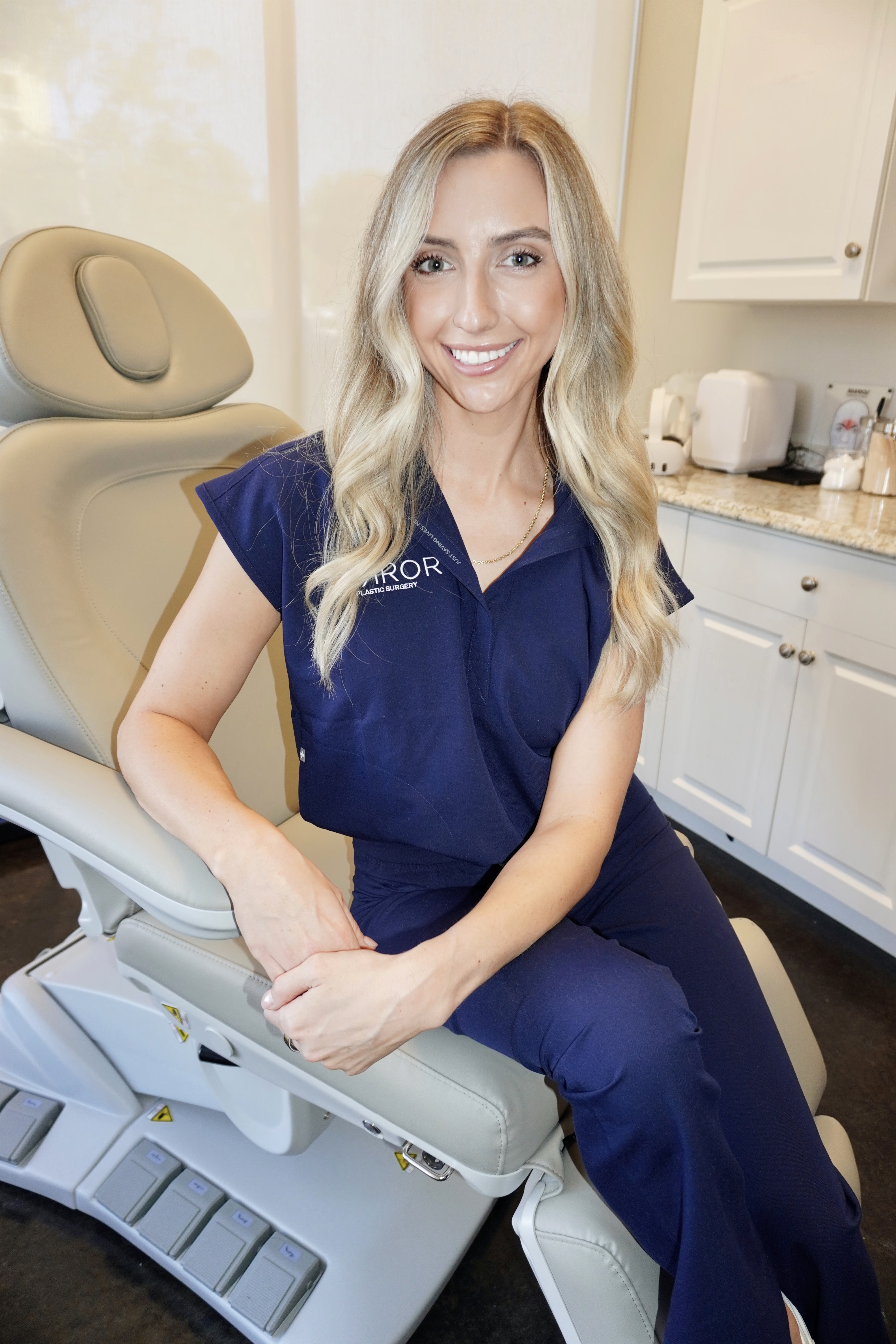
Ellie’s practice stands out because she combines esthetician training with advanced nursing credentials. She began her career at a high-end medical spa in Boston, where she developed a strong command of skin physiology and aesthetic assessment before pursuing nurse practitioner licensure. That dual background allows her to evaluate the aesthetic outcomes patients want and the clinical science required to reach them safely.
Ellie’s patient philosophy mirrors the dentistry model. Professional treatments deliver results, and lasting outcomes depend on consistent maintenance and patient understanding. She explains the physiology behind every recommendation in plain language. She also tells patients when a service or product is not yet necessary, prioritizing long-term outcomes over short-term revenue. When a patient’s needs extend into the surgical realm, Ellie’s work is complemented by Dr. Akash Chandawarkar, MD, a Harvard-educated, Johns Hopkins-trained plastic surgeon and founder of Mirror Plastic Surgery.
Schedule your personalized peptide evaluation to begin a medically supervised assessment tailored to your health profile.
Core Peptide Terms You Will Hear in Your Consultation
The following terms appear frequently in supervised peptide medicine and help you follow your treatment plan with confidence.
- Peptide stacks: Combinations of two or more peptides administered together to address overlapping or complementary biological targets. An example is the Glow Stack (GHK-Cu, BPC-157, TB-500), which targets systemic inflammation, collagen production, and soft-tissue repair at the same time.
- Lab-driven personalization: The practice of using objective laboratory data, including thyroid, liver, kidney, hormone, and metabolic panels, to select peptides, set starting doses, and define measurable endpoints before and during therapy. Baseline labs required before initiating peptide therapy include IGF-1, fasting insulin, HOMA-IR, HbA1c, fasting glucose, a complete metabolic panel, and hs-CRP, among others.
- Concierge monitoring: A care model in which a single clinician maintains direct, ongoing communication with the patient. The clinician adjusts protocols based on lab trends, symptom changes, and evolving goals, rather than routing the patient through a generalized telemedicine queue.
The Typical Patient Journey at Mirror Plastic Surgery
A supervised peptide protocol at Mirror Plastic Surgery follows a structured sequence that establishes safety first, then refines for efficacy as data accumulates.
- Initial consultation (30–60 minutes): Ellie conducts a comprehensive review of medical history, current medications, lifestyle factors, and health goals. This session clarifies whether peptide therapy is appropriate and which categories of peptides are relevant.
- Laboratory analysis: For weight management, metabolic concerns, or inflammatory conditions, relevant lab panels are reviewed. If current results are unavailable, Ellie orders them before any protocol begins. Patients on peptide therapy should undergo regular lab tests to check hormone levels, kidney and liver function, and other safety markers, with any side effects reported immediately to the prescribing clinician.
- Custom protocol creation: Based on consultation findings and lab results, Ellie designs a personalized peptide stack and dosing schedule. Peptides are sourced from reputable compounding pharmacies with documented batch testing.
- Administration training: Patients receive clear instructions for reconstitution and self-administration, often with video demonstrations. Training covers storage, injection technique, and sterile preparation.
- Scheduled check-ins: Follow-up appointments track symptom response, side effects, and relevant lab markers. The right peptide today may not be the right peptide three months later, so adjustments are made based on patient response and labs, not on external information.
- Protocol adjustments: Dosing, peptide selection, or stack composition is modified based on objective data and patient-reported outcomes. The protocol evolves with the patient rather than remaining static.
Throughout this journey, patients have 24/7 direct text access to Ellie for questions, side-effect reporting, and refill requests. The entire process, from consultation through prescription and delivery, is available in person at the St. Petersburg clinic or remotely across the United States, including Hawaii and Alaska.
Current Trends in Supervised Peptide Therapy for 2026
Two areas are generating particular clinical interest within supervised wellness and aesthetic medicine settings in 2026: next-generation GLP receptor compounds and post-surgical recovery applications.
GLP-3R compounding represents an evolution beyond the GLP-1 receptor agonists, such as semaglutide and tirzepatide, that have dominated metabolic medicine. FDA-approved GLP-1 medications such as semaglutide and tirzepatide have been studied for long-term use and are considered appropriate for eligible candidates when prescribed by a clinician, with ongoing monitoring to address side effects. Newer GLP-3R formulations are reported to carry a reduced gastrointestinal side-effect burden, a lower likelihood of muscle wasting, and broader indications including insulin resistance and cardiovascular risk factors. Human trial data on these newer compounds remains limited and continues to evolve.
Post-surgical recovery protocols represent another growing application in aesthetic medicine. A 2025 systematic review in orthopedic sports medicine concluded that BPC-157 promotes healing by boosting growth factors and reducing inflammation, with improved structural and functional recovery across fracture, muscle, tendon, and ligament injury models.1 At Mirror Plastic Surgery, peptides such as BPC-157 and TB-500 complement surgical procedures by reducing post-operative inflammation and supporting tissue repair.
Globally, peptide therapy is studied in structured medical environments for applications including oncology, metabolic disease, endocrinology, and regenerative medicine. Research pipelines are also investigating peptides for Alzheimer’s disease, cardiovascular repair, autoimmune conditions, and antimicrobial therapies.
Key Factors to Weigh Before Starting Peptide Therapy
Patients considering continuous personalized peptide therapy with ongoing follow up care benefit from reviewing several practical and safety factors before beginning any protocol.
- Sourcing quality: Third-party analyses of peptides from unregulated sources have documented incorrect peptide identity, variability in potency, bacterial endotoxin contamination, and heavy metal contamination. Licensed 503A and 503B compounding pharmacies with certificates of analysis set the standard for supervised care.
- Regulatory status: Most peptides used in wellness and aesthetic medicine are not FDA-approved for the described uses. Newer injectable peptides carry risks of contamination, safety issues, sourcing problems, and dosing errors, particularly when obtained through the grey market, wellness spas, or online sites without FDA oversight.
- Expected timelines: Improvements with peptide therapy for inflammation can begin within one to two weeks.1 Timelines vary by peptide type, individual physiology, and the condition being addressed.
- Maintenance requirements: Most metabolic and longevity protocols are longer and iterative rather than short and finite. Because obesity is a chronic, relapsing metabolic disease, abrupt discontinuation of peptide therapy without behavioral adaptation frequently leads to rapid weight regain.
- Individual variability: Genetics, diet, lifestyle, concurrent medications, and baseline lab values all influence outcomes. A protocol that produces significant results in one patient may require adjustment for another with a similar presentation.1
Risks, Limitations, and Challenges of Peptide Therapy
A balanced evaluation of peptide therapy includes a clear look at the current evidence gaps and practical risks.
- Limited long-term human data: Most studies showing promising recovery and anti-aging results are limited to animal models rather than humans, and minimal evidence exists on the side effects or consequences of long-term or frequent dosing of newer injectable peptides.
- Common side effects: Injection-site reactions such as redness, swelling, and tenderness, along with mild gastrointestinal symptoms, transient fatigue, and headaches, appear most frequently in supervised settings. Side effects from peptide therapy are rare when treatment is individualized and supervised by clinical professionals.
- Contraindications: Absolute contraindications for growth hormone secretagogues include active malignancy, uncontrolled diabetes, and active proliferative diabetic retinopathy, and absolute contraindications for BPC-157 and TB-500 include active malignancy due to theoretical angiogenesis concerns. Relative contraindications include pregnancy, breastfeeding, and severe hepatic impairment.
- Unregulated sourcing dangers: Unregulated sourcing carries documented risks of contamination and potency deviations, as outlined in the sourcing quality discussion above. Licensed pharmacy sourcing removes those specific quality-control concerns.
- Inconsistent results: Outcome variability is inherent. No peptide protocol produces identical results across patients, and some individuals may not respond meaningfully to a given compound even under supervised conditions.1
Correcting Common Misconceptions About Peptides
Misconception: Peptides are only for weight loss. GLP-1 receptor agonists have dominated public awareness, but the peptide category spans a much broader therapeutic range. Peptides are used clinically for systemic inflammation, autoimmune modulation, post-surgical recovery, collagen and elastin production, mitochondrial energy support, anxiety management, sexual wellness, and fertility support. Peptides function as signaling molecules that help restore healthier body communication to support tissue repair, recovery, immune modulation, mitochondrial health, and cellular communication.
Misconception: Results are permanent after a course of treatment. Peptide therapy produces results that depend on continued biological signaling.1 When a protocol is discontinued, the physiological support it provided diminishes. For metabolic and inflammatory conditions in particular, maintenance protocols are typically necessary to sustain the outcomes achieved during active treatment.1 This pattern reflects the nature of chronic conditions that require ongoing management rather than a single intervention.
Frequently Asked Questions
Are peptides FDA-approved?
Examples of peptides that carry FDA approval for specific indications include insulin for diabetes, GLP-1 receptor agonists such as semaglutide and tirzepatide for type 2 diabetes and weight management, and bremelanotide for hypoactive sexual desire disorder. The majority of peptides used in wellness and aesthetic medicine, including BPC-157, TB-500, GHK-Cu, Sermorelin, and Selank, are not FDA-approved for the described uses and are prescribed off-label or compounded under state pharmacy board oversight. This regulatory status does not make them inherently unsafe, but it does make the source, the prescribing clinician’s expertise, and the monitoring structure critically important.
What happens if I stop taking peptides?
The benefits of peptide therapy diminish when the protocol is discontinued, because the peptides no longer provide the biological signals that produced the results. For inflammatory or autoimmune conditions, the underlying immune activity that was being modulated will likely return to its prior state. For metabolic protocols, the weight regain risk discussed earlier becomes relevant, because counter-regulatory mechanisms require behavioral adaptation to maintain results after discontinuation. For recovery-oriented peptides used over a finite period, the tissue repair supported during treatment generally persists, although ongoing maintenance may be needed to prevent recurrence of the original issue.1 Ellie reviews realistic maintenance expectations during the initial consultation so patients can plan accordingly.
How does medically supervised peptide therapy differ from buying peptides online?
Medically supervised peptide therapy differs from online purchasing in both product quality and clinical oversight. Online gray-market vendors frequently label products as “Research Chemicals” or “Not for Human Consumption” to bypass FDA scrutiny. Independent testing of these products has documented incorrect peptide identity, variability in potency, bacterial endotoxin contamination, heavy metal contamination, and impurities. Medically supervised therapy through a licensed compounding pharmacy provides verified identity, potency, sterility, and a certificate of analysis. Supervised care also includes a baseline clinical evaluation, lab-driven dosing, defined monitoring intervals, and a clinician available to respond when something changes. The self-treatment model removes all of those safeguards at once.
Who is not a good candidate for peptide therapy?
Absolute contraindications vary by peptide class. Patients with active malignancy are contraindicated for growth hormone secretagogues and for BPC-157 or TB-500 due to theoretical concerns about angiogenesis supporting tumor growth. Uncontrolled diabetes and active proliferative diabetic retinopathy are absolute contraindications for growth hormone secretagogues. Relative contraindications across most peptide classes include pregnancy, breastfeeding, and severe hepatic impairment. Patients who are unwilling to obtain peptides from licensed pharmacies or to undergo monitoring are also not appropriate candidates. Ellie’s intake process screens for all of these factors before any protocol is initiated.
Will peptide therapy work the same way for everyone?
Peptide therapy does not work identically for every patient. Outcomes vary significantly based on genetics, baseline lab values, diet, lifestyle, concurrent medications, and the specific condition being addressed. A protocol that produces meaningful results in one patient may require adjustment for another with a similar presentation. This reality explains why lab-driven personalization and iterative monitoring matter. A static, one-size-fits-all protocol cannot account for the biological variability that determines how any individual responds. Mirror Plastic Surgery’s model treats the protocol as a starting point rather than a fixed prescription.
Making an Informed Decision About Peptide Therapy
Continuous personalized peptide therapy with ongoing follow up care functions as a structured medical treatment, not a shortcut or a simple supplement. Peptides are powerful pharmacologic interventions requiring individualized assessment, diagnostic screening, appropriate dosing, laboratory monitoring, product integrity, and long-term follow-up. For patients who meet candidacy criteria and commit to the monitoring structure, the evidence base, while still maturing, supports meaningful potential across inflammation, metabolic health, recovery, and aging-related concerns.
Mirror Plastic Surgery’s concierge model is designed for this level of care. Consultations run 30 to 60 minutes, giving Ellie time to conduct a thorough medical history review and interpret relevant lab panels before any protocol is created. Peptides are sourced exclusively from compounding pharmacies with documented batch testing. Patients receive 24/7 direct text access to Ellie throughout their protocol, and the full service, from consultation through prescription and delivery, is available remotely across the United States for patients outside the Tampa Bay area.
Start your lab-driven peptide consultation to receive a personalized evaluation grounded in your lab data, medical history, and long-term health goals.
Regulatory Disclaimer and Supervised Care Model
Most peptides discussed in this article are not approved by the U.S. Food and Drug Administration for the uses described. They are available only under the care of a licensed medical provider, often as compounded medications prepared by state-licensed 503A or 503B compounding pharmacies. The scientific evidence supporting many non-FDA-approved peptides is limited in size, duration, and quality, and the majority of data comes from animal models rather than large-scale human clinical trials. This article is intended for educational purposes only and does not constitute medical advice. Individuals interested in peptide therapy should consult a qualified, licensed clinician who can evaluate their specific health history, current medications, and laboratory data before initiating any protocol. Begin your medically supervised evaluation at Mirror Plastic Surgery under lab-driven, clinician-guided care.
1 Results may vary from person to person. Editorial content, before and after images, and patient testimonials do not constitute a guarantee of specific results.
Peptide therapy is intended for wellness and optimization purposes and is not prescribed to diagnose, treat, cure, or prevent disease unless specifically stated. Many peptides are not FDA-approved and may be used off-label. Some have limited long-term safety data, with a potential for unknown risks, complications, or desensitization with prolonged use.