
Written by: Ellie Pranckevicius, FNP-BC, Aesthetic Nurse Practitioner & Aesthetic Injector | Facial Restoration & Regenerative Injectable Specialist, Mirror Plastic Surgery | Last updated: July 31, 2026
Key Takeaways for Concierge Wellness Care
- A concierge wellness medicine model limits patient panels and charges a membership fee to deliver longer, prevention-focused visits instead of reactive, volume-driven care.
- Benefits include 30–60 minute appointments, same-day access, direct practitioner communication, and lab-guided preventive planning that addresses chronic conditions early.
- Membership fees cover enhanced services and are paid out of pocket, while insurance still handles covered labs, imaging, and referrals and patients pay applicable copays.
- The model supports highly individualized peptide therapies by enabling comprehensive lab review, batch-tested sourcing, quarterly biomarker monitoring, and direct access to the practitioner.
- Patients ready to explore personalized peptide protocols can schedule a consultation at Mirror Plastic Surgery to receive a lab-guided assessment and determine the right next step for their health goals.
Concierge Medicine Pros and Cons for Patients
Concierge wellness medicine offers clear trade-offs that patients should weigh before committing to membership.
Documented advantages include:
- Extended consultations, with 30–60 minute visits compared with the 10–20 minutes most adults spend with a primary care physician
- Smaller panels that support same-day or next-day access
- Direct practitioner communication by text, telemedicine, or in person, without routing through a call center
- Peer-reviewed studies from some concierge practices showing lower hospitalizations compared with traditional primary care1
- Lab-guided, preventive planning that addresses chronic conditions before they escalate1
Limitations worth acknowledging include:
- Membership fees are an out-of-pocket cost not reimbursed by most insurance plans
- Availability is geographically limited to practices that offer the model, though remote delivery expands access
- The model does not fit patients who primarily need high-acuity hospital-based care
How Concierge Medicine Pairs With Insurance Coverage
The billing structure of a concierge wellness model separates two distinct financial layers. Membership fees cover enhanced access, longer visits, care coordination, and other non-covered amenities and are paid out of pocket by patients. When a practice participates in insurance, covered services such as labs, imaging, and specialist referrals are billed through the insurer in the standard way, and patients remain responsible for applicable copays, deductibles, and any testing not covered by their plan.
This distinction becomes especially relevant for wellness and functional medicine services, including peptide therapies. For these services, payers generally do not provide coverage, which places them largely outside the regulatory framework for Medicare billing. Patients pay directly for these services, which gives the practice full flexibility to design individualized protocols without insurance-driven constraints on visit length or treatment selection.
Why More Doctors Are Choosing Concierge Medicine
Concierge medicine has expanded from roughly 150 U.S. physicians in 2005 to several thousand in recent years.
Many physicians who explore concierge medicine want to give patients more attention and reduce burnout. At the same time, 45.2% of U.S. physicians reported at least one symptom of burnout in the AMA’s national physician burnout survey with 2023 data. In a separate analysis, a 2016 U.S. ambulatory care study across four specialties found that physicians spent 49% of their time on EHR and desk work and only 27% on direct clinical face time with patients.
Financial pressures intensify these strains. After adjusting for inflation, Medicare physician payment has fallen 33% over the past quarter-century, which destabilizes many private practices. The same source reports that the U.S. concierge medicine market was valued at $7.35 billion in 2024 and is projected to grow at 10.33% annually through 2030, reflecting sustained structural demand rather than a passing trend.
What Patients Experience in Membership-Based Care
The operational differences between traditional primary care and a concierge wellness model are measurable across four key dimensions. The table below compares them using published data.
| Attribute | Traditional Primary Care | Concierge Wellness Care |
|---|---|---|
| Panel Size | 2,500+ patients per physician | 300–600 patients per physician |
| Visit Length | 10–20 minutes typical | 60 minutes minimum standard |
| Access | Scheduled weeks in advance, routed through staff | Same-day or next-day appointments, direct practitioner access |
| Preventive Focus | Patients often receive fewer than all recommended chronic and preventive services | Adults with a usual source of personalized primary care often receive higher rates of key preventive services1 |
Beyond these structural differences, patients in membership models can expect comprehensive lab panels reviewed at each visit, a practitioner who knows their full health history, and a protocol that evolves with their biomarkers rather than resetting at each appointment.
Schedule your first comprehensive lab review with Ellie to see how this membership structure works in practice.
How Concierge Care Supports Personalized Peptide Therapies
Peptide therapy demands clinical precision that high-volume care rarely provides. A 2026 narrative review in Frontiers in Aging concluded that non-approved peptides such as BPC-157 and CJC-1295 show promising preclinical or limited clinical evidence but lack long-term safety data, which supports rigorous clinician supervision, individualized risk-benefit assessment, and ongoing monitoring.
The concierge structure at Mirror Plastic Surgery addresses this requirement directly through three mechanisms.
- Lab-driven protocol design. Before any peptide is prescribed, Ellie reviews comprehensive lab panels covering thyroid, liver, kidney, diabetes markers, and hormone profiles. This initial assessment establishes the baseline that determines whether peptide therapy is appropriate, and if so, which compounds fit the patient’s physiology. Physician-supervised peptide therapy then follows a staged process that moves from comprehensive assessment to prescription only after contraindications are ruled out. Once treatment begins, protocols are adjusted quarterly based on repeat biomarker data so the therapy continues to match the patient’s evolving physiology.
- Batch-tested sourcing. Peptides are sourced exclusively from suppliers with documented batch testing for purity and accurate dosage, which provides a critical safeguard because peptides are not FDA-regulated. This approach directly contrasts with unverified online sources where product content and sterility cannot be confirmed.
- Responsive direct access. Patients reach Ellie by text for dosing questions, side-effect concerns, and refill requests. This level of responsiveness is structurally impossible in a traditional panel of 2,500 patients but functions as a standard feature within Mirror Plastic Surgery’s concierge model.
Specific protocols address distinct physiological targets. GHK-Cu modulates 31% of human genes to upregulate collagen synthesis and antioxidant pathways, with plasma levels declining from 200 ng/mL at age 20 to 80 ng/mL at age 60, which makes it a clinically relevant target for anti-aging protocols.1 CJC-1295 alone produces 2–10-fold GH increases lasting at least 6 days and 1.5–3-fold IGF-1 elevations for 9–11 days, while no human RCTs of the CJC-1295 plus ipamorelin combination have been published1, supporting body composition and recovery goals. For weight management, participants receiving semaglutide 2.4 mg weekly in the STEP 1 clinical trial achieved an average 14.9% weight loss over 68 weeks versus 2.4% for placebo1.
The entire process, from initial consultation through prescription and shipping, is available in person at Mirror Plastic Surgery’s St. Petersburg location or remotely across the United States, including Hawaii and Alaska.
Meet Your Practitioner: Ellie Pranckevicius, FNP-BC
Ellie Pranckevicius is a board-certified Family Nurse Practitioner who leads peptide therapies and non-surgical aesthetics at Mirror Plastic Surgery. She earned her Bachelor’s in Health Science from Boston University on the premedical track, completed an aesthetics licensure program, and obtained both her Bachelor’s and Master’s in Nursing from the University of South Florida.
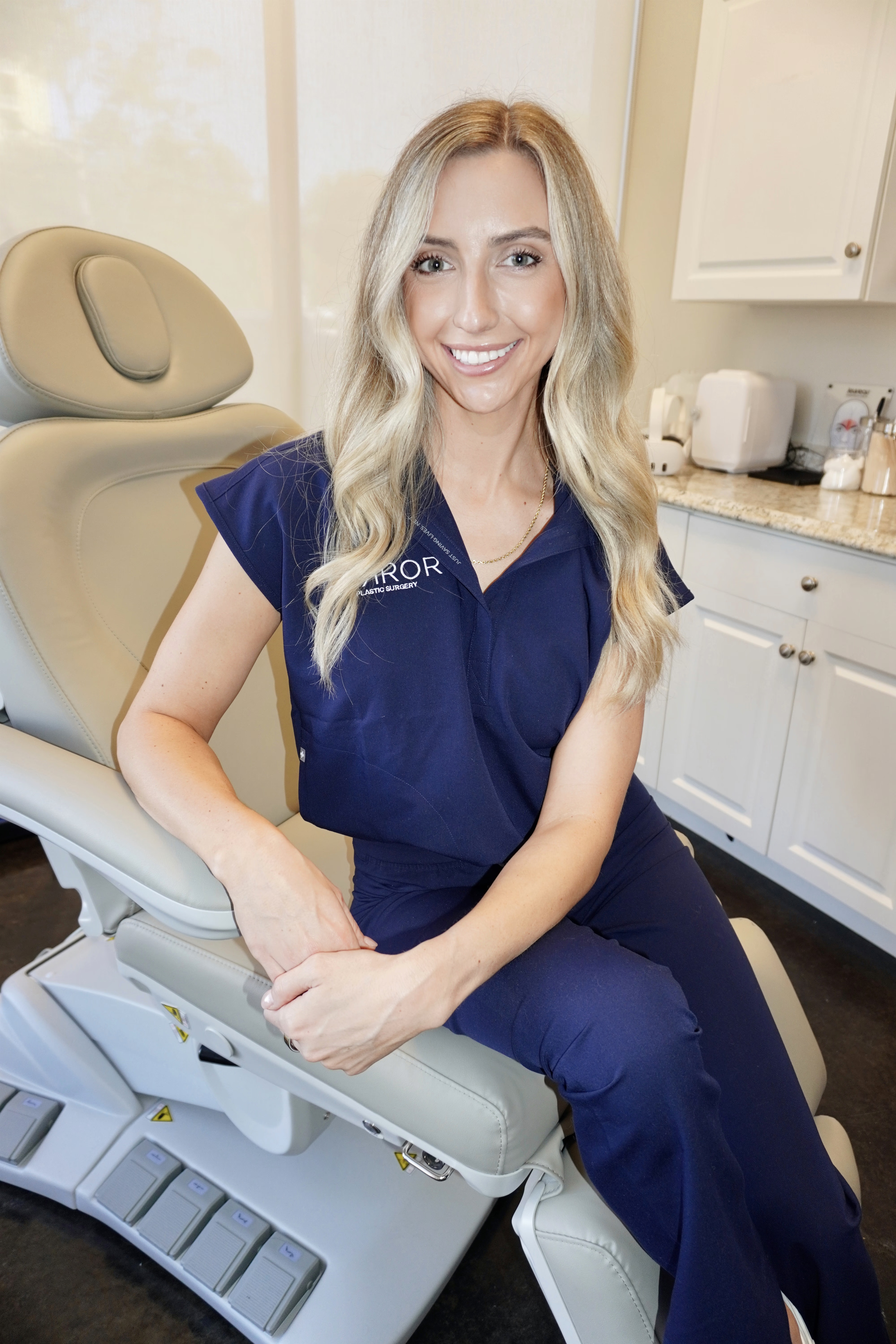
Ellie then spent four years in the Neuroscience ICU at Tampa General Hospital, where she managed complex patients and developed a deep command of physiology, metabolic health, and recovery. She began her career at a high-end medical spa in Boston, which gave her a rare combination of esthetician training and advanced clinical expertise that she now brings to peptide protocol design.
Her approach mirrors the philosophy of dentistry. Professional treatments deliver results, but lasting outcomes require patient education and consistent maintenance. She explains the physiology behind every recommendation in plain terms and tells clients when a service is not yet necessary for them.
Book an appointment with Ellie and receive a personalized lab-guided peptide assessment from a practitioner with both ICU-level clinical depth and hands-on aesthetic expertise.
Practical Takeaways: Questions to Ask Any Concierge Wellness Provider
Before enrolling in any concierge wellness or peptide therapy program, use the following checklist to evaluate whether the practice meets the standard of care the model promises.
- What lab panels are ordered before a peptide protocol is initiated, and how are results used to adjust dosing?
- Where are peptides sourced, and can the provider document batch testing for purity and accurate dosage?
- What is the practitioner’s clinical background, and do they have direct experience managing complex metabolic or inflammatory conditions?
- How is ongoing monitoring structured, and which biomarkers are tracked at each review interval?
- What does direct access mean in practice, and is the practitioner reachable by text with a clear response-time expectation?
- Is remote service delivery available, and how are prescriptions and shipments handled outside the local area?
- How does the practice respond when a peptide does not produce the expected clinical result?
Frequently Asked Questions About Peptide Therapy
Are peptides approved by the FDA?
Many peptides used in wellness protocols are not FDA-regulated as drugs. Some, such as tirzepatide and semaglutide, have received FDA approval for specific indications including type 2 diabetes and weight management. Others, including BPC-157, GHK-Cu, and CJC-1295, have robust preclinical data and limited clinical trial evidence but have not completed the large-scale Phase 3 trials required for FDA drug approval.
The primary risk associated with peptides often comes from obtaining them from unregulated sources without quality controls. At Mirror Plastic Surgery, every peptide is sourced from suppliers with documented batch testing, and every protocol is initiated only after a comprehensive medical history review and, when indicated, full lab panels.
What are the risks of using peptides without medical supervision?
Purchasing peptides from unverified online retailers carries several documented risks. These include no third-party testing for purity or accurate dosage, no screening for contraindications with existing conditions or medications, and no clinical oversight to identify adverse responses early.
Incorrect dosing can produce no therapeutic effect if active compound content is low, or serious complications if a peptide is contraindicated for an undiagnosed condition. Medical supervision, including a thorough intake, lab review, and direct practitioner access, provides the structural safeguard that separates a therapeutic protocol from an unmonitored experiment.
Do peptide therapy results vary between individuals?
Peptide therapy results vary significantly from person to person.1 Genetics, baseline lab values, diet, lifestyle, sleep quality, and the specific peptide stack all influence outcomes.
A protocol that produces rapid anti-inflammatory results in one patient may require dose adjustment or a different compound combination in another.1 This variability explains why Mirror Plastic Surgery builds every protocol from individual lab data rather than a standardized template and why Ellie reviews biomarkers on an ongoing basis to refine each patient’s plan.
What happens if I stop taking peptides?
When a peptide protocol is discontinued, the physiological effects it was producing gradually diminish.1 For inflammation management, the underlying immune activity that the peptide was modulating will likely return to its previous state.1
For anti-aging or body composition goals, the benefits associated with elevated growth hormone signaling or enhanced collagen synthesis taper without continued support.1 Maintenance protocols, often at lower doses or reduced frequency, are typically recommended to sustain the outcomes achieved during the initial treatment phase. Ellie discusses maintenance expectations during the initial consultation so patients understand the long-term commitment involved before starting.
Can peptide therapy complement surgical procedures?
Peptide therapy can complement surgical procedures when used appropriately. Several peptides used at Mirror Plastic Surgery have direct applications in post-surgical recovery.
BPC-157 and TB-500 support tissue repair, reduce inflammatory cytokines, and promote healing in muscle, tendon, and soft tissue, which are clinically relevant mechanisms after surgical procedures.1 When appropriate, Ellie coordinates with the practice’s Harvard-educated, Johns Hopkins-trained plastic surgeon to integrate peptide protocols into post-operative care plans, supporting faster recovery and reduced inflammation alongside the surgical work.
Making an Informed Decision About Concierge Wellness Care
A concierge wellness medicine model works by removing structural constraints such as oversized panels, abbreviated visits, and administrative bottlenecks that prevent traditional primary care from delivering individualized preventive and therapeutic protocols. For patients managing chronic inflammation, autoimmune conditions, weight, or aging, that structure matters because the therapies involved require lab-guided precision, quality-controlled sourcing, and ongoing clinical oversight that a 15-minute appointment cannot provide.
Mirror Plastic Surgery’s concierge model in St. Petersburg, Florida applies these principles to every peptide therapy program. Each patient receives a comprehensive intake, full lab review, batch-tested sourcing, custom protocol design, and direct access to Ellie Pranckevicius throughout their treatment journey. Remote delivery is available across the United States for patients outside the Tampa Bay area.
Realistic expectations form a core part of the process. Results vary, maintenance is typically required, and not every peptide is appropriate for every patient. The goal of the initial consultation is to determine what is clinically indicated for your specific profile, not to sell a protocol.
Book an appointment with Ellie to begin with a comprehensive assessment and find out whether a personalized peptide protocol is the right next step for your health goals.
1 Results may vary from person to person. Editorial content, before and after images, and patient testimonials do not constitute a guarantee of specific results.
Peptide therapy is intended for wellness and optimization purposes and is not prescribed to diagnose, treat, cure, or prevent disease unless specifically stated. Many peptides are not FDA-approved and may be used off-label. Some have limited long-term safety data, with a potential for unknown risks, complications, or desensitization with prolonged use.