
Written by: Ellie Pranckevicius, FNP-BC, Aesthetic Nurse Practitioner & Aesthetic Injector | Facial Restoration & Regenerative Injectable Specialist, Mirror Plastic Surgery | Last updated: July 15, 2026
Key Takeaways
- Concierge medicine limits patient panels to 300–600, which supports 30–60 minute visits and same-day access. Traditional primary care often manages 2,000–2,500 patients with 13–18 minute appointments.
- Smaller panels and longer visits create time for deeper lab review, chronic-condition management, and personalized protocols such as supervised peptide therapies that 15-minute visits cannot support.
- Concierge patients experience 49–79% lower hospitalization rates and approximately 40% fewer ER visits compared with matched traditional primary-care controls, which can offset part of the annual retainer.1
- Concierge medicine is especially helpful for people managing chronic inflammation, metabolic disorders, weight goals, or longevity interventions that require ongoing biomarker monitoring and regular protocol adjustments.
- At Mirror Plastic Surgery, Ellie Pranckevicius, FNP-BC, delivers concierge-level peptide care with comprehensive intake, lab-driven custom protocols, and direct text access. Schedule your consultation to explore whether a personalized protocol fits your goals.
Visit Length in Concierge Medicine vs Traditional Care
A February 2026 JAMA Internal Medicine study reported that the average traditional primary care visit lasts 17.4 minutes, while patients spend a total of 121 minutes per visit when waiting room time and paperwork are included. Concierge appointments typically last 30–60 minutes, sometimes longer, with same-day or next-day access and minimal wait times.
MDVIP-affiliated practices offer extended visit times, and annual wellness visits in concierge practices routinely run 60 to 90 minutes. This difference reflects basic math, not luxury. Traditional primary care physicians managing upwards of 2,500 patients would need 26.7 hours per day to deliver full preventive care, chronic disease management, and administrative duties, which forces 15-minute appointment blocks and limits personalization.
Longer visits give clinicians time to complete a thorough intake, review lab panels in depth, discuss lifestyle factors, and build long-term knowledge of a patient’s physiology. Advanced protocols, including peptide therapies, depend on that level of familiarity. When a concierge physician understands a patient’s baseline, stress patterns, training habits, and history in detail, small lab shifts that might be ignored in a ten-minute visit become clinically meaningful.
Begin a comprehensive intake with Ellie that includes lab review and a personalized protocol discussion.
Access Differences Between Concierge and Traditional Primary Care
The average wait time for a new patient physician appointment across six specialties in 15 major U.S. metropolitan areas is 31 days, a 48% increase since 2004. New patient wait times in major U.S. cities vary widely but often stretch into weeks.
Concierge practices typically provide same-day or next-day scheduling and 24/7 direct contact by phone or text. Florida ranks second nationally in concierge medicine market size, with 704 practices across 148 cities. The Tampa area (Hillsborough County side) has 17 concierge and direct primary care practices, while St. Petersburg and the surrounding area has 71. For patients managing chronic inflammation, autoimmune conditions, or weight, weeks-long waits for a 15-minute appointment create a structural barrier to the frequent monitoring these conditions need.
An MDVIP/Ipsos study found that 81% of primary care physicians feel they cannot spend as much time with patients as they would like because of traditional practice constraints. Concierge medicine addresses this by shrinking panel size instead of asking physicians to move faster.
Concierge Medicine Costs and Downstream Savings
Concierge medicine typically uses a retainer-plus-insurance structure. The retainer covers enhanced primary care access, including longer visits, same-day scheduling, and direct provider contact. Insurance still covers hospitalizations, specialist care, imaging, and prescriptions.
Traditional primary care patients pay insurance copays and remain responsible for deductibles, facility fees, and separate procedure billing.
The cost picture changes when downstream utilization is included. Concierge medicine patients show lower acute care usage in several analyses, and a 2020 Milliman study commissioned by the Society of Actuaries found approximately 40% lower emergency room utilization among DPC patients compared with traditional primary care.1 Each avoided hospitalization or ER visit directly offsets part of the annual retainer.
Concierge Medicine Outcomes for Chronic Conditions
Within those methodological constraints, the directional evidence points toward fewer hospitalizations, better preventive care, and stronger adherence across multiple studies:
- MDVIP-affiliated patients experienced hospital admission rates 49–72% lower (commercial) and 71–79% lower (Medicare) versus matched controls over five years in the 2012 Klemes study.1
- A 2025 study cited in the American Journal of Medicine compared total healthcare costs, ER visits, and hospital admissions for concierge medicine members versus traditionally insured patients.
- Patients receiving concierge care are more likely to follow medication and lifestyle recommendations than those in traditional primary care.1
- A 2016 study of MDVIP concierge members found a 96% LDL cholesterol screening rate among those with heart disease or CVD compared to national averages.1
- One facility documented higher colon cancer screening rates after transitioning to a concierge care model.1
Systematic reviews in primary care have linked higher personal continuity of care between patient and physician with reduced mortality, fewer hospital admissions, and fewer emergency department visits, even when continuity improvements were modest.1 These findings support the structural advantages of smaller panels.
Patients Who Gain the Most From Concierge Care
Endocrinology is a major growth area in concierge medicine, focused on chronic conditions like diabetes, obesity, and thyroid disease where frequent touchpoints and medication management are essential, according to Greg Grant, COO of Specialdocs Consultants (Medical Economics, January 2026). The same source highlights cardiology, geriatrics, and longevity medicine as additional high-growth specialties within concierge care.
Patients who gain the most structural benefit from concierge medicine usually live with conditions that demand frequent monitoring, protocol adjustments, and regular communication that 15-minute visits cannot provide:
- Managing chronic inflammation, autoimmune conditions, or metabolic disorders that require ongoing lab monitoring and protocol adjustment
- Pursuing weight management goals that have not responded adequately to conventional approaches
- Seeking anti-aging or longevity interventions that require individualized biomarker baselines
- Needing coordination across multiple health concerns that a 15-minute visit cannot address at once
- Valuing direct, continuous provider access for questions, refills, and protocol modifications
Concierge Medicine vs Direct Primary Care
Concierge medicine and Direct Primary Care (DPC) both use retainers and smaller panels, but they differ in structure, panel size, and service scope. Traditional primary care practices often manage 2,000–3,500 patients, DPC practices limit panels to 400–1,000 patients, and concierge medicine practices typically limit panels to 100–600 patients.
The key structural distinctions include:
- Insurance billing: DPC practices do not bill insurance for primary care visits, while concierge practices usually bill insurance for covered services in addition to charging the retainer.
- Panel size: DPC panels can reach 800 patients, premium concierge panels often run 300–500, and ultra-premium concierge panels may stay under 200.
- Service scope: Premium concierge practices provide 24/7 physician access, specialist coordination, and advanced wellness integration that entry-level DPC usually does not include.
- Complex protocol suitability: Patients managing multiple chronic conditions or pursuing lab-driven peptide protocols benefit from the smaller panels and deeper clinical relationships of premium concierge tiers, where the physician has time to monitor hormone panels, metabolic markers, and treatment response together.
Concierge-Enabled Peptide Care at Mirror Plastic Surgery
The structural features of concierge medicine, including panels of 300–600 patients, 30–60+ minute visits, direct provider access, and lab-driven personalization, align closely with the needs of medically supervised peptide therapy. Longevity-focused concierge physicians integrate peptide protocols with advanced biomarker panels, continuous glucose monitoring, and metabolic assessments to create adaptive, data-driven health plans. High-volume primary care cannot support this workflow because a 15-minute visit does not allow for the intake depth, lab review, or ongoing protocol adjustment that safe peptide use requires.
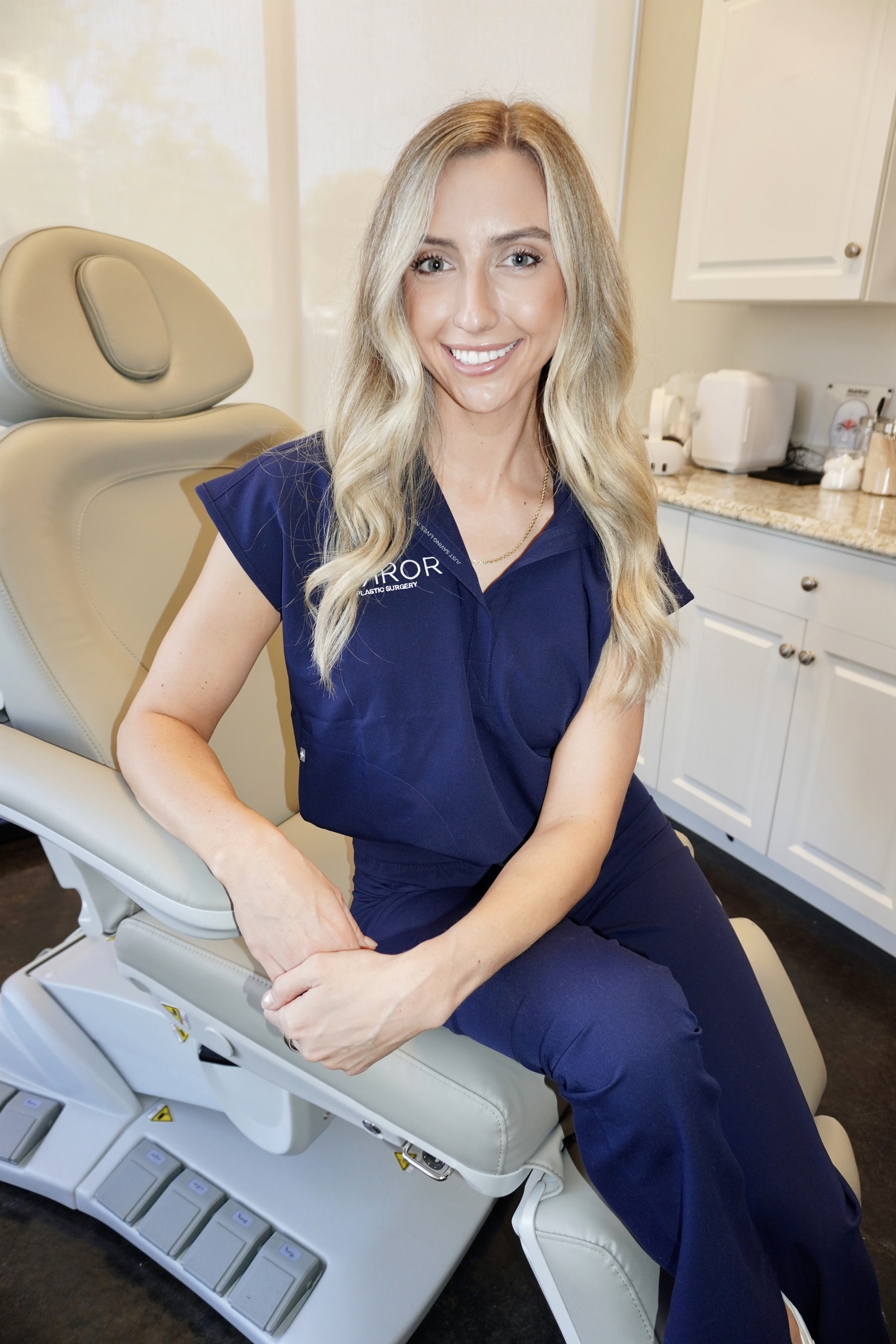
At Mirror Plastic Surgery in St. Petersburg, Florida, peptide therapies are led by Ellie Pranckevicius, FNP-BC, a board-certified Family Nurse Practitioner with four years of experience in the Neuroscience ICU at Tampa General Hospital, a Master’s in Nursing from the University of South Florida, and prior esthetician training at a high-end medical spa in Boston. This blend of critical-care physiology and aesthetic science shapes her peptide protocols, so every recommendation reflects lab-confirmed need and the patient’s actual metabolic profile.
The clinical workflow at Mirror Plastic Surgery follows a defined sequence:
- Comprehensive intake: A 30–60 minute consultation reviewing medical history, current medications, and health goals.
- Lab panel review: For weight management or inflammatory conditions, thyroid, liver, kidney, diabetes markers, and hormone panels are reviewed or ordered.
- Custom protocol creation: Peptide stacks are built from lab results and individual goals, not generic templates. Examples include the Glow Stack (GHK-CU, BPC-157, TB500) for systemic inflammation and collagen support, GLP-3R compounding for weight management and insulin resistance, NAD+ for mitochondrial energy and anti-aging, Sermorelin/Ipamorelin for natural growth hormone stimulation, Selank for anxiety management without dependency risk, and KPV for gut microbiome inflammation.
- Quality sourcing: Peptides come from providers with rigorous batch testing, which addresses the main risk of the unregulated online market, where product content and dosing guidance are often unknown.
- Ongoing concierge support: Ellie is available via direct text for questions, refill requests, and protocol adjustments. The entire process, from consultation to shipping, is available in-person in Tampa or remotely across the United States.
Peptides are not FDA-regulated, and individual results vary based on genetics, lifestyle, and the specific protocol. Maintenance protocols are usually required to sustain benefits, since stopping therapy allows the underlying condition, such as inflammation, hormonal decline, or metabolic dysfunction, to drift back toward its prior state. Mirror Plastic Surgery’s concierge model exists to provide the ongoing supervision that makes this maintenance safer and more effective.
Start a supervised peptide consultation with Ellie to explore whether this approach fits your health profile and goals.
Frequently Asked Questions
Are peptides FDA-approved, and is it safe to use them without supervision?
Many peptides are not FDA-regulated. They are used extensively in clinical and research settings internationally, with trials spanning more than a decade, but the regulatory status means quality control is not standardized across suppliers. The primary risk of obtaining peptides without medical supervision is the lack of third-party batch testing, so product content, purity, and dosing accuracy cannot be verified. Without a prior lab panel and medical history review, there is also no screening for contraindications with existing conditions or medications. Mirror Plastic Surgery sources peptides from reputable providers with documented batch testing and provides comprehensive medical supervision before, during, and after therapy.
What conditions can peptide therapy address beyond weight loss?
Peptides can target a wide range of physiological systems. At Mirror Plastic Surgery, protocols are used for systemic and gut inflammation, autoimmune condition management, post-surgical recovery, collagen and elastin production for skin and hair health, mitochondrial energy support, anxiety management, libido and sexual wellness, and fertility support. The appropriate peptide or stack depends on lab results and individual health goals, which is why a comprehensive intake serves as the starting point for every protocol.
How does Mirror Plastic Surgery’s concierge model differ from a standard telehealth peptide provider?
Larger telemedicine platforms may offer some peptides but often lack the in-depth, one-on-one care that complex protocols need. Mirror Plastic Surgery’s model includes a 30–60 minute consultation, lab panel review, custom stack creation based on individual results, quality-verified sourcing, and direct ongoing access to Ellie Pranckevicius via text for questions and adjustments. The practice also limits its surgical and non-surgical caseload, performing one to two surgeries per day, so the entire team can focus on each patient before, during, and after treatment. If a patient’s needs extend to surgical intervention, Dr. Akash Chandawarkar, a Harvard-educated, Johns Hopkins-trained plastic surgeon, is available to complement Ellie’s work.
What happens if I stop taking peptides?
Benefits from peptide therapy fade when therapy stops, similar to pausing any health regimen. Inflammation that was being managed will move back toward its prior state, collagen-stimulating effects will taper, and metabolic support will decrease. Maintenance protocols are generally necessary to sustain outcomes. Ellie reviews realistic timelines, maintenance requirements, and expected changes at each stage during the initial consultation, so patients understand the long-term commitment before they begin.
Will everyone see the same results from peptide therapy?
Results vary significantly between individuals based on genetics, diet, lifestyle, baseline lab values, and the specific protocol. Mirror Plastic Surgery’s approach addresses this directly. Instead of applying a standard protocol, Ellie builds each stack from the patient’s own lab results and health history. This personalization is the main reason the practice requires a comprehensive intake rather than offering off-the-shelf peptide packages. Clients have reported outcomes including reversal of autoimmune conditions such as psoriasis, significant weight loss, improved lipid panels, faster post-surgical recovery, and transition from pharmaceutical SSRIs and benzodiazepines to nootropic peptides for anxiety management, but individual results always depend on the individual.1
Summary: Choosing Concierge-Enabled Peptide Care
The structural differences between concierge medicine and traditional primary care are measurable. Panel size, visit duration, wait time, and downstream utilization rates all differ in ways documented across multiple 2025–2026 analyses. For patients managing chronic inflammation, autoimmune conditions, weight, or anti-aging goals, these structural differences determine whether a provider has the time and clinical depth to deliver individualized, lab-driven care or whether volume constraints prevent that level of attention.
Concierge-enabled peptide therapy at Mirror Plastic Surgery combines concierge access and personalization with advanced wellness protocols that require ongoing supervision, quality-verified sourcing, and a provider who understands the patient’s full clinical picture. This approach does not suit every patient, and Ellie’s process emphasizes honest assessment over protocol sales, including clear guidance when a therapy is not yet necessary.
For health-conscious adults in the Tampa and St. Petersburg area who feel limited by traditional primary care, a concierge-level consultation offers a clear starting point for evaluating whether supervised peptide therapy aligns with their goals.
Schedule a lab-informed consultation with Ellie at Mirror Plastic Surgery to determine whether a personalized peptide protocol is right for you.
1 Results may vary from person to person. Editorial content, before and after images, and patient testimonials do not constitute a guarantee of specific results.
Peptide therapy is intended for wellness and optimization purposes and is not prescribed to diagnose, treat, cure, or prevent disease unless specifically stated. Many peptides are not FDA-approved and may be used off-label. Some have limited long-term safety data, with a potential for unknown risks, complications, or desensitization with prolonged use.