
Written by: Ellie Pranckevicius, FNP-BC, Aesthetic Nurse Practitioner & Aesthetic Injector | Facial Restoration & Regenerative Injectable Specialist, Mirror Plastic Surgery | Last updated: August 6, 2026
How Concierge and DPC Care Compare at a Glance
- Both concierge medicine and direct primary care (DPC) limit patient panels for better access, but concierge practices usually keep smaller panels and offer 24/7 direct provider communication.
- Concierge medicine keeps insurance billing alongside a membership retainer, while most DPC practices operate outside insurance for primary care services.
- Concierge models often include advanced lab panels and specialized wellness protocols like peptide therapies, while DPC focuses on core primary care services.
- Concierge medicine offers predictable costs for specialized services included in the membership, while DPC provides predictable primary care costs with no co-pays but may not include advanced wellness support.
- Patients with chronic conditions or complex wellness goals often benefit from concierge medicine’s expanded scope and individualized monitoring. Explore whether a personalized concierge peptide protocol aligns with your health objectives in a dedicated consultation.
Key Difference 1: Access and Patient Panel Size
Both DPC and concierge medicine reduce the number of patients each provider manages compared to conventional primary care, which can exceed 2,000 patients per physician. The American Academy of Family Physicians notes that DPC practices typically maintain panels of 600 patients or fewer, which supports same-day or next-day appointments and direct provider communication. Concierge practices often maintain even smaller panels than traditional practices and provide 24/7 direct access to the practitioner. Patients who need frequent check-ins, lab reviews, or protocol adjustments, such as those on ongoing peptide therapies, gain more consistent and individualized attention from this smaller panel structure. The table below highlights how panel size compares.
| Feature | Direct Primary Care | Concierge Medicine |
|---|---|---|
| Typical panel size | Up to ~600 patients | Smaller than traditional panels |
Experience concierge-level access for your peptide care with a one-on-one visit.
Key Difference 2: How Insurance and Billing Work
Most DPC practices operate entirely outside of insurance and do not accept insurance for primary care services, though a small percentage incorporate fee-for-service billing to third parties for separate panels. Patients pay a periodic membership fee that covers primary care services, and insurance is not billed for those services in most cases. Many patients keep a high-deductible health plan or health-sharing arrangement for specialist visits, hospitalizations, or imaging. Concierge medicine usually maintains insurance billing alongside the membership retainer. The retainer covers enhanced access and services that insurance does not reimburse, such as extended consultations, advanced lab panels, and specialized wellness protocols including peptide therapies. Insurance continues to be billed for covered services, which can create broader financial coverage for patients with complex needs.
| Feature | Direct Primary Care | Concierge Medicine |
|---|---|---|
| Insurance billing | Not accepted for primary care services in most cases | Often accepted alongside membership retainer |
Key Difference 3: Service Scope and Personalization
The most commonly cited limitation of concierge medicine is cost, because the membership retainer is an additional out-of-pocket expense on top of existing insurance premiums. For some patients, this combined cost creates a barrier. DPC removes insurance billing for primary care but may not include the breadth of services that many concierge practices offer, such as advanced lab panels, specialized wellness protocols, or intensive management of complex conditions. Concierge models are designed to support a wider scope of personalized services, including evidence-based therapies like peptide protocols that need individualized lab review, dosing adjustments, and continuous practitioner oversight. DPC excels at accessible, affordable primary care, while its limitation is a narrower service scope for patients with multifaceted wellness needs.
| Feature | Direct Primary Care | Concierge Medicine |
|---|---|---|
| Service scope | Encompasses a broad range of comprehensive primary care services including acute care, preventive care, chronic disease management, and care coordination | Extended scope including advanced wellness and personalized care |
Discuss whether a concierge peptide protocol fits your health profile in a detailed consultation.
Key Difference 4: Cost Structure and Predictability
DPC practices charge a periodic membership fee, often monthly and sometimes tiered, that covers primary care services without billing insurance. As noted earlier, this insurance-free model creates high cost predictability with no co-pays, surprise bills, or insurance denials for covered primary care. This simplicity works well for patients whose needs stay within standard primary care. Concierge medicine involves a retainer plus potential insurance co-pays and out-of-pocket costs for services outside the membership scope. The concierge model, however, provides predictable pricing for specialized services included in the membership, such as comprehensive lab panels and ongoing wellness management, which conventional insurance often bills in an episodic and unpredictable way. Each concierge membership at Mirror Plastic Surgery is structured around the patient’s individual needs, and costs are reviewed transparently during consultation.
| Feature | Direct Primary Care | Concierge Medicine |
|---|---|---|
| Cost structure | Periodic membership fee, often monthly and sometimes tiered; no insurance for primary care | Retainer plus insurance; specialized services included in membership |
Key Difference 5: Support for Chronic and Preventive Wellness Goals
DPC works well for patients whose primary needs are acute care, preventive care, and standard chronic disease management. Patients dealing with chronic inflammation, autoimmune conditions, metabolic dysfunction, or age-related cellular decline often need a broader framework. The concierge model’s expanded scope becomes a meaningful structural advantage for these situations. Concierge practices can integrate advanced therapies, including peptide protocols such as BPC-157 for systemic inflammation, GLP-3R compounding for metabolic health, or NAD for mitochondrial energy support. These therapies are delivered under close practitioner supervision with ongoing lab-based monitoring. This level of coordination rarely appears in a DPC framework, where the focus remains on foundational primary care rather than specialized, protocol-driven wellness.
| Feature | Direct Primary Care | Concierge Medicine |
|---|---|---|
| Chronic and complex wellness support | Enhanced chronic disease management through personalized care plans, regular monitoring, extended visits, and 24/7 access | Personalized care with lab monitoring and advanced wellness support |
Learn how a personalized peptide protocol can support your chronic condition or wellness goals in a private visit.
Ellie’s Background in Peptide Protocol Design
Ellie Pranckevicius, FNP-BC, leads peptide therapies and non-surgical aesthetics at Mirror Plastic Surgery. She is a board-certified Family Nurse Practitioner who spent four years in the Neuroscience ICU at Tampa General Hospital, where she developed a deep command of physiology, metabolic health, and complex patient management. Her dual background, which began in high-end aesthetic medicine before she completed her Master’s in Nursing at the University of South Florida, allows her to connect aesthetic goals with rigorous clinical science. Every peptide protocol Ellie designs relies on targeted lab review, clear patient education, and individualized dosing, supported by 24/7 direct access for ongoing questions and adjustments.
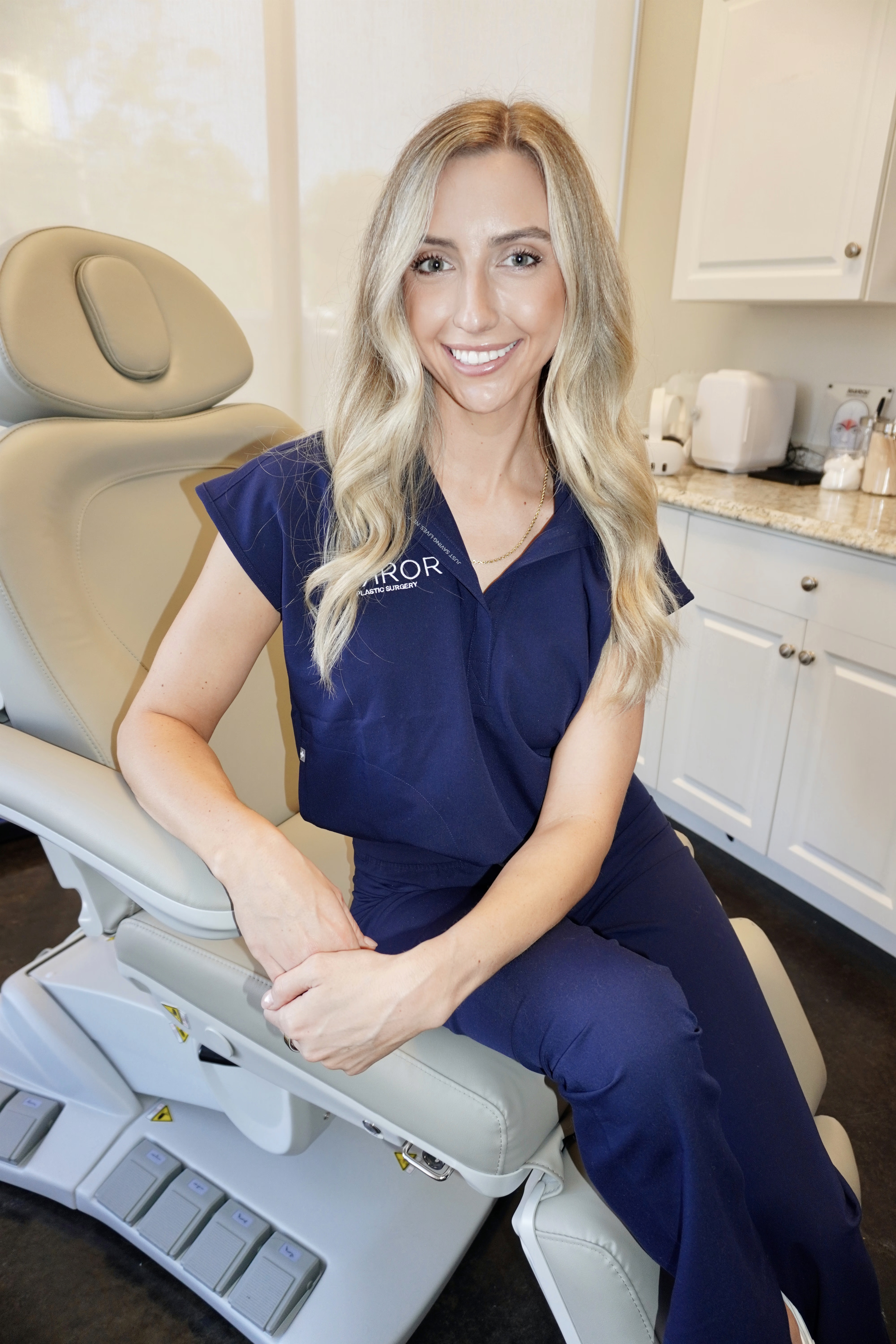
Begin a peptide-focused consultation in St. Petersburg or remotely across Florida with Ellie.
Risks, Limitations, and Peptide Therapy Challenges
Both care models carry limitations that patients should evaluate honestly before committing. For DPC, the primary limitation for complex wellness patients is scope, because most DPC practices are not structured to manage advanced peptide protocols, interpret specialized hormone or metabolic panels, or provide the ongoing supervision that non-FDA-regulated therapies require. For concierge medicine, the main risks include variability in practitioner expertise across different practices, the potential for hidden fees if the membership scope is not clearly defined upfront, and the additional out-of-pocket cost of the retainer.
Peptide therapies introduce a specific set of interconnected considerations that apply regardless of care model. These considerations focus on regulation, outcome variability, personalization, and long-term maintenance.
- Regulatory status: Many peptides are not FDA-regulated, so quality and purity vary significantly by source. Obtaining peptides without medical supervision from unverified online retailers carries meaningful safety risks, including unknown active ingredient content and lack of batch testing.
- Outcome variability: Results differ based on genetics, lifestyle, existing conditions, and the specific protocol used. This variability means no peptide therapy produces identical outcomes across all patients.1
- Personalized dosing and labs: Starting peptide therapy without baseline lab panels that assess thyroid, liver, kidney, hormone, and metabolic markers increases the risk of inappropriate dosing or contraindications with existing conditions or medications.
- Maintenance requirements: Benefits from peptide therapies typically diminish when therapy is discontinued, so ongoing protocol management becomes an important part of long-term planning.
Mirror Plastic Surgery addresses these risks through comprehensive laboratory review, reputable sourcing with batch testing, and continuous concierge support from Ellie throughout each patient’s protocol.
Three Misconceptions About Concierge Care and Peptides
Misconception 1: DPC and concierge medicine are interchangeable terms. These models are structurally distinct. DPC eliminates insurance billing for primary care and focuses on foundational services. Concierge medicine typically retains insurance for covered services while adding a membership retainer for enhanced access and expanded offerings. Confusing the two can lead patients to choose a model that does not match their actual needs.
Misconception 2: Concierge medicine is only for the wealthy. Concierge care does involve a membership retainer, yet the model exists across a range of practice types and service scopes. Patients with chronic conditions or layered wellness needs who currently spend significant sums on fragmented specialist visits, episodic labs, and unsupervised supplements may find that a concierge membership consolidates and improves care in a more cost-effective way. Each patient’s situation is reviewed transparently during consultation.
Misconception 3: Peptides are solely weight-loss tools. GLP-1 class peptides have received significant public attention for weight management, but the peptide category is much broader. Peptides are used clinically for systemic inflammation (BPC-157, TB500), collagen and elastin production (GHK-CU), mitochondrial energy support (NAD), gut microbiome health (KPV), anxiety management (Selank), growth hormone stimulation (Sermorelin/Ipamorelin), and sexual wellness (PT-141), among other applications. Weight management represents one indication among many.
Clarify which peptide applications match your health profile in a focused visit with Ellie.
Frequently Asked Questions
Are peptides FDA-approved? Most peptides used in wellness protocols are not FDA-regulated. They have been studied in clinical research for over a decade and are used globally, but regulatory status varies by compound. The primary risk usually comes from obtaining them from unverified sources without quality controls. Mirror Plastic Surgery sources peptides from providers with rigorous batch testing and offers full medical supervision throughout therapy.
What happens if I stop taking peptides? Benefits typically diminish when therapy is discontinued, similar to stopping any consistent health regimen.1 For example, inflammation that was being managed through a peptide protocol will likely return to its prior state without ongoing treatment.1 Maintenance protocols are often recommended to sustain results over time.
Will everyone see the same results? Outcomes vary based on genetics, lifestyle, existing health conditions, and the specific protocol used.1 This variation is why Mirror Plastic Surgery emphasizes individualized laboratory review and custom protocol design rather than standardized approaches.
Why does practitioner supervision matter for peptide therapy? Without supervision, there is no mechanism to verify product quality, confirm appropriate dosing, screen for contraindications with existing conditions or medications, or adjust the protocol based on lab response. Unsupervised use from online sources carries meaningful safety risks that medical oversight directly reduces.
Can I use insurance for peptide therapies under a concierge model? Peptide therapies are generally not covered by insurance regardless of care model, because most are not FDA-regulated. Under Mirror Plastic Surgery’s concierge framework, the membership structure covers the consultation, lab review, protocol design, and ongoing support. Insurance may still apply to other covered services depending on the patient’s plan.
Do peptide protocols require ongoing maintenance? For most conditions, particularly chronic inflammation, metabolic health, and anti-aging goals, ongoing maintenance is necessary to sustain benefits.1 Ellie works with each patient to design a long-term protocol that balances efficacy, safety, and realistic maintenance expectations.
Making an Informed Choice Between DPC and Concierge Care
Direct primary care and concierge medicine both improve on conventional high-volume practice, yet each serves different priorities. DPC fits patients who want accessible, affordable foundational care without insurance complexity. Concierge medicine better serves patients with chronic conditions, layered wellness goals, or interest in advanced therapies, such as peptide protocols, that require sustained practitioner involvement, specialized expertise, and individualized monitoring. The right model depends on your health profile, goals, and the specific services you expect from your provider. A thorough consultation offers the clearest way to match your needs with the appropriate care structure.
Schedule a concierge peptide consultation with Ellie at Mirror Plastic Surgery in St. Petersburg or remotely to determine whether this model is the right next step for your wellness plan.
1 Results may vary from person to person. Editorial content, before and after images, and patient testimonials do not constitute a guarantee of specific results.
Peptide therapy is intended for wellness and optimization purposes and is not prescribed to diagnose, treat, cure, or prevent disease unless specifically stated. Many peptides are not FDA-approved and may be used off-label. Some have limited long-term safety data, with a potential for unknown risks, complications, or desensitization with prolonged use.