

Written by: Dr. Akash Chandawarkar, Board Certified Plastic Surgeon, Mirror Plastic Surgery | Last updated: September 9, 2026
Key Takeaways
- Concierge medicine at Mirror Plastic Surgery targets collagen loss at its biological root with biostimulators, peptides, detailed lab work, and lifestyle support.
- Collagen production declines after age 20 and accelerates after menopause, so topical creams alone rarely create meaningful, lasting change.
- Physician-supervised protocols personalize treatment based on hormones, inflammation, and metabolism instead of relying on generic, one-size-fits-all plans.
- Sculptra, Radiesse, microneedling, and GHK-Cu peptides stimulate collagen in different ways and on different timelines, which allows tailored combinations.
- To explore a physician-led collagen restoration plan tailored to your biology, schedule a consultation.
Why Collagen Decline Demands More Than a Cream
Collagen is the most abundant structural protein in the body and supports skin firmness, elasticity, and youthful volume. After age 20, the skin loses approximately 1% of its collagen per year, and by age 50 roughly 30% of dermal collagen has been lost. For women, this decline accelerates sharply after menopause. The first five years post-menopause account for roughly 30% of total lifetime collagen loss. Topical creams cannot reverse this systemic, multifactorial process.
Concierge medicine offers a proactive, physician-led alternative. At Mirror Plastic Surgery, Dr. Akash Chandawarkar conducts extended consultations of up to an hour. He reviews medical history, comprehensive lab panels, and lifestyle factors to build a personalized plan that targets collagen production at its biological source instead of only treating surface changes.
The Science of Collagen and Skin Aging
Type I and Type III collagen matter most for visible aging. Type I provides structure and firmness. Type III offers flexibility and is closely tied to youthful-looking skin. Type III collagen decreases faster than Type I with age, and elastin fiber production essentially stops after puberty.
Environmental stressors speed this decline. UV-A light penetrates deeply into the dermis and activates matrix metalloproteinases (MMPs) for up to 24 hours after a single exposure, even without visible sunburn. This activity breaks down collagen over time. High-glycemic diets promote advanced glycation end products (AGEs) that stiffen collagen and impair the extracellular matrix. Collagen loss is therefore hormonal, environmental, and metabolic at the same time, which makes a simple topical approach incomplete.
How Concierge Medicine Approaches Collagen Production
The concierge model at Mirror Plastic Surgery focuses on depth of evaluation rather than volume of procedures. Every collagen-focused protocol begins with a full assessment that includes medical history, lifestyle review, and lab markers such as thyroid panels, hormone levels, and inflammatory markers like CRP and IL-6. This diagnostic rigor lets Dr. Akash tell apart two very different patients. One may have collagen decline driven by perimenopausal estrogen loss. Another may have skin aging from chronic systemic inflammation. These two patients need meaningfully different strategies.
Mirror Plastic Surgery also limits itself to one to two surgeries per day. Non-surgical treatments receive the same focused, unhurried attention. Patients have direct text access to Dr. Akash throughout their care, which supports ongoing adjustment as labs and skin change.
Begin your personalized collagen assessment with Dr. Akash Chandawarkar by booking an appointment with Ellie.
Advanced Biostimulators: Sculptra and Radiesse
Biostimulators are injectable treatments that encourage your body to build new collagen over time. They differ from traditional fillers that simply add temporary volume.
Sculptra (poly-L-lactic acid, PLLA) works by triggering M2 macrophage polarization, which activates the TGF-β/Smad signaling pathway in fibroblasts. This signaling leads to sustained neocollagenesis. PLLA produces a biphasic collagen response, with an early phase of Type III collagen synthesis in weeks 1–4 that shifts to Type I collagen production by months 2–6. Visible results typically peak around three to six months after the final session and last for about two years.1 A 2024 systematic review of 11 randomized controlled trials showed increased dermal thickness and improved aesthetic scores for at least 25 months.1
Radiesse (calcium hydroxylapatite, CaHA) provides immediate volume through its gel carrier. As the CaHA microspheres form a scaffold in the dermis, they stimulate fibroblasts to synthesize new Type I and Type III collagen. Collagen stimulation begins in weeks 1–4, with peak visible results at 1–3 months and typical duration of 12–18 months.1
Both treatments require physician-level expertise. Proper dilution, precise anatomical placement, and careful post-injection technique help reduce nodule risk and create natural-looking, gradual results.
Beyond injectables, device-based regenerative procedures offer another route to collagen stimulation.
Regenerative Procedures: Collagen Induction Therapy and PRP
Collagen induction therapy, also called microneedling, uses controlled micro-injuries at depths of 0.5–2.5 mm to activate a wound-healing cascade. This process upregulates collagen-related genes. In human skin models treated at 1 mm depth, microneedling increased expression of COL3A1, COL8A1, TIMP3, and cell proliferation genes.1 A 2026 review in the Journal of Cosmetic Dermatology found strong evidence for improving fine wrinkles, skin laxity, and texture.1
Platelet-rich plasma (PRP) concentrates growth factors such as PDGF, TGF-beta, and VEGF. These factors may accelerate healing and enhance collagen responses. Evidence remains mixed. A 2024 double-blind randomized controlled trial at the Mayo Clinic found that adding PRP to microneedling did not significantly outperform sterile saline for skin laxity and wrinkles. Other studies show benefit for acne scars. PRP functions best as a possible adjunct, and physician judgment guides whether it fits your specific concerns.
Microneedling results appear over 3–6 months as new collagen matures. Benefits typically last 6–12 months, and annual maintenance sessions are common.1 Most patients complete a series of 3–4 sessions spaced 4–6 weeks apart.
Peptide Therapies for Collagen: GHK-Cu and the Glow Stack
Peptides are short amino acid chains that act as signals, telling cells which processes to turn on or off. Certain peptides directly influence collagen synthesis.
GHK-Cu (copper peptide) is the most studied peptide for collagen support. In cultured human fibroblasts, GHK-Cu increases Type I and III collagen synthesis by 60–70% at nanomolar concentrations, with results replicated across multiple laboratories.1 It works by upregulating TGF-β1 signaling and activating collagen gene transcription, including COL1A1 and COL3A1. It also modulates MMPs and TIMPs to favor matrix preservation. Plasma GHK levels decline from about 200 ng/mL at age 20 to roughly 80 ng/mL by age 60. This decline may contribute to reduced tissue repair capacity later in life.
A clinical trial of daily topical GHK-Cu showed a 28% average collagen increase after 3 months, with the top quartile of participants reaching 51% improvement.1 Evidence is strongest for topical use. Injectable GHK-Cu has promising mechanisms but lacks large-scale human trials, which makes medical supervision especially important.
Mirror Plastic Surgery’s Glow Stack combines GHK-Cu with BPC-157 and TB500. BPC-157 targets systemic inflammation and supports tissue repair. TB500 supports soft tissue healing and wound repair. Together, these peptides address both the inflammatory environment that slows collagen production and the signaling that drives new collagen formation.
Peptides fall outside direct FDA regulation. Products from unverified online retailers may carry risks of contamination, mislabeling, and incorrect dosing. At Mirror Plastic Surgery, every peptide protocol is based on your labs and physiology, sourced from reputable providers with batch testing, and supervised by Dr. Akash from start to finish.
Explore a physician-supervised peptide plan for your collagen goals by booking with Ellie.
Lifestyle and Systemic Support for Collagen Health
Concierge medicine also strengthens the internal environment that supports collagen. During collagen-focused visits, Dr. Akash reviews nutrition, sleep, stress, and hormones alongside procedural options.
Nutrition: Adequate dietary protein at 1.2–1.6 g/kg/day supplies glycine, proline, and hydroxyproline, which are key collagen building blocks. Vitamin C acts as a required cofactor for prolyl hydroxylase, the enzyme that stabilizes the collagen triple helix. A 2021 systematic review of 19 randomized controlled trials found that oral collagen supplements at 2.5–10 g/day for 8–24 weeks improved skin hydration, elasticity, and self-reported wrinkle appearance compared with placebo.1
Sleep and Stress: Chronic psychological stress elevates cortisol, IL-6, and CRP, reduces dermal collagen synthesis, increases MMP activity, and slows epidermal barrier recovery. Poor-quality sleepers show higher intrinsic aging scores, more transepidermal water loss, slower barrier recovery, and less repair of UV-induced damage than good sleepers.
Hormone Balance: For many perimenopausal women, estrogen decline drives a large share of collagen loss. Hormone replacement therapy can significantly increase dermal collagen and improve skin thickness, but physicians do not recommend it solely for cosmetic reasons because of systemic risks.1 Concierge care creates space for a nuanced, individualized hormone discussion.
Comparing Your Collagen-Building Options
The table below summarizes how each treatment stimulates collagen, how quickly results appear, and how long they last. Use it to see which options align with your goals and timeline.
| Treatment | Mechanism | Time To Results | Duration |
|---|---|---|---|
| Sculptra (PLLA) | M2 macrophage polarization activates TGF-β/Smad pathway; biphasic Type III then Type I collagen response | Visible change builds from about 6–12 weeks; peak at 3–6 months1 | Around 2 years1 |
| Radiesse (CaHA) | Immediate gel-carrier volume; CaHA microspheres scaffold fibroblast activity for Type I and III collagen | Collagen stimulation begins weeks 1–4; peak visible results 1–3 months1 | 12–18 months1 |
| Microneedling (Collagen Induction Therapy) | Controlled micro-injuries (0.5–2.5 mm) trigger wound-healing cascade; upregulates COL3A1, COL8A1, fibroblast activity | Initial texture improvements 3–4 weeks; peak collagen remodeling 3–6 months1 | 6–12 months; annual maintenance recommended1 |
| GHK-Cu Peptide (Topical) | Upregulates TGF-β1 signaling and COL1A1/COL3A1 gene transcription; modulates MMP/TIMP balance | 28% average collagen increase at 3 months in clinical trials1 | Ongoing; benefits taper if discontinued |
In a concierge protocol, these treatments are often combined and sequenced based on your lab results, skin condition, and underlying biology. A patient with perimenopausal collagen loss and volume depletion may benefit from Sculptra plus the Glow Stack peptide protocol. A patient with texture changes and early laxity may respond better to a microneedling series with targeted lifestyle support. No single treatment fits everyone, which reinforces the value of physician-led, individualized care.
The Concierge Advantage at Mirror Plastic Surgery
Mirror Plastic Surgery pairs concierge access with deep expertise in plastic and reconstructive surgery. Dr. Akash Chandawarkar studied neuroscience and nuclear engineering at MIT, then graduated with Honors from Harvard Medical School through the Harvard-MIT Division of Health Sciences and Technology. He completed a seven-year integrated plastic and reconstructive surgery residency at Johns Hopkins University, followed by an aesthetic surgery fellowship at the Manhattan Eye Ear & Throat Hospital/Lenox Hill Hospital and a Stanford University Biodesign Innovation Fellowship. He is board certified by the American Board of Plastic Surgery and advises companies developing new aesthetic technologies.
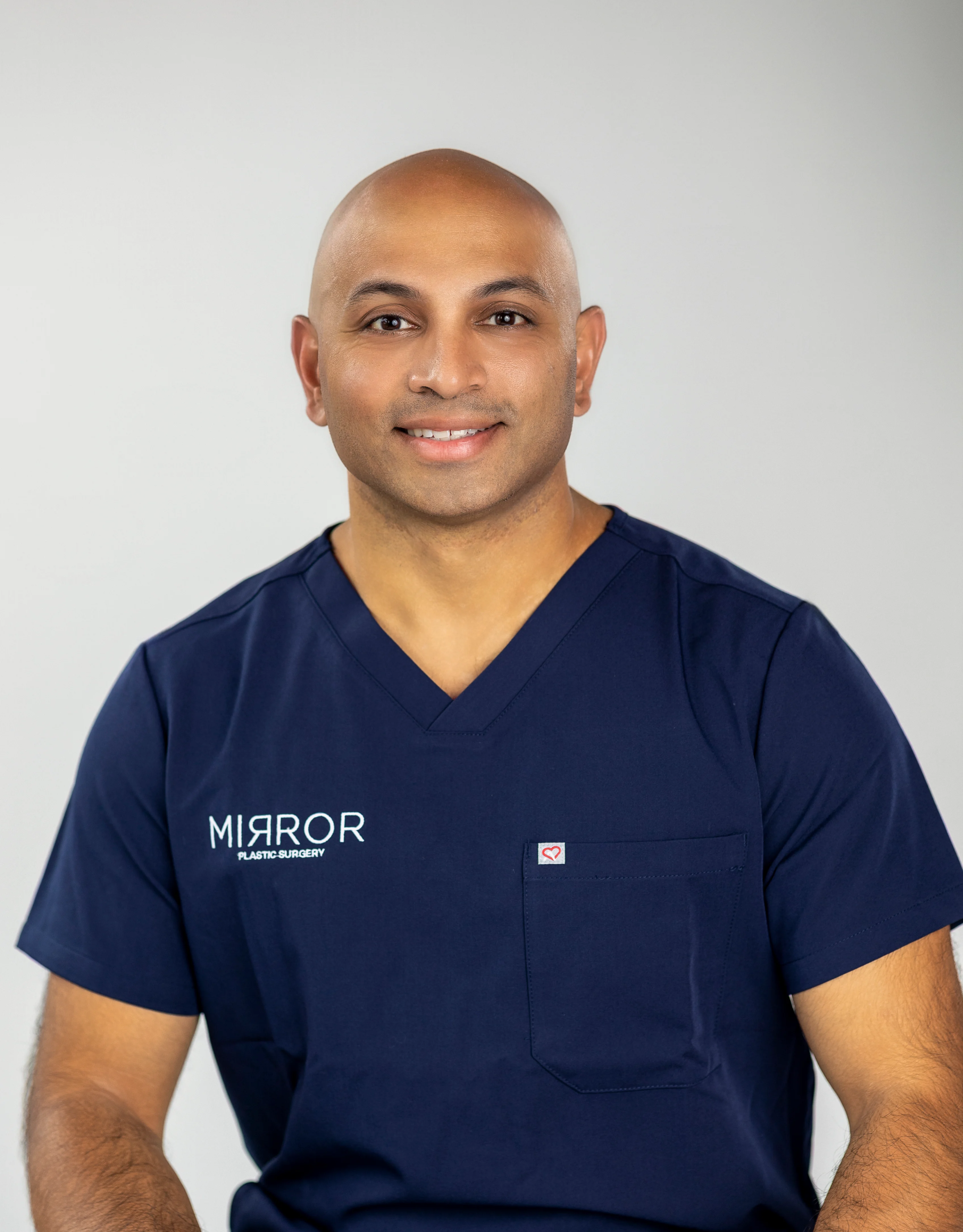
This background shapes a clear philosophy: safety first, function second, aesthetics third. Every collagen-focused protocol at Mirror Plastic Surgery relies on objective lab data instead of trends. Peptides come from vetted providers with batch testing. Consultations last up to an hour, and patients have direct text access to Dr. Akash before, during, and after treatment.
One patient described the experience this way: “Nothing was rushed. Every step felt intentional and aligned with my body. Over time, the results became visible not just in how I look, but in how I feel day to day. It felt like a long-term upgrade rather than a quick fix.”
This approach highlights the concierge advantage. High-volume practices and unregulated online peptide retailers cannot match the diagnostic depth, physician accountability, or ongoing relationship that support sustainable collagen restoration.
Take the first step toward a tailored collagen plan by booking an appointment with Ellie.
Frequently Asked Questions
What Is the Best Treatment to Stimulate Collagen Production?
There is no single best treatment. The right approach depends on your skin, age, hormones, and overall health. Biostimulators like Sculptra and Radiesse work well for diffuse volume loss and deep collagen stimulation, with effects that can last 12–24 months. Microneedling supports texture, fine lines, and early laxity, with results that develop over 3–6 months. Peptide therapies such as GHK-Cu influence collagen at the signaling level and can layer with procedures. A concierge physician reviews your labs and skin to design a combination that fits your biology.
Does Collagen Induction Therapy Really Work?
Microneedling works when performed correctly with proper aftercare. It creates controlled micro-injuries at 0.5–2.5 mm depth, which activates a wound-healing cascade and upregulates collagen genes such as COL3A1 and COL8A1. A 2026 review in the Journal of Cosmetic Dermatology found strong evidence for improvements in fine wrinkles, laxity, and texture.1 Results usually require a series of 3–4 sessions spaced 4–6 weeks apart and develop gradually over 3–6 months. Physician oversight helps ensure appropriate needle depth, sterile technique, and realistic expectations.
How Long Does Collagen Induction Therapy Last?
Results from a full microneedling series typically last 6–12 months. The collagen your body builds is real structural tissue, yet aging continues, so most patients schedule maintenance sessions every 6–12 months. Combining microneedling with biostimulators like Sculptra or peptide therapies such as GHK-Cu can deepen and extend benefits by activating multiple biological pathways at once.
Can Peptides Like GHK-Cu Boost Collagen?
Peptides like GHK-Cu can meaningfully support collagen production. As detailed earlier, GHK-Cu has shown strong collagen-boosting effects in both laboratory and clinical research. The key takeaway is that topical GHK-Cu has the most robust evidence, while injectable forms remain more experimental and require careful medical supervision and high-quality sourcing.
Are Peptides Safe if They Are Not FDA-Regulated?
Many peptides have long safety records in research settings, so the main concern is product quality and oversight. Unregulated online products may be contaminated, mislabeled, or incorrectly dosed, and self-directed use lacks medical screening. At Mirror Plastic Surgery, peptides come from reputable providers with rigorous batch testing. Each protocol is tailored to your labs and physiology, and Dr. Akash provides direct, ongoing supervision. This structure helps make peptide therapy safer and more effective than unsupervised online purchasing.
Conclusion: Your Collagen, Rebuilt With Precision
Collagen loss reflects deep biological changes driven by hormones, environment, and metabolism over decades. Addressing it effectively calls for the same level of diagnostic care you would expect for any age-related health concern. That means comprehensive lab analysis, a physician who understands the underlying physiology, and a plan that adapts as your biology changes.
Concierge collagen protocols at Mirror Plastic Surgery integrate biostimulators, collagen induction therapy, physician-supervised peptide therapies, and lifestyle support into one coordinated framework built around your labs, hormones, and goals. This framework functions as a physician-led roadmap for sustainable collagen restoration rather than a simple menu of procedures.
To explore your options with Dr. Akash Chandawarkar, schedule a consultation with Ellie at Mirror Plastic Surgery in St. Petersburg, Florida.
Results vary from person to person. Peptides are not FDA-regulated, and professional medical supervision is essential. This article is for educational purposes and does not constitute medical advice.
1 Results may vary from person to person. Editorial content, before and after images, and patient testimonials do not constitute a guarantee of specific results.
Peptide therapy is intended for wellness and optimization purposes and is not prescribed to diagnose, treat, cure, or prevent disease unless specifically stated. Many peptides are not FDA-approved and may be used off-label. Some have limited long-term safety data, with a potential for unknown risks, complications, or desensitization with prolonged use.


