Written by: Ellie Pranckevicius, FNP-BC, Aesthetic Nurse Practitioner & Aesthetic Injector | Facial Restoration & Regenerative Injectable Specialist, Mirror Plastic Surgery
Key Takeaways
- Oral hydrolyzed collagen peptides at 2.5–15 g daily for 8–12 weeks yield modest, statistically significant reductions in wrinkle depth and improvements in skin elasticity and hydration.1
- Results are more pronounced in adults over 40, and consistent daily intake matters more than maximizing dose.1
- GHK-Cu works through gene-regulatory pathways that basic hydrolyzed collagen peptides do not match, which supports more targeted collagen remodeling.
- Daily broad-spectrum sunscreen and topical retinoids remain the most evidence-backed interventions for wrinkle prevention, with collagen peptides serving as an adjunct.
- Schedule a personalized consultation at Mirror Plastic Surgery to decide whether oral peptides, GHK-Cu, or a combined protocol fits your skin-aging goals.
Why Collagen Loss Drives Visible Aging After 40
Dermal collagen provides the structural scaffold that keeps skin firm, smooth, and resilient. Production declines progressively with age, and the rate of loss accelerates after 40. This acceleration contributes directly to deepening wrinkles, reduced elasticity, and increased skin laxity. UV exposure compounds this decline: UV radiation is responsible for approximately 80% of visible skin aging, activating matrix metalloproteinases (MMPs) that degrade collagen faster than the body can replace it.
Interest in oral collagen peptide supplementation has grown against this backdrop. The premise has a clear mechanism. Bioactive di- and tripeptides such as Pro-Hyp and Hyp-Gly are absorbed intact and accumulate in skin tissue, where they act as signaling molecules to stimulate dermal fibroblasts and increase collagen production. The 2023–2026 literature evaluates how much that mechanism translates into real-world wrinkle reduction in humans.
Hydrolyzed Collagen Peptides, Bioavailability, and GHK-Cu
Hydrolyzed collagen peptides come from enzymatic or acid hydrolysis of animal-derived collagen. This process breaks the protein into short-chain fragments with molecular weights typically below 5,000 Da, which improves intestinal absorption. The Peptpure® formulation used in a 2026 RCT supports high bioavailability. These peptides mainly supply amino acid building blocks and fibroblast-stimulating signals.
GHK-Cu (glycyl-L-histidyl-L-lysine copper complex) works very differently. It is a naturally occurring tripeptide whose plasma concentration declines from approximately 200 ng/mL at age 20 to roughly 80 ng/mL by age 60, a roughly 60% reduction that parallels age-related loss of tissue repair capacity. Rather than supplying building blocks, GHK-Cu modulates over 4,000 human genes, upregulating collagen types I and III, elastin, glycosaminoglycans, and antioxidant enzymes while suppressing pro-inflammatory cytokines. The copper ion is essential. It serves as a cofactor for lysyl oxidase-mediated collagen cross-linking and superoxide dismutase activity, functions not provided by basic hydrolyzed collagen peptides. GHK-Cu also facilitates extracellular matrix remodeling by modulating MMP-2, MMP-9, and TIMPs during wound remodeling phases, shifting matrix turnover toward constructive repair rather than degradation or fibrosis.
Practitioner Perspective: Ellie Pranckevicius, FNP-BC
The complexity of these mechanisms and the need for careful dosing and sourcing make clinical supervision valuable, which is where specialized peptide expertise matters. Peptide therapies at Mirror Plastic Surgery are led by Ellie Pranckevicius, FNP-BC, a board-certified Family Nurse Practitioner whose background spans esthetician training at a high-end Boston medical spa, a Bachelor’s and Master’s in Nursing from the University of South Florida, and four years in the Neuroscience ICU at Tampa General Hospital. That critical-care foundation gives Ellie a deep command of physiology, metabolic health, and the body’s capacity for recovery. She applies this knowledge directly when designing and supervising collagen-focused peptide protocols.
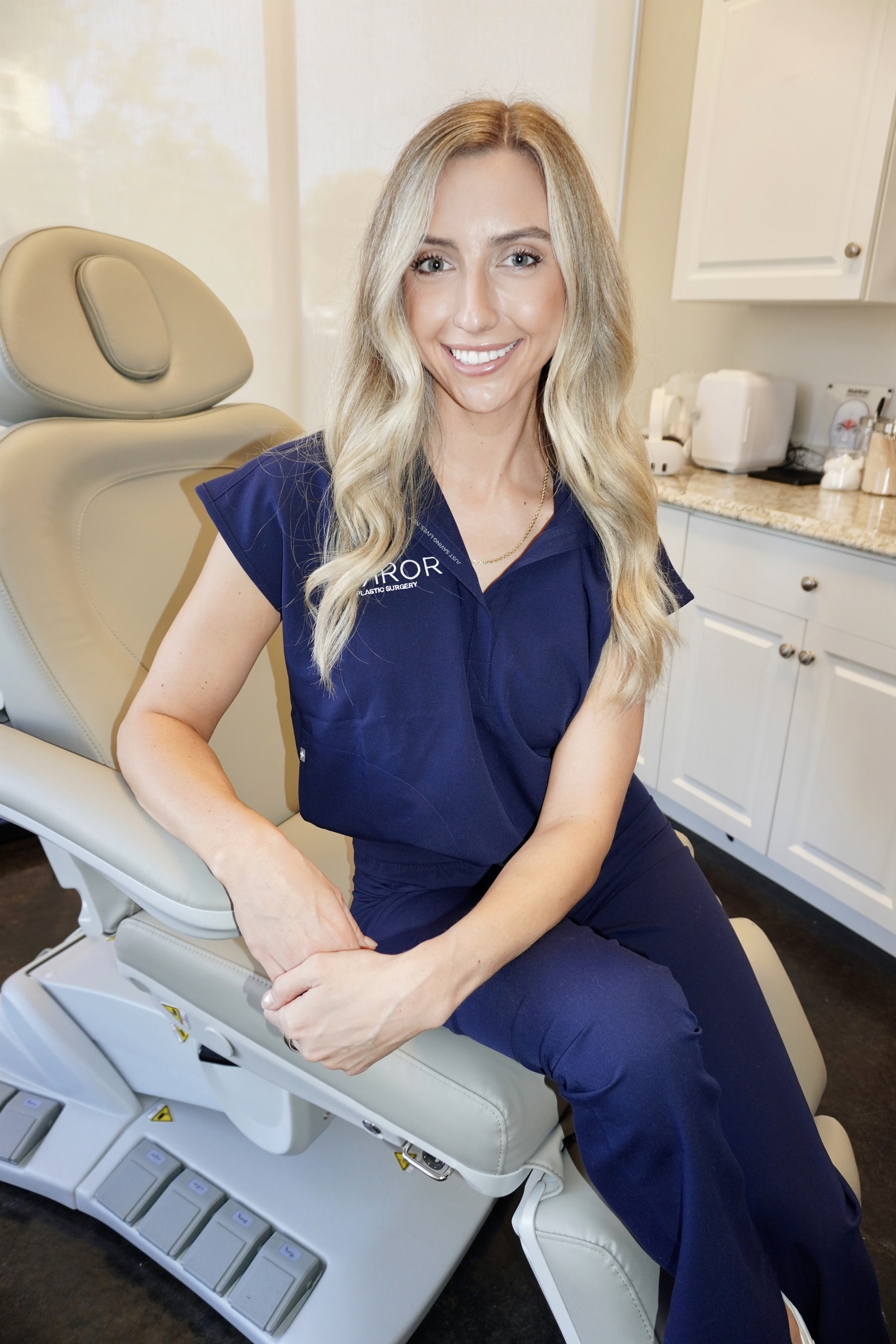
Her approach centers on education and transparency. She explains the science behind each recommendation in accessible terms, tells clients when a protocol is not yet warranted, and provides concierge-level support throughout the treatment journey.
Research Summary: 2014–2026 Meta-Analyses and RCTs
The table below summarizes key trials and meta-analyses published between 2014 and 2026. Every data point comes directly from the cited source.
The Myung et al. 2025 finding provides a meaningful counterweight to the broader literature. When analysis is restricted to independently funded, high-quality trials, the signal for wrinkle reduction weakens substantially. This does not negate the mechanistic rationale. It does highlight why medically supervised protocols with lab-guided selection, batch-tested sourcing, and adjunct interventions offer a more defensible path than self-directed supplementation.
Schedule a consultation to review your baseline collagen markers and decide which peptide protocols match the evidence for your age group.
Practical Skin Strategy: Peptides, Sunscreen, and Retinoids
Farah Moustafa, MD, assistant professor at Tufts University School of Medicine, positions oral collagen supplements as an adjunct rather than a replacement for established anti-aging interventions such as broad-spectrum sunscreen and topical retinoids. The evidence hierarchy supports this framing.
A practical integration framework for adults over 40 includes the following decision points.
- Foundation, daily broad-spectrum SPF 30+ sunscreen: A 4.5-year Australian randomized trial found that daily broad-spectrum sunscreen use resulted in 24% less photoaging compared with discretionary use. This step is non-negotiable because ongoing UV exposure and MMP activity will outpace any rebuilding efforts from supplements or topicals.
- Core active, topical retinoid: Once UV damage is consistently limited, the next priority is active collagen rebuilding. Tretinoin increases collagen I formation in photodamaged skin by stimulating fibroblasts to increase procollagen I synthesis. Retinoids remain the most evidence-backed topical intervention for structural collagen rebuilding.
- Adjunct, oral hydrolyzed collagen peptides (2.5–10 g/day for ≥12 weeks): With prevention and topical rebuilding in place, oral peptides add systemic support. Hydrolyzed collagen peptides at 2.5–10 g daily have growing evidence from multiple RCTs showing modest but measurable improvements in skin elasticity, hydration, and wrinkle depth after 8–12 weeks via a plausible mechanism of stimulating fibroblast activity. Consistent daily intake for at least 12 weeks matters more than pushing dose higher.
- Advanced protocol, medically supervised GHK-Cu: For adults seeking targeted collagen remodeling beyond what basic peptides provide, GHK-Cu acts through gene-regulatory pathways. Clinical trials of GHK-Cu facial cream have shown improvements in skin density and reduced wrinkle depth versus control1. Mirror Plastic Surgery’s GHK-Cu Glow Stack integrates GHK-Cu with BPC-157 and TB500 for systemic anti-inflammatory and collagen-supporting effects.
- Essential cofactor, vitamin C ≥75 mg/day: Adequate vitamin C intake is required as an essential cofactor for collagen hydroxylation; without it, collagen synthesis cannot proceed regardless of peptide substrate availability.
Work with Ellie to layer these interventions in the right sequence for your skin profile.
Risks, Limitations, and Sourcing Concerns
Collagen peptide supplementation carries specific risks and limitations that deserve clear discussion.
Outcome variability and modest effect sizes: Some study participants show limited response to oral collagen peptides, and improvements in measured skin parameters tend to be modest rather than dramatic. Oral collagen peptides cannot overcome significant photodamage or genetic skin aging on their own and are insufficient for patients with deep wrinkles or solar elastosis.
Funding bias in the literature: The Myung et al. 2025 meta-analysis found that benefits in skin elasticity appeared only in lower-quality, industry-funded studies, while high-quality independently funded studies showed no significant improvement. Many trials also use proprietary multi-ingredient blends that include vitamin C, hyaluronic acid, or antioxidants alongside collagen, making it impossible to isolate collagen’s independent contribution.
Regulatory and sourcing risks: The FDA does not test or approve collagen peptide supplements before sale, contributing to potential product-quality variability. Product quality risks include heavy metal contamination (mercury, lead, cadmium, arsenic) in marine-sourced products from polluted waters and discrepancies between labeled and actual collagen content.
Safety profile and contraindications:
- Common digestive side effects include bloating, gas, fullness, mild diarrhea or constipation, and nausea; these are generally dose-dependent and tend to resolve after a few days of regular use.
- Marine-sourced collagen peptides carry a risk of allergic reactions including urticaria, angioedema, and rarely anaphylaxis in individuals with seafood allergies.
- People with chronic kidney disease should exercise caution due to hydroxyproline metabolism producing oxalate and the additional protein load increasing kidney workload.
- Calcium present in some collagen supplements can reduce absorption of quinolone antibiotics and bisphosphonates, requiring a dosing gap of at least 2 hours.
- Hydrolyzed collagen has a generally favorable safety profile at doses used in clinical studies.
At Mirror Plastic Surgery, Ellie Pranckevicius sources peptides exclusively from reputable providers with rigorous batch testing. She reviews each patient’s medical history and relevant lab panels before initiating any protocol and provides ongoing concierge support. This level of oversight offers a safeguard that the unregulated online peptide market cannot match.
Get a sourcing-transparent protocol that includes lab review and a collagen peptide plan tailored to your health profile.
Broader Clinical Significance: Longevity and Skin-Health Trends
The growing interest in collagen peptides fits within a broader longevity medicine trend that treats skin aging as a systemic, not merely cosmetic, concern. The 2026 Peptpure® RCT reported skin improvements that align with biomarkers of tissue remodeling and anti-aging pathways extending beyond dermal aesthetics. The gene-regulatory scope discussed earlier, affecting DNA repair, mitochondrial function, and inflammatory signaling, positions GHK-Cu as a molecule of interest in longevity research, not only in topical aesthetics. Mirror Plastic Surgery’s concierge peptide model, which combines lab-guided protocol design, batch-tested sourcing, and ongoing clinical supervision, reflects this systems-level approach to skin and cellular health.
Frequently Asked Questions
How long does it take to see results from collagen peptides for wrinkles?
Structural changes in skin collagen can begin within 4 weeks of daily supplementation, measurable by instruments such as ultrasound. Visible improvements in skin quality, including reduced wrinkle depth and improved elasticity, typically require 8–12 weeks of consistent daily use.1 Full assessment of wrinkle reduction is most reliable at 12 weeks or beyond. Consistency of daily intake over this period matters more than maximizing dose.
What is the best type of collagen peptide for wrinkle reduction?
Hydrolyzed collagen peptides with relatively low molecular weight show the strongest absorption. The smaller fractions that include di- and tripeptides are most associated with fibroblast stimulation in skin tissue. Source quality matters. Marine-derived peptides may offer absorption advantages but carry allergy and contamination risks that require careful sourcing. For adults seeking targeted collagen remodeling beyond amino acid substrate supply, GHK-Cu operates through gene-regulatory mechanisms that basic hydrolyzed collagen does not replicate, which makes it a mechanistically distinct and more advanced option.
Can I just use a topical collagen cream instead of taking oral collagen?
Topical collagen creams cannot penetrate the skin barrier. The collagen molecule is hundreds of times larger than the size limit for absorption through the stratum corneum, so topical collagen products function only as surface moisturizers rather than collagen rebuilders. Oral hydrolyzed collagen peptides, by contrast, are absorbed as di- and tripeptides through the intestinal wall and accumulate in skin tissue. Topical GHK-Cu, at its much smaller tripeptide molecular weight, does penetrate the skin and has clinical trial evidence supporting collagen density increases, which creates a meaningful distinction from topical collagen creams.
What happens if I stop taking collagen peptides?
Discontinuation of oral collagen peptides leads to a gradual return toward baseline skin parameters over approximately 4–8 weeks, as the fibroblast-stimulating signal from circulating bioactive peptides diminishes. Some studies report that improvements in skin parameters persist for at least 4 weeks after stopping, suggesting lasting but not permanent changes in dermal collagen synthesis. Ongoing daily use is required to maintain any gains achieved. This pattern mirrors most biological maintenance interventions, where benefits continue only with consistent use, similar to stopping a retinoid or sunscreen regimen.
Is medical supervision necessary for collagen peptide supplementation?
For basic oral hydrolyzed collagen at 2.5–10 g/day, medical supervision is not strictly required, though sourcing from third-party verified products is advisable given the absence of FDA pre-market testing. For advanced peptides such as GHK-Cu, particularly when used systemically as part of a stack, medical supervision is strongly recommended. Appropriate dosing, route of administration, contraindication screening (including kidney function, current medications, and allergy history), and batch-tested sourcing all benefit from clinical oversight. The main risk of unsupervised peptide use lies in the absence of quality control, individualized dosing, and monitoring that a medically supervised protocol provides.
Summary and Clinical Implications
The 2023–2026 clinical literature supports a measured conclusion. Oral hydrolyzed collagen peptides at 2.5–10 g daily for 8–12 weeks produce modest, statistically significant improvements in skin elasticity, hydration, and wrinkle depth in multiple randomized controlled trials, with more pronounced effects in adults over 40. Effect sizes are moderate, approximately 10–20% improvement in measured parameters, and the signal weakens in independently funded, high-quality trials. Daily broad-spectrum sunscreen and topical retinoids remain the most evidence-backed interventions for wrinkle prevention and collagen preservation. Oral collagen peptides function as a biologically plausible adjunct within that framework, not a standalone solution. GHK-Cu represents a mechanistically distinct and more targeted approach, acting through gene regulation and copper-dependent enzymatic pathways rather than amino acid substrate supply, and is best deployed under medically supervised, lab-guided protocols such as those offered at Mirror Plastic Surgery.
Medical Disclaimer: The information in this article is intended for educational purposes only and does not constitute medical advice, diagnosis, or treatment. Peptide therapies discussed, including GHK-Cu, are not FDA-approved drugs. Individual results vary. Consult a qualified healthcare provider before beginning any peptide or supplementation protocol. Mirror Plastic Surgery’s peptide services are provided under the clinical supervision of licensed practitioners and are tailored to each patient’s individual health profile and lab results.
1 Results may vary from person to person. Editorial content, before and after images, and patient testimonials do not constitute a guarantee of specific results.
Peptide therapy is intended for wellness and optimization purposes and is not prescribed to diagnose, treat, cure, or prevent disease unless specifically stated. Many peptides are not FDA-approved and may be used off-label. Some have limited long-term safety data, with a potential for unknown risks, complications, or desensitization with prolonged use.