
Written by: Ellie Pranckevicius, FNP-BC, Aesthetic Nurse Practitioner & Aesthetic Injector | Facial Restoration & Regenerative Injectable Specialist, Mirror Plastic Surgery | Last updated: July 6, 2026
Key Takeaways on BPC-157 and Your Care Options
- BPC-157 remains unapproved by the FDA for any medical use as of July 2026.
- The peptide was removed from the FDA Category 2 list in April 2026 and is scheduled for PCAC review on July 23, 2026, to determine potential compounding eligibility.
- Even a favorable PCAC recommendation would only start a formal rulemaking process that could take at least a year before legal compounding access is granted.
- Patients face significant safety and quality risks when sourcing BPC-157 from unregulated online vendors without medical oversight or batch testing.
- Mirror Plastic Surgery offers one-on-one peptide consultations with Ellie Pranckevicius, FNP-BC. Schedule your appointment to explore whether a personalized protocol fits your health goals.
Current FDA Status of BPC-157 as of July 2026
Status Summary:
- BPC-157 is not FDA-approved for any indication.
- It was removed from FDA Category 2 effective April 22, 2026, after its original nominations were withdrawn.
- It is scheduled for PCAC review on July 23, 2026, for potential inclusion on the 503A Bulk Drug Substances List.
- Legal compounding access is not yet authorized while formal FDA rulemaking remains pending.
BPC-157 (both acetate and free base forms) was removed from FDA Category 2 of the 503A bulk drug substances list effective April 22, 2026, after previously being flagged for significant safety concerns. The FDA announced this removal on April 15, 2026, with a Federal Register notice published April 16, 2026. BPC-157 has not completed multi-phase clinical trials for human use in the United States and remains unapproved as a drug.
Compounding vs. Approval: How These Pathways Differ
These two regulatory pathways are frequently conflated, and the difference carries significant practical consequences for patients.
- FDA Approval requires a sponsor to complete multi-phase clinical trials demonstrating safety and efficacy for a specific indication, submit a New Drug Application (NDA) or Biologics License Application (BLA), and obtain labeling and manufacturing validation under current Good Manufacturing Practice (cGMP).
- 503A Compounding Eligibility (Category 1) reflects an enforcement position that allows licensed compounding pharmacies to prepare individualized medications for specific patients under a valid physician prescription. All such compounded products must be labeled “Compounded by an FDA-registered pharmacy. Not an FDA-approved drug product.”
Category 1 status is an interim designation that enables licensed compounding pharmacies to formulate substances for individual patients pursuant to a valid prescription while under FDA review, but does not establish proven safety, efficacy, or standardized dosing. Reclassification from Category 2 to Category 1 is a step toward compounding eligibility, not a drug approval.
Given these regulatory complexities, patients considering BPC-157 benefit from working with a qualified medical provider who can navigate the legal landscape and provide appropriate oversight. Schedule a consultation to discuss whether a peptide protocol aligns with your health goals.
July 2026 PCAC Meeting: What Patients Can Expect
The committee will review BPC-157 alongside KPV, TB-500, MOTS-C on July 23, and Emideltide (DSIP), Semax, and Epitalon on July 24. Possible outcomes for BPC-157 include:
- A positive recommendation to add it to the 503A list, enabling legal compounding after formal rulemaking.
- A request for additional data, which would extend the timeline.
- A negative recommendation, although the FDA retains independent authority to act.
PCAC recommendations are non-binding, and the FDA makes the final decision before initiating any rulemaking. Formal rulemaking can take 12 months or longer. Public comments and formal updates can be monitored at FDA Docket No. FDA-2025-N-6895 on regulations.gov.
Core Regulatory Terms You Will Hear
- 503A Compounding: A provision of the Federal Food, Drug, and Cosmetic Act permitting state-licensed pharmacies to prepare individualized drug products for specific patients under a valid prescription. Compounded drugs are not FDA-approved and are exempt from the standard premarket approval process provided they meet specific statutory conditions.
- FDA Drug Approval: A formal process requiring multi-phase clinical trials, NDA submission, manufacturing validation, and labeling review for a specific therapeutic indication.
- Batch Testing: Independent laboratory verification of a compounded peptide’s identity, purity, potency, and sterility, which provides a quality safeguard that unregulated online sources do not meet.
- Reconstitution: The process of dissolving a lyophilized (freeze-dried) peptide powder in bacteriostatic water prior to administration, which requires precise technique and sterile handling.
- Category 2: An FDA classification for bulk drug substances that present significant safety concerns and are not eligible for compounding unless the FDA issues an authorizing regulation.
Safety and Sourcing: Real-World Risks Patients Face
The regulatory uncertainty surrounding BPC-157 has created a substantial gray market. HHS Secretary Robert F. Kennedy Jr. publicly noted that the prior Category 2 restrictions had created the gray market for peptides. Patients who obtain BPC-157 from unregulated online sources face several documented risks that often compound each other.
- Unknown purity and potency: Products sold online without batch testing may contain incorrect concentrations, contaminants, or entirely different compounds, which undermines both safety and effectiveness.
- No dosing guidance: Without a clinical assessment, dosing becomes guesswork and may result in no therapeutic effect or unexpected side effects.1
- No screening for contraindications: Certain pre-existing conditions and medications can interact with peptide therapies, so missing this step increases the chance of harmful interactions.
- No reconstitution support: Improper preparation of injectable peptides raises infection risk and can degrade the active compound, further reducing any potential benefit.1
Each of these gaps increases the likelihood of ineffective treatment, adverse reactions, or preventable complications. Structured care with a licensed practitioner who uses batch-tested compounds from a registered pharmacy directly addresses these risks.
Supervised Care at Mirror vs. Unregulated Online Purchases
The distinction between a guided peptide plan and an online purchase is not merely procedural, it is clinical. At Mirror Plastic Surgery, peptide therapy begins with a comprehensive 30–60 minute consultation with Ellie Pranckevicius, FNP-BC, which includes a review of medical history, current medications, and relevant lab panels such as thyroid, liver, kidney, hormone, and metabolic markers.
BPC-157 may be incorporated into a personalized plan when clinically appropriate, alongside complementary peptides such as TB-500 or GHK-Cu, based on individual physiology and goals. Peptides are sourced from reputable compounding providers with documented batch testing for identity, purity, and sterility.
Ongoing support is available via direct text access and telemedicine, so dosing adjustments and questions are addressed throughout the course of care, not only at the time of prescription. Request an in-depth lab review and customized peptide plan with Ellie.
BPC-157 Rules for NCAA and Drug-Tested Athletes
Athletes subject to anti-doping oversight need to understand BPC-157’s prohibited status, independent of its FDA regulatory trajectory.
- BPC-157 is included on the World Anti-Doping Agency (WADA) Prohibited List in category S0-Non-Approved Substances and is banned at all times for athletes under WADA oversight.
- BPC-157 is banned by the NCAA as a non-approved substance.
- Major professional leagues including the NFL and UFC explicitly prohibit BPC-157.
- BPC-157 is detectable in urine using established extraction protocols.
- BPC-157 remains prohibited regardless of whether it is taken orally, by injection, or topically.
Athletes competing under WADA, NCAA, NFL, UFC, or MLB jurisdiction should consult their sport’s governing body and a qualified medical provider before starting any peptide plan.
Peptide Care with Ellie in Florida and Nationwide
Peptide therapy at Mirror Plastic Surgery is led by Ellie Pranckevicius, FNP-BC, a board-certified Family Nurse Practitioner with a clinical background that spans aesthetics, advanced nursing, and critical care. Ellie earned her Bachelor’s in Health Science from Boston University on the premedical track, completed an aesthetics licensure program, and obtained both her Bachelor’s and Master’s in Nursing from the University of South Florida.
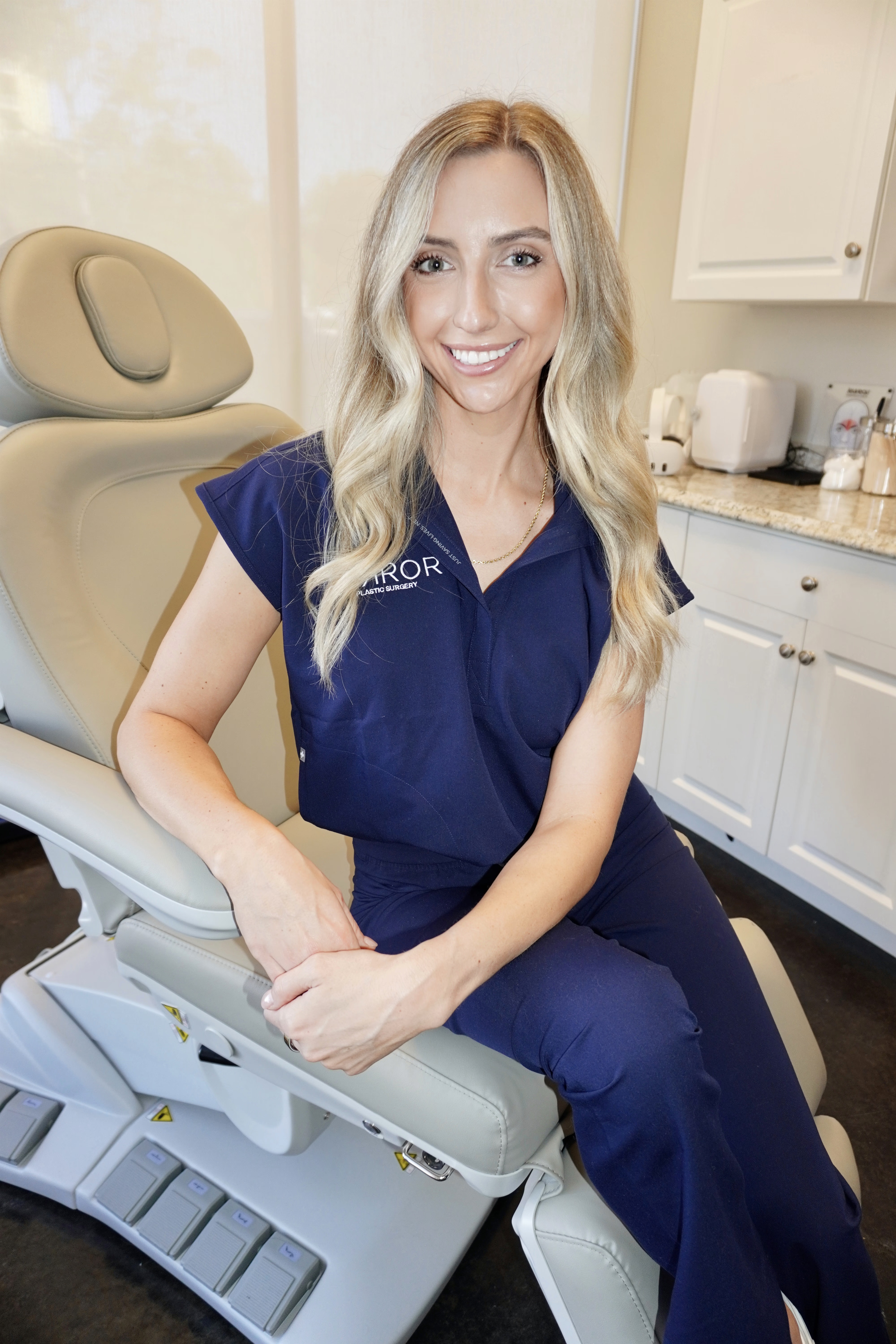
She spent four years in the Neuroscience ICU at Tampa General Hospital, developing deep expertise in physiology, metabolic health, and recovery. That experience directly informs her approach to peptide care and protocol design.
Ellie’s practice centers on education and transparency. She explains the mechanism behind each recommendation in accessible terms, clearly states when a therapy is not yet warranted, and builds protocols around individual lab results and health goals rather than standardized templates.
Consultations are available in person at Mirror Plastic Surgery’s St. Petersburg location or remotely across the United States. When surgical needs arise, Ellie’s work is supported by Dr. Akash Chandawarkar, MD, a Harvard-educated physician, Johns Hopkins-trained plastic surgeon, and fellowship-trained aesthetic surgeon at Manhattan Eye Ear & Throat Hospital/Lenox Hill Hospital.
Begin your peptide evaluation with Ellie at Mirror Plastic Surgery in Florida.
Frequently Asked Questions
Is BPC-157 FDA-approved as of July 2026?
No. BPC-157 is not FDA-approved for any indication as of July 2026. As detailed earlier, it was removed from Category 2 in April 2026 and is under PCAC review this month. That review evaluates whether BPC-157 should be added to the 503A Bulk Drug Substances List, which would allow licensed compounding pharmacies to prepare it under physician prescription. Even a positive PCAC recommendation does not constitute FDA drug approval and instead initiates a lengthy rulemaking process before compounding access becomes legal.
Is it legal to possess or use BPC-157?
The legality of BPC-157 possession depends on how it is obtained and in what context it is used. BPC-157 is not a controlled substance, so personal possession is not a criminal matter under federal law.
It is not a legal over-the-counter supplement, and compounding pharmacies currently cannot dispense it under Section 503A until rulemaking concludes after the July 2026 PCAC review. Legitimate access runs through a licensed physician and a registered compounding pharmacy.
Purchasing BPC-157 from unregulated online sources does not qualify as supervised medical use and carries significant quality and safety risks.
Can NCAA or professional athletes use BPC-157?
No. BPC-157 is prohibited under the WADA Prohibited List in category S0 (Non-Approved Substances) and is banned at all times for athletes subject to WADA oversight. The NCAA also bans it as a non-approved substance, and the NFL and UFC explicitly prohibit it as well.
The prohibition applies regardless of the route of administration, including oral, injectable, or topical use. BPC-157 can be detected in urine. Athletes competing under any of these organizations should avoid BPC-157 and consult their sport’s governing body before starting any peptide plan.
What are the risks of obtaining BPC-157 from online sources without medical supervision?
Unregulated online sources for BPC-157 present several documented risks. As outlined in the Safety and Sourcing section, these vendors typically lack batch testing, individualized dosing guidance, contraindication screening, and support for proper reconstitution and administration.
These gaps can result in no therapeutic response, adverse reactions, or infection risk from improperly prepared injectables.1 Working with a licensed practitioner who uses batch-tested compounds from a registered pharmacy directly reduces these risks.
When might BPC-157 become legally available through compounding pharmacies?
The timeline depends on the outcome of the July 23, 2026 PCAC meeting and subsequent FDA rulemaking. If the PCAC issues a positive recommendation to add BPC-157 to the 503A Bulk Drug Substances List, the FDA must then complete a formal rulemaking process, including a Notice of Proposed Rulemaking, a public comment period, and a final rule, before compounding pharmacies are authorized to prepare it.
Given the extended rulemaking timeline discussed earlier, legal compounding access would not be available until 2027 at the earliest. The PCAC may also request additional data, which would delay the timeline further. Patients seeking current access should consult a licensed medical provider to understand what options may be available through state-licensed 503A pharmacies or 503B outsourcing facilities, depending on applicable state regulations.
How is a supervised peptide protocol different from a conventional prescription medication?
FDA-approved prescription medications have completed multi-phase clinical trials demonstrating safety and efficacy for a specific indication, received formal labeling approval, and are manufactured under validated cGMP standards. Compounded peptides like BPC-157, once legally eligible, are prepared by licensed pharmacies for individual patients under a physician’s prescription but have not completed this approval process.
They are not interchangeable with FDA-approved drugs, are not covered by insurance as approved drugs, and require ongoing clinical oversight to monitor response and adjust dosing. At Mirror Plastic Surgery, this oversight includes an initial lab review, a personalized protocol built around individual health markers, and continuous support from Ellie Pranckevicius throughout the course of therapy.
Conclusion: Navigating BPC-157 Safely and Responsibly
BPC-157’s regulatory status as of July 2026 reflects an evolving landscape. The peptide has been removed from the FDA’s Category 2 restricted list, is under active PCAC review, and is not yet authorized for legal compounding under Section 503A. It remains unapproved as an FDA drug.
For patients navigating this complexity, individualized medical guidance offers a safer path than unregulated online sourcing. Mirror Plastic Surgery provides that level of support through concierge-style consultations with Ellie Pranckevicius, FNP-BC, comprehensive lab review, batch-tested sourcing, and ongoing clinical follow-up tailored to each patient’s physiology and goals.
Schedule your evidence-based peptide consultation at Mirror Plastic Surgery.
1 Results may vary from person to person. Editorial content, before and after images, and patient testimonials do not constitute a guarantee of specific results.
Peptide therapy is intended for wellness and optimization purposes and is not prescribed to diagnose, treat, cure, or prevent disease unless specifically stated. Many peptides are not FDA-approved and may be used off-label. Some have limited long-term safety data, with a potential for unknown risks, complications, or desensitization with prolonged use.