
Written by: Ellie Pranckevicius, FNP-BC, Aesthetic Nurse Practitioner & Aesthetic Injector | Facial Restoration & Regenerative Injectable Specialist, Mirror Plastic Surgery
Key Takeaways for Choosing a Peptide Provider
- GHK-Cu (copper tripeptide-1) is a naturally occurring peptide that supports collagen and elastin production while influencing cellular aging at the gene-expression level.
- Topical skincare cannot fully counteract systemic collagen and elastin decline after age 40, so medically supervised injectable peptide therapies offer a more comprehensive systemic approach.
- A five-criteria scorecard, covering skin-specific expertise, sourcing verification, lab-driven personalization, concierge oversight, and long-term maintenance, gives you a repeatable way to evaluate peptide therapy providers.
- Injectable peptides bypass the skin barrier and reach systemic circulation, delivering concentrations and depth of effect that topical products cannot match.
- Discuss your candidacy for injectable peptide therapy in a personalized consultation focused on your specific skin health goals.
The Problem: Skin Aging Beyond Topicals
Topical skincare improves surface-level concerns but cannot fully offset the systemic decline in collagen and elastin that accelerates after age 40. Fibroblast activity slows, inflammatory signaling rises, and the extracellular matrix breaks down faster than it rebuilds. Injectable and compounded peptide therapies target these mechanisms directly, but only when a qualified medical professional supervises treatment and verifies sourcing.
Health-conscious adults now have many peptide options, yet the real challenge is finding a provider whose clinical standards, sourcing practices, and follow-up support justify the commitment. The five-criteria scorecard below offers a clear, structured way to evaluate any peptide therapy provider.
Five-Criteria Provider Scorecard
The following five criteria create a simple checklist you can use to confirm whether a peptide therapy provider meets basic clinical, safety, and follow-up standards for skin health.
| # | Criterion | What to Verify |
|---|---|---|
| 1 | Skin-Specific Expertise | Provider holds an active MD, DO, NP, or PA license with prescriptive authority, plus background in aesthetics, dermatology, or functional medicine |
| 2 | Sourcing Verification | Peptides dispensed through a licensed 503A or 503B compounding pharmacy, with batch-specific Certificate of Analysis (COA) available on request |
| 3 | Lab-Driven Personalization | Baseline labs ordered before prescribing, with protocol adjusted based on inflammatory markers, hormones, and metabolic panel |
| 4 | Concierge Oversight | Direct provider access between appointments and a structured follow-up monitoring plan documented in the patient record |
| 5 | Long-Term Maintenance Protocol | Explicit plan for cycling, dose adjustment, and outcome tracking beyond the initial treatment period |
GHK-Cu and the Glow Stack for Skin Health
A narrative review by Guilherme Renke and Lucas Chinellato in the International Journal of Molecular Sciences describes GHK-Cu as the “gold standard” anti-aging peptide for skin. It stimulates collagen and elastin production and modulates expression of human genes linked to reversing cellular aging patterns.
The mechanism involves several pathways. GHK-Cu stimulates fibroblast activity and supports skin regeneration. It also regulates extracellular matrix turnover to balance collagen synthesis and degradation, improving structural integrity rather than simply increasing collagen quantity.
A 2024 randomized controlled trial in women aged 40 to 65 using 0.1% GHK-Cu cream for 12 weeks showed meaningful wrinkle reduction and improved skin elasticity versus placebo1, with wrinkle volume reduction outperforming Matrixyl® 3000 by 31.6%1.
Mirror Plastic Surgery’s Glow Stack pairs GHK-Cu with BPC-157 (Body Protective Compound 157) for systemic inflammation and TB500 (Thymosin Beta-4) for soft tissue repair and wound healing. This combination targets both the structural decline of aging skin and the inflammatory environment that accelerates visible aging.
What Injecting Peptides Does for the Face
Injectable peptides bypass the skin barrier and enter systemic circulation, creating effects that topical products cannot match at similar depth. Injectable peptides enter the body directly, which raises regulatory and safety stakes compared with topical skincare serums.
For the face and overall skin system, GHK-Cu supports remodeling through increased fibroblast proliferation, higher collagen and elastin synthesis, improved microcirculation, and reduced inflammatory cytokines that damage the dermal matrix. Clinical studies show increases in collagen production after 8–12 weeks of consistent peptide use, with visible improvements in skin texture and tone often appearing within 4–6 weeks1.
At Mirror Plastic Surgery, Ellie Pranckevicius designs injectable protocols based on each patient’s lab results, skin aging pattern, and health history. Patients receive reconstitution instructions, video demonstrations, and direct text access to Ellie throughout the protocol.
How to Verify Peptide Quality and Sourcing
Sourcing verification is the most critical step when you evaluate a peptide provider. Gray-market injectable peptides carry documented risks such as bacterial endotoxins, microbial contamination, mislabeling, unknown interactions with medications or conditions, and unsafe injection technique without clinical training.
For injectable peptides, providers should confirm at least 98% purity by HPLC, sterility results, endotoxin levels under 0.05 EU/mL, batch or lot code, test methods including HPLC and mass spectrometry, and analyst signature and date on the Certificate of Analysis.
Red flags that indicate a provider does not meet sourcing standards include:
- Inability to name the compounding pharmacy or provide a COA
- Peptides dispensed directly from the clinic rather than a licensed pharmacy
- Products labeled “Research Use Only,” which are not approved for human use and lack safety or purity verification
- No baseline labs ordered before prescribing
- Pressure to purchase multi-month packages before any follow-up appointment
Mirror Plastic Surgery sources peptides exclusively from reputable compounding pharmacies with documented batch testing, and Ellie provides full transparency on sourcing whenever patients request it.
What Happens When You Stop Peptide Therapy
Peptide therapy works by maintaining consistent biological signaling. When that signaling stops, the processes it supported, such as collagen synthesis, inflammatory regulation, and tissue repair, gradually move back toward pre-treatment levels. Therapeutic peptides for anti-aging are often used at relatively low concentrations yet show effectiveness with repeated administration, which supports sustained rather than one-time treatment protocols.
The literature still lacks universally accepted clinical dosing standards for many aesthetic and regenerative peptides. Expert guidance therefore focuses on individualized protocols based on patient goals, laboratory data, and observed response.
A structured maintenance protocol with defined cycling periods, dose adjustments guided by lab markers, and outcome tracking through photographs every 4–6 weeks is the standard of care at Mirror Plastic Surgery. Ellie designs each protocol with long-term sustainability as the goal, not a single short-term course.
Practitioner Spotlight: Ellie Pranckevicius, FNP-BC
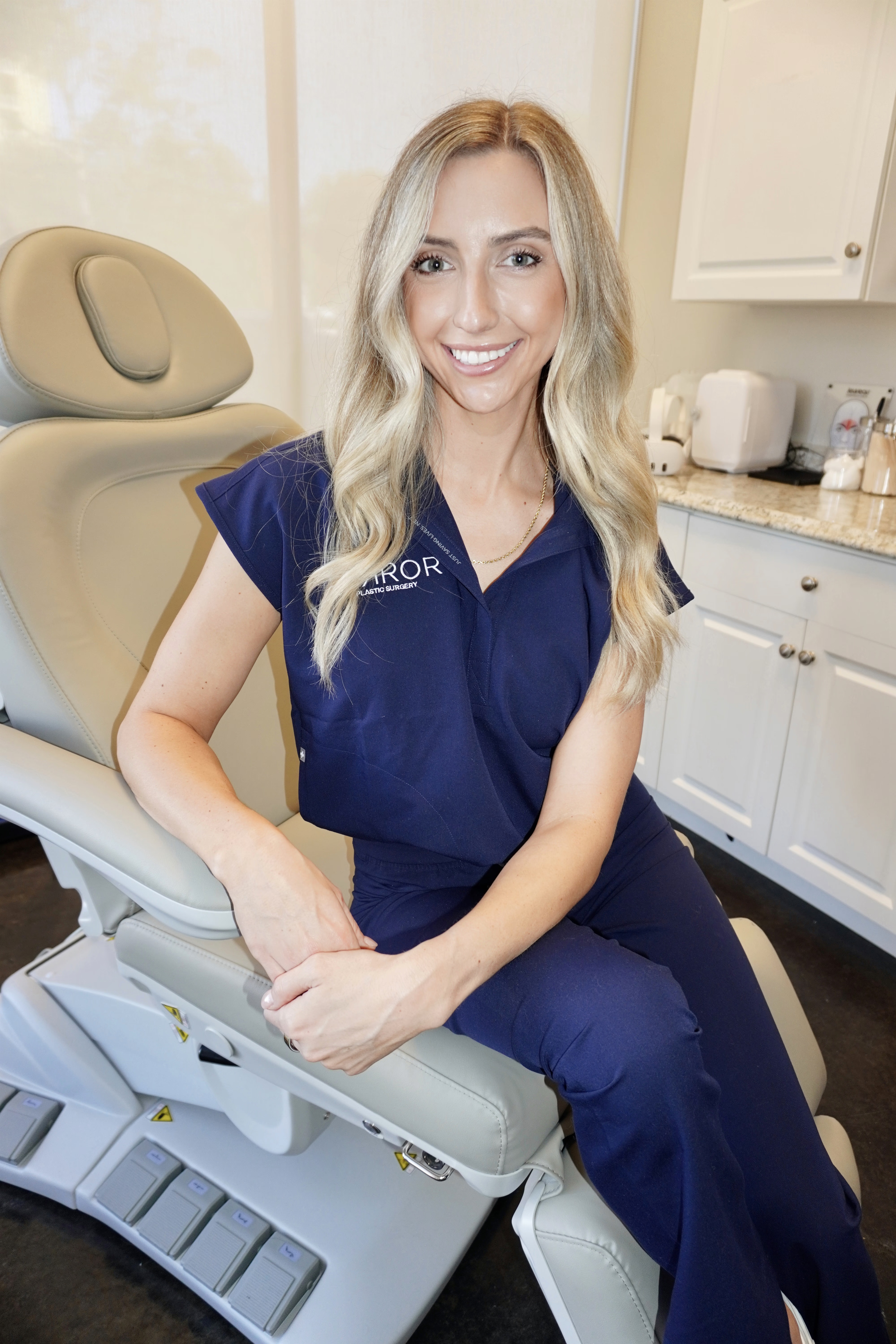
Ellie Pranckevicius is a board-certified Family Nurse Practitioner who leads peptide therapies and non-surgical aesthetics at Mirror Plastic Surgery. She holds a Bachelor’s in Health Science from Boston University, completed an aesthetics licensure program, and earned both her Bachelor’s and Master’s in Nursing from the University of South Florida. Her four years in the Neuroscience ICU at Tampa General Hospital built deep expertise in physiology, metabolic health, and recovery that informs her peptide protocols. Ellie’s combined esthetician training and advanced nursing background allow her to connect aesthetic goals with the clinical science required to reach them safely.
Step-by-Step Workflow for Peptide Therapy at Mirror
Mirror Plastic Surgery follows a defined sequence for peptide therapy that prioritizes safety, personalization, and durable results.
- Initial Consultation: A 30–60 minute session with Ellie covers full medical history, current medications, skin aging concerns, and wellness goals. A legitimate first peptide consultation includes full medical and medication review, baseline labs ordered before prescribing, an honest discussion of evidence quality, a documented clinical rationale, and a monitoring and follow-up plan.
- Lab Panel Review: Baseline labs, including inflammatory markers such as hs-CRP, hormone panels, metabolic markers, and thyroid function, are reviewed or ordered before any protocol is designed.
- Custom Protocol Design: Based on lab results and consultation findings, Ellie builds a personalized peptide stack. For skin health, this usually centers on the Glow Stack (GHK-Cu + BPC-157 + TB500), with adjustments based on individual physiology.
- Dispensing Through Licensed Pharmacy: All peptides are prescribed through a licensed compounding pharmacy and are never sold directly from the clinic.
- Reconstitution and Administration Training: Patients receive clear written instructions and video demonstrations for safe self-administration.
- Ongoing Concierge Support: Ellie remains available via direct text for questions, refill requests, and protocol adjustments. Telemedicine follow-up appointments occur at structured intervals.
- Outcome Monitoring: Progress is tracked through photos and follow-up labs, and Ellie adjusts dosing based on observed response.
The full process, from consultation through prescription and shipping, is available in person at Mirror Plastic Surgery’s St. Petersburg, Florida location or remotely across the United States, including Hawaii and Alaska. For patients who have undergone surgery with Dr. Akash Chandawarkar, peptide protocols can integrate into post-operative recovery to reduce inflammation and support healing.
Practical Checklist for Vetting a Peptide Therapy Provider
Use the following checklist before you commit to any peptide provider or protocol.
- Is the provider an MD, DO, NP, or PA with an active, verifiable state license and prescriptive authority?
- Does the provider order baseline labs before prescribing, not afterward?
- Are peptides dispensed through a named, licensed 503A or 503B compounding pharmacy?
- Can the provider produce a batch-specific COA with HPLC purity results, sterility data, and endotoxin levels?
- Is there a documented follow-up and monitoring plan, not just an initial prescription?
- Does the provider explain the FDA regulatory status of each peptide recommended?
- Is direct provider access available between scheduled appointments?
- Does the provider avoid guaranteeing specific results or pushing multi-month packages before any follow-up?
Important Safety and Regulatory Considerations
Peptide therapy for skin health does not suit every candidate. Contraindications, current medications, and pre-existing conditions must be screened before any protocol begins. GHK-Cu applied topically shows a very safe profile with few reported cases of irritation, while systemic use has not yet been established clinically, although animal studies show no relevant toxicity.
Regarding FDA status, many peptides used in aesthetic and regenerative medicine, including injectable GHK-Cu, BPC-157, and TB-500, are not FDA-approved for these indications. BPC-157 and TB-500 are classified as investigational or unapproved peptides with no FDA approval; the Pharmacy Compounding Advisory Committee recommended them for potential 503A Bulks List inclusion in July 2026, but this recommendation is non-binding, final FDA action is pending, and human evidence remains limited to animal studies, laboratory work, and case reports. Informed consent at Mirror Plastic Surgery clearly explains this regulatory context.
Realistic timelines for skin remodeling range from 4 to 12 weeks for initial visible changes, with continued improvement during sustained protocol use.1 Results vary based on genetics, lifestyle, baseline skin condition, and adherence to the protocol.
For patients seeking broader longevity support, Mirror Plastic Surgery also offers NAD+ for mitochondrial energy and anti-aging support and KPV for gut microbiome inflammation. These can complement skin-focused peptide protocols within a comprehensive wellness plan.
Frequently Asked Questions
Is GHK-Cu safe for injectable use?
As discussed in the Important Considerations section, topical GHK-Cu has a well-established safety record, but injectable use has not been clinically established for systemic applications in humans. At Mirror Plastic Surgery, Ellie conducts a full medical history review and lab panel before recommending any injectable protocol, and all products are sourced from licensed compounding pharmacies with documented batch testing. Informed consent explicitly covers the current regulatory and evidence status of each compound.
How is Mirror Plastic Surgery different from buying peptides online?
Online peptide vendors operating outside licensed pharmacy frameworks cannot guarantee product purity, accurate concentration, sterility, or freedom from bacterial endotoxins. They also provide no medical evaluation, contraindication screening, dosing guidance, or follow-up monitoring. Mirror Plastic Surgery offers a comprehensive consultation with Ellie, baseline lab analysis, a custom protocol, pharmacy-dispensed peptides with COA documentation, and ongoing concierge support with direct text access. This clinical infrastructure is fundamentally different from self-directed online sourcing.
How long does it take to see results from the Glow Stack?
As noted earlier, initial improvements typically appear within 4–6 weeks, with more significant collagen remodeling at the 8–12 week mark.1 Individual results vary based on genetics, baseline skin condition, lifestyle factors, and protocol compliance. Ellie tracks progress through structured photo documentation and follow-up appointments, adjusting the protocol based on observed response rather than fixed timelines.
Can I access Mirror Plastic Surgery’s peptide services if I live outside Florida?
Yes. The full process, including consultation, lab review, protocol design, prescription, and ongoing support, is available via telemedicine to patients across the United States, including Hawaii and Alaska. Peptides ship directly to the patient from the compounding pharmacy, and Ellie remains available via text and scheduled telemedicine appointments throughout the protocol.
What happens if I want to stop peptide therapy?
Stopping peptide therapy gradually reduces the biological effects the protocol was producing. For skin health, collagen synthesis support, inflammatory regulation, and tissue remodeling activity return toward pre-treatment levels over time. This shift is not a medical emergency, but results are not permanently fixed after a single course. Ellie designs maintenance protocols with structured cycling, dose tapering when appropriate, and lab-guided reassessment so patients can sustain outcomes over the long term instead of experiencing abrupt regression.
Conclusion: Using the Scorecard to Choose Your Provider
Choosing a peptide therapy provider for skin health works best as a structured decision. The five-criteria scorecard, covering skin-specific expertise, sourcing verification, lab-driven personalization, concierge oversight, and long-term maintenance, offers an objective framework for evaluating any provider.
Mirror Plastic Surgery meets each criterion through Ellie Pranckevicius’s dual background in aesthetics and critical-care nursing, pharmacy-sourced peptides with COA documentation, baseline lab analysis before every protocol, direct concierge access, and maintenance planning built into every patient relationship. The Glow Stack (GHK-Cu + BPC-157 + TB500) represents a practical application of this framework for patients focused on collagen decline and skin aging.
Adults who have researched peptides and want medically supervised, lab-driven care can move forward with a direct conversation with a qualified provider.
Begin your medically supervised peptide protocol with Ellie at Mirror Plastic Surgery, available in St. Petersburg or via telemedicine nationwide.
1 Results may vary from person to person. Editorial content, before and after images, and patient testimonials do not constitute a guarantee of specific results.
Peptide therapy is intended for wellness and optimization purposes and is not prescribed to diagnose, treat, cure, or prevent disease unless specifically stated. Many peptides are not FDA-approved and may be used off-label. Some have limited long-term safety data, with a potential for unknown risks, complications, or desensitization with prolonged use.