

Written by: Ellie Pranckevicius, FNP-BC, Aesthetic Nurse Practitioner & Aesthetic Injector | Facial Restoration & Regenerative Injectable Specialist, Mirror Plastic Surgery | Last updated: August 29, 2026
Key Takeaways
- Autoimmune peptide therapy works best under a clinician with deep expertise in immune physiology, lab interpretation, and individualized protocol design.
- Ellie Pranckevicius, FNP-BC, brings critical-care ICU experience and dual clinical-aesthetic training to every autoimmune peptide consultation at Mirror Plastic Surgery.
- Protocols at Mirror center on KPV and the Glow Stack (GHK-CU, BPC-157, TB500), selected and dosed using comprehensive baseline labs and patient presentation.
- Concierge-level care includes 24/7 practitioner access, batch-tested sourcing, and lab-triggered protocol adjustments instead of one-time prescriptions.
- Schedule your personalized autoimmune peptide consultation with Ellie at Mirror Plastic Surgery to begin a lab-driven treatment plan tailored to your condition.
Ellie Pranckevicius: Critical-Care Expertise for Autoimmune Peptide Therapy
Ellie Pranckevicius brings a rare mix of critical-care nursing, aesthetics training, and functional wellness expertise to every peptide consultation. Her background spans the highest-acuity clinical environments and the most nuanced aspects of skin and metabolic health, which is uncommon in the peptide therapy space.
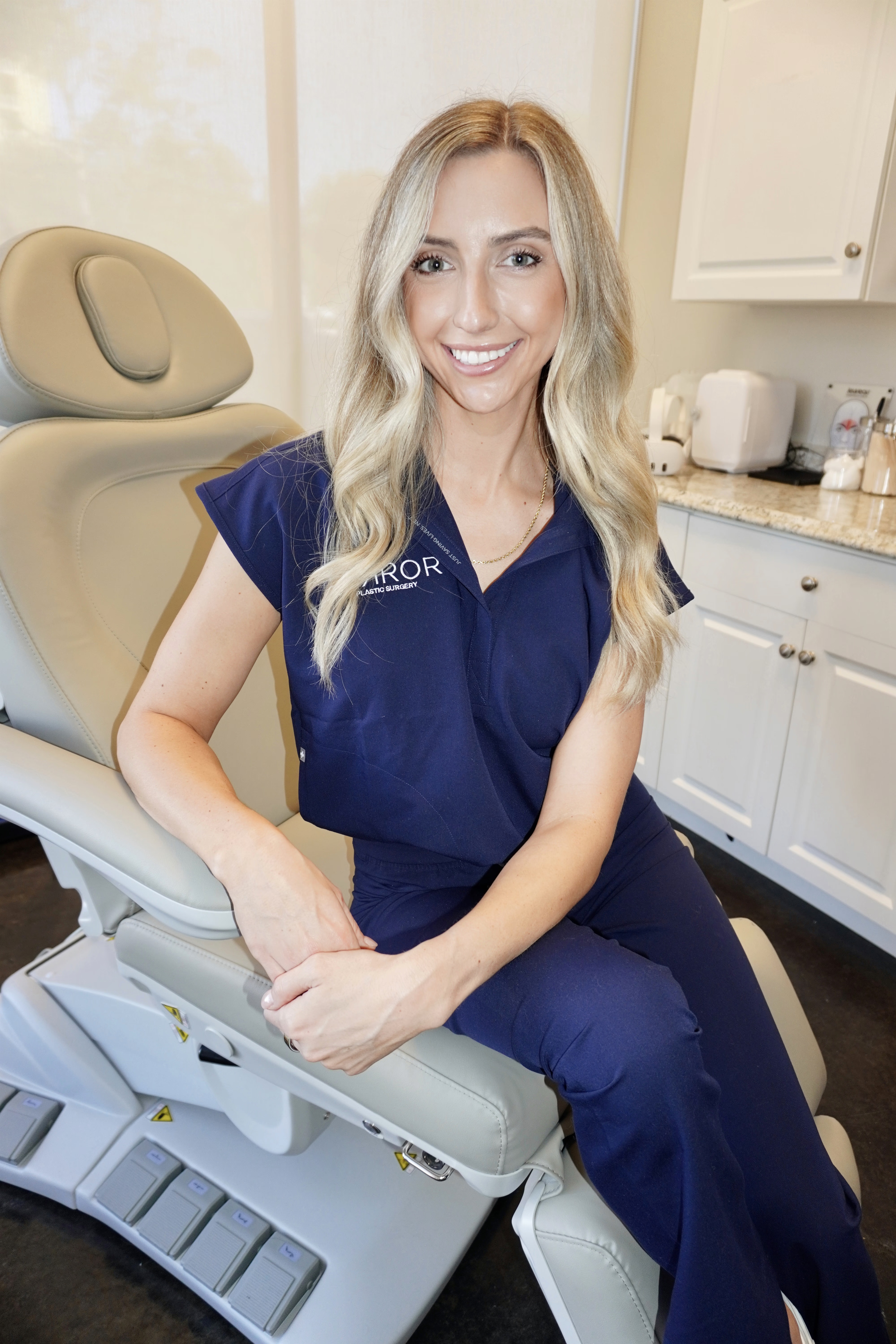
Her core credentials include:
- Board-Certified Family Nurse Practitioner (FNP-BC)
- Bachelor of Health Science, Boston University (premedical track)
- Bachelor and Master of Science in Nursing, University of South Florida
- Four years of clinical practice in the Neuroscience ICU at Tampa General Hospital, managing complex neurological and metabolic patients
- Aesthetics licensure completed at a high-end medical spa in Boston before advanced nursing training
- Dual clinical-aesthetic perspective with deep command of skin physiology, client assessment, and the science of systemic recovery
The Neuroscience ICU experience directly supports autoimmune care. Managing critically ill patients at Tampa General required constant interpretation of inflammatory cascades, metabolic panels, and organ-system interactions. That same physiological literacy now guides safe, targeted peptide protocols for conditions such as psoriasis, rheumatoid arthritis, and inflammatory bowel disease.
Ellie’s early career at a Boston medical spa built a level of skin physiology and aesthetic assessment that most clinical practitioners never develop. That dual perspective means she evaluates autoimmune presentations through both a systemic clinical lens and an aesthetic outcomes lens. She understands what the body needs to heal and what the patient hopes to see.
Who Can Safely Prescribe Peptides for Autoimmune Conditions?
Peptide therapy does not require an MD. Board-certified nurse practitioners with advanced clinical training are fully qualified to evaluate, prescribe, and supervise peptide protocols in Florida and across the United States. The key factor is clinical depth, not job title.
The most capable peptide prescribers share several traits. They have a strong foundation in physiology and metabolic health, experience interpreting comprehensive lab panels, familiarity with inflammatory signaling pathways, and a structured approach to monitoring patient response over time. Legitimate peptide therapy providers require baseline lab work before treatment and deliver structured follow-up with lab-triggered protocol adjustments at a minimum of 8–12 weeks, rather than issuing a fixed protocol that never changes.
Critical-care nursing experience creates a meaningful advantage. Practitioners who have managed ICU patients develop an intuitive understanding of how the body responds under physiological stress. These same systems are often dysregulated in autoimmune disease. Ellie’s four years in the Neuroscience ICU at Tampa General Hospital built that clinical depth, which she now applies to peptide-based immune modulation in an outpatient concierge setting.
Peptides Used at Mirror for Autoimmune and Inflammatory Conditions
Several peptides show preclinical relevance for inflammation and immune modulation. Mirror Plastic Surgery’s protocols for autoimmune patients center on KPV and the Glow Stack, a combination of GHK-CU, BPC-157, and TB500. Ellie selects and doses these peptides based on each patient’s lab results and clinical presentation.
KPV (Lysine-Proline-Valine)
KPV is the C-terminal tripeptide derived from alpha-melanocyte-stimulating hormone that reduces inflammation by entering cells via the PepT1 transporter and inhibiting NF-κB and MAPK signaling pathways. This mechanism is particularly relevant for gut and skin inflammation. In DSS-induced and TNBS-induced colitis mouse models, orally administered KPV significantly decreased inflammation severity, improved mucosal integrity, and reduced secretion of TNF-α, IL-1β, and IL-6 through a PepT1-mediated mechanism independent of MC1R signaling.
KPV enters inflamed intestinal epithelial cells via the PepT1 transporter, whose expression is upregulated in inflamed tissue, creating a self-targeting effect that delivers the peptide preferentially to areas of gut inflammation. For skin applications, a 2025 study found that KPV inhibited the ERK/p38 MAPK/NF-κB axis and suppressed caspase-1 activation in human epidermal keratinocytes. These findings support potential use in inflammatory skin conditions such as psoriasis. KPV is not FDA-approved, and no robust randomized human clinical trials have been completed as of 2026. All efficacy claims for human autoimmune conditions remain preclinical.
While KPV focuses on inflammatory signaling, Mirror’s protocols often pair it with peptides that support tissue repair and systemic recovery.
The Glow Stack: GHK-CU, BPC-157, and TB500
The Glow Stack targets systemic inflammation along with collagen and elastin production. BPC-157 modulates pro-inflammatory cytokines TNF-α, IL-1β, and IL-6 in rat models of colitis, adjuvant arthritis, and sepsis, and appears to attenuate excessive inflammatory signaling without complete immunosuppression. BPC-157 and KPV target gut inflammation through complementary mechanisms. BPC-157 focuses on structural repair of the intestinal lining, while KPV acts upstream to suppress inflammatory signaling, which makes them candidates for combined supervised protocols in IBD.
BPC-157 was previously placed on the FDA’s Category 2 list but was removed in April 2026 and is not currently on it. Any provider offering it must give explicit disclosure and documented informed consent acknowledging its experimental status. GHK-CU supports collagen and elastin production, skin health, and hair and nail rejuvenation. TB500 addresses soft tissue inflammation and wound repair. Together, the stack addresses both the systemic inflammatory burden common in autoimmune conditions and the visible tissue-level consequences of chronic inflammation.
The gut-immune axis is a key therapeutic target in autoimmune management because BPC-157 promotes intestinal epithelial repair and tight junction integrity while KPV reduces intestinal inflammation. Mirror’s protocols keep this axis central, especially for patients with IBD-related autoimmune presentations.
How Mirror Designs Your Autoimmune Peptide Protocol
Every peptide engagement at Mirror Plastic Surgery starts with a 30-to-60-minute one-on-one consultation with Ellie. The session covers a full medical history review, a discussion of your specific health goals, and an evaluation of existing lab results. If you do not have recent labs, Ellie orders a comprehensive panel before any protocol begins.
Lab panels reviewed or ordered include:
- Thyroid markers
- Liver function
- Kidney function
- Diabetes and glucose metabolism markers
- Hormone panels
- Inflammatory markers relevant to the patient’s autoimmune presentation
Autoimmune peptide therapy protocols should begin with comprehensive baseline assessment of inflammatory markers and disease activity scores rather than symptom-only prescribing. Ellie’s process follows this standard closely. Clinics that skip baseline labs cannot monitor patient response because they lack a starting reference point against which to measure changes in markers such as IGF-1, fasting glucose, or inflammatory indicators.
After labs are reviewed, Ellie constructs a custom peptide stack. She selects specific peptides, routes of administration, and dosing schedules based on your physiology, pre-existing conditions, and goals. Patients with psoriasis, for example, have experienced condition reversal through targeted protocols.1 Others have seen measurable improvements in lipid panels and inflammatory markers within weeks of beginning supervised therapy.
Concierge Peptide Care Compared to Online or High-Volume Clinics
Mirror’s model differs from online peptide sources and high-volume clinics at a structural level. The practice focuses on safety, depth of evaluation, and ongoing access instead of quick prescriptions.
Unregulated online peptide sources have repeatedly shown contamination, mislabeling, incorrect dosing, and inconsistent potency in independent testing. Purchasing peptides without medical supervision means no pre-existing condition screening, no interaction review, no baseline labs, and no one to contact when something changes. Asynchronous-only consultations without real-time clinical evaluation or current medication review create a patient safety gap common in lower-quality telehealth models.
Mirror’s concierge model addresses each of these gaps with specific safeguards:
- Direct 24/7 text access to Ellie for questions, concerns, and refill requests
- Detailed reconstitution and self-administration instructions, often supported by video demonstrations
- Lab-triggered protocol adjustments as your markers evolve
- Full medication review for interactions before any protocol begins
- Ongoing monitoring instead of a one-time prescription
Mirror also limits its daily patient volume on purpose. The practice performs only one to two surgical procedures per day and applies the same philosophy to non-surgical care. Ellie’s attention stays focused, not spread across a high-volume queue, so patients receive thoughtful responses when they need them.
Safety, Sourcing, and Regulatory Changes for Peptides
Because peptides are not FDA-regulated as a single category, sourcing becomes the primary safety variable under a provider’s direct control. Before starting peptide therapy, patients should request the exact active ingredient, the dispensing pharmacy and legal basis for compounding, lot and certificate of analysis records, sterility and traceability documentation, and the identity and license of the responsible clinician.
Mirror sources peptides only from reputable compounding pharmacies that provide rigorous batch testing to verify product quality, purity, and accurate dosage. In February 2026, HHS Secretary Robert F. Kennedy Jr. announced that approximately 14 peptides would be reclassified back to Category 1 status. This change restored legal access through licensed 503A or 503B compounding pharmacies and still requires full clinical oversight and Certificates of Analysis. The new rules formalized quality standards that Mirror’s sourcing protocols already exceeded, so patients continue to receive pharmaceutical-grade oversight without disruption to their care.
Ongoing support is built into Mirror’s model. Ellie remains accessible throughout each protocol, adjusting stacks as lab results evolve and incorporating any changes in health status into the treatment plan. Post-surgical patients at Mirror have used peptide protocols to support recovery and reduce inflammation following procedures, with faster healing outcomes documented in the practice’s patient experience.1
Conclusion: Choosing a Peptide Partner for Autoimmune Care
For research-driven adults in the St. Petersburg and Tampa Bay area managing diagnosed autoimmune conditions, choosing a peptide provider functions as a clinical decision, not a convenience choice. Ellie Pranckevicius’s neuroscience ICU background, dual clinical-aesthetic training, and Mirror’s lab-driven concierge model create a standard of care that online sources and high-volume clinics structurally cannot match.
KPV, the Glow Stack, and BPC-157 protocols are available at Mirror under full medical supervision, with batch-tested sourcing, comprehensive lab integration, and 24/7 practitioner access. Every protocol is built from your labs, your history, and your goals, not from a template.
Mirror Plastic Surgery is located at 780 4th Ave S, St. Petersburg, FL 33701. Reach the practice by phone or text at 727-361-6515 or by email at hello@mirrorplasticsurgery.com. Follow the practice on Instagram at @mirrorplasticsurgery, @dr.akashplasticsurgery, and @perfectlyplastics.
Disclaimer: Peptide therapies offered at Mirror Plastic Surgery are not FDA-approved for the treatment of autoimmune conditions. All information presented in this article is for educational purposes only and does not constitute medical advice. Individual results vary. Consult a qualified healthcare provider before beginning any new therapeutic regimen.
Disclaimer: Preclinical data cited in this article, including studies on KPV and BPC-157, are derived from animal models. No robust randomized controlled human clinical trials have been completed for these peptides in autoimmune conditions as of the date of publication (August 29, 2026). Claims of efficacy in human patients remain investigational.
Frequently Asked Questions
What makes Ellie Pranckevicius qualified to treat autoimmune patients with peptide therapy?
Ellie is a board-certified Family Nurse Practitioner (FNP-BC) with a Master of Science in Nursing from the University of South Florida and four years of clinical experience in the Neuroscience ICU at Tampa General Hospital. That critical-care background gave her direct, high-stakes experience interpreting inflammatory markers, metabolic panels, and complex physiological responses, which are the same systems involved in autoimmune disease. She also holds aesthetics licensure and began her career at a high-end medical spa in Boston, giving her a dual clinical-aesthetic perspective that most peptide practitioners lack. At Mirror, she applies this background to every consultation, reviewing comprehensive lab panels and constructing individualized protocols rather than using a one-size-fits-all approach.
Is peptide therapy safe for someone with an autoimmune condition?
Safety in peptide therapy depends largely on the quality of supervision, sourcing, and pre-treatment screening. Peptides such as KPV and BPC-157 are not FDA-approved, and the primary risks associated with their use come from unregulated sourcing, incorrect dosing, and the absence of pre-existing condition screening. These risks decrease when a qualified clinician provides proper medical oversight. At Mirror, every patient completes a comprehensive lab review before any protocol begins. Peptides are sourced from compounding pharmacies that provide batch testing and Certificates of Analysis. Ellie remains accessible throughout the protocol to monitor response and adjust the stack as needed. Patients with autoimmune conditions who have pre-existing organ involvement, take immunosuppressant medications, or have complex health histories receive additional screening to confirm that the proposed protocol fits their specific situation.
How long does it take to see results from peptide therapy for autoimmune conditions?
The timeline varies by individual, condition severity, the specific peptides used, and how consistently the protocol is followed. Some patients report initial improvements in inflammation-related symptoms within the first week of use.1 Others, particularly those with more complex autoimmune presentations, may need four to eight weeks before meaningful changes in symptoms or lab markers appear.1 Mirror’s approach includes structured follow-up and lab-triggered protocol adjustments, so the protocol evolves with the patient’s response instead of remaining static. Maintenance protocols are typically necessary to sustain benefits over time.1 As with most ongoing health regimens, stopping peptide therapy usually allows the underlying inflammatory condition to return to its prior state.1
Can I use peptide therapy alongside my existing autoimmune medications?
Ellie evaluates this on a case-by-case basis during the consultation. A full medication review is a standard part of Mirror’s intake process, and no protocol begins without a clear understanding of the patient’s current pharmaceutical regimen. Certain peptides may interact with immunosuppressants or other medications used in autoimmune management. Ellie’s critical-care background gives her the clinical literacy to identify those interactions before they become a problem. Patients are never advised to discontinue existing medications without the involvement of their prescribing physician. Mirror’s peptide protocols are designed to complement, not replace, appropriate conventional care when it is serving the patient well.
What is the difference between buying peptides online and getting them through Mirror Plastic Surgery?
Online peptide sources operate without medical supervision, quality verification, or any mechanism for pre-treatment screening. Independent testing of online peptide products has repeatedly identified contamination, mislabeling, incorrect dosing, and inconsistent potency. No one evaluates whether a given peptide is appropriate for your specific health profile, no baseline labs establish a reference point, and no support exists if something changes during use. Mirror’s model functions as the structural opposite. Ellie conducts a 30-to-60-minute consultation, reviews comprehensive lab panels, constructs a custom protocol based on your individual physiology, and sources peptides from batch-tested compounding pharmacies. She also remains accessible via text 24/7 throughout your protocol. The entire process can take place in person at the St. Petersburg office or remotely across the United States.
1 Results may vary from person to person. Editorial content, before and after images, and patient testimonials do not constitute a guarantee of specific results.
Peptide therapy is intended for wellness and optimization purposes and is not prescribed to diagnose, treat, cure, or prevent disease unless specifically stated. Many peptides are not FDA-approved and may be used off-label. Some have limited long-term safety data, with a potential for unknown risks, complications, or desensitization with prolonged use.


