
Written by: Ellie Pranckevicius, FNP-BC, Aesthetic Nurse Practitioner & Aesthetic Injector | Facial Restoration & Regenerative Injectable Specialist, Mirror Plastic Surgery | Last updated: July 15, 2026
Key Takeaways for Patients Considering Peptides
- Personalized peptide therapy targets specific cellular pathways for inflammation, repair, metabolism, and aging, while generic med-spa treatments act mainly at the surface.
- Lab-driven protocols at Mirror Plastic Surgery begin with biomarker review and are adjusted over time based on individual physiological responses.
- Most peptides used in wellness settings lack FDA approval and require professional medical oversight to reduce safety risks.
- Peptide stacks are customized to each patient’s labs and goals rather than sold as pre-set packages common at high-volume medical spas.
- Schedule your personalized consultation at Mirror Plastic Surgery to explore lab-guided peptide alternatives to standard medical spa treatments.
How Peptide Therapy Compares to Typical Med-Spa Treatments
Standard med-spa services, such as superficial chemical peels, HydraFacials, and generic IV vitamin drips, act primarily at the surface or deliver broad nutritional support without targeting root cellular mechanisms. Personalized peptide therapy instead engages specific molecular pathways including receptor-level signaling, gene expression modulation, angiogenesis, and mitochondrial function. The table below maps the key differences across five health domains.
| Domain | Mechanism | Evidence Level | Med-Spa Counterpart |
|---|---|---|---|
| Inflammation | BPC-157 modulates nitric oxide and angiogenesis pathways, while KPV targets gut-lining inflammation via melanocortin receptors | Preclinical animal models and small pilot studies (n=12–58), no large RCTs in humans | Generic IV anti-oxidant drips, no receptor-level targeting |
| Cellular Aging | GHK-Cu modulates approximately 31% of all human genes (with ≥50% expression change), and plasma levels decline from about 200 ng/mL at age 20 to about 80 ng/mL at age 60 | Controlled human evidence limited to topical application, while injectable systemic use lacks RCT support | Chemical peels and microneedling, which focus on surface-layer remodeling only |
| Weight Management | GLP-1 and GLP-3R receptor agonists modulate insulin secretion, gastric emptying, and satiety signaling | FDA-approved tirzepatide produced 15–20.9% weight loss at 72 weeks in SURMOUNT-1 (n>7,700), while newer GLP-3R compounding lacks equivalent RCT data | Body-contouring devices such as CoolSculpting and RF that do not engage metabolic pathways |
| Recovery | TB-500 modulates systemic actin, and BPC-157 promotes local angiogenesis and collagen synthesis through complementary, non-competing pathways | No RCTs in humans, one retrospective case series of 12 patients, animal data extensive | PRP injections with multiple RCTs and meta-analyses for specific tendinopathies |
| Energy / Mitochondria | NAD+ targets the mitochondrial electron transport chain, while Sermorelin and Ipamorelin stimulate pulsatile GH release without raising cortisol | NAD research remains largely limited to animal models, and CJC-1295 produced 2–10-fold GH increases in single-dose human studies | Generic B-vitamin IV drips without mitochondrial pathway specificity |
Key Peptides and Their Closest Med-Spa Comparisons
Mirror Plastic Surgery builds protocols around peptides chosen for distinct mechanistic targets. Each peptide or stack below includes its closest surface-level med-spa comparison and the biomarker or physiological signal that guides its use.
- The Glow Stack (GHK-Cu / BPC-157 / TB-500): GHK-Cu is monitored against baseline skin repair capacity and collagen markers, and microneedle pretreatment increases GHK-Cu skin penetration approximately 8-fold versus passive topical application. BPC-157 and TB-500 target systemic and soft-tissue inflammation respectively. The med-spa counterpart, a series of chemical peels or HydraFacials, addresses surface texture without engaging collagen gene expression or inflammatory signaling pathways.
- GLP-3R Compounding: This newer-generation GLP receptor agonist is reported to carry fewer gastrointestinal side effects than earlier GLP-1 formulations and to address insulin resistance, weight management, and cardiovascular risk factors. It is tracked against HbA1c, fasting insulin, and lipid panels. The med-spa counterpart includes body-contouring devices that reduce localized fat deposits without metabolic pathway engagement.
- NAD (Nicotinamide Adenine Dinucleotide): NAD targets mitochondrial function for energy production and cellular repair. It is monitored against energy-related biomarkers and metabolic panels. The med-spa counterpart is a generic IV vitamin drip that delivers broad nutritional support without mitochondrial specificity.
- Selank: Selank is a nootropic peptide that acts on GABAergic pathways in a way similar to benzodiazepines but without the same dependency profile. It is used for anxiety and mood regulation. No direct med-spa equivalent exists, and the closest comparison is aromatherapy or relaxation-focused facial treatments.
- KPV: KPV targets melanocortin receptors within the gut microbiome to reduce intestinal inflammation, with potential relevance to IBD risk reduction. It is monitored against inflammatory markers including hsCRP and IL-6. The med-spa counterpart is a probiotic IV infusion, which lacks receptor-level gut targeting.
How Mirror Plastic Surgery Personalizes Peptide Therapy
The Mirror Plastic Surgery approach to peptide therapy follows a structured, concierge-level process that differs from one-size-fits-all med-spa menus. Every protocol begins with a comprehensive 30–60 minute consultation with Ellie Pranckevicius, FNP-BC, covering full medical history, current medications, and specific health goals. For weight management, metabolic concerns, or inflammatory conditions, baseline labs, including IGF-1, fasting insulin, HbA1c, lipid panel, CMP, thyroid markers, hormone panels, and hsCRP, are reviewed or ordered before any peptide is prescribed. This step screens for contraindications, establishes reference points, and identifies the root physiological dysregulation driving the patient’s symptoms.
Custom peptide stacks are then built around those findings. No pre-set packages are offered, and the combination, dosing, and administration route are determined by the individual’s lab profile and goals. Peptides are sourced exclusively from reputable compounding pharmacies with documented batch testing, confirming purity, potency, and sterility, which is a critical safeguard because Studies indicate that 38% to 43% of research-grade peptide products fail to meet advertised purity specifications due to impurities or mislabeling. Ongoing monitoring includes follow-up labs at defined intervals and direct 24/7 access to Ellie via text for questions, dose adjustments, and refill requests. The entire process, from consultation through prescription and shipping, is available in-person in St. Petersburg and Tampa or remotely across the United States.
Who Should Avoid Peptide Therapy and Known Downsides
Peptide therapy does not suit every individual, and honest communication about its limitations sits at the center of Mirror Plastic Surgery’s clinical philosophy. The evidence base for most non-FDA-approved peptides remains in early stages, and peer-reviewed literature describes multi-peptide stacks as an emerging area of scientific inquiry while noting that randomized controlled trials in humans remain largely absent. Animal and in vitro data are promising for several compounds, yet the translational gap between preclinical findings and confirmed human outcomes remains real and should be disclosed to every patient.
Absolute contraindications include:
- Active malignancy or a history of cancer sensitive to growth-promoting signals, because peptides that upregulate growth hormone may also promote tumor growth
- Pregnancy or breastfeeding due to insufficient human safety data
- Uncontrolled diabetes or active hypoglycemia risk without supervision
- Untreated pituitary tumors for GH secretagogue protocols
Relative contraindications include severe hepatic impairment, active autoimmune flares when using immune-modulating peptides, and unwillingness to obtain peptides from licensed pharmacies or undergo monitoring. Reported adverse events of peptide stacking include injection-site reactions, hormonal disturbances, and insulin resistance, which underscores the necessity of professional supervision.
Costs and Realistic Treatment Timelines
Supervised personalized peptide therapy involves several cost components beyond the peptides themselves, including the initial consultation, baseline lab work, ongoing follow-up visits, and supplies. A realistic six-month course of peptide therapy that includes baseline labs and follow-up visits represents a personalized investment for most patients, rather than the lower monthly figures sometimes advertised on clinic landing pages. Compounded peptides are not covered by health insurance in the United States for optimization or anti-aging indications, although HSA or FSA reimbursement may be possible with a letter of medical necessity.
Timeline expectations vary by peptide class and individual physiology. GH secretagogue protocols typically produce improved sleep within 1–2 weeks, measurable IGF-1 changes at 4–6 weeks, and body composition shifts at 6–12 weeks.1 Tissue-repair peptides such as BPC-157 and TB-500 follow a different trajectory, often reducing pain in 1–3 weeks while structural healing requires 6–12 weeks.1 Anti-aging stacks involving GHK-Cu fall between these timelines, producing visible skin changes at 4–8 weeks while gene expression effects accumulate over months.1 Maintenance protocols are generally required to sustain results, and discontinuing therapy usually allows the underlying condition to drift back toward its baseline state.
Celebrity Hype, Social Media, and Realistic Expectations
Social media and wellness influencers have amplified interest in peptide therapy significantly, with interest in grey-market injectable peptides surging nonstop over the past year, particularly among athletes and younger demographics. Celebrity endorsements and before-and-after content circulate widely, yet the clinical reality remains more measured. Some analyses discuss placebo effect and social media amplification as factors in perceived efficacy, and no large RCT has confirmed that multi-peptide stacking produces the dramatic outcomes often depicted online.
Results remain highly individual and are shaped by genetics, baseline biomarkers, lifestyle, and protocol adherence. A supervised, lab-reviewed protocol sets realistic, measurable benchmarks and helps patients interpret progress within the context of their own physiology. That realistic framing becomes essential when choosing a provider, because it separates evidence-based care from marketing-driven promises.
How to Choose a Peptide Therapy Provider
The following questions help you evaluate any clinic offering peptide therapy:
- Does the provider conduct an in-depth consultation of at least 30 minutes that covers full medical history before recommending any peptide?
- Are baseline labs ordered or reviewed prior to prescribing, including inflammatory markers, metabolic panels, and hormone levels?
- Are peptides sourced exclusively from licensed 503A or 503B compounding pharmacies with batch-specific Certificates of Analysis confirming at least 98% HPLC purity, mass spectrometry identity, and endotoxin testing?
- Does the provider offer ongoing access, not just a one-time prescription, including follow-up labs at defined intervals and direct communication between visits?
- Does the provider disclose the regulatory status of each peptide, including which compounds are FDA-approved versus compounded, and discuss contraindications honestly?
- Is the protocol individualized to your biomarker profile, or is it a pre-set package offered to all patients?
Schedule a consultation that answers these questions before any peptide protocol is recommended.
Meet Your Nurse Practitioner: Ellie Pranckevicius
Ellie Pranckevicius, FNP-BC, leads peptide therapy and non-surgical aesthetics at Mirror Plastic Surgery. She holds a Bachelor’s in Health Science from Boston University on the premedical track, completed an aesthetics licensure program, and earned both her Bachelor’s and Master’s in Nursing from the University of South Florida. Before pursuing her nurse practitioner credentials, Ellie built her clinical foundation across four years in the Neuroscience ICU at Tampa General Hospital, where she managed complex patients and developed a deep command of physiology, metabolic health, and recovery, experience that directly informs how she reads lab panels and constructs peptide protocols.
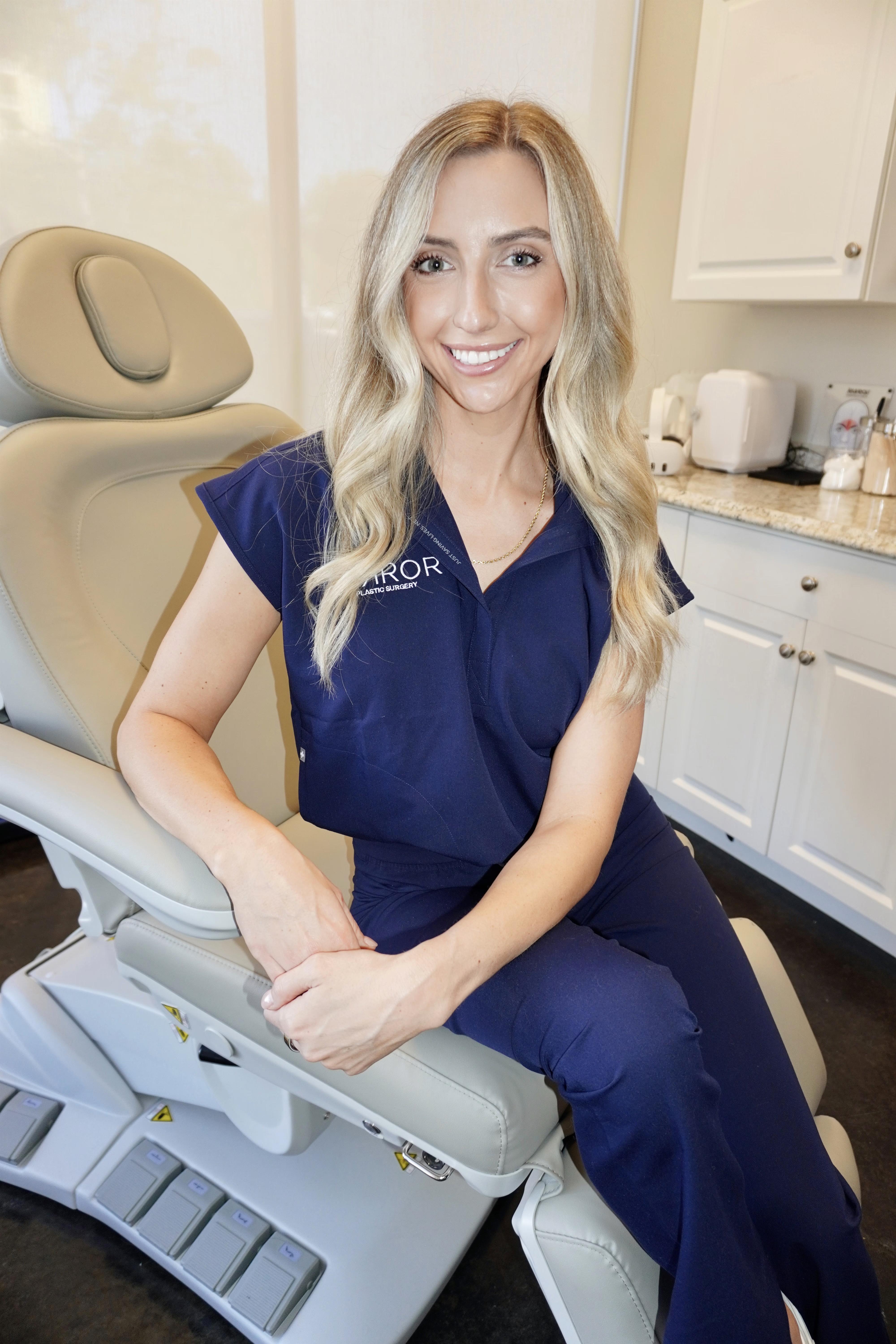
Ellie’s practice blends esthetician training from a high-end Boston medical spa with advanced nursing expertise. She understands both the aesthetic outcomes patients want and the clinical science required to pursue them safely. Her approach mirrors the philosophy of dentistry, where professional treatments deliver results but lasting outcomes require understanding and consistent maintenance. She is known for telling patients when a peptide or service is not yet necessary, and she prioritizes long-term results over short-term revenue. When surgical complementarity is indicated, Ellie’s work integrates with the practice of Dr. Akash Chandawarkar, MD, a Harvard-educated physician, Johns Hopkins-trained plastic surgeon, and fellowship-trained aesthetic surgeon at Manhattan Eye Ear & Throat Hospital and Lenox Hill Hospital.
Safety Considerations and Common Questions
The following questions reflect the most common concerns raised by patients and physicians evaluating peptide therapy.
Are peptides regulated by the FDA?
Some FDA-approved peptide drugs such as tirzepatide have undergone rigorous Phase 3 clinical trials. Many peptides used in wellness and optimization settings, including BPC-157, TB-500, and GHK-Cu, are not FDA-approved for any indication. The regulatory landscape continues to evolve, and the FDA scheduled a July 2026 Pharmacy Compounding Advisory Committee meeting to review several compounds for possible reclassification. At Mirror Plastic Surgery, every peptide’s regulatory status is disclosed during consultation, and sourcing is limited to licensed compounding pharmacies with documented batch testing.
What are the risks of obtaining peptides without medical supervision?
The primary risks of self-sourcing peptides online involve quality and safety. As noted earlier, nearly half of research-grade peptide products fail purity testing, which raises concerns about impurities and mislabeling. Without baseline labs, there is no way to screen for contraindications such as active malignancy, uncontrolled diabetes, or hormone-sensitive conditions that make certain peptides dangerous. Without ongoing monitoring, dose-related adverse effects including hormonal disturbances, insulin resistance, and injection-site infections go undetected. Professional supervision reduces sourcing risk, establishes individualized dosing, and creates defined monitoring intervals with direct practitioner access.
Will results vary from person to person?
Results vary significantly from person to person. Genetics, baseline biomarkers, diet, lifestyle, concurrent medications, and protocol adherence all influence outcomes. A peptide that produces measurable IGF-1 changes in one patient may produce minimal response in another with a receptor variant affecting GH signaling. Mirror Plastic Surgery’s protocols therefore begin with lab review rather than a pre-set menu, with the goal of matching each peptide to the specific physiological gap identified in that individual’s data and then adjusting based on follow-up markers.
What happens if I stop taking peptides?
Benefits diminish when therapy is discontinued, similar to stopping any health regimen. Inflammation that was being modulated by BPC-157 or KPV will likely return toward its prior state. Growth hormone pulse patterns supported by Sermorelin or Ipamorelin will revert as the peptide clears. Maintenance protocols, typically at reduced frequency after an initial treatment phase, are designed to sustain the physiological improvements achieved during active therapy. Ellie discusses maintenance planning during the initial consultation so patients understand the long-term commitment before beginning.
Is peptide therapy only for weight loss?
Weight management represents one application among many. Mirror Plastic Surgery’s peptide protocols address a broad range of conditions:
- Chronic inflammation and autoimmune conditions including psoriasis and rheumatoid arthritis
- Post-surgical and injury recovery through reduced inflammation and accelerated tissue repair
- Cellular aging through collagen and elastin production, mitochondrial support, and gene expression modulation
- Anxiety and mood regulation through nootropic peptides such as Selank
- Sexual wellness and libido through PT-141
- Fertility support through Kisspeptin protocols
- Energy and metabolic support via NAD and GH secretagogues
How to Get Started with Peptide Therapy at Mirror Plastic Surgery
Mirror Plastic Surgery serves patients in-person at 780 4th Ave S, St. Petersburg, FL 33701, and remotely across the United States, including Hawaii and Alaska. The process begins with a comprehensive consultation with Ellie, during which your medical history is reviewed, relevant labs are ordered or assessed, and a custom peptide protocol is built around your specific goals and biomarker profile. No pre-set packages are offered. Every recommendation is grounded in your individual physiology and presented with full transparency about the evidence base and regulatory status of each compound.
Conclusion: Making an Informed Decision About Peptides
Personalized peptide therapy occupies a distinct position between conventional pharmaceutical medicine and surface-level aesthetic services. The evidence base is real but uneven, with FDA-approved agents like tirzepatide supported by robust Phase 3 data, while compounds such as BPC-157 and TB-500 show compelling preclinical signals that have not yet been validated in large human trials. That gap makes the quality of supervision, including the depth of the consultation, the rigor of lab review, the integrity of sourcing, and the consistency of follow-up, the most important variable in determining whether a peptide protocol is safe and effective for any given individual.
Mirror Plastic Surgery’s concierge model is built around that standard. Patients receive one-on-one time with a board-certified nurse practitioner who reads their labs, explains the physiology behind every recommendation, sources from batch-tested compounding pharmacies, and remains accessible throughout the protocol. The decision to pursue peptide therapy should rest on full information about what the evidence supports, what it does not, and what professional oversight provides that no online retailer or generic med-spa menu can match.
Frequently Asked Questions
How is Mirror Plastic Surgery’s peptide therapy different from what a typical medical spa offers?
Most medical spas offer peptide services as add-ons to a broader aesthetic menu, often without reviewing labs, screening for contraindications, or building individualized stacks. Mirror Plastic Surgery’s approach begins with a 30–60 minute consultation with Ellie Pranckevicius, FNP-BC, that includes a full medical history review, and, where indicated, comprehensive lab panels covering thyroid, liver, kidney, diabetes markers, and hormone levels. Peptide stacks are constructed from those findings rather than from a pre-set package. Sourcing is limited to licensed compounding pharmacies with batch-specific Certificates of Analysis. Ongoing support includes direct 24/7 access to Ellie via text, follow-up lab monitoring at defined intervals, and protocol adjustments based on how your body responds.
How long does it take to see results from personalized peptide therapy?
Timelines vary by peptide class, individual physiology, and the condition being addressed. Patients using GH secretagogues such as Sermorelin or Ipamorelin often notice improved sleep quality within the first one to two weeks, with measurable IGF-1 changes appearing on follow-up labs at four to six weeks and body composition shifts becoming apparent at six to twelve weeks.1 Tissue-repair protocols involving BPC-157 and TB-500 may reduce pain and inflammation within one to three weeks, while structural healing of tendons or ligaments typically requires six to twelve weeks of consistent use.1 Anti-aging stacks targeting collagen production and skin quality generally produce visible changes at four to eight weeks.1 Ellie sets specific, biomarker-anchored benchmarks at the outset so progress can be tracked objectively rather than assessed by subjective impression alone.
Can peptide therapy be combined with surgical procedures at Mirror Plastic Surgery?
Post-surgical peptide protocols represent one of Mirror Plastic Surgery’s specific applications. Peptides that reduce systemic inflammation and promote tissue repair, including BPC-157 and TB-500, can support recovery after surgical procedures and may reduce downtime while improving healing outcomes. Ellie coordinates these protocols within the surgical plan developed by Dr. Akash Chandawarkar, MD, to ensure that the peptide stack complements rather than conflicts with the post-operative care plan. This integration of non-surgical and surgical expertise under one practice benefits patients pursuing both aesthetic and functional goals.
Is peptide therapy available remotely, or do I need to visit the St. Petersburg clinic in person?
Mirror Plastic Surgery offers the complete peptide therapy process, including consultation, lab review, protocol design, prescription, and ongoing support, both in-person at the St. Petersburg, Florida location and remotely across the United States, including Hawaii and Alaska. Telehealth consultations with Ellie follow the same clinical standard as in-person visits, with full medical history review, lab panel assessment, individualized protocol design, and direct ongoing access. Peptides are shipped directly to the patient from licensed compounding pharmacies. Patients who prefer in-person care can visit the clinic at 780 4th Ave S, St. Petersburg, FL 33701, or reach the practice by phone at 727-361-6515 or email at hello@mirrorplasticsurgery.com.
What should I bring to my first peptide therapy consultation?
The most useful preparation for a first consultation with Ellie includes a complete list of current medications and supplements, any recent lab work within the past six to twelve months, and a summary of relevant medical history including chronic conditions, autoimmune diagnoses, or prior surgeries. A clear articulation of your primary health goals, whether that involves managing inflammation, supporting weight management, improving recovery, addressing skin aging, or another concern, also helps guide the visit. If recent labs are not available, Ellie will order the appropriate panels based on your goals and history. The consultation is designed to be comprehensive rather than transactional, and you can expect a full hour of focused, one-on-one clinical discussion before any protocol is recommended.
1 Results may vary from person to person. Editorial content, before and after images, and patient testimonials do not constitute a guarantee of specific results.
Peptide therapy is intended for wellness and optimization purposes and is not prescribed to diagnose, treat, cure, or prevent disease unless specifically stated. Many peptides are not FDA-approved and may be used off-label. Some have limited long-term safety data, with a potential for unknown risks, complications, or desensitization with prolonged use.