Written by: Dr. Akash Chandawarkar, Board Certified Plastic Surgeon, Mirror Plastic Surgery
Key Takeaways
- Doctors hesitate to recommend Kybella when a patient’s anatomy, such as fat depth or skin laxity, does not match its narrow FDA-approved use under the chin.
- The September 2026 FDA labeling update warns against non-submental use after 129 off-label adverse events, so safety depends on staying within the approved area.
- Kybella can be ineffective or risky for patients with deep subplatysmal fat, significant skin laxity, prominent platysmal bands, low hyoid position, or enlarged submandibular glands.
- Up to six sessions may be required, and about one-third of patients in trials saw no meaningful improvement, so realistic expectations and careful assessment matter.1
- Mirror Plastic Surgery provides detailed, anatomy-based consultations before recommending Kybella or alternative contouring options.
Book a Consultation at Mirror Plastic Surgery
Why Many Doctors Are Cautious About Kybella
Physician hesitation about Kybella typically comes down to six specific concerns:
- Kybella is FDA-approved only for the submental area, and the September 2026 FDA labeling update explicitly warns against non-submental use.
- Results depend heavily on fat depth. Kybella is injected into the deep layer of the superficial fat pad, and injection into the deep platysma layer must be strictly avoided.
- Skin laxity can worsen the appearance of the neck after fat reduction.
- The marginal mandibular nerve runs near the treatment zone, so technique and anatomical knowledge are critical.
- Kybella requires up to six treatment sessions, which affects cost, downtime, and patience.
- Some patients are non-responders and develop persistent nodules.
Each concern reflects how closely the treatment must match the patient’s anatomy and goals.
The September 2026 FDA Labeling Update. On September 15, 2026, the FDA approved updated labeling for Kybella, adding warnings about adverse reactions associated with unapproved use outside the submental region. The update followed a review of the FDA Adverse Event Monitoring System, which identified 129 cases of adverse events when deoxycholic acid was injected outside the approved submental site, including serious events such as blurred or reduced vision with periorbital use and muscle or nerve injury including facial paresis and paresthesia. For patients considering Kybella outside the chin, such as in the jowls or neck bands, this update clearly advises against that approach.
Fat Depth. The safe and effective target for submental deoxycholic acid injection is the deep layer of the superficial fat pad, while injection into the deep platysma layer must be strictly avoided. Patients whose submental fullness comes from deep subplatysmal fat are poor candidates because the drug cannot reach that tissue safely.
Skin Laxity. Kybella is a fat-reduction treatment and does not function as a skin-tightening procedure, though some secondary collagen deposition may occur after adipocytolysis.1 Patients whose primary concern is loose skin usually do better with energy-based tightening or a neck lift. Removing fat volume from lax skin can expose looseness that the fat once helped mask.
The Marginal Mandibular Nerve. Marginal mandibular nerve palsy is the most concerning nerve complication of deoxycholic acid injection, presenting as ipsilateral mouth droop and depressor anguli oris dysfunction; prevention focuses on strict control of injection area and depth and avoiding high-dose injection along the nerve’s course. In the REFINE-1 phase 3 trial, marginal mandibular nerve injury occurred in 4% of treated subjects, with all cases resolving spontaneously at a median of 44 days.1
Non-Responders and Session Count. In the REFINE-1 trial, 30% of deoxycholic acid patients did not achieve even a one-grade improvement on the clinician’s own assessment.1 Additionally, the FDA identified 117 cases of unresolved nodules or masses associated with deoxycholic acid injections, which had been present for a mean of 143 days at the time of reporting. These findings explain why experienced injectors pause when early sessions show little change.
Get an Anatomy-Based Kybella Assessment
Is Kybella Safe? What the FDA Label Actually Says
Kybella is FDA-approved for submental fat, and the September 2026 FDA labeling update specifically warns against non-submental use, stating that neuromuscular and other serious adverse events may occur when Kybella is administered outside the submental fat region. Safety in practice depends on staying within this indication.
The anatomical structure that makes injector expertise essential is the marginal mandibular nerve. The marginal mandibular branch of the facial nerve is the key anatomic hazard in the mandibular border and submental region; injection into the deep platysma layer must be strictly avoided to protect it, and poor injection depth or placement near the mandibular border increases nerve-injury risk. In plain terms, the nerve that controls the corner of the mouth runs close to the treatment zone, so the injector must understand that anatomy in detail.
Deoxycholic acid damages adipocyte membranes within 20 minutes and triggers significant inflammation by 24 hours. It also affects myelin and neural tissue, but that damage is milder and reversible, which is why marginal mandibular nerve palsy typically resolves on its own within 4–8 weeks. Common side effects include swelling, bruising, pain, and numbness at the injection site. For a full breakdown of the recovery timeline, see Mirror Plastic Surgery’s Kybella Side Effects page.
Safety in real-world use depends on patient selection and injector expertise.
Who Is Not a Good Candidate for Kybella
The following patient profiles are generally poor candidates for Kybella:
- Patients with significant skin laxity, because the FDA label explicitly advises careful consideration when excess skin laxity could make fat reduction aesthetically undesirable.
- Patients with jowling, because jowl tissue lies outside the FDA-approved submental indication.
- Patients whose submental fullness is driven by deep rather than superficial fat.
- Patients with prominent neck muscle bands (platysmal banding), because prominent vertical neck bands are caused by the platysma muscle and respond to Botox or surgical platysmaplasty rather than fat reduction.
- Patients with a low hyoid position, where skeletal anatomy limits the achievable cervicomental angle regardless of fat volume.
- Patients who have completed multiple Kybella sessions with minimal change.
On the question of jowls specifically, the jowl area is outside the FDA-approved submental indication, and the September 2026 FDA labeling update warns against non-submental use, so injecting Kybella into jowls is not recommended. The off-label adverse events noted earlier show why this boundary matters clinically.
Skin laxity is the most common reason a physician declines Kybella. Reducing fat volume under loose skin removes structural support that held the skin in place. The result is more visible looseness. For anatomical danger zones and injection boundaries, see Mirror Plastic Surgery’s Where Not To Inject Kybella page.
Why Kybella Does Not Work for Some People
Forum language like “Kybella ruined my face” or “not working on me after 3 rounds” appears frequently in patient communities. These outcomes usually reflect a mismatch between the treatment and the underlying anatomy.
Several distinct anatomical reasons can explain minimal change after multiple sessions:
- The fat may be subplatysmal (deep) rather than superficial, placing it outside the safe injection target zone.
- The fat may be fibrous, which reduces the drug’s ability to distribute evenly through the tissue.
- The patient may have more skin laxity than fat, so the submental fullness is primarily a skin problem.
- The submental fullness may be caused by anatomy other than fat, such as a low hyoid bone, prominent submandibular glands, or platysmal banding. Enlarged submandibular salivary glands can create fullness under the jaw that looks like fat but is glandular tissue that neither Kybella nor liposuction addresses.
Over-treatment with any non-surgical fat reduction modality, including deoxycholic acid, radiofrequency, or cryolipolysis, can lead to excessive subcutaneous fibrosis, which disrupts normal tissue planes and complicates future surgical procedures such as neck lifts. That risk is a strong reason to stop and reassess when early rounds show minimal response.
A proper pre-treatment assessment identifies these anatomical contributors. Without that work upfront, additional sessions cannot correct a mismatch between the treatment and the anatomy.
Comparing Kybella, Chin Liposuction, and Neck Lift
No single option works best for every neck or chin. Each procedure fits a specific pattern of fat volume, skin quality, and muscle or gland anatomy. The table below compares Kybella, chin liposuction, and neck lift on session count and skin tightening.
| Attribute | Kybella | Chin Liposuction | Neck Lift |
|---|---|---|---|
| Number of Sessions | Up to 6 sessions, each at least 1 month apart | Single procedure | Single procedure |
| Skin Tightening | None built in; relies on existing elasticity | Optional adjunct with energy-based tightening | Skin tightening and muscle tightening built into procedure |
For a detailed surgical comparison, see Mirror Plastic Surgery’s Kybella vs. Neck Lift page.
How A Proper Assessment Shapes the Treatment Plan
A careful assessment is the step that makes every later decision more accurate. At Mirror Plastic Surgery, consultations can extend up to an hour and evaluate skin quality, fat depth, fat distribution, platysmal anatomy, hyoid position, and the patient’s long-term goals before any treatment is recommended.
Dr. Akash Chandawarkar, MD, is board certified by the American Board of Plastic Surgery and personally performs the practice’s injectable and non-surgical treatments. He trained at Harvard and Johns Hopkins, then completed an aesthetic surgery fellowship at the Manhattan Eye, Ear & Throat Hospital and Lenox Hill Hospital. That background means every Kybella assessment is conducted by a surgeon with a surgeon’s command of subdermal anatomy.
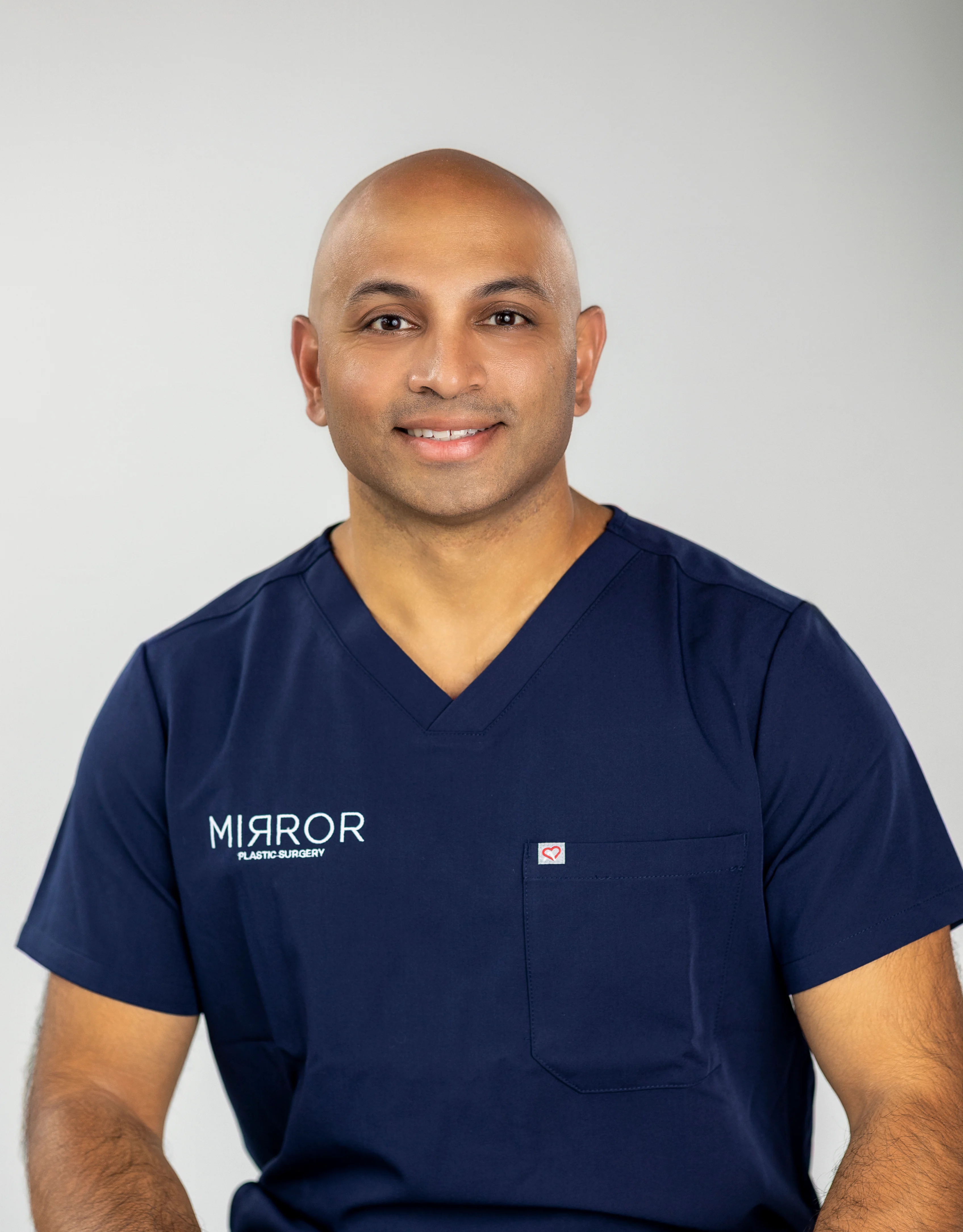
Mirror Plastic Surgery’s guiding principle is safety first, function second, aesthetics third. The practice is supplier-neutral and evidence-based. Kybella is available for the narrow set of anatomies where it fits well. When the anatomy points elsewhere, Dr. Akash explains why and recommends alternatives.
Find Out If Kybella Fits Your Anatomy
What to Ask Any Injector Before Agreeing to Kybella
Clear questions help you understand whether Kybella suits your anatomy and goals. Before committing to a Kybella series, ask any prospective injector the following:
- Is my submental fat superficial enough for Kybella to reach it safely?
- How much skin laxity do I have, and could fat reduction make my neck look worse?
- Is the treatment area within the FDA-approved submental indication?
- How many sessions do you expect, and what is the plan if I do not respond after three rounds?
- Who will perform the injections, and what is their anatomical training?
- What are the alternatives if Kybella is not the right tool for my anatomy?
A provider who answers these questions clearly and specifically is better equipped to guide you through this treatment.
Frequently Asked Questions (FAQ)
Is There Anything Better Than Kybella?
“Better” depends entirely on anatomy. Kybella works best for a small-to-moderate superficial submental fat pad with good skin elasticity. Chin liposuction removes fat in a single procedure and can be paired with skin tightening for larger fat volumes. A neck lift addresses skin laxity, platysmal banding, and fat in one surgical plan, which Kybella cannot match. The most suitable option depends on each patient’s anatomy, skin quality, and goals.
Which Is Better, Chin Lipo or Kybella?
Chin liposuction removes fat in a single procedure and can treat larger fat volumes with more predictable contouring. Kybella requires multiple sessions and works only on superficial submental fat. For small, focal fat pockets with tight, elastic skin, Kybella can be an excellent choice. For larger fat volumes, lax skin, or patients who want a single-procedure result, chin liposuction is generally more predictable.
Why Do I Still Have a Double Chin After Losing Weight?
Submental fat is often genetic and does not respond to diet and exercise the way abdominal fat does. In some patients, the fullness is not primarily fat. It may reflect a low hyoid bone position, prominent submandibular glands, platysmal banding, or skin laxity. These contributors look similar from the outside but require different treatments. A proper assessment separates them before any treatment is recommended.
Conclusion
Physicians who hesitate about Kybella usually focus on anatomy and indication. Kybella is a narrow tool that works well for the right patient and disappoints when the anatomy does not match. The key question is whether a given patient’s submental fat is superficial enough, and their skin tight enough, for Kybella to serve as the right tool.
Mirror Plastic Surgery offers Kybella when it fits the anatomy. Dr. Akash Chandawarkar also explains directly when a patient would benefit more from chin liposuction, a neck lift, or a combination approach. That level of clarity is the goal of the consultation.
Book Your Consultation with Dr. Akash
Disclaimer: Results may vary from person to person. Editorial content, before and after images, and patient testimonials do not constitute a guarantee of specific results.
1 Results may vary from person to person. Editorial content, before and after images, and patient testimonials do not constitute a guarantee of specific results.