

Written by: Dr. Akash Chandawarkar, Board Certified Plastic Surgeon, Mirror Plastic Surgery | Last updated: September 9, 2026
Key Takeaways
- Patients consistently praise concierge aesthetic practices for unhurried, physician-led consultations lasting 30–75 minutes, which correlate with higher treatment uptake and long-term retention.1
- Honest guidance that resists upselling builds deep trust. Many concierge surgeons decline 10–15% of requested treatments to prioritize patient safety and natural outcomes.
- Industry surveys confirm that 85% of consumers prefer subtle, natural results and 71% fear looking overdone, outcomes supported by a conservative, staged approach.1
- Board-certified physician involvement and extended consultation time are strong predictors of satisfaction and help distinguish true concierge care from volume-driven med-spa models.1
Research Methodology: How We Analyzed Patient Feedback And Clinical Data
This report synthesizes four categories of evidence: published patient reviews across concierge aesthetic practices, peer-reviewed studies in aesthetic medicine journals, global consumer surveys by major aesthetics manufacturers, and physician practice surveys. The goal is to identify consistent patterns rather than highlight individual testimonials, creating an evidence base for patients deciding whether physician-led concierge care justifies its premium.
Primary sources include:
- The Dermatologic Surgery multicenter study (Kamrani P et al., 2026) of 1,951 consultations across six dermatology practices
- Allergan Aesthetics’ Layered Beauty global survey of 12,000 participants across nine countries
- The 2025 VDÄPC membership survey of German aesthetic plastic surgeons
- NewBeauty’s State of Aesthetics Summer 2026 report, powered by the BeautyEngine platform
What Patients Consistently Praise In Concierge Aesthetic Consultations
Unhurried, Physician-Led Consultations
Across concierge aesthetic practices, patients repeatedly highlight consultation length as a defining strength. The Dermatologic Surgery study found that consultations lasting at least 75 minutes showed the highest rates of both immediate treatment and long-term patient retention.1 The authors note that extended initial appointments allow more time to discuss aesthetic goals, clarify expectations, answer concerns, and build confidence in the treatment plan.
The VDÄPC 2025 survey reports that approximately 70% of aesthetic physicians spend 30–60 minutes on initial consultations, and only 1.3% spend less than 15 minutes. This pattern contrasts sharply with the 10–15 minute appointment slots common in many high-volume med spa settings.
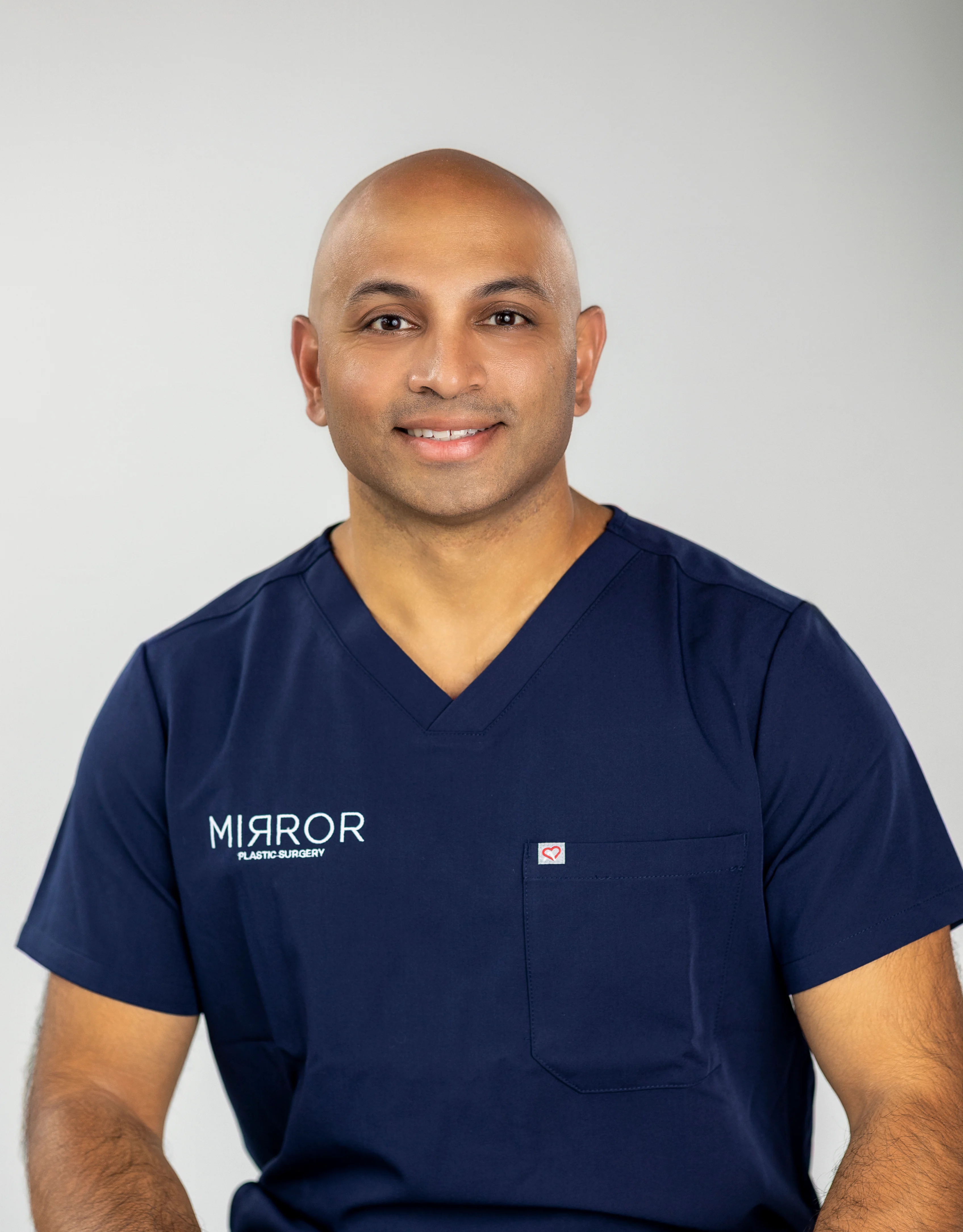
At Mirror Plastic Surgery, consultations can extend up to a full hour. Dr. Akash Chandawarkar personally conducts the assessment and performs all injectable treatments. Because he is a board-certified plastic surgeon, every neuromodulator and dermal filler is placed by a physician with a surgeon’s command of facial and subdermal anatomy. That depth of knowledge supports both safety and precision.
Honest Guidance And Resistance To Upselling
Patient reviews frequently single out providers who recommend against unnecessary procedures as especially trustworthy. The VDÄPC 2025 survey found that 30% of aesthetic surgeons decline at least one in ten requested treatments, and 17.7% decline more than 15% of requests. This pattern reflects careful consultation and a safety-first mindset.
Travis Woodley, MSN, RN, CRNP, founder of Revitalize, notes that in concierge care the provider is compensated for the relationship rather than the volume of product. That structure removes the financial incentive to recommend unnecessary treatment. The first appointment at a true concierge practice may involve no treatment at all. It often functions as an assessment, a conversation, and sometimes a recommendation to wait or do less.
Mirror Plastic Surgery applies this principle through supplier-neutral recommendations and Dr. Akash’s documented transparency. For example, he is known for advising patients that an expensive service is not yet necessary for them. This approach builds deep trust and long-term patient relationships.
Natural-Looking Results And The “Undetectable” Standard
Patient reviews and industry data converge on a clear preference for subtle, natural outcomes. Allergan Aesthetics’ 2026 Layered Beauty survey found that 74% of consumers want undetectable results, 71% fear looking fake or overdone, and 85% prefer natural and subtle outcomes. NewBeauty’s State of Aesthetics Summer 2026 report found that 50.6% of patients want results so subtle nobody notices.
Concierge patients often credit deeper anatomical knowledge and a conservative, staged approach for achieving this standard. As Travis Woodley observes, patients who look “done” typically received too much product in too short a window from a provider who did not push back. A physician-led practice with a conservative philosophy reduces this risk through its structure and priorities.
However, concierge aesthetic medicine also attracts criticism, and understanding these concerns helps patients make balanced decisions.
What Patients Criticize Or Caution About Concierge Aesthetic Medicine
Cost And Accessibility Concerns
The most common criticism in patient reviews of concierge aesthetic medicine is premium pricing. Concierge Medicine Today reports that classical concierge models range from $10,000–$50,000 annually, while contemporary “Concierge Medicine 2.0” subscription models typically range from $100–$750 per month. Critics often characterize the model as elitist.
In aesthetic medicine specifically, most practices do not require membership fees. The premium usually appears in per-treatment pricing that reflects physician expertise and extended consultation time. The key question becomes what the premium purchases: longer consultations, board-certified physician involvement, continuity of care, and anatomical precision that predicts better outcomes and fewer corrections.1
Variability In Quality Among Practices
Patient reviews also caution that not all practices using the “concierge” label deliver the same level of care. The term has become common in marketing, and its use does not automatically guarantee physician involvement, extended consultation time, or a conservative treatment philosophy.
Your Health Magazine emphasizes that the level of medical oversight is the single most important factor when choosing a practice. It advises patients to verify board certification and confirm that the physician performs the actual treatment, not only supervision. Mirror Plastic Surgery meets the highest standard on this criterion. Dr. Akash is board-certified by the American Board of Plastic Surgery, trained at Harvard and Johns Hopkins, and holds a fellowship in aesthetic surgery at MEETH/Lenox Hill Hospital. He personally performs every injectable treatment.
Is Concierge Aesthetic Medicine Worth The Cost? The Data Says Yes
The Dermatologic Surgery study provides strong clinical evidence: each additional 10 minutes of consultation time was associated with higher same-day treatment rates (odds ratio 1.48) and higher 3-year patient retention (odds ratio 1.08).1 These effects are substantial and show a structural relationship between consultation depth and patient outcomes.
Allergan Aesthetics’ 2026 consumer research found that 65% of patients who have multiple full-face consultations treat three or more facial areas, compared to 23% after a single visit.1 This pattern indicates that thorough consultations support more comprehensive, better-planned treatment rather than impulsive single-area decisions. The same research identified that the number-one reason patients return to a cosmetic injector is “trust in my practitioner’s action and ability,” ranking above cost and convenience.
Only 9.1% of aesthetic patients follow a long-term treatment plan with a provider. Concierge practices are structurally positioned to close this gap. The concierge premium functions as an investment in the factors that predict satisfaction: time, expertise, and trust.1
To see how these factors appear in everyday choices, the following comparison contrasts concierge practices with med spas across the dimensions that matter most.
Schedule your physician-led consultation and experience what an unhurried assessment with a board-certified plastic surgeon feels like.
Concierge Practice Vs. Med Spa: What The Evidence Shows
The table below distills key differences between concierge practices and med spas. It highlights how consultation length, provider expertise, and treatment philosophy influence outcomes and long-term relationships.
30–75+ minutes; 70% of physicians spend 30–60 min on initial consults
| Attribute | Concierge Practice | Med Spa | Evidence |
|---|---|---|---|
| Consultation Length | Typically 10–15 minutes | Dermatologic Surgery (2026), MeliOra Elite Wellness | |
| Provider Expertise | Board-certified physician performs treatment | Varies; may be nurse practitioner, RN, or PA under physician supervision | American Med Spa Association, Your Health Magazine |
| Treatment Philosophy | Safety first, conservative, staged approach, clinician will advise doing less | Volume-focused model with revenue tied to units of product injected per hour | Revitalize Medical Clinic, VDÄPC survey (2025) |
| Patient Retention | 41.3% of treatments are repeat visits, rising year-over-year since 2021 | Lower retention linked to throughput-focused model | VDÄPC survey (2025) |
How To Choose A Concierge Aesthetic Practice: An Evidence-Based Checklist
- Verify Board Certification And Physician Involvement. Confirm that a board-certified physician performs the actual treatment, not only supervision. Your Health Magazine identifies the level of medical oversight as the single most important factor when choosing a practice.
- Ask About Consultation Length. Research shows that consultations of 30–60 minutes or longer produce better outcomes and higher satisfaction. Short, rushed assessments rarely allow for full discussion of goals and risks.
- Evaluate The Treatment Philosophy. Look for a practice that prioritizes safety and function before aesthetics and that recommends against unnecessary procedures. As noted earlier, survey data shows that a meaningful share of surgeons decline a notable portion of requested treatments.
- Assess Communication Style. The number-one reason patients return to an injector is trust in the practitioner. Choose a provider who educates rather than sells and who offers direct access for follow-up questions.
- Confirm Product Range And Supplier Neutrality. A practice that offers multiple brands and avoids commission-based incentives can recommend products that fit your anatomy and goals.
What To Expect In A Personalized Consultation At Mirror Plastic Surgery
Applying these criteria to Mirror Plastic Surgery shows how a personalized consultation works in practice. The initial visit functions as a structured diagnostic process that can extend up to a full hour. Dr. Akash Chandawarkar conducts a top-to-bottom assessment, starting with open dialogue about the patient’s emotional drivers and long-term goals. He then moves to a detailed physical evaluation of facial and bodily areas using symptom-based severity frameworks.
This diagnostic approach reflects Dr. Akash’s broader philosophy, which treats aesthetics the way dentistry treats oral health. Professional treatment delivers results, and lasting outcomes depend on understanding and consistent maintenance. He explains the physiology of the skin in relatable terms, helping patients understand why a treatment is recommended and how to support their results over time.
His initial focus centers on revitalizing inherent facial characteristics. He works to restore, balance, and harmonize before considering volume augmentation. This sequencing helps prevent the overdone appearance that often arises from isolated, single-area injections. Because Dr. Akash personally performs every injectable treatment, the physician with the deepest anatomical knowledge holds the syringe.
Red Flags To Avoid When Researching Aesthetic Practices
Patient review analysis across the industry reveals a consistent set of warning signs. Research by Kerry Bielik, Founder of Insight Patient Satisfaction Solutions, indicates that up to 70% of complaints in aesthetic practices relate to service issues rather than clinical outcomes. Front desk interactions, wait times, consultation quality, and pricing transparency influence satisfaction as strongly as the procedure itself.
Specific red flags to watch for include:
- Rushed consultations under 15 minutes with no time for questions
- Pressure to book same-day treatment before a thorough assessment is complete
- Vague or incomplete explanations of risks, benefits, and realistic timelines
- Lack of physician involvement in the actual treatment
- One-size-fits-all treatment plans that ignore individual anatomy
- Opaque pricing or upselling tactics tied to product quotas
Frequently Asked Questions
What Is the Real Problem With Concierge Medicine?
The most common criticism is cost and perceived elitism. The model carries a premium, and that premium is not accessible to every patient. In aesthetic medicine, however, the concierge premium purchases measurable benefits such as longer consultations, physician expertise, continuity of care, and anatomical precision that research links to better outcomes and higher satisfaction. High-volume, rushed appointments with non-physician injectors can create different costs in the form of corrections, dissatisfaction, and loss of trust.
Is a Concierge Aesthetic Practice Worth the Cost?
For patients who value time, expertise, and natural results, the evidence supports the premium. Clinical research confirms that longer consultations significantly increase both immediate treatment rates and long-term retention. Industry data shows that trust in the practitioner is the number-one reason patients return, ranking above cost and convenience. The premium pays for structural factors that predict satisfaction, including unhurried time with a physician, honest guidance, and a conservative approach that avoids the overdone outcomes many patients fear.
How Do I Know If a Practice Is Truly Personalized?
Look for structural indicators rather than marketing language. A genuinely personalized practice offers consultations of at least 30 minutes, a physician who performs the treatment rather than only supervising it, and a treatment plan based on your specific anatomy. The provider explains the rationale behind each recommendation and invites questions. Practices that rush the assessment or pressure patients to book same-day treatment usually operate on a throughput model, regardless of how they describe themselves.
What If I Am Worried About Looking Overdone?
Choose a provider whose philosophy explicitly prioritizes natural balance and function. As noted earlier, the vast majority of consumers prefer natural, subtle outcomes and worry about looking overdone. A physician-led practice with a conservative, staged approach, such as Mirror Plastic Surgery’s guiding principle of safety first, function second, aesthetics third, reduces this risk by design. Dr. Akash’s holistic, full-face approach helps ensure that no single area is over-treated in isolation, and his willingness to advise patients against unnecessary procedures is built into the practice.
What Makes Mirror Plastic Surgery Different From Other Concierge Practices?
Several factors distinguish Mirror Plastic Surgery within the concierge category. Dr. Akash Chandawarkar is board-certified by the American Board of Plastic Surgery, a credential that reflects the highest standard of surgical and anatomical training. His background includes medical education at Harvard, surgical training at Johns Hopkins, and a fellowship in aesthetic surgery at MEETH/Lenox Hill Hospital in Manhattan. He serves on advisory boards for Merz Aesthetics and Tiger Aesthetics, which keeps him at the forefront of injectable innovation. He personally performs every injectable treatment at the practice. The practice limits itself to one to two surgeries per day and extends non-surgical consultations up to a full hour, so no patient is treated as a throughput unit.
Conclusion: The Evidence Supports Physician-Led Concierge Care
Patient reviews consistently reward unhurried, physician-led consultations. Clinical data confirms that consultation length predicts treatment success and long-term retention. Industry surveys show that patients overwhelmingly prefer natural results achieved through trusted, long-term provider relationships, and that trust in the practitioner outranks cost and convenience as the reason patients return.
Mirror Plastic Surgery implements every principle the evidence supports. The practice offers hour-long consultations, a board-certified plastic surgeon performing all injectables, honest supplier-neutral guidance, and a safety-first philosophy that places patient well-being above procedure volume. For patients in the St. Petersburg and Tampa Bay area seeking the standard of care that research links to strong outcomes, Mirror Plastic Surgery provides a clear path.1
Arrange your consultation with Ellie to begin a physician-led aesthetic journey grounded in evidence, honesty, and long-term results.
Disclaimer: Results may vary from person to person. Editorial content, before and after images, and patient testimonials do not constitute a guarantee of specific results.
1 Results may vary from person to person. Editorial content, before and after images, and patient testimonials do not constitute a guarantee of specific results.


