Written by: Ellie Pranckevicius, FNP-BC, Aesthetic Nurse Practitioner & Aesthetic Injector | Facial Restoration & Regenerative Injectable Specialist, Mirror Plastic Surgery | Last updated: July 13, 2026
Key Takeaways
- Non-surgical BBL uses larger volumes of biostimulatory filler across the full gluteal region for projection and contour. Targeted hip-dip filler focuses on the lateral indentations with smaller, more precise deposits.
- Both treatments rely on biostimulatory products like Radiesse and AlloClae that stimulate collagen production rather than providing instant gel volume. These products offer safer and longer-lasting results than hyaluronic acid fillers for body contouring.
- Treatment planning at Mirror Plastic Surgery starts with a comprehensive anatomical assessment that often lasts close to an hour. This evaluation determines the right approach based on skeletal geometry, tissue quality, and correction goals.
- Targeted hip-dip correction usually requires fewer sessions and lower total volume than a full non-surgical BBL. This difference often results in a lower three-year cost of ownership while still delivering meaningful contour improvement.1
- Schedule your personalized consultation at Mirror Plastic Surgery to receive an expert evaluation and customized treatment plan tailored to your anatomy and aesthetic goals.
Why Hip Dips Respond Well to Biostimulatory Fillers
Hip dips reflect pelvic bone shape and fat distribution, so lifestyle changes cannot remove them. Injectable biostimulators trigger your body’s own collagen production instead of placing a soft gel pocket, which makes them better suited for this structurally driven area.
The two primary biostimulatory products used at Mirror Plastic Surgery for hip dips and non-surgical BBL are Radiesse (calcium hydroxylapatite) and AlloClae. Radiesse delivers immediate structural volume and ongoing collagen stimulation, with a reported duration of 12–18 months.1 Sculptra (poly-L-lactic acid), widely referenced in published literature, builds volume gradually over 3–6 months with results that can last over 2 years because the new collagen remains after the product is metabolized.1
Hyaluronic acid fillers are not considered safe practice for buttock or hip-dip augmentation. The required volumes would be prohibitively expensive, carry higher migration risk, and raise FDA labeling concerns, which aligns with the position of leading Florida-based practices.
How Mirror Plastic Surgery Builds Your Treatment Plan
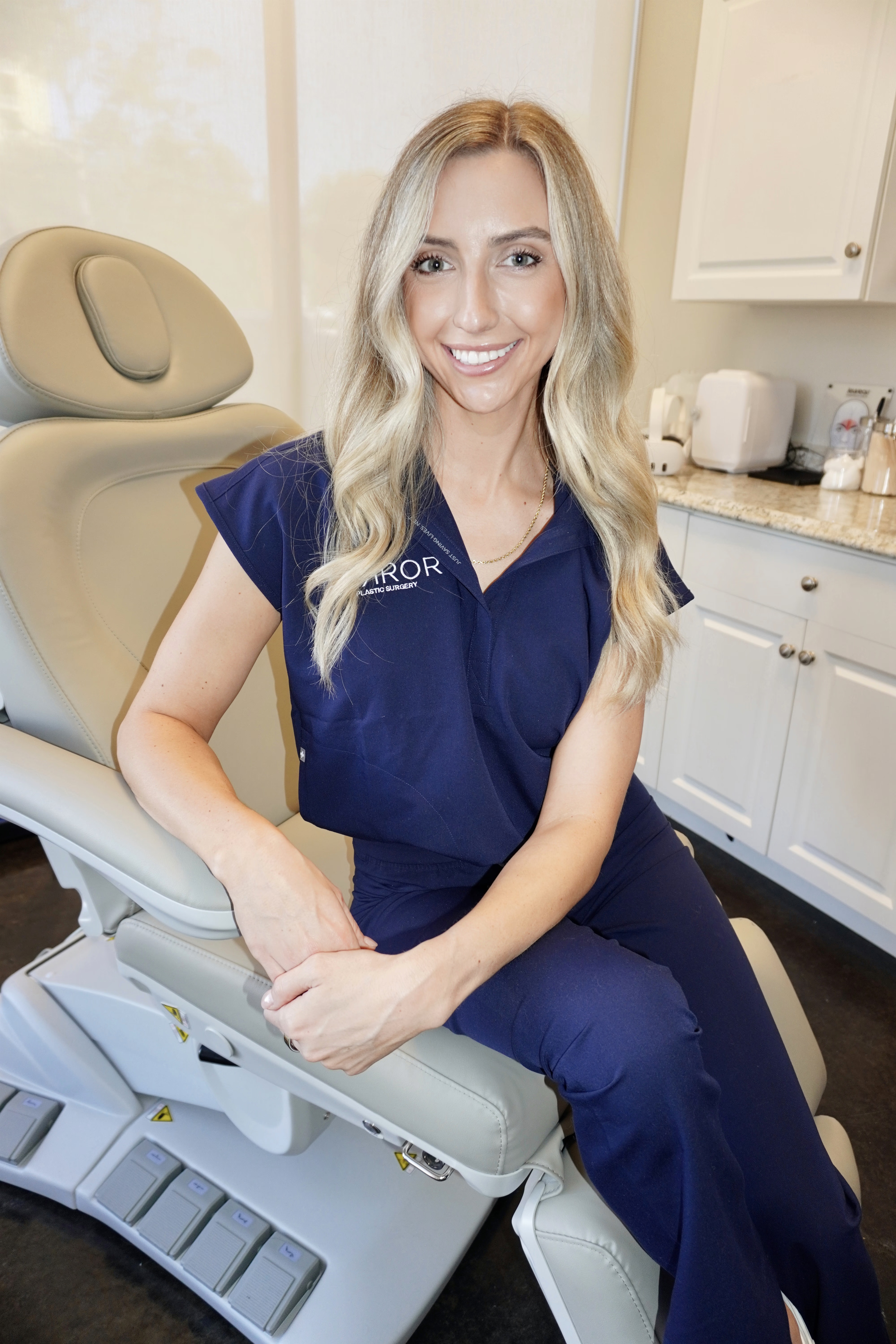
Effective planning starts with a thorough anatomical assessment that connects product choice to your unique structure. At Mirror Plastic Surgery, Ellie Pranckevicius conducts an in-depth, top-to-bottom evaluation before recommending any product. This process identifies the degree of hip-dip indentation, gluteal tissue quality, skeletal geometry, and whether targeted correction, full contouring, or a combination approach makes the most sense.
For targeted hip-dip correction, mild cases typically need fewer vials distributed across multiple sessions, while more pronounced indentations call for higher total volume.1 A full non-surgical BBL that focuses on overall gluteal projection requires a larger total volume and a longer initial series.1 The comparison table later in this article outlines typical session counts and product volumes for each approach.
Product selection is based on your anatomy and goals, not supplier relationships. Many practices receive incentives to favor specific products, but Mirror Plastic Surgery maintains supplier neutrality so Ellie’s recommendations reflect clinical need rather than quotas or promotions.
Book a consultation with Ellie to receive a personalized treatment plan based on your anatomy and goals.
Biostimulatory Trends in Modern Body Contouring
Current non-surgical body contouring trends for 2025–2026 favor biostimulatory protocols that rebuild structural collagen instead of chasing instant volume. PLLA-based products create a collagen framework that supports larger body areas and blends naturally, which helps avoid an overfilled or artificial look.
Radiesse now plays a growing role as either an adjunct or standalone product for hip-dip correction when patients want visible improvement right away plus long-term collagen support. Radiesse provides immediate contour change through its thicker gel carrier, while PLLA-based products build volume more gradually over 6–12 weeks.
AlloClae, available at Mirror Plastic Surgery for buttocks and hip dips, represents a next-generation regenerative option. Ellie evaluates AlloClae on a case-by-case basis during your full assessment to decide whether it fits your anatomy and goals.
Key Safety and Planning Factors to Weigh First
Provider qualifications and anatomical expertise drive both safety and outcome quality in non-surgical body contouring. The hip and gluteal region contains major blood vessels, so precise depth and technique are essential for safe injection.
Before committing to any treatment plan, keep the following connected factors in mind:
- Provider credentials: Seek a board-certified or fellowship-trained provider with documented experience in body contouring injectables, not only facial work. This background supports safe navigation of gluteal vascular structures and complex hip anatomy.
- Anatomical assessment depth: A rushed consultation cannot fully evaluate skeletal geometry, tissue quality, or asymmetry. A comprehensive top-to-bottom assessment, typically lasting close to an hour, is the standard at Mirror Plastic Surgery so Ellie can map your anatomy before recommending a strategy.
- Supplier neutrality: Providers tied to a single product line may feel pressure to favor that option. Ellie selects products based on your anatomy and goals, not on sales targets, which keeps recommendations focused on clinical benefit.
- Reversibility awareness: Biostimulatory fillers including Radiesse are non-dissolvable. Clear informed consent on non-reversibility forms part of the safety protocol before treatment, and it reinforces why provider selection matters so much.
- Candidacy factors: Ideal candidates are healthy non-smokers with realistic expectations, good skin quality, and no contraindications such as pregnancy or breastfeeding.
Risks, Limitations, and How to Think About Tradeoffs
Every non-surgical body contouring option involves tradeoffs, and understanding them early supports realistic expectations. The points below work together as a framework rather than isolated warnings.
- Result variability: Severe hip dips may improve significantly but not disappear completely with injectable biostimulators.1 Your underlying bone structure sets an upper limit on correction.
- Nodule risk: Small nodules can rarely form if post-treatment massage instructions are not followed. Proper deep-dermal technique and adherence to aftercare reduce this risk.
- Gradual onset: Most patients see full results from biostimulatory fillers 2–4 months after treatment as collagen matures, so expectations should align with this slower timeline.1
- Ongoing maintenance: All biostimulatory results soften over time as collagen remodels, so periodic maintenance sessions are part of any long-term plan.
- Migration risk hierarchy: Biostimulatory products carry a lower migration risk because volume forms within your own collagen rather than as a mobile gel pocket. Even so, correct placement depth and technique remain crucial.
Common Misconceptions About Hip-Dip and BBL Fillers
- “Results are permanent”: No injectable body contouring result lasts forever. All biostimulatory fillers require maintenance as the body metabolizes the product and naturally remodels collagen.
- “One session is enough”: Most patients need 2–4 sessions spaced 4–6 weeks apart for full correction, so single-session promises deserve careful scrutiny.
- “Higher price guarantees better results”: Price reflects product volume, overhead, and market positioning more than anatomical skill. A supplier-neutral provider who uses the right amount of the right product will not push extra volume your anatomy does not need.
- “Non-surgical BBL and hip-dip filler are the same”: These are distinct plans with different volume requirements, session counts, and total costs. Treating them as interchangeable often leads to confusion about outcomes and budgeting.
How Long Hip-Dip Filler Typically Lasts
Longevity depends on product choice, placement depth, metabolism, and lifestyle factors such as weight changes and exercise intensity.1 As discussed earlier, PLLA-based options generally provide longer duration than Radiesse, while Radiesse still offers a substantial timeline. Both approaches use smaller maintenance sessions than the initial series to sustain results.
Deeper structural placement in body zones like hip dips often supports longer duration compared with more superficial facial use of the same products. PLLA-based results can last several years, although individual variation remains significant.1
Safety Profile of Hip-Dip Filler
Sculptra has a long history in aesthetic medicine and a strong safety record when used by trained medical professionals in appropriate clinical settings. Radiesse shares a similar safety profile when placed by a provider who understands gluteal and lateral hip anatomy in depth.
Most complications relate to technique, including dilution, placement, and aftercare. Because biostimulatory fillers are non-dissolvable, provider expertise becomes the central safety factor, and careful massage after treatment further reduces risk.
What to Expect From Hip-Dip Filler Comfort and Recovery
Treatment uses no incisions or general anesthesia, and most patients resume normal activities the same day. Temporary swelling, tenderness, or mild bruising at injection sites usually resolves within a few days, and topical or local anesthetic helps manage discomfort during the procedure.
Common side effects include mild swelling that settles within days, bruising that can last about a week, and short-term tenderness, redness, or itching. Avoiding blood thinners and alcohol before treatment helps minimize these effects.
When Surgical BBL Makes More Financial Sense
Patients who want a large, permanent volume increase may find that repeated non-surgical maintenance eventually rivals or exceeds the total cost of a surgical BBL over several years. Surgical BBL pricing usually covers the surgeon, anesthesia, facility, garments, and follow-ups in a single package, while non-surgical BBL is billed per product and session with ongoing maintenance.
The more volume you want and the longer you plan to maintain it non-surgically, the sooner surgical BBL can become the more cost-effective path. Patients with pronounced hip dips driven mainly by bone structure may also need surgical fat transfer to the trochanteric region for fully smooth contours. At Mirror Plastic Surgery, if Ellie’s assessment suggests that a surgical consultation with Dr. Akash Chandawarkar better matches your goals, she will share that recommendation clearly.
Book a consultation with Ellie to decide whether a non-surgical or surgical pathway fits your anatomy, goals, and timeline.
Non-Surgical BBL vs Targeted Hip-Dip Filler: Side-by-Side View
The table below compares targeted hip-dip filler and full non-surgical BBL across key planning factors. All figures come from published 2026 market data. Tampa-area pricing at Mirror Plastic Surgery is customized during consultation because each plan reflects individual anatomy and goals.
| Attribute | Targeted Hip-Dip Filler | Full Non-Surgical BBL |
|---|---|---|
| Typical session count | 2–3 sessions | 2–4 sessions |
| Typical product volume | 6–16 syringes total | 10–20+ syringes total |
| Longevity (biostimulatory) | 12–18 months (Radiesse), 2–3+ years (PLLA) | 2–3+ years with proper maintenance |
| Maintenance schedule | Every 1–2 years, fewer syringes than initial series | Every 18–24 months, 4–8 vials per cycle |
| 3-year total cost of ownership | Lower overall, initial series plus one maintenance cycle | Higher overall, larger initial volume plus maintenance |
At Mirror Plastic Surgery, Ellie uses Radiesse and AlloClae as the primary products for non-surgical BBL and hip-dip correction. This choice reflects their biostimulatory mechanism, structural performance in body contouring, and safety profile compared with alternatives. Hyaluronic acid fillers are not used for buttock or hip-dip augmentation because the necessary volumes increase migration risk and offer shorter duration than biostimulatory options.
FAQ
What is the difference between a non-surgical BBL and hip-dip filler at Mirror Plastic Surgery?
A non-surgical BBL is a full gluteal contouring treatment that uses larger volumes of biostimulatory filler, such as Radiesse or AlloClae, to build projection, smooth cellulite, soften stretch marks, and improve overall shape. Targeted hip-dip filler is more focused and treats the lateral indentation between the iliac crest and greater trochanter with a smaller total product volume. Ellie Pranckevicius performs both treatments after a comprehensive top-to-bottom assessment. The right approach depends on your anatomy, desired degree of correction, and long-term goals, which Ellie reviews with you during consultation.
How many sessions will I need, and how far apart are they spaced?
Session count varies by treatment type and individual anatomy. Targeted hip-dip correction typically requires 2–3 sessions, while a full non-surgical BBL may require 2–4 sessions. Sessions are usually spaced 4–6 weeks apart so the biostimulatory process can progress between visits. Because these fillers build collagen gradually, most patients see final results 2–4 months after completing the initial series.1 Ellie will outline a realistic timeline during your initial consultation.
Are biostimulatory fillers safe for hip-dip and buttock augmentation?
Radiesse and PLLA-based biostimulatory fillers have well-established safety records when used by trained medical professionals with strong knowledge of gluteal and lateral hip anatomy. Because these products are non-dissolvable, provider expertise becomes the most critical safety factor. At Mirror Plastic Surgery, Ellie Pranckevicius brings a dual background in esthetics and advanced nursing, including four years in a Neuroscience ICU, along with specialized training in body contouring injectables. Dr. Akash Chandawarkar, a Johns Hopkins-trained plastic surgeon, provides surgical oversight that supports the practice’s safety-first approach.
How does Mirror Plastic Surgery’s pricing work for these treatments?
Mirror Plastic Surgery does not publish fixed package prices because every treatment plan is individualized. Total cost depends on the specific product used, the number of vials or syringes your anatomy requires, and the number of sessions in your plan. Ellie does not upsell volume beyond what your anatomy can use effectively. Mirror Plastic Surgery operates as a supplier-neutral practice, so product recommendations rest on clinical reasoning rather than sales targets. You receive a personalized quote during your consultation after a thorough assessment.
When should I consider a surgical BBL instead of a non-surgical approach?
A surgical BBL may suit you better when you want a substantial volume increase, when pronounced skeletal hip-dip geometry limits injectable results, or when the multi-year cost of non-surgical maintenance approaches the total cost of surgery. If Ellie’s assessment indicates that a surgical consultation would better match your goals, she will say so directly. Dr. Akash Chandawarkar can then complement Ellie’s non-surgical work with surgical options, keeping your care within the same practice.
Conclusion
The choice between non-surgical BBL and targeted hip-dip filler depends on anatomy, correction goals, longevity preferences, and realistic three-year cost planning. Biostimulatory products such as Radiesse and AlloClae at Mirror Plastic Surgery provide a structurally appropriate and safer mechanism for body contouring than many alternatives, but they still require maintenance and clear expectations about what injectables can achieve compared with surgery.
Sound decision-making starts with a provider who understands anatomy, maintains supplier neutrality, and communicates honestly when a different pathway would serve you better.
Book a consultation with Ellie at Mirror Plastic Surgery in St. Petersburg, FL, and receive a comprehensive assessment tailored to your anatomy and long-term goals.
Disclaimer: Results may vary from person to person. Editorial content, before and after images, and patient testimonials do not constitute a guarantee of specific results.
1 Results may vary from person to person. Editorial content, before and after images, and patient testimonials do not constitute a guarantee of specific results.