Written by: Ellie Pranckevicius, FNP-BC, Aesthetic Nurse Practitioner & Aesthetic Injector | Facial Restoration & Regenerative Injectable Specialist, Mirror Plastic Surgery | Last updated: July 3, 2026
Key Takeaways for Non-Surgical Breast Enhancement
- Non-surgical breast enhancement uses injectables and energy-based treatments to create subtle volume or skin-quality changes, not surgical-level augmentation.
- Biostimulatory fillers such as Sculptra and AlloClae stimulate gradual collagen production, while radiofrequency and laser treatments mainly improve laxity and texture without adding meaningful volume.1
- Thorough anatomical assessment, attention to Florida-specific skin factors, and strong provider qualifications help set realistic expectations and protect your safety.
- Patients need clear guidance on maintenance schedules, temporary results, and imaging considerations, including possible mammographic interference from certain fillers.
- Schedule your anatomy-first evaluation with Ellie at Mirror Plastic Surgery to understand your realistic non-surgical breast enhancement options.
How Breast Anatomy Shapes Non-Surgical Results
The breast contains glandular tissue, adipose tissue, Cooper’s ligaments, and an overlying skin envelope. That envelope can only accept a limited amount of additional volume before tissue integrity and shape begin to distort. Injectable and energy-based treatments must work within that limit. Biostimulatory agents such as poly-L-lactic acid (Sculptra) and calcium hydroxylapatite (Radiesse) stimulate collagen production gradually, adding modest soft-tissue volume over weeks to months.1 AlloClae, a newer acellular tissue matrix option offered at Mirror Plastic Surgery, supports tissue architecture through a regenerative mechanism. Energy-based modalities, including radiofrequency, ultrasound, and laser, act on the skin envelope itself. They improve laxity and surface quality but do not create meaningful volume.1 None of these mechanisms match the volumetric change achieved through surgical implant placement or fat grafting. Understanding this anatomical ceiling anchors every responsible treatment conversation at Mirror Plastic Surgery. That is why each consultation begins with mapping your specific anatomy against these biological limits.
Discover where your anatomy sits within these constraints during a consultation with Ellie.
How Mirror Plastic Surgery Builds a Treatment Plan
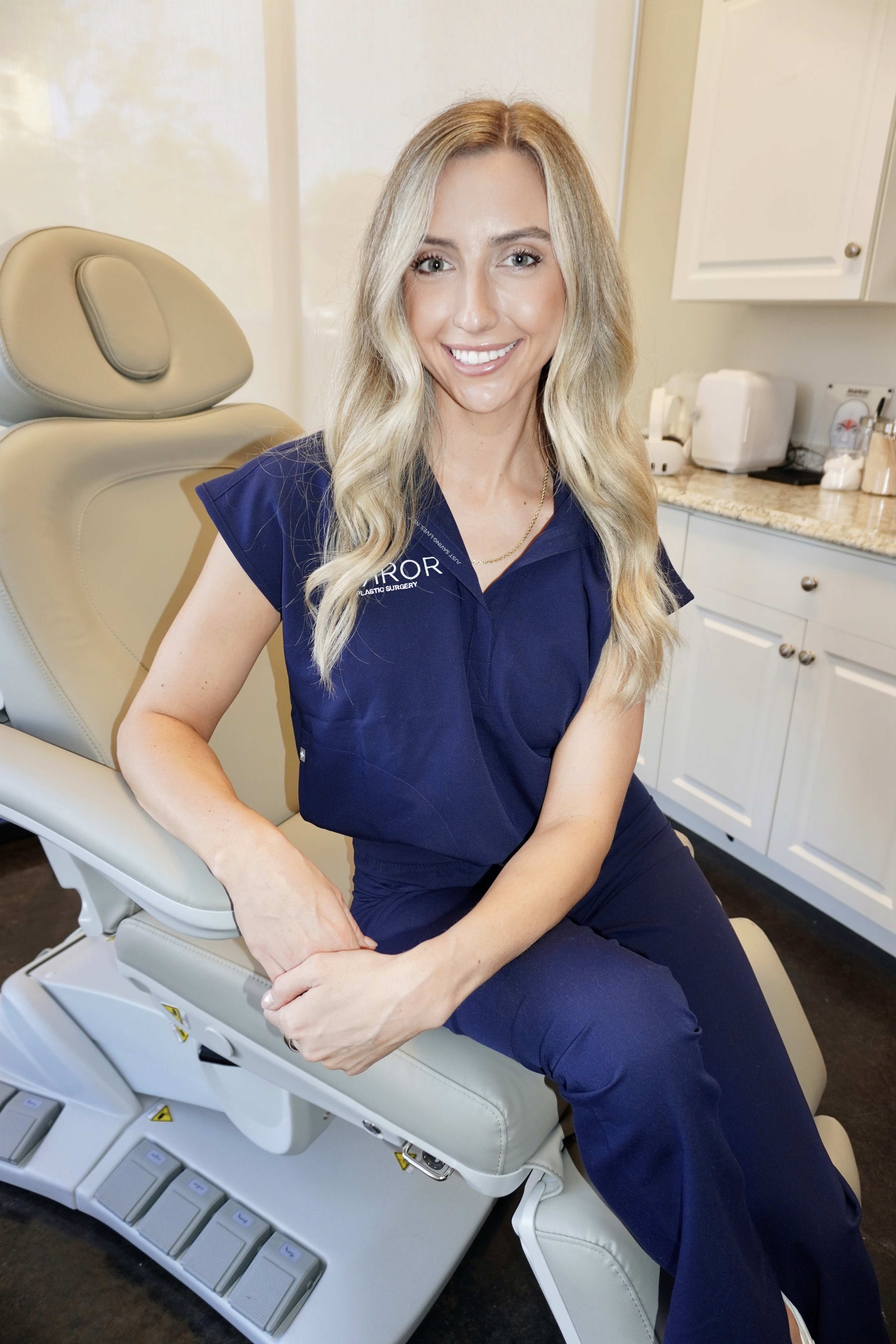
Every non-surgical breast enhancement inquiry at Mirror Plastic Surgery starts with a one-hour, top-to-bottom consultation led by Ellie Pranckevicius, FNP-BC. The session covers medical history, current skin quality, breast tissue composition, and a direct discussion of realistic outcomes. Florida’s climate introduces specific clinical variables. Chronic sun exposure accelerates dermal collagen breakdown, which lowers the baseline skin quality that energy-based treatments rely on for a strong response. Year-round humidity can influence wound healing and post-treatment skin behavior. Ellie evaluates these factors during your visit rather than assuming they will not matter.
Ellie’s 600 hours of hands-on esthetics training provide the technical precision needed for breast-specific injection work. Her Master’s in Nursing from the University of South Florida and four years in the Neuroscience ICU at Tampa General Hospital trained her to assess vascular anatomy and recognize complications early. Together, these experiences give her an unusually complete view of both surface and subdermal anatomy. Treatment planning at Mirror Plastic Surgery remains supplier-neutral, so product selection follows your anatomy and goals instead of brand quotas or commissions. When non-surgical options cannot reasonably meet your goals, Dr. Akash Chandawarkar, a Johns Hopkins-trained, Harvard-educated plastic surgeon with fellowship training at Manhattan Eye Ear & Throat Hospital, can discuss surgical pathways within the same practice.
Request your personalized one-hour assessment to review your anatomy and Florida-specific factors that affect candidacy.
Current Non-Surgical Breast Enhancement Modalities
Med-spa settings use several modalities for non-surgical breast enhancement. Platelet-rich plasma (PRP) uses growth factors from the patient’s own blood to stimulate tissue regeneration and improve skin texture at the décolleté and breast surface. Sculptra, a poly-L-lactic acid biostimulatory filler, gradually builds collagen over multiple sessions and produces subtle volume. AlloClae, available at Mirror Plastic Surgery, is an acellular tissue matrix that supports structural regeneration and is used for breast, buttock, and hip-dip applications. Radiofrequency and microneedling devices target skin laxity and surface texture by delivering controlled thermal energy to the dermis. Laser treatments address pigmentation, texture irregularities, and superficial laxity on the breast skin and décolleté. Published data describing dramatic enlargement with these tools is not available. Clinical literature and expert consensus describe outcomes in terms of improved contour, modest volume, and better skin quality rather than cup-size transformation.1
Who Typically Benefits From Non-Surgical Breast Treatments
Patient candidacy shapes outcomes as much as modality selection. Ideal candidates seek subtle improvement in volume, contour, or skin quality and accept that results are temporary and require maintenance. The realistic ceiling for volume change through injectable biostimulatory treatments remains modest, and many patients will see less.1 Patients with very thin skin, significant ptosis, or large volume goals usually benefit more from a surgical consultation.
Provider qualifications also carry significant weight. A qualified provider should have advanced anatomical training that extends beyond basic injection technique, board-certified physician oversight within the practice, a supplier-neutral approach to product selection, and documented experience with breast-specific anatomy. High-volume med spas that move quickly from patient to patient rarely allow time for the detailed anatomical assessment these treatments require. Mirror Plastic Surgery limits itself to one to two surgical cases per day to preserve focused attention for every patient, and that same standard applies to non-surgical services.
Meet with Ellie to review your candidacy and receive an honest assessment of what non-surgical options can realistically achieve for your anatomy.
Risks, Imaging Limits, and Clinical Tradeoffs
Injectable treatments in the breast region carry risks that differ from facial injections because breast tissue lies close to structures evaluated during routine imaging. Biostimulatory fillers, particularly calcium hydroxylapatite-based products, can create calcifications or nodules that appear on mammography. Radiologists need accurate information about any prior injectable treatments before interpreting imaging, because filler-related findings can mimic or obscure pathological calcifications. This reality does not automatically rule out these treatments. It does require careful documentation of all procedures and consistent disclosure at every future imaging appointment. PRP carries a lower imaging-interference profile because it uses your own blood, although breast-specific PRP data remains limited. Energy-based treatments do not introduce foreign material and have no known mammographic interference, but they also produce the most modest outcomes in this category. Patients and providers should discuss the tradeoff between imaging clarity and volume outcome before any treatment begins.
Common Misconceptions About Non-Surgical Breast Enhancement
Many patients arrive believing that non-surgical breast enhancement can match augmentation surgery. It cannot. Marketing language that implies otherwise, including phrases such as “natural breast augmentation” used for filler treatments or dramatic before-and-after images, deserves careful scrutiny. Another frequent misconception is that these treatments are permanent. Biostimulatory fillers require maintenance sessions, often every one to two years depending on the product and individual metabolism. Collagen stimulation follows a biological cycle that remodels and eventually softens without retreatment. Patients who understand these timelines from the start make more stable long-term decisions than those expecting a one-time, permanent result.
Side-by-Side Comparison of Non-Surgical Options
- PRP (Platelet-Rich Plasma): Mechanism: autologous growth factor delivery that stimulates tissue regeneration. Expected volume change: minimal, with primary benefits in skin texture and quality. Duration: results develop gradually, with maintenance schedules set per patient. Imaging considerations: low interference risk because the product is autologous.
- Sculptra (Poly-L-Lactic Acid): Mechanism: biostimulatory collagen induction. Expected volume change: subtle, gradual improvement over multiple sessions. Duration: maintenance schedule determined per patient. Imaging considerations: may produce small nodules, so patients should disclose treatment to the radiologist before mammography.
- AlloClae: Mechanism: acellular tissue matrix that supports structural regeneration. Expected volume change: modest contour improvement and tissue support. Duration: ongoing collagen integration, with maintenance schedule determined per patient. Imaging considerations: patients should discuss AlloClae use with their provider before scheduling breast imaging.
- Radiofrequency / Microneedling: Mechanism: controlled thermal energy that improves dermal laxity and surface texture. Expected volume change: none, with benefits focused on skin quality and mild laxity. Duration: results vary, but often last 6–12 months per treatment cycle. Imaging considerations: no foreign material introduced and no known mammographic interference.
- Laser Treatments: Mechanism: targeted light energy that treats pigmentation, texture, and superficial laxity. Expected volume change: none. Duration: varies by device and indication. Imaging considerations: no foreign material and no known mammographic interference.
Discuss which single modality or combination best fits your anatomy, goals, and imaging needs.
Frequently Asked Questions
What realistic cup-size change can non-surgical treatments provide?
Biostimulatory injectable treatments such as Sculptra create modest volume changes at most, and many patients see less depending on baseline tissue composition, skin quality, and collagen response.1 Energy-based treatments such as radiofrequency and laser do not add volume and instead address skin laxity and surface texture. Patients who want more than subtle additional volume, or who have significant ptosis, usually benefit from a surgical consultation. Ellie’s one-hour assessment at Mirror Plastic Surgery maps your anatomy against realistic outcomes before any treatment is recommended.
Are autoimmune conditions like Hashimoto’s thyroiditis contraindications?
Autoimmune conditions, including Hashimoto’s thyroiditis, can act as contraindications for biostimulatory fillers because these products rely on the body’s collagen-production response. An overactive or dysregulated immune system can create unpredictable inflammatory reactions to foreign material, including biostimulatory agents. Additional contraindications include active infection at or near the treatment site, bleeding disorders, pregnancy or breastfeeding, and certain medications that affect clotting or immune function. A thorough medical history review, such as the one completed during Mirror Plastic Surgery’s comprehensive consultation, offers the most reliable way to identify these factors before treatment.
How do non-surgical breast treatments affect future breast imaging?
Injectable biostimulatory fillers, particularly calcium hydroxylapatite-based products, can create calcifications or nodules that appear on mammography. These findings can resemble or obscure pathological calcifications and complicate interpretation for radiologists. Patients should disclose all prior injectable breast treatments to their radiologist and ordering physician before any mammogram or breast MRI. PRP carries a lower imaging-interference risk. Energy-based treatments introduce no foreign material and have no known mammographic interference. Providers should document imaging implications for any planned treatment in the medical record and review them during consultation.
What training should a provider have for non-surgical breast enhancement?
A qualified provider needs advanced anatomical training that covers both surface and subdermal breast anatomy, not just general injection technique. Board-certified physician oversight within the practice adds a meaningful safety layer. Supplier-neutral product selection, where the provider is not financially tied to a specific brand, keeps recommendations focused on patient anatomy rather than commercial relationships. At Mirror Plastic Surgery, Ellie Pranckevicius combines esthetics licensure, advanced nursing credentials, and ICU clinical experience within a practice overseen by Dr. Akash Chandawarkar, a Johns Hopkins-trained plastic surgeon. This depth of oversight is uncommon in med-spa settings and represents a clear differentiator in safety and outcome quality.
Conclusion: Setting Realistic Expectations With Expert Guidance
Non-surgical breast enhancement in a med-spa environment produces modest, temporary changes rather than surgical-level augmentation. Available treatments, including biostimulatory fillers, PRP, AlloClae, radiofrequency, and laser, each carry specific mechanisms, outcome limits, maintenance needs, and imaging considerations. A thorough anatomical assessment functions as a core part of safe preparation, not an optional extra. Mirror Plastic Surgery’s concierge approach, led by Ellie Pranckevicius with surgical oversight from Dr. Akash Chandawarkar, centers on that standard. Florida-specific factors such as sun-related collagen degradation and humidity receive direct evaluation instead of being overlooked. Safety, function, and natural aesthetics, in that order, guide every recommendation in this practice. Arrange a consultation with Ellie for an honest, anatomy-first evaluation of your non-surgical breast enhancement options.
Disclaimer: Results may vary from person to person. Editorial content, before and after images, and patient testimonials do not constitute a guarantee of specific results.
1 Results may vary from person to person. Editorial content, before and after images, and patient testimonials do not constitute a guarantee of specific results.