
Written by: Ellie Pranckevicius, FNP-BC, Aesthetic Nurse Practitioner & Aesthetic Injector | Facial Restoration & Regenerative Injectable Specialist, Mirror Plastic Surgery | Last updated: July 26, 2026
Key Takeaways: Lip Flip vs Lip Filler
- A lip flip uses neuromodulator to relax the upper-lip muscle so the lip gently rolls outward and shows more natural pink tissue without adding volume. Lip filler places gel inside the lips to build volume, shape, and definition.
- Lip flip results usually last about 2–3 months. Lip filler results often last 6–12 months, so maintenance frequency and yearly cost differ significantly.1
- A lip flip works best when the upper lip has enough volume at rest but tucks inward when you smile. Lip filler is better when lips are thin at rest or when you want structural volume, sharper definition, or symmetry correction.
- Both treatments can be combined when lips lack structure at rest and also roll inward with animation. Many injectors prefer a staged plan to see how each treatment contributes.
- Schedule a personalized consultation to decide whether a lip flip, filler, or a tailored combination best matches your anatomy and goals.
Lip Flip vs Fillers: Quick Comparison Table
Results appear in 3–7 days, full effect at 10–14 days1
| Feature | Lip Flip | Lip Filler |
|---|---|---|
| Mechanism | Neuromodulator relaxes orbicularis oris fibers, rolling the upper lip outward | Gel physically adds volume, shape, and definition |
| Onset | Visible immediately, final result after swelling resolves1 | |
| Duration | Duration: 2–3 months1 | Typically lasts 6–12 months depending on product, metabolism, and individual factors1 |
| Reversibility | Not reversible, metabolizes naturally over weeks | Hyaluronic acid-based lip fillers are fully reversible with hyaluronidase |
| Maintenance Cadence | Every 2–3 months to maintain consistent results | Lip filler maintenance is typically performed every 6–12 months but is optional rather than mandatory, with timing adjusted to individual metabolism, product, and visible volume loss. |
How a Lip Flip and Lip Filler Change the Lips
A lip flip targets the orbicularis oris, the circular muscle that surrounds the mouth. A small dose of 4–6 units of neuromodulator is injected into this muscle at the upper lip border to partially relax selected fibers. The upper lip then rolls slightly outward, exposing more of the natural pink vermilion tissue. No tissue is added, only the lip’s position changes.
Lip filler works through a different mechanism. Gel is placed directly into the lip tissue, where it occupies space and increases volume. This placement allows the injector to refine the cupid’s bow, support the vermilion border, and correct asymmetry. Products such as Juvederm Volbella and Restylane Kysse use advanced crosslinking technologies designed to resist enzymatic breakdown in the highly mobile lip tissue, which extends longevity compared with earlier formulations.
How Long Lip Flip and Filler Results Last
Duration is one of the most meaningful differences between these treatments. Because the mouth moves constantly, a lip flip using Botox or Daxxify usually lasts about 2–3 months.1 Frequent talking, eating, and smiling speed up neuromodulator metabolism in this area.
Lip filler typically lasts longer.1 Most lip fillers provide visible results for 6–12 months.1 The first syringe often lasts 6–9 months because untreated lip tissue breaks down the product more quickly. Subsequent treatments often last longer once a baseline is established.1 Longevity decreases with high facial animation, elevated metabolism, sun exposure, smoking, and dehydration. Understanding these duration patterns helps match each treatment to a patient’s anatomy and lifestyle.
Choosing a Lip Flip or Filler for Thin Lips
Treatment choice depends on what “thin” means for a specific patient. A lip flip is most appropriate when the upper lip has adequate volume at rest but rolls inward during smiling, when the vermilion border is thin, or when the patient wants subtle enhancement without added volume. In this situation, the lip has enough tissue, but its position hides existing volume.
When lips are genuinely thin at rest, a lip flip alone does not correct the issue. Lip filler is preferred when lips are thin at rest, when there is age-related volume loss, when the patient wants improved definition or border support, or when noticeable structural volume increase is the primary goal.
A practical guideline: if the concern appears only during animation, a lip flip may address it. If the concern is visible at rest, filler is usually the appropriate tool.
Schedule an assessment with Ellie to determine whether your concern appears at rest, during animation, or both, and which treatment best addresses it.
Combining a Lip Flip and Lip Filler Safely
Many patients achieve strong results by combining lip filler for volume and structure with a lip flip to enhance upper lip projection and reduce residual inward curl, with filler typically injected first followed by the flip after two weeks of settling. This staged approach allows the injector to evaluate filler results before adding neuromodulator and lowers the risk of overcorrection.
Downsides of a Lip Flip and Lip Filler
Each treatment has trade-offs that patients should understand before deciding.
Lip Flip Downsides:
The primary limitation is short duration, which requires frequent maintenance, as discussed above. This brief effect is paired with non-reversibility, so patients must wait for natural metabolism if they dislike the result.
Functional changes also matter. The treatment is not suitable for singers, wind-instrument musicians, or public speakers, because mild muscle weakening can temporarily affect speaking, sipping, or maintaining an oral seal. Common temporary side effects include mild swelling, bruising, tenderness, and slight asymmetry. Less common effects include difficulty using a straw, trouble pronouncing certain words, and mild drooling.
Mechanism limits are another factor. A lip flip adds no volume and only changes position, so it is unsuitable when structural fullness is the main goal.
Lip Filler Downsides:
- Patients often report short-term pain at the injection site, and bruising, swelling, and redness usually resolve within a few days.
- Severe complications such as vascular occlusion from lip filler are rare but require immediate management by a skilled provider.
- Filler does not correct inward rolling of the upper lip during animation.
- Filler cannot shorten the philtrum, so patients with a long upper lip may not reach their desired outcome with filler alone.
Who Should Skip or Delay a Lip Flip or Filler
Beyond infection and pregnancy, additional contraindications fall into three groups. Immune-related concerns include active autoimmune conditions. Allergic risk includes known hypersensitivity to any filler or neuromodulator component. Bleeding risk includes current use of blood thinners that may increase bruising. Because these factors vary widely, a thorough medical history review during consultation is the right setting to evaluate individual contraindications.
Cost, Maintenance, and Long-Term Value
A lip flip usually has a lower per-session price. Most lip flip procedures in the U.S. cost between $75 and $300 as of 2026, with many reputable clinics in major metro areas charging $150–$300 once injector fees are included. Because results last only about 2–3 months, yearly maintenance costs can add up and may approach or exceed the annual cost of filler.
Florida lip filler pricing in 2026 typically ranges from $450 to $1,200 per syringe. Provider expertise is the largest driver of lip filler value, because experienced injectors charge more for technical judgment in depth, shape, balance, and complication management, which reduces the likelihood of costly corrective procedures later.
Exact pricing at Mirror Plastic Surgery is determined during your personal consultation, where Ellie assesses your anatomy and recommends only what is clinically appropriate. This assessment-first approach means pricing reflects actual need rather than quotas or upselling targets.
Get your personalized treatment plan and transparent pricing from Ellie, with recommendations based solely on what is clinically appropriate for your anatomy.
Why Ellie’s Personalized Assessment Drives Better Results
The most important variable in any lip enhancement outcome is not the product. The assessment that comes first has the greatest impact. At Mirror Plastic Surgery, Ellie Pranckevicius, FNP-BC, performs a comprehensive top-to-bottom evaluation that can last up to an hour. She studies the lips in context with the midface, perioral region, and overall facial balance.
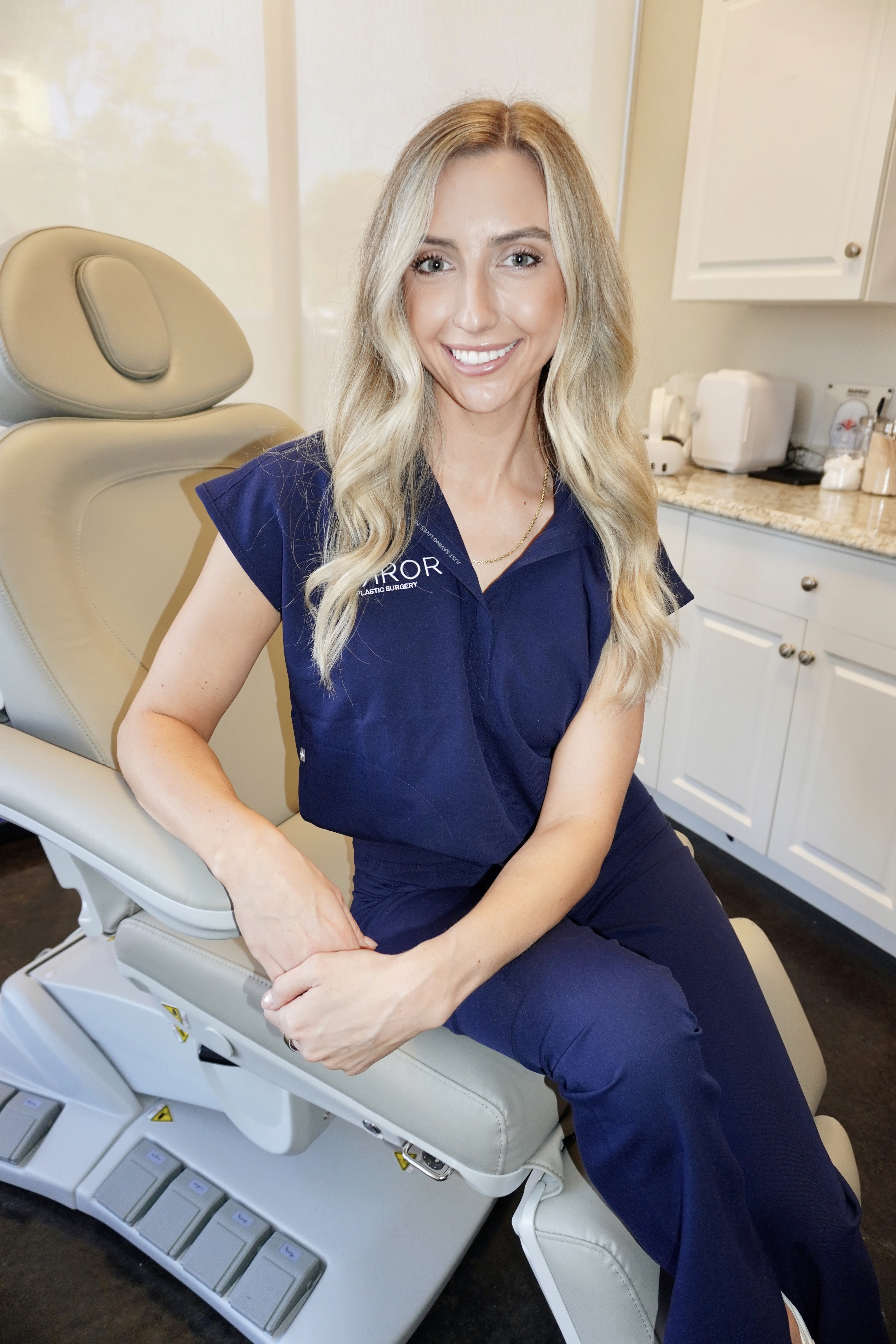
Ellie’s approach grows from her dual background as a licensed esthetician and a board-certified Family Nurse Practitioner with four years of Neuroscience ICU experience at Tampa General Hospital. This combination gives her a precise understanding of both surface and subdermal anatomy, which directly supports safe, accurate injection placement.
That anatomical precision shapes her treatment philosophy. She prioritizes revitalizing inherent facial characteristics before adding volume. This approach aligns with 2026 expert-reviewed guidelines that emphasize choosing techniques and products based on three distinct patient objectives: beautification to enhance shape and symmetry, rejuvenation to refresh lips, and restoration to reconstruct perioral structure. Treating the lips as part of the whole face, rather than an isolated feature, helps prevent asymmetry and an overdone look.
Mirror Plastic Surgery is a supplier-neutral practice. Product recommendations are based entirely on what is clinically appropriate for each patient’s anatomy, not on brand relationships or volume incentives.
Conclusion: Matching Treatment to Your Anatomy
A lip flip and lip filler address different anatomical concerns through different mechanisms. A lip flip offers a short-duration, low-commitment option for patients whose upper lip rolls inward during animation but has adequate volume at rest. Lip filler is better suited when structural volume, definition, or symmetry correction is needed. Many patients benefit from a thoughtful combination when both concerns are present.
Duration, reversibility, candidacy, and long-term cost all differ in meaningful ways between these options. The most reliable path to a natural, proportionate outcome is an individualized assessment that considers the full face, not just the lips.
Get Ellie’s thorough, honest evaluation of which treatment or combination is right for your anatomy at Mirror Plastic Surgery in St. Petersburg, FL.
Frequently Asked Questions
How is a lip flip different from lip filler if both make lips look fuller?
Each treatment creates the appearance of fullness in a different way. A lip flip does not add tissue or volume. It relaxes a small portion of the orbicularis oris muscle so the upper lip rolls outward and reveals more of the existing pink vermilion. The lip looks fuller because more of it is visible, not because more tissue exists.
Lip filler physically deposits gel into the lip tissue, which increases actual volume. This added volume lets the injector sculpt shape, define the vermilion border, and correct asymmetry. If your lips are thin at rest, a lip flip will not meaningfully change that, and filler is usually the appropriate tool. If your lips look adequate at rest but disappear when you smile, a flip may be enough. Many patients benefit from both treatments, applied in a staged sequence.
Will a lip flip affect my ability to speak or use a straw?
A lip flip can temporarily affect these functions. The orbicularis oris muscle controls many fine movements, including speaking, sipping, whistling, and maintaining an oral seal. When a neuromodulator partially relaxes this muscle, some patients notice mild difficulty using a straw, slight changes in pronunciation, or a subtle feeling of lip weakness.
These effects are temporary and fade as the neuromodulator metabolizes, usually within 2–3 months. For patients whose work or hobbies depend on precise lip control, such as singers, wind-instrument musicians, public speakers, or broadcast professionals, this temporary change should be discussed carefully during consultation.
How does Ellie at Mirror Plastic Surgery decide which treatment to recommend?
Ellie performs a comprehensive facial assessment that can last up to an hour. She evaluates how the lips relate to the midface, perioral anatomy, and overall facial proportions rather than viewing them in isolation. She also determines whether the concern appears at rest, during animation, or both, which directly guides the choice between a lip flip, filler, or a combination.
Her first priority is restoring and balancing inherent facial features before adding volume. She is known for transparency and will clearly explain when a treatment is not yet necessary for a patient’s anatomy. Mirror Plastic Surgery remains supplier-neutral, so product choices are based solely on clinical suitability, not brand incentives.
Can I reverse a lip flip if I do not like the result?
A lip flip cannot be reversed in the same way as filler. No enzyme equivalent to hyaluronidase exists for neuromodulators. If the result is not to your liking, you must wait for natural metabolism over 2–3 months. This limitation makes a thorough pre-treatment consultation especially valuable, because understanding expected outcomes and procedure limits lowers the chance of disappointment.
Hyaluronic acid-based lip fillers are fully reversible with hyaluronidase, which can dissolve the product and return the lip area to its pre-treatment baseline within a few days if needed.
Is it safe to get a lip flip and lip filler at the same appointment?
Same-day treatment is possible, but many experienced injectors prefer a staged approach. Filler is usually placed first, and the lip flip is performed after the filler has settled, often at a follow-up visit about two weeks later. This sequence lets the injector evaluate the filler result before adding neuromodulator, which reduces the risk of overcorrection and helps identify the cause of any asymmetry.
Whether same-session or staged treatment is appropriate depends on your anatomy, the degree of correction needed, and the injector’s clinical judgment. At Mirror Plastic Surgery, this decision is made during the initial assessment, with patient safety and long-term outcome as the main priorities.
Disclaimer: Results may vary from person to person. Editorial content, before and after images, and patient testimonials do not constitute a guarantee of specific results.
1 Results may vary from person to person. Editorial content, before and after images, and patient testimonials do not constitute a guarantee of specific results.