Lip Filler Types: A Safety-Focused Guide to Choosing
Content
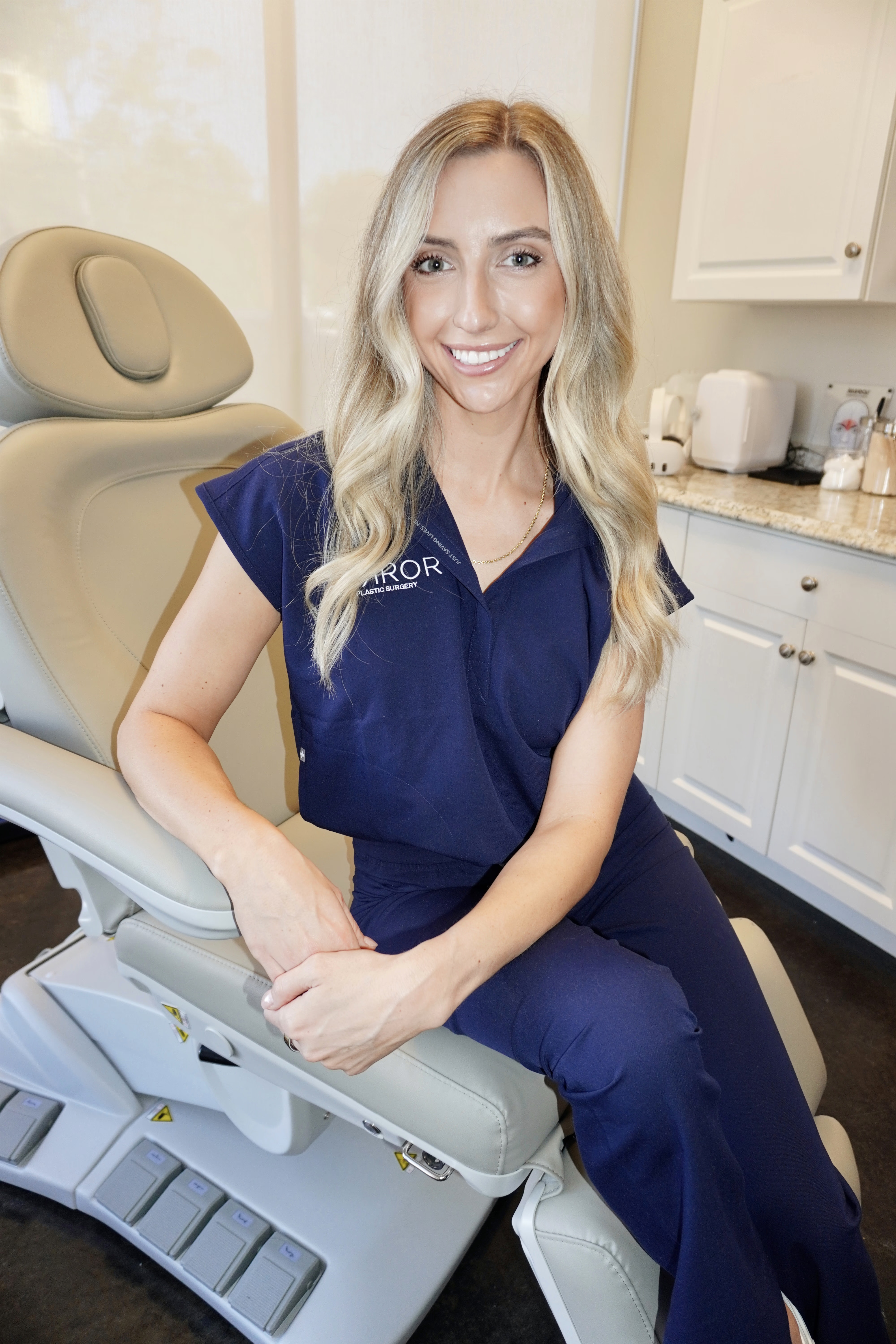
Written by: Ellie Pranckevicius, FNP-BC, Aesthetic Nurse Practitioner & Aesthetic Injector | Facial Restoration & Regenerative Injectable Specialist, Mirror Plastic Surgery | Last updated: July 27, 2026
Key Points Before You Choose Lip Filler
Hyaluronic acid (HA) fillers remain the evidence-based standard for lip augmentation because they are reversible, well studied, and adaptable to individual anatomy and movement.
Patients should complete a thorough medical screening, including herpes history, bleeding disorders, and prior filler use, before any lip filler treatment to reduce complication risk.
Among HA options, softer, lower-viscosity gels like Juvederm Volbella XC and RHA 3 usually create the most natural-looking results by preserving lip flexibility and expression.
Non-HA fillers such as PMMA and CaHA carry higher risks of lumps, migration, and irreversible complications in the highly mobile lip area and are generally not recommended.
Schedule a personalized consultation with the experts at Mirror Plastic Surgery for a comprehensive facial assessment and a tailored, safety-first lip filler plan.
Quick Safety Checklist Before Any Lip Filler
Before proceeding with any lip filler treatment, a qualified medical provider should confirm each of the following:
Document informed consent naming the product, planned volume, and specific risks including vascular occlusion, migration, and the possible need for dissolution.
Choosing a Lip Filler Category After Safety Screening
Once you complete the safety screening above, the next step is selecting a filler category that fits your anatomy and goals. The best option depends on your natural lip structure, movement patterns, and whether you want mainly hydration, definition, or volume. The table below compares the main filler categories used in aesthetic medicine today.
Filler Type
Reversible?
Appropriate for Lips?
Typical Duration
Hyaluronic Acid (HA), for example Juvederm, Restylane, RHA
Not recommended, significantly higher risk of lumps and migration in lips
Permanent
The best filler choice depends on the patient’s anatomy, movement patterns, and desired flexibility rather than brand loyalty alone. For lips specifically, softness and reversibility usually matter more than structural firmness.
HA Lip Fillers That Look the Most Natural
Natural-looking results come from matching filler rheology, or how a gel moves and recovers, to the constant motion of the lips during speech, smiling, and expression. Natural enhancement remains the most requested lip filler style in 2026, with patients prioritizing movement and facial harmony over projection.
Within the HA category, product selection plays a major role:
Juvederm Volbella XC (15 mg/mL HA) is a soft, low-viscosity gel suited for subtle hydration, fine line correction, and delicate enhancement. It prioritizes natural movement over volume and lasts up to 12 months.1
Juvederm Ultra XC (24 mg/mL HA) provides more immediate volume and definition with a similar duration. The trade-off is a slightly firmer feel compared to Volbella.
Restylane Kysse uses XpresHAn technology to allow natural movement in dynamic areas, supporting expression while providing crisp definition. It offers comparable longevity to the other HA lip fillers above.
RHA 3 received FDA approval for lip augmentation in adults aged 22 and older on October 27, 2023. RHA fillers use lighter crosslinking that preserves longer HA chains, enabling the gel to stretch, compress, and recover shape during facial movement, which suits the lips particularly well.
Safety depends on both the product and the person receiving it. The following patient-specific factors guide safe product selection:
Skin quality and tissue thickness: Thinner or more delicate tissue requires lower-viscosity, softer gels to avoid palpability or the Tyndall effect.
Lip movement and muscle activity: Lips require a filler that maintains the softness and flexibility needed for the constant movement described above, and overly firm products create stiffness.
Hydration versus volume goals: Patients seeking improved texture and hydration are often better served by low-density gels like Volbella or RHA 1. Patients seeking defined volume may be candidates for medium-density options, provided anatomy supports that choice.
The FDA warns that rare but serious complications such as skin necrosis, stroke, or blindness can occur if any dermal filler is inadvertently injected into a blood vessel, which underscores why injector expertise outweighs brand selection.
Celebrity Lip Fillers and Why Reversibility Matters
Public figures including the Kardashians have been widely associated with HA-based lip fillers from the Juvederm family, particularly Juvederm Ultra XC and Volbella XC. Many celebrities and influencers have since dissolved old filler in favor of a softer appearance, reflecting the broader 2026 shift toward quiet aesthetics and natural movement over dramatic volume.
The more clinically relevant point is why reversibility matters regardless of which public figure’s results you admire. Because HA is reversible, as noted in the comparison above, results can be adjusted or fully dissolved if goals change, anatomy shifts with age, or a different approach is desired. That flexibility is not available with non-HA alternatives. HA fillers represent a commitment you can walk back if needed, which changes the risk-benefit calculation entirely, particularly for anyone trying lip enhancement for the first time.
Fat Transfer and Permanent Fillers Compared to HA
Fat transfer and permanent fillers are sometimes presented as longer-lasting alternatives to HA, yet both carry meaningful trade-offs that deserve careful discussion.
How Ellie Approaches Lip Filler at Mirror Plastic Surgery
Every lip assessment at Mirror Plastic Surgery starts with the whole face, not just the lips. Lip proportion connects closely to chin position, dental projection, philtrum length, and the way a person’s smile moves. A result that looks refined on one patient can look forced on another using the identical product and volume because the anatomy differs.
Ellie’s approach prioritizes restoration before augmentation. When lips have lost hydration and definition with age, the first goal is to address those changes before adding volume. Many patients feel surprised by how much improvement comes from a conservative, well-placed treatment rather than a full syringe of the densest product available.
Ellie also explains clearly when a patient does not need a procedure yet. That conversation builds more trust than any before-and-after photo. When treatment is appropriate, she selects products based on tissue quality, movement patterns, and whether the primary goal is hydration, border definition, or volume, not on what is trending. No single technique, needle-versus-cannula approach, or HA formulation is universally superior. The right choice is always individualized.
Long-term maintenance receives as much attention as the initial treatment. Ellie explains how and why filler breaks down, which factors accelerate that process, and how to plan maintenance realistically so results age well rather than requiring correction.
Ellie Pranckevicius, FNP-BC, Aesthetic Nurse Practitioner, Mirror Plastic Surgery
Ellie Pranckevicius, FNP-BC
Frequently Asked Questions
Am I a good candidate for lip filler?
Most healthy adults who are not pregnant or breastfeeding, do not have active infection or inflammation in the treatment area, and have realistic expectations are potential candidates. A thorough medical history review is required before any treatment. Factors that may affect candidacy include a history of cold sores, which may require antiviral prophylaxis, bleeding disorders, anticoagulant use, autoimmune conditions, and prior filler history. At Mirror Plastic Surgery, Ellie conducts a comprehensive top-to-bottom assessment to evaluate anatomy, tissue quality, and goals before recommending any product or volume.
How long do lip fillers last, and will I need maintenance?
As noted earlier, most HA lip fillers last 6 to 12 months, and the lips often sit toward the shorter end of that range.1 The lips metabolize filler faster than less mobile facial areas because of constant muscle activity and relatively high blood flow. First-time patients often see results fade sooner because the tissue lacks an existing filler foundation. Factors including metabolic rate, exercise level, and sun exposure can accelerate breakdown. Maintenance treatments allow results to build gradually over time, and conservative dosing at each session supports a natural appearance that ages well.
What are the warning signs after lip filler that require urgent attention?
Normal post-treatment effects include swelling peaking within 24 to 72 hours, bruising lasting up to a week, and tenderness at injection sites. Warning signs that require immediate medical evaluation include severe or escalating pain, skin blanching or whitening, dusky or mottled discoloration, coolness of the skin, and any changes in vision. These may indicate vascular occlusion, a rare but serious complication that requires prompt hyaluronidase treatment. Mirror Plastic Surgery maintains hyaluronidase on-site with a written occlusion protocol as part of its safety-first standard of care.
Can lip filler be dissolved if I do not like the result?
Yes. As discussed earlier, HA’s reversibility with hyaluronidase typically returns the lips close to their original state within 24 to 48 hours. This feature is one of the primary reasons HA remains the evidence-based standard for lip augmentation. A 2024 MRI study found that HA filler can remain detectable in tissue for at least two years even after the cosmetic effect has faded1, which is why conservative dosing and appropriate spacing between treatments matter for long-term tissue health.
What makes Mirror Plastic Surgery’s approach to lip filler different?
Mirror Plastic Surgery operates on a concierge medicine model that prioritizes safety first, function second, and aesthetics third. Ellie Pranckevicius brings a rare combination of esthetician training and advanced nursing expertise, including four years in a Neuroscience ICU, which informs her clinical judgment and anatomical precision. Consultations extend up to an hour and include a full top-to-bottom facial assessment rather than an isolated evaluation of the lips. The practice is supplier-neutral, so product selection is driven entirely by what is most appropriate for each patient’s anatomy and goals, not by quotas or brand relationships. Patients who are not yet ready for treatment are told so directly.
Conclusion: Making a Safe, Personalized Lip Filler Choice
Hyaluronic acid fillers are the evidence-based standard for lip augmentation in 2026. They are reversible, well studied, and available in formulations that can be matched precisely to individual anatomy, movement, and goals. The most important variable in any lip filler outcome is not the brand on the syringe but the depth of anatomical knowledge and clinical judgment behind the needle. At Mirror Plastic Surgery in St. Petersburg, Florida, Ellie Pranckevicius conducts a comprehensive top-to-bottom assessment before any treatment recommendation, which ensures that safety, function, and your unique anatomy guide every decision.
Book a consultation with Ellie to receive a personalized, evidence-based assessment and find out which lip filler type, if any, is right for you.
Disclaimer: Results may vary from person to person. Editorial content, before and after images, and patient testimonials do not constitute a guarantee of specific results.
1 Results may vary from person to person. Editorial content, before and after images, and patient testimonials do not constitute a guarantee of specific results.