
Written by: Ellie Pranckevicius, FNP-BC, Aesthetic Nurse Practitioner & Aesthetic Injector | Facial Restoration & Regenerative Injectable Specialist, Mirror Plastic Surgery | Last updated: July 24, 2026
Key Takeaways
- Swelling after lip filler is a normal inflammatory response that peaks within 12–48 hours and usually settles within two weeks.1
- Days 1–2 often show the most dramatic fullness and asymmetry, so wait until at least Day 14 before judging results.1
- Cold compresses, head elevation, and avoiding heat or salty foods help limit swelling and bruising.
- Persistent, worsening, or delayed swelling beyond two weeks may signal a complication and needs prompt professional evaluation.
- At Mirror Plastic Surgery, Ellie Pranckevicius provides personalized aftercare guidance and direct access throughout recovery. Schedule your anatomy-first lip assessment to experience this level of care.
When Lips Typically Look the Most Swollen
Day 1 after lip enhancement represents the peak of swelling, when lips may look significantly fuller, uneven, or disproportionate. For many patients, the morning of Day 2 feels most alarming because fluid pools overnight and the local anesthetic has fully worn off, so tenderness becomes more noticeable. Many patients report some level of tenderness on Day 1. This stage passes quickly.
- Expect lips to look 20–50% larger than the intended final result on Days 1–2.1
- Avoid assessing symmetry or shape during this window, because swelling is rarely uniform.
- Apply a wrapped cold compress for 10–15 minutes at a time to ease acute puffiness.
- Photograph your lips at the same time each day in consistent lighting to track improvement objectively.
Day‑by‑Day Lip Filler Swelling Timeline
Swelling peaks between 12 and 48 hours post-injection, then decreases progressively.1 As noted earlier, this peak period can make lips appear significantly oversized before they settle. Research has shown that most injection-site reactions, including edema, are mild and transient.
- Day 0 (procedure day): Immediate fullness, possible tightness, small raised dots at injection points, and residual numbness from anesthetic.
- Day 1: Swelling increases as anesthetic clears. Redness, firmness, and tenderness are common.
- Days 2–3 (peak): The top lip can appear extra lifted and bruising becomes more visible.1 Temporary asymmetry is normal.
- Days 4–7: Swelling reduces significantly, lips look more natural, and bruising begins to fade.1 Most patients feel comfortable in public by Day 5.
- Days 8–14: Swelling is almost completely resolved and lips reach their final soft, natural shape.1
- Weeks 2–4: Final result is generally stable by week 41 as filler fully integrates with surrounding tissue.
Morning Swelling and Sleep Position
Swelling after lip filler often looks worse after sleeping because fluid pools overnight when the head lies flat. Gravity drains interstitial fluid less effectively when the body is horizontal, so morning puffiness follows a normal physiological pattern rather than indicating a complication.
- Sleep on your back with your head elevated above heart level using two or three pillows for the first two nights. This position uses gravity to limit fluid pooling.
- Avoid sleeping face-down, because that position increases pressure on the lips and encourages fluid accumulation in the tissue.
- Expect morning swelling to improve within one to two hours of being upright as gravity aids drainage. If it does not improve at all after Day 5, contact your injector.
- Stay well hydrated throughout the day to support lymphatic clearance and more efficient fluid movement.
Benadryl and Lip Filler Swelling
Diphenhydramine (Benadryl) is an antihistamine that may reduce histamine-driven swelling, but routine post-filler edema is primarily an inflammatory and osmotic response rather than a histamine-mediated allergic reaction. Benadryl is not a standard clinical recommendation for normal lip filler swelling. Paracetamol is often preferred as an over-the-counter pain reliever after lip filler because some other analgesics may increase bruising risk. Always confirm suitability with your clinician or pharmacist before taking any medication.
- Do not self-administer antihistamines or anti-inflammatories without consulting your injector first.
- Ibuprofen and aspirin should be avoided for the first 24 hours as they may increase bruising risk.
- If swelling feels itchy, hive-like, or rapidly spreading, contact your injector immediately. This pattern needs evaluation for an allergic reaction rather than home management.
- Cold compresses and head elevation remain the most evidence-consistent first-line strategies for routine swelling.
Typical Timeline for Swelling to Resolve
Most patients experience a significant reduction in swelling by days 6–7.1 As outlined in the day-by-day timeline, most visible swelling settles by Day 14, although subtle changes continue.1 Factors that prolong swelling include larger injected volumes, highly cross-linked fillers with greater water retention, older age with slower metabolism, first-time procedures, and a personal tendency toward edema.
Upper lip filler often follows a distinct pattern. The upper lip frequently swells more than the lower lip, so it may project or curl outward during Days 2–3. This appearance softens as the inflammatory response settles.
Swelling after two weeks deserves closer attention. Swelling that persists beyond two weeks, returns after initially subsiding, or fluctuates and worsens is not normal edema and typically indicates a delayed inflammatory reaction that needs professional evaluation.
- Most visible swelling resolves by Day 14 for the majority of patients.1
- Full filler integration with surrounding tissue can take up to four weeks.1
- Delay judgment of final results until at least the two-week mark.
- If any swelling remains at two weeks, schedule a follow-up with your injector rather than waiting indefinitely.
Checklist for Reducing Lip Filler Swelling
This seven-step checklist reflects general best practices drawn from clinical aftercare guidance. Confirm specific instructions with your injector, because individual anatomy and treatment details vary.
- Ice in intervals: Apply ice packs wrapped in cloth for 5–10 minutes at a time during the first 48 hours. Never apply ice directly to skin.
- Elevate your head: Sleep on your back with the head elevated on two or three pillows for the first two nights to reduce overnight fluid pooling.
- Consider arnica: Arnica cream may be applied after lip injections to shorten bruise duration through natural anti-inflammatory effects. Discuss timing with your injector.
- Avoid heat sources: Avoid saunas, steam rooms, sunbeds, very hot showers, and hot drinks for 48 hours to prevent blood-vessel dilation that worsens swelling.
- Eliminate alcohol and salty foods: Avoid alcohol, salty foods, and spicy foods for 24–48 hours because they increase swelling and bruising.
- Stay hydrated: Drink at least 8–10 glasses of water per day to support filler integration and quicker healing.
- Gentle lymphatic support: After the first 48 hours, very gentle outward strokes away from the lips (not pressing into the filler) may support lymphatic drainage. Avoid any firm massage until cleared by your injector, because filler remains malleable for the first 48 hours and pressure can cause unwanted migration.
Warning Signs That Swelling Is Not Normal
Research including a meta-analysis in Frontiers in Surgery found that injection-site swelling is common among HA lip augmentation patients, confirming it as a normal response rather than a complication. True complications are uncommon, yet early recognition matters. The lists below outline when to seek help.
Contact your injector promptly for any of the following:
- Swelling that worsens after Day 3 instead of improving
- A hard lump that does not improve after 7–10 days, or nodules appearing at weeks 2–4
- Persistent or increasing asymmetric firmness after the first week
- Swelling that has not improved at all by Day 5
- Redness or warmth that worsens rather than improves
- Swelling that returns after initially subsiding
Seek emergency care immediately for any of the following:
- Skin turning white, blue, or blueish-purple with unusual pain and cool temperature. These are signs of vascular occlusion and require hyaluronidase treatment within hours.
- Sudden vision changes, skin that feels cold or mottled, or skin that develops blisters
- Difficulty breathing, wheezing, or throat or chest tightness. These are emergency symptoms that need urgent care.
- Fever with spreading redness, heat, or purulent discharge indicating possible infection
How Mirror Plastic Surgery Guides Your Recovery
At Mirror Plastic Surgery, post-procedure support is built into the care model from the first consultation. Ellie Pranckevicius, FNP-BC, approaches every lip treatment through the lens of her dual background in esthetics and advanced nursing, including four years in a Neuroscience ICU, where reading subtle physiological changes was a daily clinical requirement.
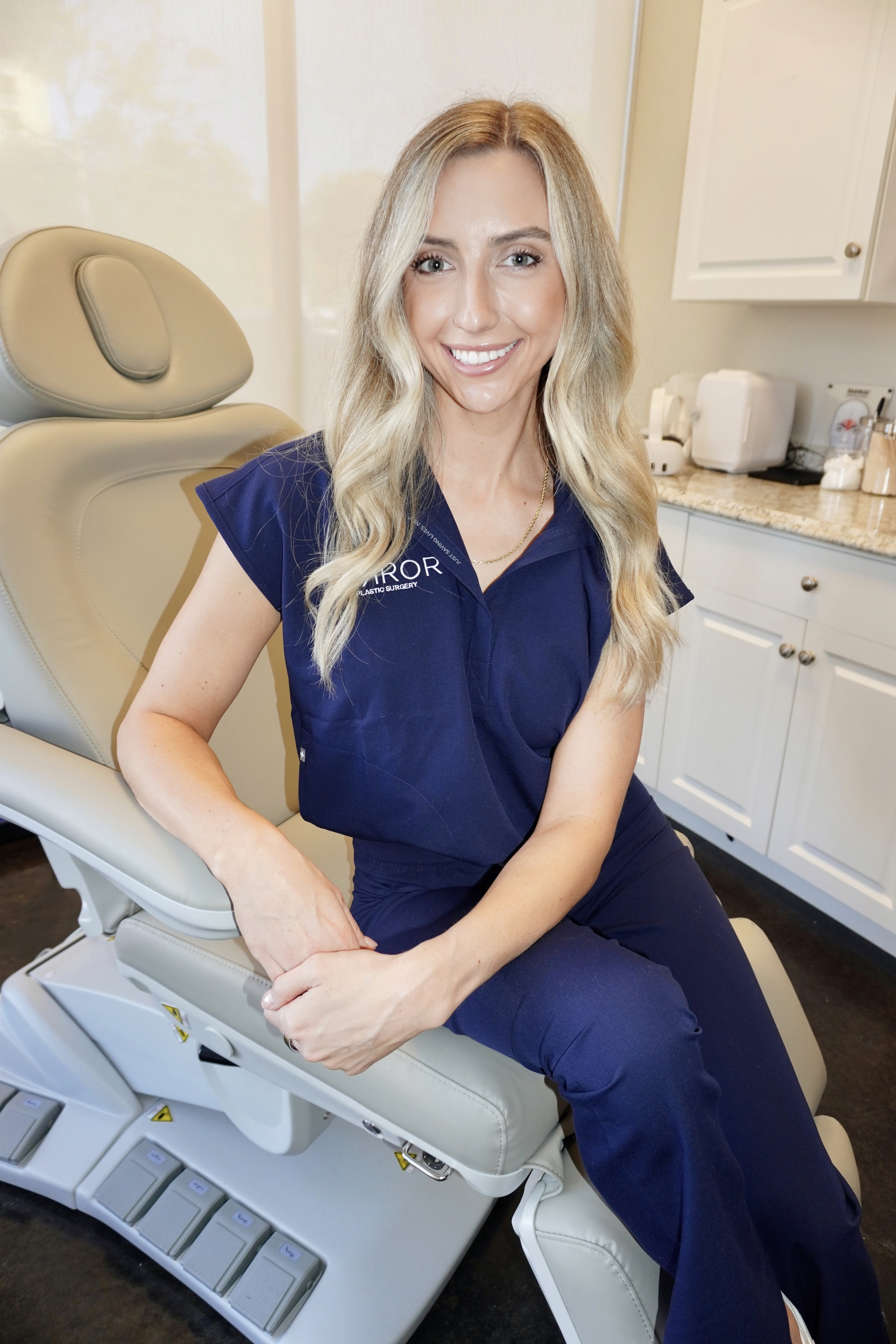
“My priority order never changes: safety first, function second, aesthetics third,” says Ellie. “That means before I place a single unit of filler, I spend time understanding your anatomy, your healing tendencies, and your long-term goals, not just what you want to look like next week.”
This philosophy directly shapes the recovery experience. Instead of a brief post-procedure handout, patients receive a thorough walkthrough of their individual swelling expectations based on the volume used, injection pattern, and their own tissue characteristics. High-volume practices rarely have time to provide this level of detail.
“I want every patient to know exactly what day-by-day progression looks like for them specifically,” Ellie explains. “When you understand why your upper lip looks more swollen than your lower lip on Day 2, you are not panicking. You are informed. That is the difference between a rushed appointment and a real assessment.”
Patients at Mirror Plastic Surgery have direct access to Ellie via text, call, or email throughout their recovery. If a symptom arises that does not fit the expected timeline, there is no waiting on hold or navigating a call center. “If something does not look right, I want to hear from you immediately,” Ellie says. “Early intervention is everything when it comes to rare complications.”
Initial consultations run up to an hour. This deliberate choice allows for a top-to-bottom anatomical assessment, honest discussion of realistic outcomes, and a personalized aftercare plan. This approach contrasts with high-volume practices where treatment decisions are made in minutes and follow-up is minimal.
Experience a thorough, anatomy-first assessment that prioritizes your individual healing tendencies and long-term goals.
Knowing the normal progression of lip filler swelling, along with the clear signals that fall outside that progression, helps protect both your safety and your results. Swelling that peaks at 48 hours and resolves steadily over two weeks reflects physiology working as expected. Swelling that worsens after Day 3, changes color, or appears with severe pain signals a problem that needs professional evaluation without delay. The difference between a reassuring recovery and a complication caught early often comes down to having an injector who is accessible, anatomically knowledgeable, and committed to your long-term outcome over a single appointment.
Get the concierge-level guidance your results deserve at Mirror Plastic Surgery in St. Petersburg, FL.
Disclaimer: Results may vary from person to person. Editorial content, before and after images, and patient testimonials do not constitute a guarantee of specific results.
Frequently Asked Questions
Is it normal for only one side of my lips to swell more after filler?
Asymmetric swelling during the first three to five days after lip filler is a common and expected part of healing. The upper lip has a particularly rich blood supply, and individual variations in blood flow, injection entry points, and sleep position all influence how fluid distributes across the lips. One side swelling more than the other does not automatically mean filler was placed unevenly. The key indicator to watch is trajectory. Asymmetric swelling that is improving by Day 7 is normal. Asymmetric firmness or swelling that worsens after Day 7, or that remains clearly uneven at the two-week mark, warrants a follow-up with your injector for evaluation.
Can I wear makeup or use lip products after lip filler?
Avoid makeup on or around the lips for the first 24 hours after lip filler treatment. Fresh injection sites are small open entry points, and applying products, even those marketed as clean or natural, introduces bacteria that can increase infection risk. After the first 24 hours, only new, fragrance-free products are recommended. Lip balms with heavy fragrances, exfoliating ingredients, or retinol should be avoided during the first week. If you are unsure whether a specific product is safe to use, contact your injector before applying it.
When is it safe to exercise after lip filler?
Strenuous exercise should be avoided for at least 24 to 48 hours after lip filler treatment. Physical exertion elevates heart rate and blood pressure, which increases blood flow to the face and can worsen swelling and bruising during the acute inflammatory phase. Activities that involve significant heat, such as hot yoga, outdoor running in warm weather, or saunas, carry additional risk because heat causes blood vessel dilation that amplifies edema. Light walking is generally acceptable after the first 24 hours, but return to full exercise intensity should be discussed with your injector based on your individual treatment and healing response.
What makes Mirror Plastic Surgery’s approach to lip filler different from other practices?
Mirror Plastic Surgery operates on a concierge medicine model that prioritizes safety first, function second, and aesthetics third, in that order. Initial consultations with Ellie Pranckevicius run up to an hour and include a comprehensive top-to-bottom anatomical assessment, not just a discussion of the area being treated. This structure means lip filler decisions are made in the context of your full facial anatomy, your skin physiology, your healing tendencies, and your long-term goals. Patients also receive direct access to Ellie via text, call, or email throughout their recovery, so questions or concerns are addressed promptly rather than through a general intake line. This level of access and individualized attention is a deliberate contrast to high-volume practices where appointments are brief and follow-up is limited.
How do I know if my lip filler swelling is a delayed inflammatory reaction rather than normal healing?
Normal post-filler swelling appears within the first 48 hours, feels soft and diffuse, and improves consistently day by day, with most resolution by two weeks. A delayed inflammatory reaction (DIR) follows a distinctly different pattern. It typically appears two weeks to several months after treatment, is often focal and asymmetric, feels firm or tender rather than soft, and may be accompanied by pinkish-red or dusky skin that feels noticeably warm. A key distinguishing feature is that DIR swelling fluctuates. It may worsen with illness, stress, fatigue, or hormonal changes, and it does not respond to ice the way routine edema does. If you notice swelling returning after it had resolved, or swelling that appears for the first time weeks after your treatment, contact your injector for evaluation rather than waiting to see if it resolves on its own.
1 Results may vary from person to person. Editorial content, before and after images, and patient testimonials do not constitute a guarantee of specific results.