
Written by: Ellie Pranckevicius, FNP-BC, Aesthetic Nurse Practitioner & Aesthetic Injector | Facial Restoration & Regenerative Injectable Specialist, Mirror Plastic Surgery
Key Takeaways for Hip Dip Filler vs Fat Transfer
-
Hip dip filler uses biostimulatory injectables like Radiesse or AlloClae to restore volume and stimulate collagen without surgery. Fat transfer uses your own fat, harvested and grafted surgically, to correct the indentation.
-
Biostimulatory fillers typically deliver results lasting two years or longer with periodic maintenance.1 Fat transfer can stay stable for many years but is affected by weight changes and partial fat reabsorption.1
-
Non-surgical filler usually involves one to two days of mild downtime per session. Surgical fat transfer requires four to six weeks of activity restrictions and recovery at both donor and treatment sites.
-
Properly placed fat grafts feel the most like natural tissue because they behave as your own fat. Both approaches can look and feel natural when performed with precise anatomical technique.
-
Schedule your personalized consultation at Mirror Plastic Surgery to decide whether hip dip filler or fat transfer fits your anatomy, lifestyle, and goals.
How Long Do Hip Dip Filler and Fat Transfer Results Last?
Biostimulatory fillers such as Radiesse work in two phases. First, the calcium hydroxylapatite carrier gel provides immediate volume. Next, gradual collagen production begins as the gel resorbs. The collagen-stimulation phase extends results beyond the filler’s physical presence, but the tissue remodeling does not last forever. Results from biostimulatory fillers such as Radiesse or Sculptra for hip dips typically last 2 years or longer.1 A structured multi-session protocol, typically two to four sessions spaced 4–6 weeks apart, builds a more durable collagen scaffold before you move into a maintenance phase.1
AlloClae, an allograft-based biostimulatory option available at Mirror Plastic Surgery, adds a regenerative component through extracellular matrix support that encourages longer-term tissue integration. Despite this enhanced regenerative capacity, AlloClae still requires ongoing maintenance on a similar schedule to other biostimulatory fillers. Periodic touch-ups remain part of the realistic long-term plan for non-surgical correction.
Surgical fat transfer follows a different longevity pattern. A portion of grafted fat, commonly cited in aesthetic surgery literature as roughly 40 to 60 percent, is reabsorbed in the months after surgery. The fat that survives and establishes a blood supply behaves as living tissue and can remain stable for many years.1 Weight fluctuations directly affect this retained fat.1 Significant weight loss after surgery can reduce the correction, and weight gain can change the contour in ways that are hard to predict. Neither option is permanently fixed, so both require realistic multi-year planning.
What Is the Recovery Timeline for Each Option?
Beyond how long results last, the recovery experience differs significantly between the two approaches. Non-surgical hip dip filler involves no incisions and no general anesthesia. Patients often notice mild swelling, tenderness, and bruising at the injection sites that usually resolve within a few days. Strenuous exercise is typically restricted for 24–48 hours after non-surgical dermal filler treatments, including hip dip filler. Most patients return to desk work and light daily activity within 24 to 48 hours.1 Because a full correction often needs more than one session, the overall treatment plan spans several months, but each visit carries the same brief downtime.
Surgical fat transfer requires a more involved recovery. The procedure includes liposuction at a donor site, commonly the abdomen, flanks, or thighs, in addition to grafting at the hips. As a result, two areas of the body heal at the same time. Patients typically avoid sitting or applying direct pressure to the treated hip area for a set period, wear compression garments, and limit vigorous activity for four to six weeks.1 Full softening and settling of the grafted tissue can take three to six months.1 Many patients value the single-session nature of surgery because it concentrates recovery into one defined period instead of multiple shorter visits.
How Natural Do Hip Dip Filler and Fat Transfer Results Feel?
Biostimulatory fillers placed correctly in the subcutaneous plane gradually integrate with surrounding tissue as the carrier gel resorbs and collagen forms. Properly placed product should not feel lumpy or obvious to the touch. Superficial placement or overfilling can create firmness or visible irregularities. These issues highlight how much precise anatomical technique at the time of injection shapes a natural outcome.
Grafted fat that survives the reabsorption phase behaves like native adipose tissue. It moves with your body, responds to temperature, and usually feels indistinguishable from surrounding fat when you touch the area. Many surgeons consider the tactile outcome of fat transfer the gold standard for naturalness when the graft is placed in appropriate layers and volumes. Overgrafting or poor technique can still create irregularities, just as with any volume-adding procedure.
In both pathways, the injector’s or surgeon’s command of subdermal anatomy most directly determines whether the result looks and feels like a seamless part of your body.
What Does Maintenance Cost Over Time?
A five-year view of non-surgical hip dip correction must account for the initial multi-session protocol described above, followed by periodic maintenance sessions at the intervals discussed earlier to sustain the result. The total number of sessions over five years is higher than with a single-session surgical approach, and each visit includes its own product and provider fee. Patients who want to avoid surgical downtime and prefer a gradual, adjustable process often accept this trade-off. Patients who prefer a one-time investment with a longer stable phase may find surgery more economical over the same time frame.
Surgical fat transfer carries a higher upfront cost that includes facility fees, anesthesia, and surgeon time. If significant fat reabsorption occurs, a revision or touch-up procedure may be needed, which increases the total cost. Weight management after surgery also influences how long the investment holds. Neither pathway should be judged on upfront cost alone. The full multi-year picture provides a more accurate comparison.
Who Is a Good Candidate for Each Approach?
Candidacy for either option depends on your anatomy and cannot be confirmed without a direct physical assessment. The following self-assessment checklist highlights factors that commonly influence the decision:
-
Body weight is stable and has remained stable for at least six months (relevant to both options and critical for fat transfer longevity).
-
Sufficient donor fat exists at the abdomen, flanks, or thighs (required for fat transfer and not relevant for filler).
-
The hip dip indentation reflects a soft-tissue volume deficit rather than a skeletal structural issue (both options address soft tissue; neither changes bone).
-
Willingness to accept four to six weeks of surgical downtime (required for fat transfer).
-
Preference for a gradual, adjustable, non-surgical process with periodic maintenance (favors biostimulatory filler).
-
No active infection, autoimmune condition, or clotting disorder affecting the treatment area.
-
Realistic expectations about the degree of correction achievable with non-surgical treatment compared with surgery.
Patients who lack sufficient donor fat, want a non-surgical pathway, or prefer incremental correction usually align better with biostimulatory fillers. Patients with adequate donor fat, a preference for a single recovery period, and a desire for the most natural long-term tissue feel are often better served by surgical fat transfer.
Side-by-Side Comparison: Filler vs Fat Transfer
|
Factor |
Biostimulatory Filler (Radiesse / AlloClae) |
Surgical Fat Transfer |
Notes |
|---|---|---|---|
|
Initial result duration |
Typically lasts 2 years or longer |
Stable fat survives long-term; reabsorption phase 3–6 months |
Both require multi-year planning |
|
Downtime per treatment |
A few days of light restriction |
4–6 weeks activity restriction |
Filler requires multiple sessions |
|
Sessions over 5 years |
Multiple (protocol + maintenance) |
Typically 1 (revision possible) |
Anatomy and weight stability affect both |
|
Reversibility |
Biostimulatory fillers are not enzyme-reversible, resorb naturally over time |
Not reversible, liposuction can reduce excess |
HA fillers are not considered safe practice for this area |
Why a Top-to-Bottom Assessment Matters
Choosing between hip dip filler and fat transfer without a direct anatomical evaluation means deciding with incomplete information. The depth of the indentation, the quality and distribution of subcutaneous tissue, the underlying skeletal structure, and your weight history all influence which approach makes sense and in what volume or sequence.
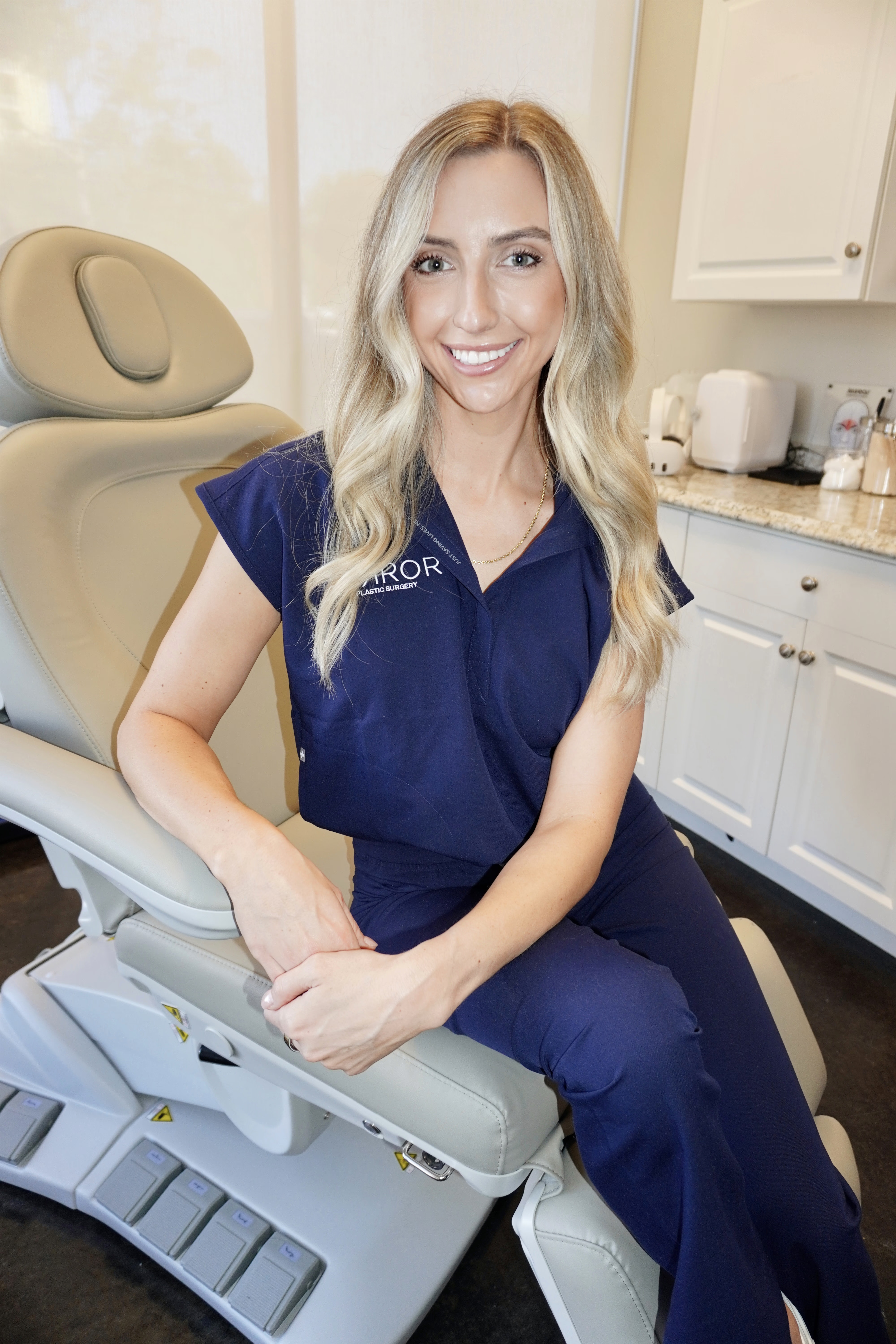
At Mirror Plastic Surgery in St. Petersburg, non-surgical hip dip correction is led by Ellie Pranckevicius, FNP-BC, an Aesthetic Nurse Practitioner with a background that spans esthetics licensure, advanced nursing, and four years in the Neuroscience ICU at Tampa General Hospital. That clinical foundation gives Ellie a detailed understanding of subdermal anatomy and physiological response that guides her injection technique and product selection. For non-surgical correction, Ellie uses biostimulatory options including Radiesse and AlloClae, both of which stimulate your body’s own collagen and extracellular matrix rather than simply displacing tissue. Hyaluronic acid fillers are not considered safe practice for the hip and gluteal region and are not used for this indication at Mirror Plastic Surgery.
When surgical fat transfer offers a better match, patients can access the full spectrum of options within one practice that applies the same safety-first, anatomy-driven philosophy to both surgical and non-surgical care.
Mirror Plastic Surgery’s initial consultations can last up to an hour and follow a top-to-bottom assessment. This visit explores the anatomical factors relevant to hip dip correction along with your long-term goals, lifestyle, and realistic maintenance preferences. The process differs from a high-volume mill consultation. You will not encounter quota-driven product recommendations, supplier allegiance, or pressure toward a procedure that does not fit your anatomy and life.
Frequently Asked Questions
Are biostimulatory fillers safe for hip dip correction?
Biostimulatory fillers such as Radiesse and AlloClae have an established safety profile when placed by a provider with thorough knowledge of subdermal anatomy in the hip and gluteal region. The key safety variable is the injector’s anatomical precision and product choice. Hyaluronic acid fillers are not considered safe practice for this area because of the risk of vascular complications in the gluteal vasculature, and they are not used for hip dip correction at Mirror Plastic Surgery.
How many filler sessions are needed to correct hip dips?
Most patients need an initial protocol of two to four sessions spaced 4–6 weeks apart to build a sufficient collagen scaffold and reach the desired correction. After the initial protocol, maintenance sessions, typically once every 2 years or longer, help sustain the result. The exact number depends on the depth of the indentation, your collagen response, and your aesthetic goals, all of which are evaluated during the initial consultation.
Can hip dip filler be reversed if I am unhappy with the result?
Biostimulatory fillers are not reversible with hyaluronidase because they do not contain hyaluronic acid. They resorb naturally over time as your body metabolizes the carrier gel and the stimulated collagen matures. Any irregularity from overfilling or suboptimal placement should gradually improve on its own, but no enzyme-based correction exists. This reality underscores the value of working with a provider who uses conservative, anatomy-appropriate volumes from the start.
Will fat transfer to the hips be affected by future weight changes?
Yes. Grafted fat that survives the initial reabsorption phase behaves as living adipose tissue and responds to overall weight changes. Significant weight loss after surgery can reduce the volume of the correction, and weight gain can increase it in ways that are hard to predict. Stable body weight, ideally maintained for at least six months before the procedure, is one of the most important candidacy criteria for hip fat transfer. A thorough pre-procedure assessment will address this factor directly.
Is non-surgical hip dip correction appropriate for all body types?
Non-surgical correction with biostimulatory fillers works best for patients whose hip dip indentation is primarily a soft-tissue volume deficit rather than a skeletal structural issue. Patients with very deep indentations, minimal subcutaneous tissue in the area, or a strong skeletal contribution to the contour may see only partial improvement from filler alone. A direct physical assessment is the only reliable way to determine whether filler alone will meet your goals or whether surgical fat transfer, or a staged combination approach, better suits your anatomy.
Next Steps for Your Hip Dip Treatment Plan
The hip dip filler vs fat transfer decision cannot be made accurately from a checklist alone. Anatomy varies, goals varies, and the right answer for one person may not fit another. Mirror Plastic Surgery’s top-to-bottom assessment with Ellie Pranckevicius provides individualized, evidence-based guidance so you can decide with confidence before committing to any product, protocol, or procedure.
Mirror Plastic Surgery is located at 780 4th Ave S, St. Petersburg, FL 33701. New patients can reach the practice by phone or text at 727-361-6515 or by email at hello@mirrorplasticsurgery.com.
Disclaimer: Results may vary from person to person. Editorial content, before and after images, and patient testimonials do not constitute a guarantee of specific results.
1 Results may vary from person to person. Editorial content, before and after images, and patient testimonials do not constitute a guarantee of specific results.