
Written by: Ellie Pranckevicius, FNP-BC, Aesthetic Nurse Practitioner & Aesthetic Injector | Facial Restoration & Regenerative Injectable Specialist, Mirror Plastic Surgery | Last updated: July 22, 2026
Key Takeaways on Hip Dips and Treatment Options
- Hip dips are a normal skeletal variation caused by genetics and bone structure. Exercise or other interventions cannot fully remove them.
- Targeted gluteus medius training can modestly smooth the hip-to-thigh transition, but results plateau due to bone attachment points and fascia.1
- Biostimulatory injectables such as Sculptra, Radiesse, and AlloClae offer a non-surgical way to camouflage hip dips through gradual collagen stimulation and added volume.
- Injectable results develop over several months, last one to three years depending on the product, and need maintenance sessions to stay consistent.1
- Patients ready for personalized non-surgical hip dip correction can schedule an evidence-based assessment at Mirror Plastic Surgery.
What Are Hip Dips and Why They Occur
Hip dips are a natural indentation between the hip and thigh created by the relationship between the pelvis, the upper femur, and the surrounding soft tissue. Formally called the trochanteric depression, this contour reflects normal human skeletal anatomy and does not signal poor health, excess weight, or low fitness.
Bone and Soft-Tissue Factors Behind Hip Dips
Hip dips form at the natural gap between the ilium, the wing-shaped part of the pelvis, and the greater trochanter, the bony prominence at the top of the femur. The size of the indentation depends on three fixed skeletal variables:
- The distance between the iliac crest and the greater trochanter
- Overall pelvic width
- Femoral neck length
Femoral bone structural geometry can adapt slightly to mechanical loading from exercise, with effects that vary by population and study. The upper femur still keeps its characteristic shape, similar to a curvy number seven that juts outward from the pelvis. This geometry creates the structural space responsible for hip dips regardless of overall health or fitness level.
Soft tissue adds another layer of influence. The gluteus medius attaches higher on the hip while upper thigh muscles attach lower, leaving a natural space that produces the visible indentation even when muscles are well developed. Fat distribution also affects visibility. Estrogen-driven fat storage in women is not uniform around the hips, so people at the same body weight can show different hip dip visibility depending on whether fat sits directly over the trochanteric gap or above and below it.
Women more often notice visible hip dips because the gynecoid pelvic shape is wider across the top, which increases the visual distance between the iliac crest and greater trochanter. Still, most people have some degree of hip dip due to normal skeletal and soft-tissue contours, regardless of body shape.
After understanding these structural causes, many people look for ways to soften the contour through training.
Can Squats or Other Exercises Fill In Hip Dips?
Short of surgery, hip dips cannot be eliminated because they reflect skeletal structure and exercise cannot move the bones. Exercise can still add muscle volume to the gluteus medius and nearby tissue, which modestly smooths the hip-to-thigh transition.
Not all exercises work equally well for this goal. Standard bilateral squats do not rank among the highest-activating movements for the gluteus medius specifically.
Side-lying clamshells create low gluteus medius recruitment and do not work well as a primary exercise for minimizing hip dips, although they can serve as a warm-up activation move. A more effective resistance training protocol targets the gluteus medius with:
- Resisted hip abduction-extension (band or cable)
- Single-leg squats
- Single-leg glute bridges
- Side-lying hip abduction
These movements work best when performed for 3 sets of 12–20 repetitions with progressive resistance.
Realistic Exercise Timelines and Limitations
Visible changes from a consistent gluteus medius training program usually require several months of progressive overload. Even with strong programming, two structural limits cap the outcome.
First, a layer of connective tissue called fascia keeps the muscles separate and ensures some depression always remains where they meet the bone. Second, as muscle and fat distribution change with training, the underlying bones and muscles can appear more prominent, which can make the hip dip look more visible instead of less.
Spot reduction does not work. A review of studies confirmed that training one area does not reduce fat specifically in the hips or any single region.
Safety also matters. Overloading the gluteus medius through repetitive exercise is a leading cause of microtrauma to the muscle and its tendons, which can trigger greater trochanteric pain syndrome. This condition occurs up to four times more often in women than men and affects up to a quarter of the population at some point.
Comparison of Hip Dip Correction Options
The table below compares three main approaches to hip dip correction across four dimensions. All data points come from cited clinical sources.
| Approach | Invasiveness | Expected Change | Longevity | Recovery |
|---|---|---|---|---|
| Targeted Exercise | None | Modest smoothing of hip-to-thigh transition, no change to bone structure1 | Maintained only with ongoing training | None, with a risk of greater trochanteric pain syndrome from overtraining |
| Biostimulatory Injectables (Sculptra, Radiesse, AlloClae) | Minimally invasive injections | Gradual volume and collagen build-up, visible improvement at 4–6 weeks, full effect at 4–6 months1 | Sculptra up to 2–3 years, Radiesse 12–18 months, AlloClae stable over time with minimal change | Swelling and bruising usually resolve within days to two weeks, no surgical downtime |
| Surgical Fat Transfer | Surgical, with anesthesia and a liposuction donor site | Softening of hip-to-thigh transition, complete elimination not possible because of the bony anchor1 | Surviving volume stays stable for years once established at 2–3 months, with 75–85% retention at seven months using enriched technique | Weeks of restricted activity, compression garments, and risks such as seroma, contour irregularity, and infection |
This comparison shows that each approach carries different trade-offs in invasiveness, timing, and durability. Patients who have maximized exercise-based changes yet still want more smoothing often view biostimulatory injectables as a middle ground between training and surgery.
When Fillers Make Sense After Exercise
Biostimulatory injectables become a logical next step when a patient has followed a consistent, well-structured resistance training program for several months and reached a plateau in visible improvement. Beyond this training base, the decision rests on several anatomy and goal factors:
- Skeletal anatomy that creates a deep structural indentation unlikely to respond to soft-tissue changes alone
- A goal of smoother lateral hip contour without surgical downtime or recovery
- Stable body weight, since the best candidates for non-surgical hip contouring are near their target weight with localized concerns rather than generalized changes
- Preference for gradual, natural-looking results instead of immediate large volume
These criteria work together to identify patients whose skeletal structure and aesthetic goals match what injectables can realistically provide. The decision remains anatomy-specific. A thorough provider assessment that evaluates pelvic width, trochanteric depth, overlying soft tissue, and skin quality offers the most reliable basis for a treatment plan.
Request your anatomical assessment with Ellie to receive an honest, evidence-based recommendation tailored to your structure and goals.
Non-Surgical Injectable Options for Hip Dip Correction
Mirror Plastic Surgery uses biostimulatory fillers for non-surgical hip dip correction, choosing products based on individual anatomy, indentation depth, and patient goals. The primary options include Sculptra, Radiesse, and AlloClae.
Sculptra (poly-L-lactic acid, PLLA) acts as a biostimulator rather than a traditional volume filler. It triggers the body’s natural collagen production to gradually restore volume instead of supplying instant filler volume. A staged, conservative dosing plan across two to three sessions spaced 4–6 weeks apart is recommended because PLLA stimulates collagen slowly. The lack of visible change right after injection can mislead patients into requesting excessive initial volume, which can cause overcorrection once collagen fully develops. A staged protocol reduces this risk while allowing careful assessment of collagen growth and contour.
Radiesse (calcium hydroxylapatite, CaHA) provides immediate contour improvement along with longer-term collagen stimulation. Radiesse produces quicker visible contour changes after injection compared with Sculptra. Radiesse typically lasts about 12–18 months and then requires maintenance sessions.
AlloClae is a structural adipose filler derived from donor tissue. AlloClae is a FDA-approved structural adipose filler used for nonsurgical body contouring and smoothing irregularities, including hip dips, and offers immediate natural-looking results without harvesting fat from the patient’s own body. Its stability over time sets it apart from biodegradable options.
Ellie Pranckevicius integrates regenerative medicine principles into her non-surgical BBL and hip dip correction protocols. She tailors product selection and placement to each patient’s anatomy instead of using a fixed volume formula. This approach reflects Mirror Plastic Surgery’s supplier-neutral philosophy: the right product in the right amount for the right anatomy.
Risks, Recovery, and Long-Term Maintenance
Common short-term effects of body enhancement injections include swelling, redness, tenderness, and bruising at the injection site, which usually resolve within days to a week. Less frequent but important considerations include:
- Delayed nodules or papules, especially with collagen-stimulating injectables
- Asymmetry during the swelling phase
- Hypersensitivity reactions
- Rare vascular complications that need prompt attention
Nodule formation is a known potential side effect with biostimulatory fillers and can be reduced with proper injection technique into the subcutaneous plane. Sculptra technique, dilution ratio, injection placement, and strict adherence to the 5-5-5 massage rule after treatment strongly influence outcomes and the risk of nodules or uneven results.
Post-treatment aftercare for biostimulatory fillers usually includes:
- Avoiding saunas, hot baths, intense exercise, and alcohol for one week
- Gentle massage of the area starting the day after treatment to support even product distribution
- Avoiding blood thinners such as ibuprofen or aspirin and abstaining from alcohol for at least 48 hours before the procedure to lower bruising risk
Contraindications include pregnancy, breastfeeding, active skin infection at the treatment site, a history of keloid formation, known allergy to product ingredients, and some autoimmune conditions. Periodic touch-up treatments help maintain Sculptra outcomes, while Radiesse usually requires reassessment at 12–18 months.
How to Select a Provider for Hip Dip Injectables
Even with FDA-approved products, complications such as infection, nodules, asymmetry, and vascular occlusion can occur when the injector lacks proper training. Choosing a board-certified plastic surgeon or a highly trained aesthetic nurse specialist working under direct medical supervision reduces these risks.
When you evaluate a provider for non-surgical hip dip correction, consider the following criteria:
- Formal training in surface and subdermal anatomy specific to the gluteal and lateral hip region
- Experience with biostimulatory fillers and a staged, conservative dosing philosophy
- A comprehensive initial assessment that evaluates the full body contour, not just the isolated indentation
- Clear communication about realistic outcomes, off-label use, and maintenance needs
- Access to medical oversight and a defined protocol for managing complications
- Supplier-neutral product selection based on patient anatomy rather than inventory quotas
At Mirror Plastic Surgery, Ellie Pranckevicius brings a dual background in esthetics and advanced nursing, including four years in the Neuroscience ICU at Tampa General Hospital. Her initial assessments can last up to an hour and follow a structured top-to-bottom diagnostic framework. Non-surgical treatments take place within a practice founded by Dr. Akash Chandawarkar, a Harvard-educated, Johns Hopkins-trained plastic surgeon, so surgical expertise remains available when anatomy calls for a broader discussion.
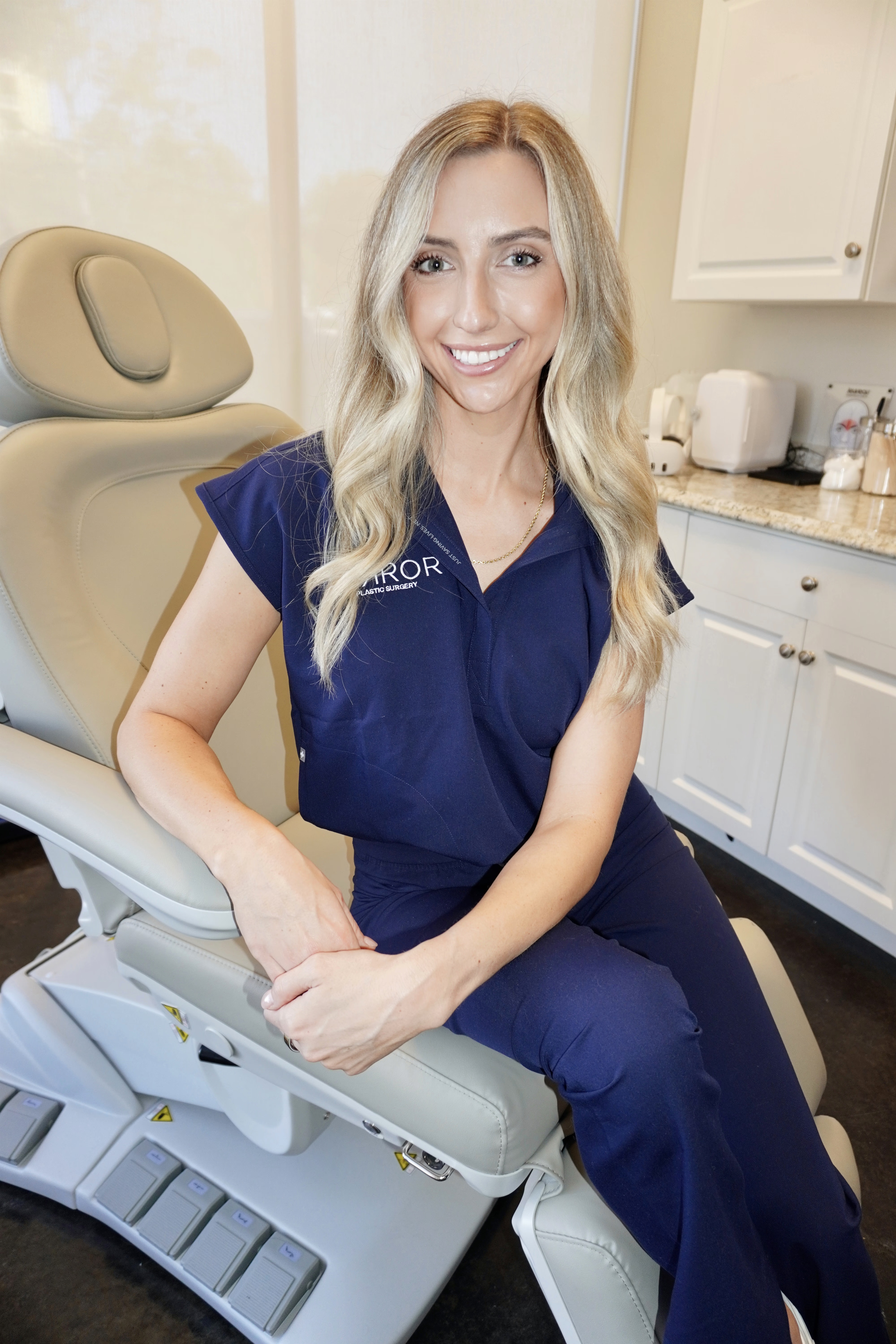
Discuss your options with Ellie at Mirror Plastic Surgery’s St. Petersburg location to review your anatomy and receive a personalized, evidence-based treatment plan.
Frequently Asked Questions
Can hip dips ever be completely eliminated?
Hip dips cannot be completely eliminated. They are anchored to the underlying bone structure, specifically the relationship between the iliac crest and the greater trochanter of the femur. Neither exercise nor injectable treatments can change skeletal anatomy. Both approaches can reduce the visual depth of the indentation.1 Exercise does this by adding muscle volume to the surrounding tissue, and biostimulatory injectables do it by adding collagen-stimulated volume directly over the trochanteric depression. Patients should expect meaningful contour improvement rather than total erasure.
Are biostimulatory fillers safe for hip dip correction?
Biostimulatory fillers have a well-characterized and manageable risk profile when a qualified, experienced injector uses FDA-approved products in an appropriate clinical setting. Common side effects such as swelling, bruising, and tenderness usually resolve within days to two weeks. Rarer complications, including nodule formation, are strongly linked to improper injection depth, dilution errors, or poor aftercare and are reduced by choosing a provider with specific training in this anatomy. Sculptra and Radiesse are used off-label for hip dip correction because both products hold FDA approval for facial indications. This off-label use makes provider expertise and honest pre-treatment counseling especially important.
How many treatment sessions are typically needed, and how long do results last?
The number of sessions depends on the product, the depth of the indentation, and individual anatomy. Sculptra protocols for hip dip correction usually involve two to four sessions spaced four to six weeks apart, with full collagen-based results visible at four to six months and longevity of up to two years with yearly maintenance. Radiesse provides more immediate visible improvement and typically lasts twelve to eighteen months. AlloClae offers immediate results with notable stability over time. A staged approach that delivers part of the planned volume in the first session and reassesses before adding more supports natural-looking outcomes and helps avoid overcorrection.
Will exercise interfere with injectable results, or vice versa?
Moderate exercise works well with biostimulatory filler treatments. Intense physical activity should pause for about one week after injections to allow the product to settle and to lower the risk of migration or uneven distribution. Over the longer term, large shifts in body weight or muscle mass can change the appearance of treated areas. This effect is one reason providers recommend reaching and maintaining a stable weight before and after treatment. Patients who actively build gluteal muscle through resistance training often find that combining exercise and injectables creates a more complete result than either approach alone, which should be reviewed during a personalized assessment.
Who is not a good candidate for non-surgical hip dip correction with injectables?
Poor candidates include people who are pregnant, breastfeeding, or have active skin infection or inflammation at the treatment site. A history of keloid scarring, known allergy to product ingredients such as PLLA or lidocaine, and certain autoimmune conditions also exclude some patients. Individuals significantly above their target weight are usually advised to reach a stable weight before body contouring injectables, since weight changes can unpredictably alter results. People with very deep, structurally dominant hip dips driven mainly by wide pelvic anatomy may see only partial improvement with injectables and benefit from an honest discussion about realistic expectations before proceeding.
Conclusion: Setting Realistic Expectations for Hip Dip Treatment
Hip dips represent a normal anatomical feature shaped by skeletal geometry and cannot be fully removed by any intervention. Targeted resistance training can modestly smooth the hip-to-thigh transition by building gluteus medius volume, but a structural ceiling defined by bone attachment points and fascial anatomy limits the effect. Biostimulatory injectables such as Sculptra, Radiesse, and AlloClae provide a non-surgical way to further camouflage the indentation through collagen stimulation and targeted volumization, with results lasting one to several years depending on the product and maintenance plan. Surgical fat transfer remains an option for patients seeking greater correction, although it carries a different risk and recovery profile. Clear understanding of the anatomical basis of hip dips and the realistic ceiling of each approach supports confident, informed treatment decisions.
Explore your candidacy for non-surgical correction with Ellie at Mirror Plastic Surgery in St. Petersburg, FL, to discuss your anatomy and decide whether this approach fits your goals.
Disclaimer: Results may vary from person to person. Editorial content, before and after images, and patient testimonials do not constitute a guarantee of specific results.
1 Results may vary from person to person. Editorial content, before and after images, and patient testimonials do not constitute a guarantee of specific results.