
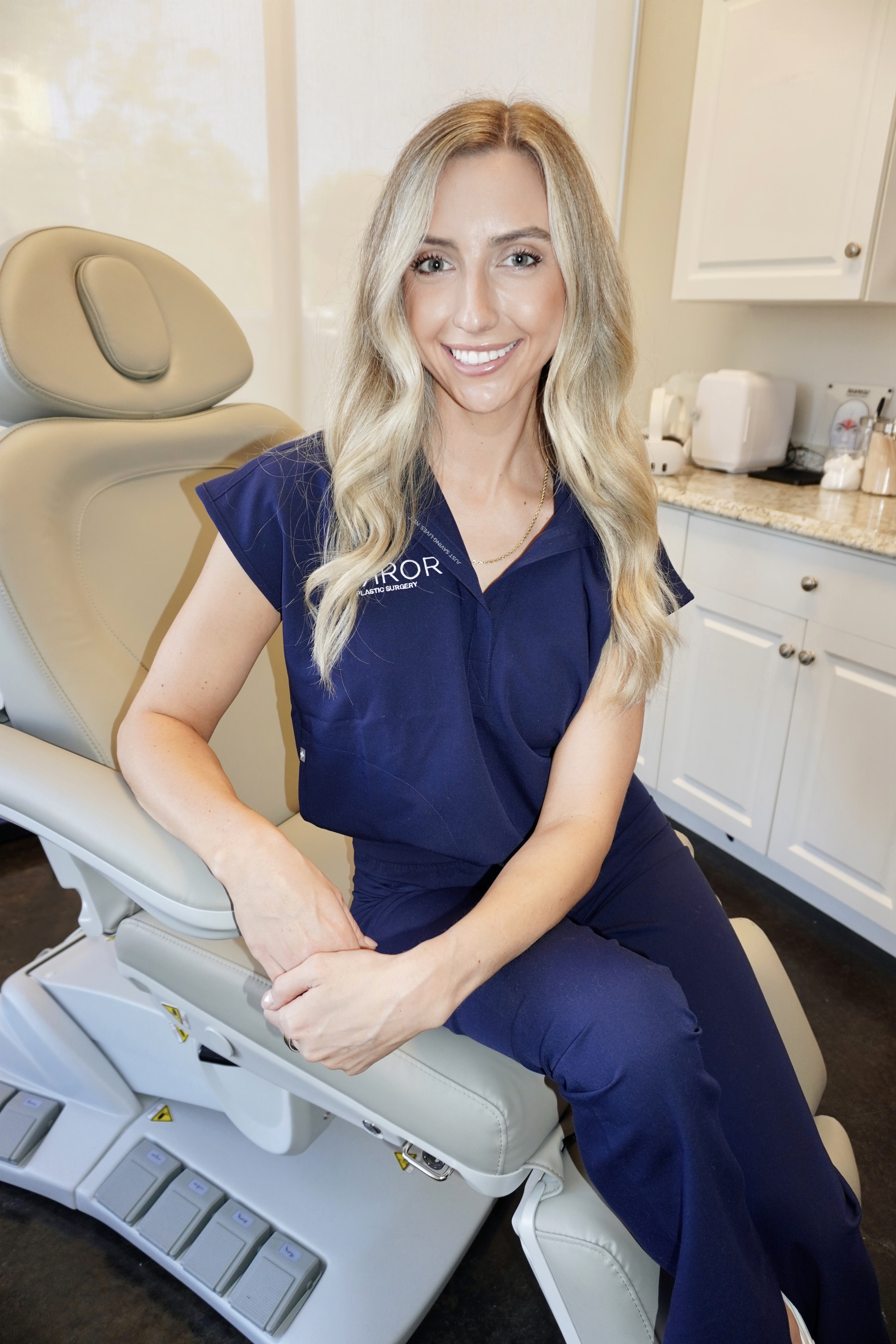
Written by: Ellie Pranckevicius, FNP-BC, Aesthetic Nurse Practitioner & Aesthetic Injector | Facial Restoration & Regenerative Injectable Specialist, Mirror Plastic Surgery | Last updated: August 2, 2026
Key Principles for Natural, Anatomical Filler Results
- Natural filler outcomes start with a detailed anatomical assessment that maps bone structure, fat compartments, and skin quality before any product is chosen.1
- Depth and rheology must match the target compartment, with high-G′ fillers on bone for structural lift and low-G′ products in superficial layers for contour smoothing.
- Ellie’s eight-step consultation framework keeps every treatment plan individualized, transparent, and aligned with the safety-function-aesthetics hierarchy.
- Technique, vascular safety, and conservative volume selection are prioritized to minimize risks and avoid an overdone or “pillow face” appearance.1
- Schedule your personalized anatomical assessment at Mirror Plastic Surgery to receive a treatment plan designed for your face and long-term goals.
Why Facial Anatomy, Not Volume, Guides Every Filler Decision
Adding volume in the wrong place is the most common cause of the “pillow face” outcome patients want to avoid.1 A Google Trends analysis by UCLA David Geffen School of Medicine researchers found increased U.S. search interest in cheek filler and dermal fillers after the rise of GLP-1 medications. Demand for volume restoration is growing faster than many clinicians’ training in safe, anatomy-based planning.
Ellie’s foundational principle is simple and consistent. “I restore what belongs there before I consider adding anything new. The anatomy tells me the plan, and my job is to read it carefully.” This approach aligns with the safety-function-aesthetics hierarchy that shapes every treatment at Mirror Plastic Surgery.
Skin laxity, etched rhytides, pigment irregularities, and heavy tissue descent are not reliably corrected by filler alone.1 In those situations, a regenerative strategy, energy-based treatment, or surgical consultation with Dr. Akash Chandawarkar often provides a better path than additional filler.
Ellie’s Eight-Step, Top-to-Bottom Consultation Process
A thorough consultation functions as the real procedure, and the injection simply carries out that plan. Mirror Plastic Surgery dedicates up to an hour to each new patient. This slower pace contrasts with rushed evaluations that often produce asymmetric or short-lived outcomes.1 The process follows eight structured steps.
- Medical and injectable history: Prior filler type, volume, and longevity, along with contraindications and medications that affect bleeding or healing.
- Emotional driver mapping: The timing and motivation behind treatment, and what “natural” means to the individual patient.
- Multi-view photographic and live assessment: Frontal, oblique, lateral, and profile views at rest and in animation, consistent with evidence-based facial balancing protocols.
- Third-by-third structural analysis: Upper third (brow, forehead, temple), middle third (cheek, infraorbital, midface), and lower third (chin, prejowl, mandibular angle, perioral).
- Soft-tissue quality grading: Skin thickness, laxity, and texture, which determine whether filler is appropriate or whether a complementary modality should come first.
- Compartment identification: Deep bony and ligamentous anchors versus superficial fat pad deflation, each requiring a different product and vector.
- Vascular risk stratification: High-risk zones such as temple, glabella, and nose are flagged before Ellie finalizes any plan.
- Sequenced treatment plan: Deep structural restoration comes first, followed by superficial blending. The plan is presented transparently, including clear limits on what filler can and cannot achieve.
Deep vs Superficial Compartment Mapping with Vector Tables
Once the consultation identifies which compartments have deflated and which tissue layers require treatment, Ellie matches injection depth to the anatomical target. Depth selection reflects the deflated compartment and the vessels between the instrument and the target, not personal preference. Deep supraperiosteal injections on bone create structural lift and projection1 and are standard for zygomatic arch (Ck1), zygomatic eminence (Ck2), and anteromedial cheek (Ck3) zones. Superficial subcutaneous injections address contour smoothing in lateral lower cheek (Ck4) and submalar (Ck5) areas.
Wu et al. demonstrated that deep-to-superficial sequencing, combined with rheology-matched fillers, can restore projection, enhance contour, and maintain natural facial dynamics.1
| Zone | Depth | Product Rheology | Primary Vector |
|---|---|---|---|
| Zygomatic arch / eminence (Ck1–Ck2) | Deep supraperiosteal | High-G′ cohesive | Superolateral lift |
| Anteromedial cheek (Ck3) | Deep supraperiosteal | High-G′ cohesive | Anterior projection |
| Lateral lower cheek / submalar (Ck4–Ck5) | Superficial subcutaneous | Low-G′ soft | Contour smoothing |
| Temple (subfascial / interfascial) | Subfascial or interfascial | Moderate-G′ cohesive | Lateral volume fill |
| Nasolabial fold / marionette | Superficial dynamic zone | Low-G′ flexible | Linear retrograde smoothing |
How Ellie Chooses Filler Products by Rheology, G-Prime, and Layer
G-prime (G′), which reflects a filler’s resistance to deformation, must match the mechanical demands of the tissue layer. Wu et al. (2026) confirmed that high-G′ filler near retaining ligaments supports midface elevation and jawline definition.1 Low-G′ filler in dynamic zones smooths lines while preserving natural expression.
Mirror Plastic Surgery remains supplier-neutral, so Ellie selects from the full portfolio, including Juvederm, RHA, Versa, Restylane, Radiesse, and Evolysse, based on anatomy and treatment layer. RHA fillers suit high-movement zones. Juvederm Voluma and comparable high-G′ products anchor structural planes. Radiesse and other biostimulatory options serve patients who need collagen induction alongside volume.
Micro-Droplet and Cannula Techniques for Seamless Blending
Technique selection connects the right product to a natural-looking result. Product choice and technique work together, so Ellie plans them as a single strategy. Micro-droplet skin-booster protocols, including SKINVIVE and RHA Redensity, treat skin quality and hydration in a separate layer from structural volume. These protocols rely on multiple sessions and periodic maintenance rather than single large-volume deposits.
For structural zones, a 22G cannula is recommended for midface and malar placement because it distributes product evenly across sub-SMAS planes with minimal trauma. Cannulas are considered safer for deep injections near bone than needles, which more easily pierce blood vessels. For jawline contouring, a 22G cannula is preferred for long, linear retrograde threads along the mandibular border.
Discuss your technique and product options with Ellie during a personalized consultation.
Vascular Safety Zones, Reversal Agents, and Complication Red Flags
Safety sits at the center of every filler decision at Mirror Plastic Surgery, not at the margins. The midface contains several major vascular hazard points. The infraorbital foramen region, the medial cheek near the angular artery, and the nasolabial fold region are identified as major high-risk zones. The temple carries the highest consequence. Temporal vessels connect directly to the ophthalmic artery system, so vascular occlusion from temple filler can cause retrograde embolism and potential vision loss.
Reported complication risks vary by zone, according to UK aesthetic safety guidance:
- High-risk zones (temples, nose, glabella)
- Medium-risk zones (lips, cheeks, jawline)
- Lower-risk zones (nasolabial folds, marionette lines)
Aspiration before injection carries a high false-negative rate because vessel walls can collapse against the needle tip, which creates a false sense of security. For this reason, Mirror Plastic Surgery relies on three complementary safety mechanisms. Cannula use helps navigate around vessels rather than pierce them. Small controlled deposits limit the volume at each injection point. Slow injection speed allows rapid recognition of resistance or blanching. Together, these techniques provide layered protection that aspiration alone cannot deliver. Safe temple technique requires small, controlled deposits rather than rapid or forceful injection. Hyaluronidase remains on-site for immediate reversal of any hyaluronic acid filler complication.
Red flags that require immediate evaluation include blanching of skin, sudden vision changes, severe pain out of proportion to the injection, or mottled discoloration along a vascular distribution.
Maintenance, Long-Term Planning, and When to Pause Filler
Filler functions as a long-term commitment, and knowing when to pause matters as much as knowing when to treat. A retrospective study by Wilde et al. reported post-hyaluronidase syndrome in some patients undergoing elective filler dissolution.
HA fillers can persist in tissues for extended periods, depending on injection site, filler properties, and patient metabolism. Cumulative volume without anatomical reassessment drives many overfilled outcomes. Ellie’s protocol includes periodic reassessment to decide whether maintenance, a pause, or a complementary modality makes the most sense, rather than a reflexive refill.
Maintenance-oriented micro-droplet and skin-booster protocols offer a lower-volume, higher-frequency option for patients who want ongoing skin quality improvement without accumulating structural filler.
Best Filler Choices, Mature Skin Considerations, and Why Some Patients Pause Fillers
The most effective filler for volume loss is the one matched to the specific compartment, depth, and tissue quality of the individual face. For deep structural midface and cheek restoration, high-G′ cohesive fillers placed supraperiosteally provide durable lift.1 For skin quality and fine-line hydration, micro-droplet skin boosters treat a separate, more superficial layer. Biostimulatory fillers such as Radiesse suit patients who need collagen induction along with volume.
Patients in their 60s and 70s often have thinner skin and reduced tissue support, which increases the risk of visible product when placed too superficially. Deep supraperiosteal and sub-SMAS placement with conservative volumes, paired with lower-G′ products in dynamic zones, offers a more discreet and natural result. Ellie grades skin quality explicitly before selecting any product.
As discussed in the vascular safety section, high-risk zones require the most experienced injectors and the most conservative technique. Many patients now pause or stop fillers after seeing cumulative volume distortion in others. As the post-dissolution syndrome data demonstrate, abrupt high-dose dissolution carries its own risks, so conservative, anatomy-driven accumulation from the beginning remains the safest long-term strategy.
Frequently Asked Questions
What is the difference between deep and superficial filler placement, and which is safer?
Deep placement, specifically supraperiosteal injection on bone, restores structural projection in zones such as the zygomatic eminence, anteromedial cheek, and chin. This approach keeps product away from much of the superficial vascular network and produces durable lift. Superficial placement in the subcutaneous layer focuses on contour smoothing and fine-line blending but can carry higher vascular risk in certain regions, especially near the infraorbital and angular arteries. No single depth is universally safer. The correct choice depends on the zone, the concern treated, and the vascular anatomy in that area. At Mirror Plastic Surgery, Ellie maps each zone individually before choosing depth, product, and instrument.
How does Ellie decide which filler brand or product to use for my face?
Mirror Plastic Surgery remains supplier-neutral, so brand quotas and commission structures never drive product selection. Ellie chooses among Juvederm, RHA, Versa, Restylane, Radiesse, Evolysse, and other options based on three factors. She evaluates the rheological properties needed for the target tissue layer, including G-prime, cohesivity, and viscosity. She considers the specific zone and depth of placement. She also accounts for the patient’s skin quality, age, and prior injectable history. High-G′ products support deep structural planes, while low-G′ flexible products suit dynamic superficial zones. Biostimulatory fillers enter the plan when collagen induction is a co-objective. The goal remains the most appropriate product for that patient’s anatomy, not the most expensive or heavily marketed option.
How many syringes will I need, and how often should I return for maintenance?
Ellie determines volume recommendations during the consultation after a full anatomical assessment, not before. Her philosophy favors conservative, staged restoration instead of single-session high-volume treatment. This approach reduces the risk of overcorrection and cumulative distortion over time. Maintenance intervals vary by product, treatment zone, and individual metabolism. Some areas may need a touch-up at six to twelve months, while others remain stable for two years or longer. During your consultation, Ellie outlines a realistic maintenance timeline and explains when a pause or a complementary treatment makes more sense than additional filler.
Is temple filler safe, and what makes Mirror Plastic Surgery’s approach different?
The temple ranks among the highest-consequence zones in facial filler practice because the superficial temporal artery runs through the area and deeper vessels connect to the ophthalmic circulation. This anatomy creates a pathway for serious complications, including vision loss. That risk does not make temple filler universally unsafe. Instead, injector expertise and technique determine safety. At Mirror Plastic Surgery, Ellie approaches the temple with small, controlled deposits, careful cannula selection, slow injection speed, and a pre-treatment vascular risk assessment. Hyaluronidase remains available on-site for immediate reversal. Ellie’s background in the Neuroscience ICU at Tampa General Hospital supports a level of clinical judgment for recognizing and responding to vascular events that many aesthetic injectors do not have.
What happens if I want to dissolve my filler in the future?
Hyaluronidase can dissolve hyaluronic acid fillers, yet dissolution carries its own considerations. Research has documented a post-hyaluronidase syndrome in a subset of patients, with significant facial hollowing and an accelerated aged appearance. This pattern correlates with longer filler duration in tissue and higher cumulative volumes. The safest long-term strategy uses conservative, anatomy-driven accumulation from the start. This approach limits total volume in tissue at any time and reduces the severity of any future dissolution if it becomes necessary. Ellie discusses dissolution risks and long-term filler management during the initial consultation so patients can make informed decisions before their first treatment.
Disclaimer: Results may vary from person to person. Editorial content, before and after images, and patient testimonials do not constitute a guarantee of specific results.
1 Results may vary from person to person. Editorial content, before and after images, and patient testimonials do not constitute a guarantee of specific results.