
Written by: Ellie Pranckevicius, FNP-BC, Aesthetic Nurse Practitioner & Aesthetic Injector | Facial Restoration & Regenerative Injectable Specialist, Mirror Plastic Surgery | Last updated: August 6, 2026
Key Takeaways on Filler Longevity and Safety
- Dermal fillers for natural-looking results typically last 6 months to 2 years. Lips fade fastest at 6 to 9 months, while cheeks and jawline often retain correction for 12 to 18 months.1
- Fillers can remain detectable in tissue for years after the visible effect fades, so full-face assessment is essential to avoid cumulative overfill.1
- Excessive volume and poor planning can cause Facial Overfilled Syndrome, migration, or tissue stretching.1 Conservative dosing protects long-term facial balance.
- Exercise intensity, metabolism, sun exposure, and smoking significantly influence how long subtle filler results remain visible.1
- Schedule a personalized consultation at Mirror Plastic Surgery for an anatomy-first assessment and a realistic maintenance timeline tailored to your facial structure.
How Long Fillers Last in Lips, Cheeks, Jawline, and Tear Troughs
Filler duration varies by facial area because each zone has different movement patterns, blood supply, and tissue structure. These differences change how quickly the body metabolizes filler.
Lips (6–9 months): The orbicularis oris muscle moves thousands of times daily, which increases mechanical stress on filler. The vermillion also has a rich vascular and lymphatic supply that speeds breakdown. Softer formulations create natural movement but usually sit at the shorter to mid range of longevity. Conservative dosing, typically a half to one syringe, lowers the risk of migration and keeps lips in proportion with surrounding features.
Tear Troughs (9–12 months): Minimal muscle movement in the infraorbital zone supports longer retention. The skin here is thin and delicate, so product choice and placement must be precise. Overfilling increases the chance of visible puffiness and fluid retention over time. Conservative placement protects this area from a tired or swollen look.
Cheeks (12–18 months): Firmer, more cross-linked gels placed deep on bone experience less movement and shear. A meta-analysis found durable results in cheek and jawline filler placements, with significant decay usually appearing after one year. For natural-looking correction, conservative volumes placed supraperiosteally create lift and structure without bulky, rounded cheeks.
Jawline and Chin (12–15 months): These areas have strong structural support and moderate movement, which suits firmer products and often yields 12 to 18 months of visible effect. Treating only the jawline without assessing the full lower face can create asymmetry. A full-face assessment approach is designed to prevent that imbalance.
The following table summarizes how anatomical differences across facial zones influence duration, breakdown, and the specific cautions that keep results natural.
| Facial Area | Average Duration | Why It Fades | Natural-Look Caveat |
|---|---|---|---|
| Lips | 6–9 months | High muscle activity, rich blood supply | Softer formulations for natural movement last toward the shorter end |
| Tear Troughs | 9–12 months | Minimal movement, but thin skin limits volume | Conservative dosing is critical; overfill risk is highest here |
| Cheeks | 12–18 months | Deep placement over bone, less movement | Excess volume blurs zygomatic contours and flattens the face |
| Jawline / Chin | 12–15 months | Structural stability, moderate movement | Isolated treatment without full-face context risks asymmetry |
How Long Fillers Can Stay in Your Face
Imaging evidence and visible cosmetic effect describe different timelines. A 2024 MRI review of 33 mid-face patients found detectable filler in all 33 patients at two years after injection.1 In many of these patients, the visible cosmetic effect had already faded.
MRI studies show that fillers can persist for several years, sometimes up to 12 years, depending on injection site, filler properties, and patient metabolism.1 Ultrasound often reveals filler injected 5 to 10 years earlier as small residual clusters, scattered fragments, or encapsulated nodules.
This distinction matters for maintenance planning. Repeated top-up treatments that ignore remaining product can create cumulative overfill because traces of filler outlast the marketed six to twelve month duration. An anatomy-first injector evaluates residual product before adding volume. High-volume, single-area treatment models often skip this step.
New FDA-approved formulations introduced between 2025 and 2026 provide more anatomy-specific rheology options. Duration for these products still depends mainly on placement depth, injection volume, and patient metabolism rather than brand name alone.
Understanding how long filler persists in tissue naturally leads to the next concern, which is the long-term impact of that persistence on facial aging.
How Fillers Affect Aging Over Time
Fillers do not directly accelerate aging. Technique, volume, and long-term planning determine whether the face ages gracefully with filler or appears distorted.
Facial Overfilled Syndrome, or FOS, develops after years of repeated injections that accumulate without fully clearing. The result can include chronic puffiness, flattened three-dimensional contours, and altered facial proportions. These persistent changes reflect both accumulated volume and tissue adaptations such as water retention, mild fibrosis, and stretching of facial support ligaments.
A retrospective study reported post-hyaluronidase syndrome in some patients after filler dissolution. These patients experienced facial hollowing, reduced skin elasticity, and worsening wrinkles, especially when filler had been present for long periods or used in large volumes.
Filler migration from the midface toward the mouth or jawline can also occur over time. Muscle movement and gravity contribute to this drift and may create a jowly appearance. These outcomes arise from excessive volume, infrequent assessment, and single-area treatment without full-face context. Conservative dosing and a full-face planning framework serve as the main safeguards.
What Happens When You Stop Getting Fillers
With moderate, conservative filler use, the face usually returns to roughly its pre-treatment appearance after treatments stop.1 Some patients notice slightly thicker or firmer skin because injections can stimulate natural collagen production.
Current evidence does not support a rebound effect or accelerated sagging after stopping dermal fillers.1 Any sense of worsening usually reflects contrast with the previously fuller appearance rather than new damage.
Heavy or prolonged use can stretch soft tissues as they adapt to added volume. When filler dissipates, stretched tissue may not fully tighten, especially in older patients with reduced elasticity. Conservative dosing from the beginning creates the most predictable long-term outcome and reduces the need for corrective work later.
Dermal fillers do not create dependency or permanently stretch skin when used conservatively. When treatments stop, the face returns to its natural baseline without accelerated volume loss.
How Metabolism and Lifestyle Change Filler Longevity
Biology and daily habits significantly affect how long subtle filler results remain visible. Clinical literature consistently highlights several key factors.
- Exercise intensity: Regular intense cardio can shorten duration by one to two months. Increased blood flow, higher core temperature, and elevated metabolic activity speed filler breakdown.
- Smoking: Smoking accelerates skin aging and reduces collagen synthesis. This weakens the structural support that helps fillers look smooth and stable over time.
- Sun exposure: Chronic unprotected sun exposure degrades collagen and elastin around the filler. Reduced support in this framework can shorten the visible benefit.
- Metabolic rate: Younger patients and those with faster metabolisms often process fillers more quickly, which shortens longevity.
- Stress and sleep: Ongoing stress and poor sleep raise cortisol levels. This shift can affect collagen metabolism and inflammatory responses, which influence how filler integrates and persists.
- Hydration: Hyaluronic acid attracts water, so good hydration helps maintain filler plumpness and a smoother effect.
A thorough pre-treatment assessment that accounts for these variables, rather than a fixed protocol, allows an experienced injector to set realistic timelines and recommend appropriate volumes from the first visit.
Key Filler Risks and How Mirror Plastic Surgery Reduces Them
Natural-looking results depend on more than product choice. Several core considerations shape safe, predictable outcomes.
- Excessive dermal filler volume can create pillow face, duck lips, and a broadened forehead. These signs reflect poor volume planning rather than a flaw in filler itself.
- Filler migration usually stems from technique errors such as incorrect injection plane, overfilling, or using an unsuitable product. Properly placed filler is not expected to migrate significantly.
- Hyaluronic acid fillers vary in their responsiveness to hyaluronidase, with some showing greater resistance than others. Even with this variation, they offer a safety advantage over biostimulators such as Sculptra or Radiesse when treating vascular occlusion, misplacement, or patient dissatisfaction.
- Single-area treatment without a full-face assessment can create proportion imbalances. These imbalances often become more obvious as the treated area fades at a different rate than surrounding structures.
At Mirror Plastic Surgery, Ellie Pranckevicius performs a comprehensive top-to-bottom facial assessment before any injection. She focuses on restoring inherent facial characteristics first, then considers volume augmentation. This sequence helps prevent asymmetry and cumulative overfill, which are common in high-volume, single-area treatment settings.
Book a consultation with Ellie to receive a personalized, anatomy-first assessment and a realistic treatment timeline based on your facial structure and lifestyle.
Annual Maintenance Planning With the 75% Rule
Consistent, low-volume maintenance usually produces more natural long-term results than waiting for full dissipation and restarting with a full syringe. The core principle is the 75% Rule. Scheduling maintenance when about 75 to 80 percent of the initial effect remains maintains a natural look and reduces total product volume over time.
This rule translates into area-specific timing that prevents both under-correction and cumulative overfill.
- Lips: Lips metabolize filler fastest, often within 6 to 9 months. An annual schedule that starts with one syringe, then uses half a syringe each year, refreshes results after enough breakdown to avoid stacking product. This pattern usually creates lower cumulative volume than full syringes every six months.
- Cheeks and jawline: These areas often retain correction for 12 to 18 months. An annual assessment at 10 to 12 months captures the 75% retention point. At that visit, the injector can evaluate residual product and add only what is needed, which limits overfill.
- Tear troughs: Product in this area tends to persist, and the risk of chronic puffiness is higher. Conservative touch-ups at 9 to 12 months with minimal added volume follow the 75% Rule while protecting this delicate zone.
- Full-face planning: Treating areas in sequence, such as upper face, midface, then lower face, keeps transitions smooth between zones. This approach avoids the mismatched look that often appears when only a single area receives treatment.
Most patients do not need full filler treatments more than once a year when their maintenance schedule accounts for existing product. Ellie’s approach at Mirror Plastic Surgery follows this framework with gradual, low-volume touch-ups planned annually instead of reactive, high-volume corrections.
Schedule your maintenance planning session with Ellie to build a personalized annual plan that keeps results subtle, balanced, and predictable.
Frequently Asked Questions
Am I a good candidate for natural-looking dermal fillers?
Most adults in good general health who have early to moderate volume loss, subtle asymmetry, or softening contours qualify for conservative hyaluronic acid filler treatment. Anatomy matters more than age. A full-face assessment clarifies whether filler is the right first step or whether foundational skin work should come first. Ellie’s initial consultation at Mirror Plastic Surgery answers this question and includes an honest discussion of whether any treatment is needed.
How do I know if I am receiving too much filler?
Natural-looking results restore proportion and balance instead of simply adding volume. Signs of excessive product include a persistently puffy midface, lips that overpower nearby features, or loss of natural shadows and contours. Conservative dosing, often starting with less than a full syringe and reassessing at follow-up, offers the safest path. At Mirror Plastic Surgery, Ellie follows an undertreat-first protocol and always considers residual product from prior treatments before adding more volume.
What is the difference between hyaluronic acid fillers and biostimulatory fillers?
Hyaluronic acid fillers add immediate volume and can be fully reversed with hyaluronidase. They are the standard choice for lips, cheeks, tear troughs, and jawline. Biostimulatory fillers such as Radiesse, which contains calcium hydroxylapatite, and Sculptra, which contains poly-L-lactic acid, stimulate collagen production over time. They are not reversible and have distinct longevity profiles, with Radiesse often lasting 12 to 18 months. The right choice depends on treatment area, degree of correction, and long-term goals. Ellie selects products based on individual anatomy rather than brand loyalty.
Will my face look worse if I stop getting fillers?
For patients who use conservative volumes over a moderate period, the face returns to its pre-treatment baseline as filler metabolizes. It does not typically look worse than before. Current evidence does not show a rebound or accelerated aging effect from stopping hyaluronic acid fillers. The feeling of looking worse usually reflects contrast with the previously fuller appearance. In heavy, prolonged use, some tissue stretching can occur, which reinforces the value of conservative dosing from the start.
How soon after a consultation can I receive treatment?
At Mirror Plastic Surgery, treatment timing depends on the initial assessment. Some patients move forward with treatment at the same appointment. Others benefit from a staged plan that addresses foundational concerns first. Ellie outlines a clear sequence and timeline during the consultation so each step supports long-term facial balance rather than short-term volume.
Conclusion: Planning Fillers for Subtle, Long-Lasting Results
Dermal fillers for natural-looking results can last from 6 months to 2 years, depending on facial area, product cross-linking, placement depth, and metabolism. Lips fade fastest, while cheeks and jawline often hold subtle correction longest when product is placed conservatively on bone. Lifestyle factors such as exercise intensity, sun exposure, smoking, and metabolic rate also influence these timelines.
Long-term safety and a natural appearance depend less on a specific product and more on conservative dosing, full-face assessment, and a maintenance framework that accounts for residual product before adding new volume.
Mirror Plastic Surgery’s approach, led by Ellie Pranckevicius, FNP-BC, under the clinical direction of Harvard-educated, Johns Hopkins-trained plastic surgeon Dr. Akash Chandawarkar, follows these principles. Every plan begins with a comprehensive top-to-bottom assessment, prioritizes anatomy over volume, and focuses on long-term balance instead of quick correction.
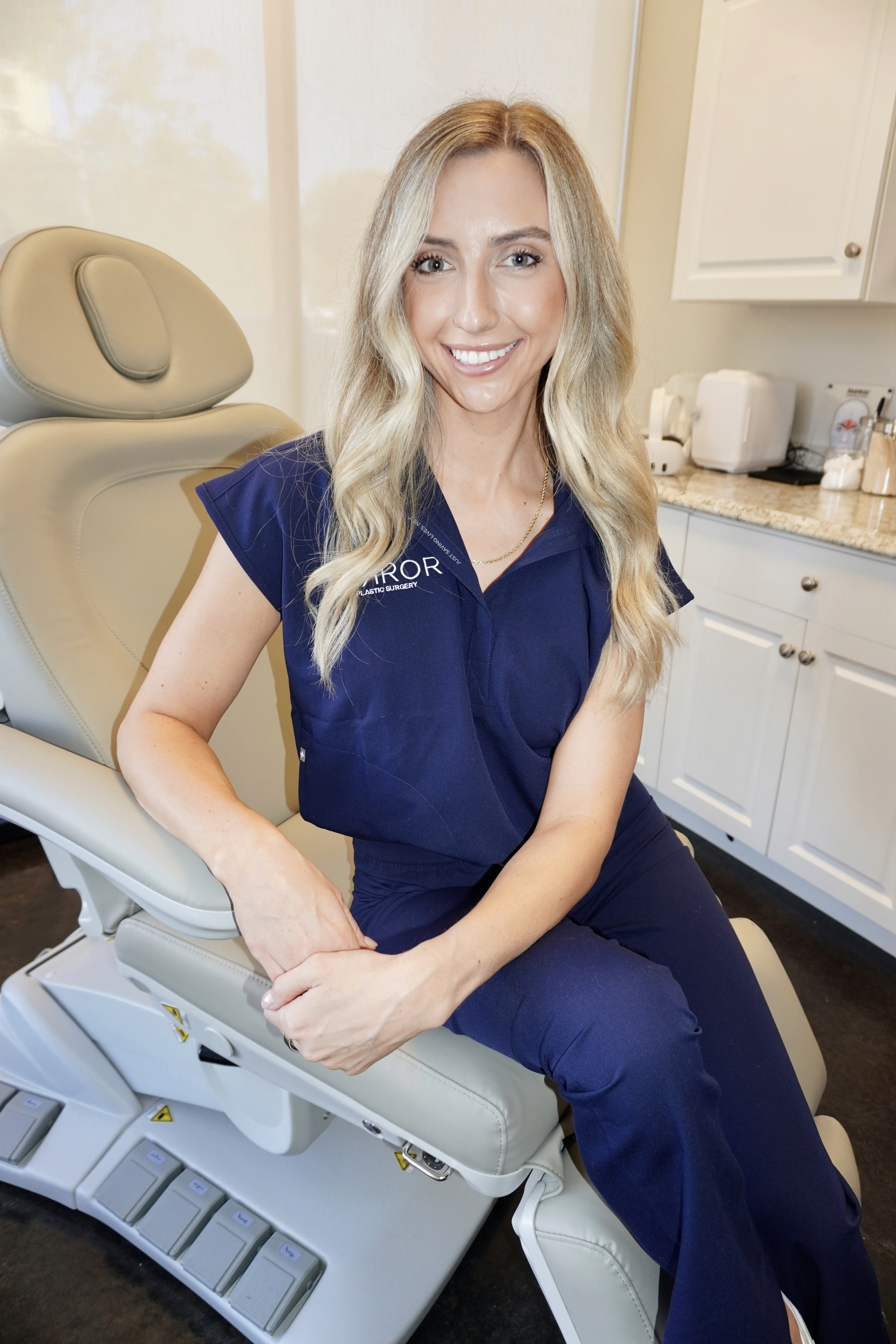
Book a consultation with Ellie at Mirror Plastic Surgery in St. Petersburg, FL, to receive a personalized, evidence-based plan for subtle, lasting results.
Disclaimer: Results may vary from person to person. Editorial content, before and after images, and patient testimonials do not constitute a guarantee of specific results.
1 Results may vary from person to person. Editorial content, before and after images, and patient testimonials do not constitute a guarantee of specific results.