
Written by: Ellie Pranckevicius, FNP-BC, Aesthetic Nurse Practitioner & Aesthetic Injector | Facial Restoration & Regenerative Injectable Specialist, Mirror Plastic Surgery | Last updated: August 6, 2026
Key Takeaways
- A thorough dermal filler consultation is a structured 60-minute assessment that prioritizes safety, function, and aesthetics before any product is selected.
- Every patient completes a full medical history review, detailed vascular evaluation, and documented treatment plan before treatment begins.
- Board-certified providers with advanced anatomy training deliver safer, more predictable outcomes than those focused on speed or volume.1
- Full-face assessment prevents overdone results by treating the face as a continuous system rather than isolated areas.1
- Patients seeking a dermal filler specialist near St. Petersburg can schedule a 60-minute, anatomy-driven consultation at Mirror Plastic Surgery to receive a personalized treatment plan built around their goals.
What Defines a Thorough Dermal Filler Consultation in St. Petersburg
A thorough dermal filler consultation is a 60-minute, full-face assessment that moves step by step through medical history, vascular anatomy, realistic goal-setting, and a written treatment plan. Comprehensive pre-treatment consultations that include a full medical review often last 60 minutes or longer, compared with shorter appointments at high-volume clinics. That time difference is not administrative, it is clinical, because it determines whether critical safety steps can be completed. Those 60 minutes create the window in which vascular risk is evaluated, contraindications are identified, and a treatment plan is built around your anatomy rather than a menu.
Why a Dermal Filler Consultation Is Always Required
Given the clinical depth required for safe filler treatment, a consultation is always required before injection. The American Academy of Dermatology states that a dermatologist always conducts a consultation before injecting dermal filler, during which the provider examines the patient’s skin to determine whether a filler is appropriate or whether another procedure is better suited. Collecting a complete medical history before any aesthetic injectable treatment is a core safety practice.
Skipping or shortening this visit is not a time-saving convenience, it is a safety failure. Vascular occlusion is a serious risk with filler injection, so careful evaluation of blood vessel pathways is a crucial part of the consultation exam. A provider who moves from greeting to injection in under 15 minutes has not completed that assessment.
Dermatologist, Plastic Surgeon, or Nurse Practitioner: Who Should Do Your Fillers?
The type of credential matters less than the depth of training behind it. Board-certified dermatologists complete one year of postgraduate training plus three years of ACGME-accredited dermatology residency training. Board-certified plastic surgeons complete either a 6-year integrated plastic surgery residency or a 3-year independent plastic surgery residency after 5 years of prerequisite general surgery training. Both practice independently in all states.
Nurse practitioners complete a master’s or doctoral NP program. In full-practice-authority states they can evaluate, diagnose, and prescribe independently, though aesthetic injection is not typically part of NP training and requires additional specialized coursework. There is no nationwide federally regulated standard for education to offer aesthetic injectables in the United States, so credentials alone do not determine safety. Depth of anatomical knowledge and complication training does.
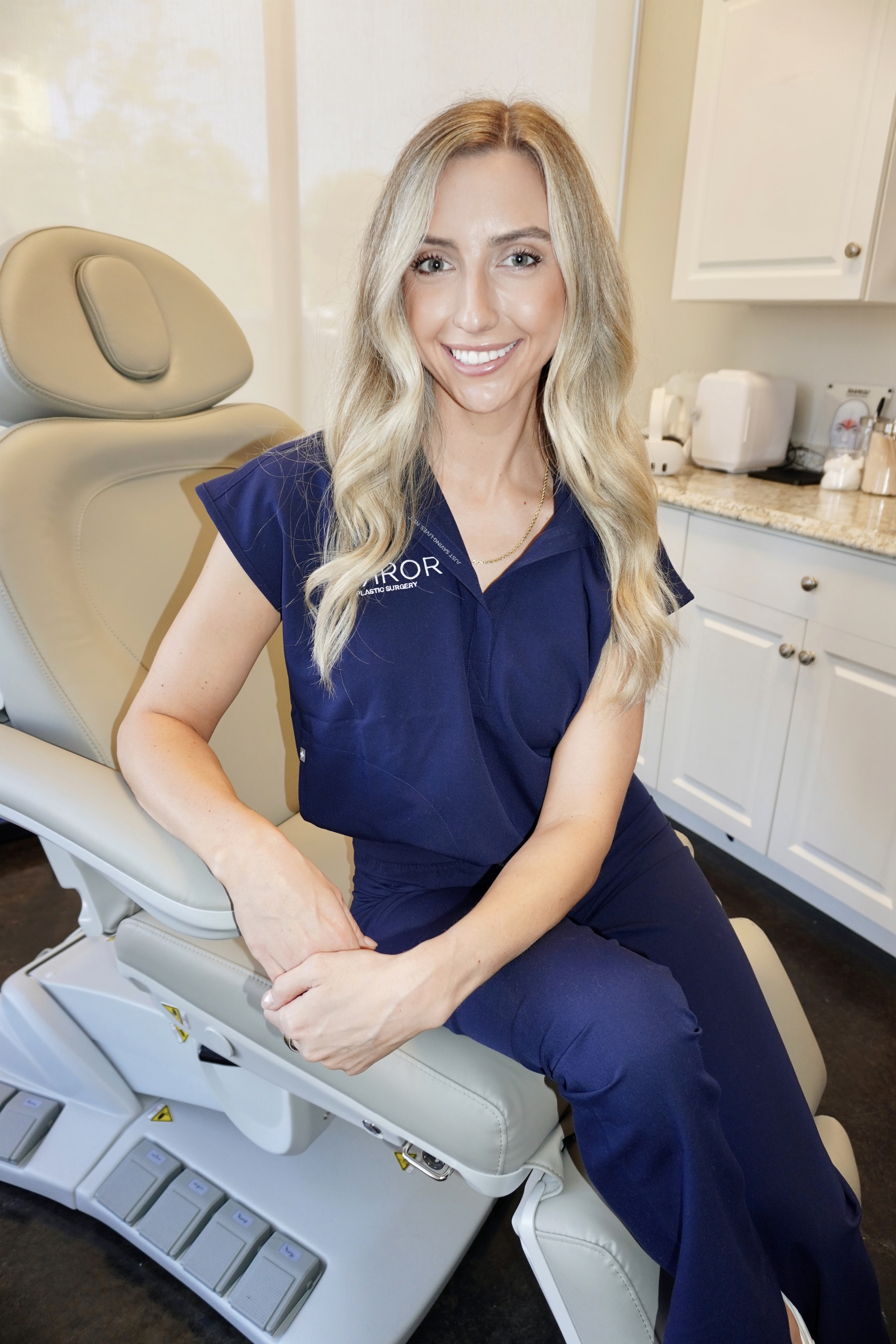
At Mirror Plastic Surgery, non-surgical injectables are led by Ellie Pranckevicius, FNP-BC. Ellie holds a Bachelor’s in Health Science from Boston University, completed a 600-hour aesthetics licensure program, and earned both her Bachelor’s and Master’s in Nursing from the University of South Florida. Four years in the Neuroscience ICU at Tampa General Hospital sharpened her clinical judgment and physiological understanding before she joined Mirror. Her dual background, beginning as a licensed esthetician and advancing through critical-care nursing, gives her a layered understanding of surface and subdermal anatomy that is rare in any single provider category. When cases call for surgical evaluation, Ellie’s work is complemented by Dr. Akash Chandawarkar, MD, a Harvard-educated physician, Johns Hopkins-trained plastic surgeon, and fellowship-trained aesthetic surgeon at Manhattan Eye Ear & Throat Hospital (MEETH)/Lenox Hill Hospital.
What a Dermal Filler Consultation Looks Like at Mirror
With this level of expertise behind the practice, Mirror’s consultation process reflects the same depth of training. At Mirror Plastic Surgery, the consultation follows a four-phase, 60-minute workflow designed to produce a documented, anatomy-specific treatment plan before any product is discussed.
Those four phases are:
- Review and triage
- Clinical assessment and contraindication discussion
- Treatment planning and expectation management
- Decision point to treat, defer, or decline
In practice at Mirror, Ellie begins with an open-ended conversation about your emotional drivers and long-term goals. She then moves into a structured physical assessment using symptom-based severity scales for conditions such as temporal hollowing. She evaluates vascular landmarks in high-risk zones and closes with a written plan that specifies product, zone, volume, and clinical rationale. A qualified provider will never pressure a patient to proceed with treatment on the same day if the patient needs additional time to consider the plan.
60-Minute Dermal Filler Consultation Checklist for St. Petersburg Patients
Use this checklist to evaluate any provider you are considering. Every step should occur before treatment begins, because each one contributes to a complete and safe clinical picture.
- Full medical history intake, including autoimmune conditions, bleeding disorders, pregnancy status, and prior vascular events. Patients should disclose all medical conditions, especially allergies, bleeding disorders, heart conditions, and previous cosmetic treatments.
- Medication and supplement review, with particular attention to warfarin, aspirin, ibuprofen, vitamin E, St. John’s wort, garlic, and ginger supplements.
- Prior filler and injectable history, including product type, treatment area, complications, and timing relative to dental procedures or vaccinations.
- Targeted vascular safety evaluation, focusing on high-risk zones including the glabella, nasal dorsum, forehead, and periorbital region. Ultrasound imaging may improve safety in high-risk filler injections.
- Baseline photography using standardized images from multiple angles for documentation and outcome comparison.
- Symptom-based severity scaling with structured diagnostic grading of areas such as temporal hollowing, infraorbital volume loss, and midface descent.
- Realistic goal alignment through discussion of proportions, ratios, and what filler can and cannot achieve relative to your anatomy.
- Contraindication screening and decision point with explicit confirmation of candidacy or deferral before any product is selected.
- Documented treatment plan. The consultation should conclude with a written treatment plan provided by the injector.
- Informed consent. Consent must be treatment-specific and cover risks including vascular occlusion along with the alternative of no treatment.
Why Full-Face Assessment Prevents Overdone Filler Results
Isolated, single-area injections are one of the most common sources of the “overdone” appearance patients fear. Ellie’s approach at Mirror is grounded in a holistic, full-face philosophy. Foundational restoration of inherent facial characteristics comes first, and the upper, middle, and lower facial regions are assessed as a continuous system rather than independent zones.
Aesthetic facial rejuvenation often involves comprehensive, patient-centered whole-face assessment rather than isolated correction of individual features.
Hong et al. (2025) have discussed how anatomy-led assessment can help transform filler treatment into a more predictable, reproducible intervention. Treating the tear trough without addressing midface support loss, for example, frequently produces persistent edema and visible irregularities. A full-face assessment helps prevent those problems before they occur.
Red Flags That Signal a High-Volume Filler Clinic
Patients who have experienced rushed consultations often describe the same warning signs. The following indicators suggest that a clinic is prioritizing volume over your safety.
- Consultation lasts fewer than 15 minutes with no physical examination of facial anatomy
- No discussion of high-risk injection zones or how the provider protects critical vessels
- Same-day pressure to proceed without time to review the treatment plan
- No baseline photography taken before treatment
- Opaque pricing or package upselling before your goals are understood
- Limited product range with no explanation of why a specific brand was selected for your anatomy
- No documented informed consent covering vascular occlusion, asymmetry, and reversal options
- No written complication protocol covering vascular occlusion and no on-site hyaluronidase
Patients remember whether they felt listened to, whether they felt understood, whether the consultation was personalised and whether they trusted the recommendations, and those factors heavily influence how they ultimately perceive their results. That emotional experience is inseparable from clinical safety. A rushed consultation is not a minor inconvenience, it is a clinical gap that undermines both trust and outcomes.
When Fillers Are Not the Right Choice
Honest communication about candidacy is a core principle at Mirror Plastic Surgery. Ellie is known for advising patients when a treatment is not yet necessary or not appropriate at all. The following are recognized contraindications and situations where fillers are not recommended.
Absolute contraindications include:
Relative contraindications requiring provider evaluation include:
- Certain autoimmune conditions such as SLE, Sjögren’s syndrome, or scleroderma during active flare due to elevated risk of foreign-body granuloma formation
- History of herpes simplex labialis before lip or perioral filler, requiring prophylactic antiviral therapy
- Dental procedures within 2 weeks before or after filler, which carry documented risks of transient bacteremia leading to biofilm infection
- Vaccinations within 2 weeks of filler, which can trigger delayed inflammatory reactions at filler sites through immune activation
Situations where surgical referral is more appropriate include:
- Filler does not lift significantly ptotic tissue, reverse significant cutaneous laxity, or produce surgical-level structural correction; proceeding when patient goals require what filler cannot deliver often yields unnatural outcomes. In these cases, Dr. Akash is available for surgical consultation.
Emerging Safety Standards for Anatomy-Driven Filler Consultations
The field of injectable aesthetics is moving rapidly toward image-guided, patient-specific planning. High-resolution ultrasound with Doppler analysis enables real-time visualization of facial vasculature for pre-injection mapping in high-risk zones including the forehead, glabella, nose, and pyriform fossa, improving procedural precision and reducing vascular adverse events such as tissue necrosis and vision loss.
Recent analyses of publications on injectable aesthetic medicine have concluded that research has evolved from empirical artistry toward evidence-based, technology-driven practice, identifying vascular safety, ultrasound-guided injection, and AI-enhanced symmetry assessment as the main emerging trends.
A 2024 review of published cases identified 365 new instances of partial or complete vision loss after filler injection from September 2018 to March 2023, following earlier reviews that had documented 98 cases through 2015 and an additional 48 cases through 2019. These figures underscore why anatomy-driven planning, not speed, must define the standard of care. Mirror Plastic Surgery’s evidence-based treatment planning integrates these emerging safety standards into every consultation workflow.
Three-Question Framework for Choosing a Filler Provider
Before booking any filler appointment in the St. Petersburg or Tampa Bay area, apply these three questions to every provider you evaluate.
- How long is the consultation, and what does it include? A thorough consultation must include medical history review, detailed vascular safety evaluation, baseline photography, and a documented treatment plan. Anything shorter than a full, structured visit is incomplete.
- Is the provider supplier-neutral? A provider tied to a single brand or quota system cannot always select the product best suited to your anatomy. Ask directly which brands they carry and how they choose between them for individual patients.
- What happens if something goes wrong? A defensible safety minimum includes having hyaluronidase on premises, a written complication protocol covering vascular occlusion, and escalation pathways to secondary-care providers with ophthalmology access. If a provider cannot answer this question clearly, that is your answer.
Conclusion and Next Steps with Mirror Plastic Surgery
The 60-minute, anatomy-driven consultation is not a premium add-on, it is the non-negotiable foundation of safe, natural, and lasting dermal filler results.1 Rushed appointments skip the vascular evaluation, contraindication screening, and goal alignment that determine whether your outcome is predictable or problematic.1 For St. Petersburg and Tampa Bay patients who have experienced that gap firsthand, Mirror Plastic Surgery’s concierge model offers a documented alternative: one provider, one hour, one treatment plan built entirely around your anatomy and long-term goals.
Disclaimer: Results may vary from person to person. Editorial content, before and after images, and patient testimonials do not constitute a guarantee of specific results.
Frequently Asked Questions
How is a 60-minute dermal filler consultation at Mirror Plastic Surgery different from a standard appointment?
A standard filler appointment at a high-volume clinic typically lasts 15 to 30 minutes and may combine consultation and treatment in a single rushed visit. Mirror Plastic Surgery’s 60-minute consultation is a standalone assessment that moves through four structured phases: full medical and medication history review, detailed evaluation of high-risk facial zones, realistic goal alignment using symptom-based severity scales and baseline photography, and a documented treatment plan signed before any product is selected. The consultation is designed to identify contraindications, protect critical vessels, and build a treatment plan specific to your anatomy, not a generalized menu. Same-day treatment may follow if the clinical exam confirms candidacy, but the consultation itself is never compressed to accommodate a schedule.
What credentials should I look for in a dermal filler specialist near St. Petersburg?
Florida is a full-practice-authority state for nurse practitioners, meaning a board-certified FNP can evaluate, diagnose, and prescribe independently. However, licensure alone does not determine safety. The depth of anatomy training and hands-on injectable experience behind the credential matters most. Look for a provider who has completed specialized injectable training covering facial vascular anatomy, contraindication management, and complication protocols, not just injection technique. At Mirror Plastic Surgery, Ellie Pranckevicius combines FNP-BC certification with specialized aesthetics training and critical-care nursing experience, credentials detailed earlier in this article. For patients whose goals may require surgical evaluation, Dr. Akash Chandawarkar, a Harvard-educated, Johns Hopkins-trained plastic surgeon with fellowship training at MEETH/Lenox Hill Hospital, provides an integrated referral pathway within the same practice.
What are the most important things to disclose before a dermal filler consultation?
Your provider needs a complete picture of your health history to assess candidacy safely. Before your consultation, prepare to disclose all current medications and supplements, including aspirin, ibuprofen, warfarin, vitamin E, fish oil, St. John’s wort, garlic, and ginger, because these affect bruising risk. Disclose all medical conditions, particularly autoimmune disorders, bleeding disorders, heart conditions, and any history of cold sore outbreaks if you are considering lip or perioral filler. Inform your provider of all prior cosmetic treatments, including previous filler, neuromodulators, implants, or surgical procedures. Timing matters too. Dental procedures or vaccinations within two weeks of filler treatment carry documented risks of biofilm infection and delayed inflammatory reactions respectively, and your provider needs to know about both. Pregnancy and breastfeeding are absolute contraindications. The more complete your disclosure, the more accurate your candidacy assessment will be.
How long do dermal filler results last, and what affects longevity?
Longevity depends on filler type, placement site, and individual metabolism, not a single guaranteed duration. Fillers typically last 6 to 9 months in the lips, 9 to 12 months in folds, and 12 to 18 months in the cheeks or jawline.1 Mobile areas such as the lips metabolize filler faster than less mobile areas such as the cheeks or jawline. Biostimulatory fillers such as Radiesse work differently, stimulating collagen production over time rather than simply adding volume, and their results evolve on a different timeline. At Mirror Plastic Surgery, Ellie selects products based on your specific anatomy, skin quality, age, and treatment zone, not brand preference or supplier quotas, which means the product chosen for you is the one most likely to perform as expected in your particular case.1 Maintenance timelines are discussed transparently during the consultation so you can plan accordingly.
Are there situations where Mirror Plastic Surgery would recommend against fillers?
Yes, and that transparency is a defining feature of the practice. Ellie is known for advising patients when a treatment is not yet necessary or when a different approach would serve them better. Mirror evaluates both absolute contraindications, such as active infection, hypersensitivity, pregnancy, and breastfeeding, and relative contraindications, such as autoimmune flares, recent dental work, or upcoming vaccinations, as detailed in the contraindications section above. Beyond medical factors, fillers are not the appropriate solution for significantly ptotic tissue, substantial skin laxity, or goals that require surgical-level structural correction. In those cases, Mirror Plastic Surgery will recommend a surgical consultation with Dr. Akash rather than proceed with a treatment that cannot deliver what the patient needs. This honest, goal-first approach is the foundation of the long-term patient relationships the practice is built on.
1 Results may vary from person to person. Editorial content, before and after images, and patient testimonials do not constitute a guarantee of specific results.