
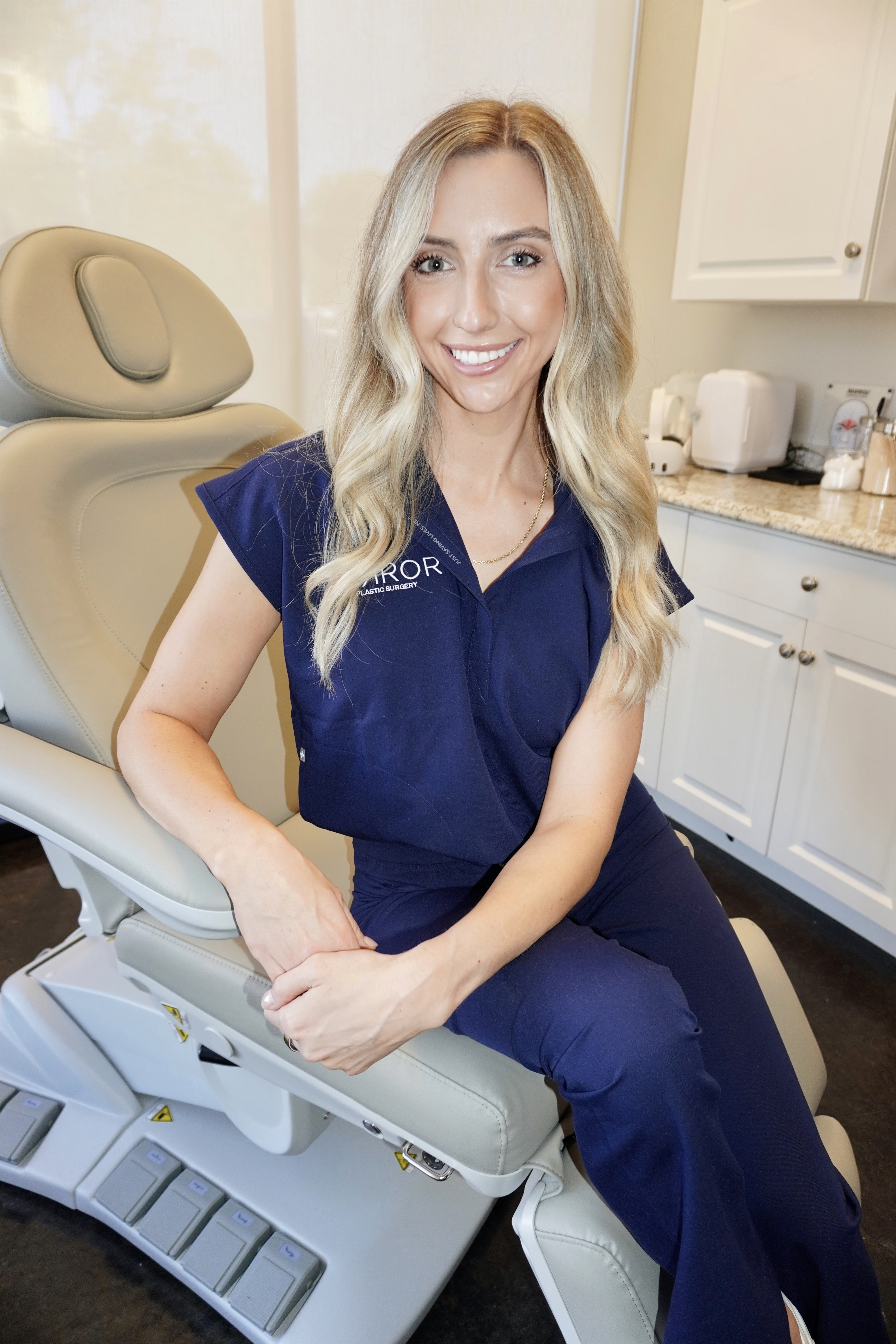
Written by: Ellie Pranckevicius, FNP-BC, Aesthetic Nurse Practitioner & Aesthetic Injector | Facial Restoration & Regenerative Injectable Specialist, Mirror Plastic Surgery | Last updated: August 14, 2026
Concierge Injectables at a Glance
- Concierge aesthetic medicine replaces rushed, menu-driven appointments with extended, individualized assessments by a single credentialed provider.
- At Mirror Plastic Surgery, consultations last up to 60 minutes and include a full-face anatomical evaluation before any product is selected.
- Ellie Pranckevicius brings FNP-BC credentials, four years of neuroscience ICU experience, and 600 hours of esthetician training to every injectable treatment.
- The practice limits itself to one to two procedures per day, so safety, function, and aesthetics stay prioritized over patient volume.
- Schedule your 60-minute assessment with Ellie at Mirror Plastic Surgery to begin a personalized injectable plan.
Is Concierge Med Spa Care Worth the Cost?
NewBeauty’s State of Aesthetics Summer 2026 report found that only 9.1% of aesthetic patients follow a long-term treatment plan with a provider, even though 93% remain open to some form of aesthetic treatment. That gap between engagement and planning is precisely where concierge care delivers measurable value.
At Mirror Plastic Surgery, each injectable consultation extends up to 60 minutes, with a structured top-to-bottom assessment that covers medical history, prior treatment responses, skin quality, facial animation, and long-term goals before any product is selected. Concierge medicine appointments typically last 30–60 minutes, compared to the 10–15 minute visits standard in high-volume traditional practices.
In concierge aesthetic practices, the focus on the ongoing patient relationship rather than treatment volume enables providers to recommend against treatment when clinically appropriate. This structural difference, not a marketing claim, is what makes continuity of care possible. Well-established evidence shows that continuity of care is associated with better health outcomes, lower hospitalization rates, and reduced mortality.1
Mirror Plastic Surgery limits itself to one to two surgeries per day, so the entire clinical team remains focused on each patient before, during, and after treatment. This approach directly contrasts with high-volume practices that may perform five to ten procedures daily.
Start your concierge care journey with Ellie and experience how extended assessment supports safer, more natural injectable results.
How an Aesthetic Injector Approaches Your Face
An aesthetic injector conducts a comprehensive facial assessment, selects appropriate products based on individual anatomy rather than a fixed menu, administers neuromodulators and dermal fillers with anatomical precision, and manages follow-up to evaluate outcomes and adjust plans over time.
At Mirror Plastic Surgery, Ellie Pranckevicius approaches every face as a whole system. Her full-face restorative philosophy begins with foundational restoration, which revitalizes inherent facial characteristics, before she considers volume augmentation. This sequencing helps prevent the asymmetry and overdone appearance that can result from isolated, single-area injections.1
Product selection at Mirror Plastic Surgery is supplier-neutral. RealSelf’s Q1 2026 Real Talk Trend Report shows patients are researching brands prior to consultations, reflecting a shift toward informed, supplier-neutral product selection in aesthetic treatments. Ellie selects from a broad portfolio, including biostimulatory options such as Radiesse for structural reinforcement and alloClae for non-surgical body contouring. Each choice reflects the patient’s anatomy and goals, not quota or commission.
Calcium hydroxylapatite (CaHA) procedures are increasingly popular and reflect a clinical shift from passive filling toward biostimulatory products that promote collagen production for longer-term aesthetic outcomes.1 This trend aligns directly with Mirror Plastic Surgery’s safety-function-aesthetics hierarchy.
The safety hierarchy Ellie applies to every treatment plan follows this order:
- Safety: Is this treatment appropriate for this patient’s anatomy, history, and health status? This foundational assessment determines whether any treatment should proceed.
- Function: Will the outcome preserve or improve natural movement and structural integrity? After confirming safety, Ellie evaluates whether the treatment will maintain the face’s biomechanical performance.
- Aesthetics: Does the plan achieve the patient’s goals without overcorrection or asymmetry? Visual outcomes come last, so they never compromise the first two criteria.
RN, NP, and Injector Qualifications Explained
No federal standard governs who can inject Botox or dermal fillers in the United States; rules are set state by state, creating a patchwork of licensing laws, supervision requirements, and scope-of-practice boundaries that vary by location. Nurse practitioners with prescriptive authority can order and administer injectables in full-practice states without physician oversight and with varying degrees of collaboration elsewhere, while registered nurses cannot order independently and must administer under physician oversight or standing orders in all states.
Ellie Pranckevicius holds the FNP-BC credential, a Family Nurse Practitioner board certification earned through a Master of Science in Nursing from the University of South Florida. This credential grants prescriptive authority and a scope of practice that supports independent clinical judgment in aesthetic medicine.
Her clinical background extends well beyond standard NP training. Before joining Mirror Plastic Surgery, Ellie spent four years in the Neuroscience ICU at Tampa General Hospital. Essential injector backgrounds for minimizing risks in aesthetic procedures include experience in ICU and neuroscience environments, as these develop rapid assessment skills, calm emergency response, deep anatomy knowledge, precision, and attention to detail.
Ellie also completed a rigorous 600-hour esthetician licensure program and began her career in 2019 at a high-end medical spa in Boston. This dual background in advanced nursing and hands-on esthetics training gives her a layered understanding of both subdermal anatomy and surface skin physiology that most injectors do not possess.
Patients are placing greater emphasis on providers’ credentials, safety protocols, and consistency of results when selecting aesthetic injectable treatments, with price no longer serving as the sole deciding factor. Ellie’s neuroscience ICU experience directly supports complication readiness and sets her apart from providers whose backgrounds are limited to elective aesthetic settings.
Concierge vs Traditional Med Spa Structure
The structural differences between concierge aesthetic care and traditional high-volume med-spas affect every stage of the patient experience, from initial assessment through long-term follow-up. National chain aesthetic clinics typically operate on a high-volume model that uses standardized intake forms, preset treatment menus, and fixed appointments with uniform unit placement for injectables regardless of a patient’s unique facial anatomy, muscle patterns, or aesthetic goals.
The table below compares the two models across four dimensions. All figures are drawn from published sources cited inline.
| Dimension | Concierge Model (Mirror Plastic Surgery) | Traditional High-Volume Med Spa | Source |
|---|---|---|---|
| Assessment length | Up to 60 minutes, with a top-to-bottom anatomical evaluation | 10–15 minutes standard | Pabau Concierge Medicine Overview |
| Daily procedure limit | 1–2 surgeries per day, with full-team focus on each patient | High patient throughput prioritized over individual attention | MeliOra Elite Wellness |
| Product selection basis | Supplier-neutral, selected by anatomy, goals, and evidence | Preset treatment menus, with volume-driven recommendations common | MedRein Health |
| Complication resources | FNP-BC with neuroscience ICU background, documented emergency protocols, and medical director oversight | Varies widely, with no standardized national requirement for emergency preparedness | GoTox Aesthetics |
Questions to Guide Your Injector Consultation
Before committing to any injectable treatment, a thorough set of questions helps distinguish providers who deliver evidence-based, safety-first care from those operating on volume and convenience. Use this checklist at every consultation and treat it as a conversation roadmap, not just a list.
Assessment and Planning
- How long is the initial consultation, and does it include a full-face anatomical assessment or only the area you requested?
- Will the provider evaluate your facial animation, including smiling, frowning, and brow raising, before recommending treatment?
- Does the practice develop a long-term treatment plan, or is each visit treated as a standalone appointment?
Credentials and Experience
- What is the provider’s clinical background, and have they worked in high-acuity medical environments such as an ICU or emergency setting?
- Which advanced certifications do they hold beyond their base license?
- Has a medical director examined you and established your treatment plan, or is oversight primarily on paper?
Emergency Protocols
- Does the clinic stock hyaluronidase on site for immediate management of vascular occlusion?
- Is the injector ACLS- or BLS-certified, and when was the last renewal?
- What documented protocol does the team follow if a complication occurs during or after treatment?
Supplier Neutrality and Product Integrity
- Are products purchased directly from manufacturers or authorized distributors, and can the clinic provide lot numbers?
- Are product recommendations based on your anatomy, or do preferred-vendor agreements influence selection?
- Will the provider advise against a treatment if your anatomy or history makes it inappropriate?
Follow-Up and Continuity
- Will you see the same provider at every visit, or does the injector rotate?
- How does the practice track your treatment history, product placement, and response over time?
- What does follow-up look like after an injectable appointment, and how can you reach the provider directly if you have concerns?
Bring this checklist to your consultation with Ellie; she has clear, documented answers for every question.
Conclusion: Why Concierge Injectables Fit Today’s Patient
The treatment-planning gap identified earlier, where 93% of patients remain open to aesthetic care but fewer than one in ten commit to a structured plan, is the problem concierge care is designed to solve.
At Mirror Plastic Surgery in St. Petersburg, Florida, Ellie’s dual background in advanced nursing and hands-on esthetics, detailed throughout this article, supports every injectable consultation. The structural constraints described earlier, including limited daily procedures, supplier-neutral selection, and extended assessments, are not marketing differentiators but the operational conditions that make anatomically precise, natural, long-term results achievable.1
Today’s aesthetic patients arrive at consultations with extensive research, clearly defined expectations, and heightened demands for natural-looking results and long-term outcomes.1 Mirror Plastic Surgery’s model is built to meet that standard.
Ready to move beyond high-volume med-spa appointments? Book your consultation with Ellie today.
Frequently Asked Questions
What makes a concierge injectable consultation different from a standard med-spa appointment?
A concierge injectable consultation is structured around a comprehensive, unhurried assessment at Mirror Plastic Surgery that extends up to 60 minutes. This visit covers medical history, prior treatment responses, skin quality, facial animation patterns, and long-term aesthetic goals before any product is selected or administered. A standard med-spa appointment typically begins with treatment rather than assessment, uses a preset service menu, and may involve a rotating injector who has no prior knowledge of the patient’s anatomy or history. The concierge model also includes direct follow-up with the same provider, which enables adjustments based on how the patient’s tissue responds over time. This continuity is structurally impossible in high-volume settings where patient throughput is the operational priority.
Is Ellie Pranckevicius qualified to manage complications from injectable treatments?
Ellie Pranckevicius holds the FNP-BC credential, which grants prescriptive authority and a clinical scope that supports independent judgment in aesthetic medicine. Before joining Mirror Plastic Surgery, she spent four years as a nurse in the Neuroscience ICU at Tampa General Hospital, an environment that develops rapid assessment skills, calm emergency response, and deep physiological knowledge that directly supports complication management in aesthetic settings. Her 600-hour esthetician training adds a detailed understanding of surface skin physiology. Mirror Plastic Surgery also operates under the medical directorship of Dr. Akash Chandawarkar, a Harvard-educated, Johns Hopkins-trained plastic surgeon, which provides an additional layer of clinical oversight for complex cases.
What injectable products does Ellie use, and how does she select them?
Mirror Plastic Surgery is a supplier-neutral practice, so product selection is based entirely on each patient’s anatomy, skin quality, treatment goals, and clinical evidence, not on vendor agreements or commission structures. Ellie works with a broad portfolio of neuromodulators, including Botox, Dysport, Xeomin, Daxxify, and Jeuveau, and dermal fillers including biostimulatory options such as Radiesse. For non-surgical body contouring, including the non-surgical Brazilian Butt Lift, Ellie uses biostimulatory fillers, specifically Radiesse and alloClae, which promote the body’s own collagen production for structural reinforcement and gradual, natural-looking results.1 The selection process is explained to each patient during the consultation so they understand the rationale behind every recommendation.
How does Mirror Plastic Surgery’s approach reduce the risk of an overdone or unnatural appearance?
Unnatural results from injectables do not stem from the products themselves but from excessive dosing, improper placement, inadequate anatomical knowledge, or poor treatment sequencing. Mirror Plastic Surgery addresses each of these risk factors directly. Ellie’s full-face restorative philosophy prioritizes foundational restoration before volume augmentation, which helps each facial region transition seamlessly into the next. Her neuroscience ICU background supports precise anatomical placement and real-time clinical judgment. The practice’s supplier-neutral model removes quota-driven upselling, and the 60-minute assessment allows Ellie to evaluate facial animation under multiple conditions before recommending any treatment. Patients also receive honest guidance when a requested treatment is not yet necessary or appropriate for their anatomy.
What should I expect at my first injectable consultation at Mirror Plastic Surgery?
Your first consultation with Ellie at Mirror Plastic Surgery is a comprehensive assessment, not a treatment session. Ellie will begin by exploring your emotional motivations for seeking treatment and your long-term aesthetic goals. She will then conduct a structured top-to-bottom evaluation of your facial anatomy, skin quality, volume distribution, and muscle movement patterns. Based on this assessment, she will explain her findings in accessible terms, including the physiology behind any recommended treatment, and present a personalized, evidence-based plan. She may advise that certain treatments are not yet necessary, or that a different sequence of care would produce better long-term results.1 You will leave with a clear plan, a thorough understanding of the rationale behind it, and direct access to Ellie for any follow-up questions.
Disclaimer: Results may vary from person to person. Editorial content, before and after images, and patient testimonials do not constitute a guarantee of specific results.
1 Results may vary from person to person. Editorial content, before and after images, and patient testimonials do not constitute a guarantee of specific results.