
Written by: Ellie Pranckevicius, FNP-BC, Aesthetic Nurse Practitioner & Aesthetic Injector | Facial Restoration & Regenerative Injectable Specialist, Mirror Plastic Surgery | Last updated: August 11, 2026
Key Takeaways
- Concierge injectable care focuses on longer consultations, detailed anatomical assessments, and personalized plans instead of high-volume scheduling.
- This model follows a clear clinical hierarchy of safety first, function second, and aesthetics third, with supplier-neutral product choices based on anatomy.
- Deep provider credentials, including advanced anatomy training and on-site complication resources such as hyaluronidase, improve safety and outcomes.
- In 2026, patients increasingly choose natural-looking micro-dosing, biostimulatory agents, and longer-lasting regenerative treatments over quick, temporary changes.
- Patients in St. Petersburg and the Tampa Bay area can experience this concierge approach by booking a consultation with Ellie at Mirror Plastic Surgery.
How the Concierge Injectable Model Works
The concierge model for injectable aesthetics developed as a direct response to high-volume medspa limitations. Traditional scheduling relies on fixed time blocks, standardized workflows, and throughput metrics that prioritize the number of daily appointments. A concierge practice instead reserves more time for each patient, maintains continuity with a single provider, and structures every visit around individualized medical assessment rather than menu-style services.
At Mirror Plastic Surgery in St. Petersburg, Florida, this philosophy shows up in consultations that can last up to an hour, a strict limit of one to two surgeries per day, and a guiding clinical hierarchy of safety, then function, then aesthetics. Patients in the Tampa Bay area who want this level of attention will notice that the experience differs significantly from most high-volume clinics.
Book a consultation with Ellie to experience a top-to-bottom injectable assessment tailored to your anatomy and long-term goals.
Injectable Options: Neuromodulators, Fillers, and Biostimulators
Injectable aesthetic treatments fall into three main categories, and each category has its own mechanism, indications, and longevity profile.
Neuromodulators are botulinum toxin type A formulations, including Botox, Dysport, Xeomin, Daxxify, and Jeuveau. These products temporarily reduce targeted muscle activity to soften dynamic expression lines. Results typically last three to four months, and newer extended-duration options such as Daxxify appeal to patients who prefer fewer appointments.1 The FDA accepted a supplemental Biologics License Application for BOTOX Cosmetic for masseter muscle prominence in 2026, which broadened neuromodulator use beyond wrinkle treatment.
While neuromodulators focus on muscle activity, dermal fillers address volume. Fillers restore or enhance volume with products such as calcium hydroxylapatite (CaHA) fillers like Radiesse or other biostimulatory agents. HA fillers can last several months in high-movement areas such as the lips and longer in structural regions like the midface and jawline.1 Uses extend beyond the face to the neck, earlobes, décolleté, and body contouring procedures such as non-surgical BBL, where biostimulatory agents like Radiesse are preferred for gluteal volumization.
Biostimulatory agents such as poly-L-lactic acid (PLLA, for example Sculptra) and polynucleotides (PN/PDRN) stimulate fibroblast activity and collagen production instead of adding immediate volume. These products can deliver results that last well over a year, depending on the patient’s collagen response.1 Interest in biostimulatory options like Sculptra has grown as patients choose longer-lasting regenerative treatments over short-term cosmetic changes.
In high-volume “mill” environments, product selection often reflects inventory agreements, quotas, or time pressure instead of individual anatomy. A concierge practice stays supplier-neutral and selects from a full product range based solely on each patient’s physiology and goals.
Step-by-Step Treatment Planning at Mirror Plastic Surgery
A concierge injectable consultation starts long before any product is chosen. The process follows a clear sequence.
- Emotional driver assessment: The provider explores the patient’s motivations, concerns, and long-term goals through open-ended conversation. This context shapes every clinical decision that follows.
- Full health history review: Medications, contraindications, prior treatments, and skin condition are documented. Concierge injectable visits begin with a review of goals, full health history, and medications before any plan is created.
- Top-to-bottom anatomical mapping: The provider evaluates facial and body regions systematically. This includes volume distribution, muscle dynamics, skin quality, fat compartments, and skeletal support, often using structured tools such as severity scales for temporal hollowing.
- Evidence-based product selection: Recommendations match anatomical findings and patient goals, with clear explanations for each product or technique. Foundational restoration comes before volume augmentation.
- Realistic outcome planning: The provider explains timelines, maintenance needs, and the cumulative nature of injectable care. Aesthetics becomes an ongoing discipline instead of a one-time event.
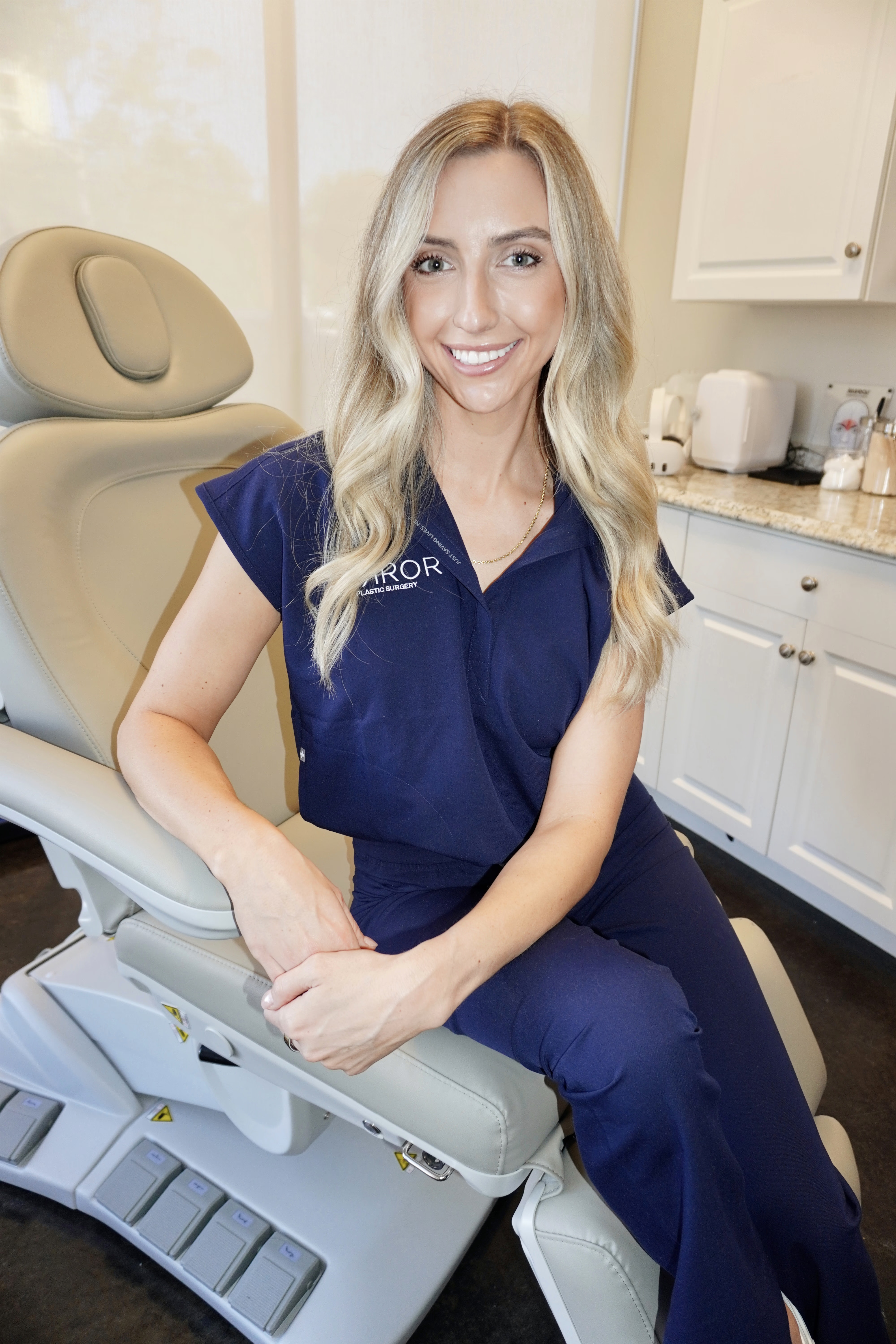
This five-step framework guides every consultation with Ellie Pranckevicius, FNP-BC, Mirror Plastic Surgery’s Aesthetic Nurse Practitioner. She applies it with a holistic full-face approach that keeps the upper, middle, and lower face in harmony and helps avoid asymmetry or an “overdone” look from isolated treatments.
2026 Injectable Trends Supporting the Concierge Approach
The 2026 injectable landscape features several trends that support the concierge model’s emphasis on time, training, and customization.
Allergan Aesthetics introduced the “undetectable era” concept at the AMWC 2026 congress. This idea builds on the micro-dosing trend, often called baby Botox, where providers use smaller doses to preserve natural movement. These techniques have replaced the frozen-face aesthetic in 2026 and require advanced understanding of facial anatomy and muscle balance.
The shift toward biostimulatory agents described earlier has accelerated in 2026. Bioremodeling injectables such as Profhilo, polynucleotides, and next-generation HA skin boosters have become the fastest-growing revenue category. These products stimulate fibroblasts and rebuild collagen without adding bulk. SKINVIVE by Juvéderm also received an indication expansion for neck lines in 2026, supporting more anatomically targeted use.
Regulatory oversight has tightened as well. The U.S. FDA has taken action against unlicensed providers, which is shifting patients toward licensed, compliance-focused practices. GLP-1 medication users seeking volumization and skin-tightening injectables have also driven strong 2026 demand for mid-face restoration with dermal fillers.
Provider credentials now play a larger role in patient decision-making. Injectors with four or more stacked certifications in Botox, fillers, PDO threads, PRP/PRF, and related modalities earn more and deliver measurably different outcomes than single-credential providers. Ellie’s background includes esthetics licensure with 600 hours of hands-on training, a Master’s in Nursing from the University of South Florida, and four years in the Neuroscience ICU at Tampa General Hospital, reflecting this depth of expertise.
What to Look for in an Injectable Provider
Patients comparing injectable providers can use several objective criteria to guide their choice.
- Clinical background and licensure: Safe injectable practice requires a clinical background such as MD, RN, NP, PA, or equivalent, not just brand training or a weekend course.
- Anatomical training depth: Safe practice starts with structured anatomical education covering layered facial anatomy, injection depth, and awareness of high-risk vascular and neural structures. Key danger zones include the forehead, glabella, nose, infraorbital region, and temple.
- Complication preparedness: For dermal filler treatments, safe practice requires on-site hyaluronidase ready for immediate use if vascular compromise is suspected, because delays can cause tissue loss or vision changes.
- Consultation structure: Written consent, written aftercare, and standard follow-up visits signal a higher standard of care than a quick, procedure-only visit.
- Supplier neutrality: Providers tied to a single brand or quota may recommend based on inventory instead of patient need.
Risks, Maintenance, and Tradeoffs with Injectables
Injectable treatments involve real risks that a responsible provider will explain clearly. Incorrect botulinum toxin placement can cause brow ptosis, eyelid drooping, or asymmetry, and dermal fillers carry the vascular risks mentioned earlier, including intravascular injection into vessels such as the angular, supratrochlear, and infraorbital arteries.
Result longevity varies by product type, treatment area, metabolism, and lifestyle.1 Biology, sun exposure, skincare habits, and treatment consistency all affect how long results last.1 Patients who exercise intensely may notice neuromodulator results fade slightly faster because of higher metabolic clearance.1
Injectable aesthetics function as ongoing maintenance rather than a one-time fix. Smaller, regularly timed touch-ups are often more cost-effective than waiting for results to disappear, because they reduce the need for larger corrective sessions and lower total product volume over time. Cosmetic injectables remain elective and are not covered by standard health insurance.
Most aesthetic outcome studies measure results for only three to twelve months, and industry-funded research is common. Provider transparency and sound clinical judgment therefore matter when evaluating long-term value claims.
Clearing Up Common Myths About Concierge Injectables
Misconception: Longer appointments mean unnecessary upselling. In a true concierge model, extended time supports honest conversations and realistic expectations. Concierge practices often decline treatment when expectations do not align with safe, natural outcomes. Ellie frequently advises patients to delay or skip expensive services when they are not yet needed, which builds trust.
Misconception: Injectables always look frozen or obvious. When a skilled provider performs wrinkle relaxer treatments, expression lines soften while natural movement remains. The goal is a refreshed look achieved through careful dosing and placement. The 2026 shift toward micro-dosing and the “undetectable era” supports this standard.
Misconception: More product creates better results. In aesthetics, more treatment often produces worse outcomes, not better ones. Providers focus on restoring structure first, then consider volume only when it truly benefits facial balance.
Misconception: Injectables are only for older patients. Injectables can suit a wide age range, including adults in their late twenties and thirties who want to prevent deep-set lines. Restorative and volumizing treatments are then tailored to the specific changes each patient shows over time.
Concierge vs High-Volume: Side-by-Side Comparison
| Feature | Concierge Model | High-Volume Medspa Model |
|---|---|---|
| Consultation length | Up to 60 minutes, with open-ended dialogue and anatomical mapping | Typically 10–15 minute appointment slots |
| Provider continuity | Same credentialed provider assesses, plans, treats, and follows up | Rotating injector model, provider may change between visits |
| Daily patient volume | 1–2 treatment sessions per day, full team focus on each patient | High-volume operations emphasize utilization metrics and throughput |
| Product selection approach | Supplier-neutral, product chosen based on individual anatomy and goals | May be influenced by brand agreements, inventory, or quota incentives |
| Safety and complication protocol | On-site complication management, hyaluronidase available, anatomy-first planning | Varies widely by clinic, and FDA enforcement actions have targeted unlicensed high-volume providers for vascular complications |
Book a consultation with Ellie at Mirror Plastic Surgery’s St. Petersburg location to experience the concierge model in person.
Frequently Asked Questions
Who is a good candidate for concierge injectable treatments?
Good candidates are adults in overall good health who want to soften fine lines, restore volume, enhance features, or address body contouring concerns. A comprehensive consultation determines the best plan based on goals, medical history, skin condition, and anatomy. Candidacy does not depend on age alone. Preventative neuromodulator treatments can suit adults in their late twenties and thirties, while restorative and volumizing treatments match the specific changes each person shows. Certain medical conditions, medications, active skin infections, or unrealistic expectations may make treatment inappropriate at a given time, and a concierge provider will explain this clearly.
How does the concierge model improve safety compared to high-volume settings?
Safety in injectable aesthetics rests on provider credentials, anatomical knowledge, and complication readiness. In a concierge model, the same credentialed provider performs the assessment, treatment, and follow-up, which reduces handoff errors common in rotating-injector settings. Longer consultations allow for thorough health history review, contraindication screening, and mapping of vascular and neural risk zones before any injections. Concierge practices also keep complication supplies on-site, including hyaluronidase for hyaluronic acid filler emergencies, and operate under physician oversight. At Mirror Plastic Surgery, Ellie Pranckevicius’s four years in the Neuroscience ICU at Tampa General Hospital provide a strong clinical judgment foundation.
How often will I need maintenance treatments?
Maintenance frequency depends on product type, treatment area, and individual biology. Neuromodulators usually require repeat sessions every three to four months, and extended-duration options can lengthen that interval.1 Dermal fillers in high-movement areas such as the lips often last six to twelve months, while structural placements in the midface and jawline can last twelve to eighteen months.1 Biostimulatory agents such as Sculptra can produce results for eighteen to twenty-four or more months by stimulating collagen.1 Consistent, scheduled maintenance is typically more efficient than letting results fully fade, because it uses less product over time. Your provider will outline a realistic long-term schedule during your first visit.
What is the recovery experience like after injectable treatments?
Most injectable treatments involve minimal downtime. Mild swelling, redness, or bruising at injection sites is common and usually resolves within a few days. Neuromodulators take several days to start working, with full effect around two weeks. Dermal fillers often show immediate change, and final results appear as swelling settles. Biostimulatory agents create gradual improvements over several months as collagen builds. Providers give specific aftercare instructions, including sun protection, to support and extend results. Patients who exercise intensely may notice neuromodulator effects fade a bit sooner because of faster metabolism.
How long do injectable results last, and what affects longevity?
Longevity varies with product type, placement, metabolism, and lifestyle.1 Neuromodulators last about three to four months on average.1 Dermal fillers last six to eighteen months, depending on the area and formulation.1 Biostimulatory agents can provide results for two years or more.1 Collagen production rate, sun habits, skincare consistency, and hydration all influence how long results hold. Daily unprotected sun exposure speeds collagen breakdown and shortens the benefit of collagen-stimulating treatments. Once structural volume is established with fillers, maintenance sessions usually require less product than initial treatments, which makes consistent care more cost-effective.
When should I seek a professional evaluation rather than waiting?
A professional evaluation helps whenever you notice changes in volume, skin texture, or muscle activity that concern you, at any age. Early assessment allows a provider to document a baseline, address foundational needs before larger volume deficits develop, and design a plan that evolves with your anatomy. Patients who have experienced complications or unsatisfactory results from prior treatments should seek evaluation quickly, because early correction is more effective. If you use GLP-1 medications and see rapid facial volume changes, a timely consultation can help address these shifts before they progress.
Choosing Concierge Injectables with Confidence
Concierge injectable care is defined by clinical philosophy rather than price or décor. This model places safety and anatomical integrity above throughput, reserves enough time for meaningful assessment, maintains provider continuity, and communicates clearly about what treatment can and cannot achieve.
For patients in St. Petersburg and the Tampa Bay area, Mirror Plastic Surgery offers this model through Ellie Pranckevicius, FNP-BC. Her combined background in esthetics and advanced nursing, along with Neuroscience ICU experience and physician oversight from Harvard-educated, Johns Hopkins-trained plastic surgeon Dr. Akash Chandawarkar, creates a level of injectable care that is difficult to match in high-volume settings.
Evaluating any injectable provider using the criteria in this guide, including credential depth, anatomical training, consultation structure, supplier neutrality, and complication preparedness, supports decisions that align with your long-term health and aesthetic goals.
Book a consultation with Ellie at Mirror Plastic Surgery, located at 780 4th Ave S, St. Petersburg, FL 33701, or contact the practice by phone or text at 727-361-6515.
Disclaimer: Results may vary from person to person. Editorial content, before and after images, and patient testimonials do not constitute a guarantee of specific results.
1 Results may vary from person to person. Editorial content, before and after images, and patient testimonials do not constitute a guarantee of specific results.