Written by: Ellie Pranckevicius, FNP-BC, Aesthetic Nurse Practitioner & Aesthetic Injector | Facial Restoration & Regenerative Injectable Specialist, Mirror Plastic Surgery | Last updated: August 18, 2026
Key Takeaways
- Cellulite laser therapies fall into invasive (Cellulaze) and non-invasive categories, and most patients see modest, not dramatic or permanent, change.
- Cellulaze can produce visible improvement for at least one year after a single session, though results are not guaranteed to be permanent.1
- Non-invasive external lasers require multiple sessions, have shorter-lived outcomes, and generally work best for mild-to-moderate cellulite.
- Avéli subcision delivers high patient satisfaction at twelve months after one session, with durability supported by fibrous band release.1
- Provider anatomical expertise strongly influences outcomes, so schedule a personalized consultation at Mirror Plastic Surgery to match the right cellulite treatment to your anatomy.
How This Review Was Compiled From 2011–2026 Data
This review pulls from four main sources: peer-reviewed clinical studies on PubMed (2011–2026), IMCAS expert reviews, American Academy of Dermatology and Cleveland Clinic guidance, and patient-reported outcomes from RealSelf and public forums. Included human studies used photographic or validated scale endpoints with at least three months of follow-up. Studies without control groups are labeled as Level of Evidence 4.
How Cellulaze Works and What 2026 Results Show
Cellulaze uses a side-firing 1440 nm Nd:YAG fiber inserted under the skin to thermally cut fibrous septae, melt herniated fat, and heat the dermis to stimulate collagen. A typical protocol delivers 70–100 joules per square centimeter at 8–10 watts.
The pivotal multicenter study of 57 patients across five centers found that a single Cellulaze procedure produced sustainable improvement in cellulite appearance for at least one year.1 Barry DiBernardo’s 2011 prospective study documented a 25% increase in skin thickness and a 29% improvement in elasticity at one year.1 The American Academy of Dermatology notes that results can last a year or longer for some patients, but they are not guaranteed or permanent for everyone.
RealSelf Ratings and What Patients Actually Report
Patient reviews across forums and RealSelf for Cellulaze tend to repeat several themes.
- Pain and anesthesia: Most patients tolerate the procedure with local anesthesia, and many describe soreness for one to two weeks afterward.
- Downtime: Recovery usually includes drainage and mild soreness on day one, peak swelling on days two through five, and a return to light work within a couple of weeks. Final skin-tightening changes appear over several months.
- Longevity concerns: Many patients report that visible improvement fades within one to two years, which matches published descriptions of results as long-lasting but not curative.
- Satisfaction variability: DiBernardo’s 2011 study found high patient satisfaction at one year, and all patients said they would recommend the procedure. Broader forum discussions feel more mixed and often point to unrealistic expectations as the main cause of disappointment.
Book a consultation with Ellie to receive an honest, anatomy-based opinion on whether Cellulaze or another option fits your cellulite grade and skin quality.
Non-Invasive External Lasers: What Reddit and Clinical Data Show
Many patients also explore non-invasive external laser options that avoid incisions and anesthesia. Non-invasive lasers, including 1064 nm Nd:YAG and low-level laser therapy (LLLT) devices, consistently show more limited outcomes than invasive treatments. Clinical studies of 1064 nm laser treatments report improvement in photographic cellulite severity after multiple sessions, with many patients noticing change, but results mainly benefit mild-to-moderate cellulite.
A double-blind, placebo-controlled trial of LLLT using green 532 nm diodes found that some treated patients achieved at least a one-stage reduction on the Nürnberger–Müller scale. Forum discussions echo these findings. Multiple sessions are expected, results are short-lived, and side effects are usually mild but still present. Patient satisfaction varies, and most people describe results that last several months.
Avéli Subcision Compared With Laser Options
The table below compares Cellulaze (invasive laser), non-invasive external laser, and Avéli subcision using four shared metrics based on 2026 data.
| Metric | Cellulaze (Invasive Laser) | Non-Invasive External Laser | Avéli Subcision |
|---|---|---|---|
| Improvement rate at 12 months | Sustainable improvement at 12 months in many treatment sites | Patient-reported noticeable improvement after multiple sessions, with results that can fade after several months | High patient satisfaction at 12 months, with CSS reduction sustained through 12 months |
| Sessions required | Single session | Multiple sessions | Single session |
| Typical recovery | Return to light work within a couple of weeks, with final results over several months | No downtime for non-invasive external low-level laser therapy (LLLT) for cellulite | Return to light activity within 24–48 hours, with bruising resolving in about 30 days |
| Result durability | Can last for years after a single session, but not permanent | Several months | Sustained through 12 months in the pivotal trial, with a structural mechanism that supports long-term durability |
A 2026 prospective study of 22 patients who had Avéli subcision combined with Renuvion helium plasma radiofrequency reported improvement in up to 81.8% of patients at 180 days.1 Objective 3D imaging confirmed measurable reductions in dimple volume, surface area, and depth, including complete resolution in some cases.1 Histology showed progressive collagen and elastin increases through day 180.
Cost, Downtime, and Recovery Considerations
Non-invasive external lasers usually have the lowest per-session price but require the most visits and produce the shortest-lasting results. In contrast, Cellulaze and Avéli are single-session procedures performed under local anesthesia, although their recoveries differ. Cellulaze involves one to two days of minimal downtime, with collagen remodeling continuing for up to twelve months. Avéli patients usually return to light activities within 24 to 48 hours, and swelling and bruising resolve within 30 days.
Because anatomy, cellulite grade, and lifestyle vary from person to person, Mirror Plastic Surgery provides personalized quotes during consultation instead of listing fixed prices.
Why Provider Skill Matters Most for Cellulite Results
Plastic surgeon Allen Gabriel’s 2023 review in Aesthetic Surgery Journal Open Forum concludes that treatments targeting fibrous septa produce more significant and durable improvement than options that only address microcirculation or skin laxity. The quality of fibrous band identification and release depends entirely on the operator. A device can only perform as precisely as the clinician using it.
Mirror Plastic Surgery’s concierge model focuses on this reality. Ellie Pranckevicius, FNP-BC, brings a combined background in esthetics and advanced nursing, including four years in the Neuroscience ICU at Tampa General Hospital, which deepens her understanding of subdermal anatomy and tissue physiology. Consultations can last up to an hour and include a top-to-bottom anatomical assessment before any treatment is recommended.
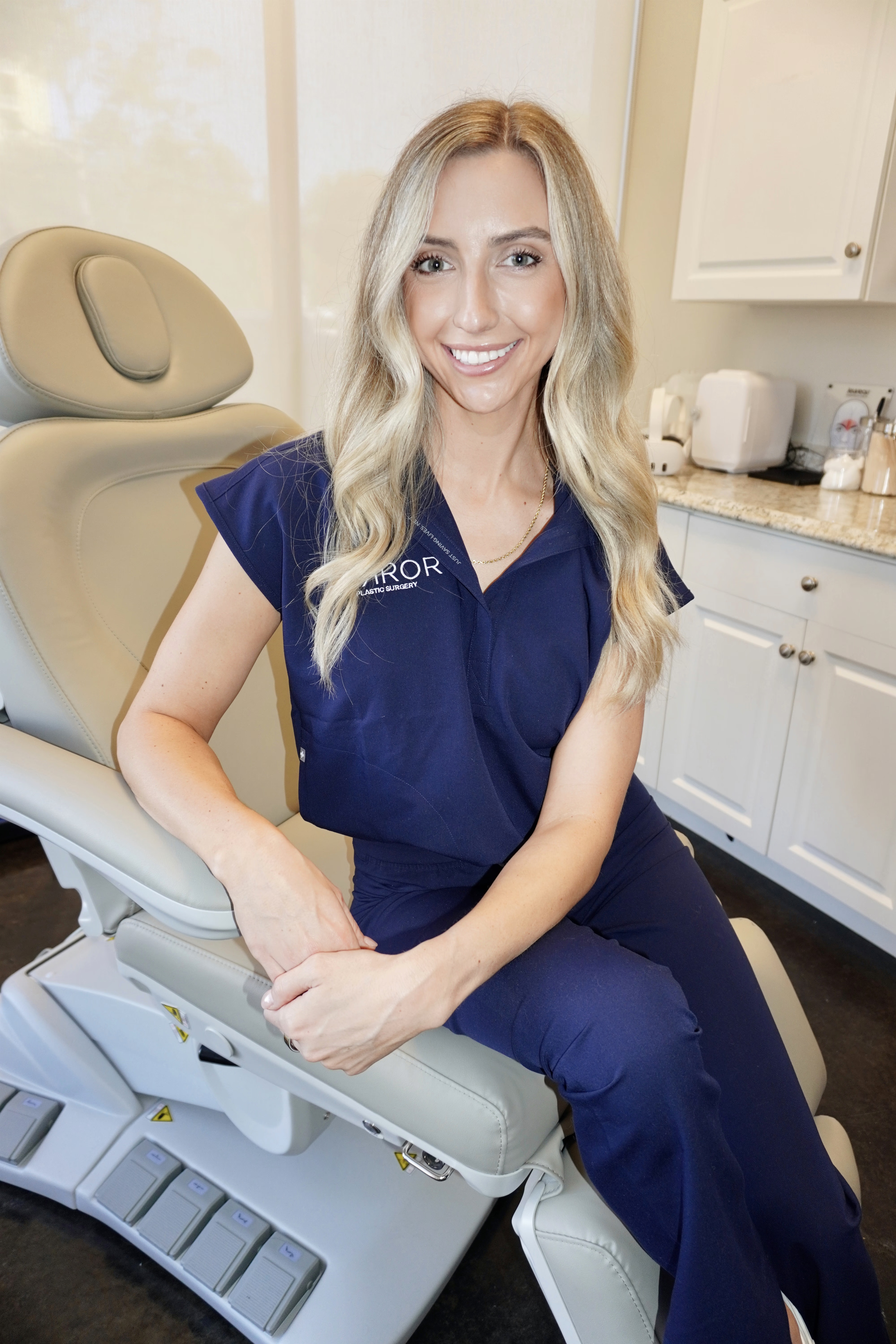
When a case calls for surgical input, Ellie works with Dr. Akash Chandawarkar, MD, a Harvard-educated, Johns Hopkins-trained plastic surgeon with fellowship training at Manhattan Eye Ear & Throat Hospital. The practice performs one to two procedures per day, a deliberate cap that preserves focused clinical attention at every step.
Book a consultation with Ellie to receive an anatomy-first assessment of your cellulite grade, skin quality, and the treatment path most likely to deliver durable results for your body.
Supporting Data on Safety, History, and Patient Selection
DiBernardo’s 2011 study used real-time thermal monitoring to maintain safe temperatures, and no treatment-induced burns occurred. Adverse effects were limited to mild discomfort, bruising, swelling, and numbness that resolved within three months. The openFDA MAUDE database lists adverse event reports for Cynosure SmartLipo and Cellulaze, but this passive reporting system does not provide true incidence rates.
Ideal candidates for invasive cellulite treatments are adults with moderate-to-severe cellulite, stable weight, realistic expectations, and no contraindications to local anesthesia. A severity-based framework suggests lifestyle changes for mild cases, non-invasive modalities for moderate cases, and subcision or collagenase injections for advanced cases.
How to Choose a Cellulite Treatment in Florida
Florida patients comparing cellulite treatments can use the following factors as a practical checklist.
- Cellulite grade: Minimally invasive subcision with or without 1440 nm Nd:YAG laser is recommended as primary treatment for severe cellulite. Radiofrequency or shock wave therapy is usually first-line for moderate cellulite.
- Downtime tolerance: Non-invasive lasers offer minimal downtime but require repeated visits and give shorter-lasting results. Single-session invasive options involve a brief recovery and create more durable structural change.
- Longevity expectations: No cellulite treatment provides a permanent cure, so maintenance is common, and counseling on recurrence risk is essential.
- Provider anatomical expertise: Accurate fibrous band identification and precise release depend on hands-on anatomical skill, which varies widely between providers.
- Combination potential: Combining mechanical subcision with energy-based therapy can safely improve both cellulite appearance and skin laxity, as shown in the 2026 TVS plus helium plasma RF trial.
Limitations of Current Cellulite Research
Most cellulite studies enroll small numbers of patients, lack randomized controls, and follow patients for twelve months or less. Anatomical differences in fibrous band depth, fat distribution, and skin thickness mean that group-level improvement rates do not reliably predict individual outcomes. Provider experience adds another layer of variability that device trials cannot fully control. Longer-term data beyond three years remain limited for most treatments, including Avéli.
The Shift Toward Evidence-Based, Anatomy-First Care
The 2023 clinical guidelines highlight the advantages of combination therapies for cellulite and recommend tailoring treatment to cellulite severity, lifestyle, and expectations. The field is moving away from device-first thinking and toward anatomy-first assessment. This change rewards providers who invest in diagnostic depth instead of applying a single protocol to every patient.
Mirror Plastic Surgery’s model, which includes concierge consultations, supplier-neutral product selection, and a safety-function-aesthetics hierarchy, aligns with this evidence-based direction in aesthetic medicine.
Frequently Asked Questions
What is the most successful treatment for cellulite in 2026?
Current evidence places subcision-based treatments, especially Avéli and vacuum-assisted subcision, as the most consistent options for moderate-to-severe cellulite. These approaches show high patient satisfaction at twelve months and structural durability through fibrous band release. For patients with skin laxity, combining subcision with an energy-based modality such as helium plasma radiofrequency has shown progressive improvement through 180 days in a 2026 prospective trial. Radiofrequency and shock wave therapy remain first-line for moderate cellulite when invasive options are not a fit. The most appropriate treatment depends on cellulite grade, skin quality, anatomy, and goals, so a thorough clinical assessment should always come first.
Does laser treatment for cellulite produce permanent results?
No cellulite treatment currently offers permanent results. As discussed earlier, Cellulaze shows improvement at twelve months that can last for years in favorable cases, although results are not permanent. Non-invasive external lasers create shorter-lived change and usually require multiple sessions. Maintenance treatments and lifestyle factors, including weight stability and skin care, influence how long results last. Clear expectation-setting before treatment is a core part of responsible care.
How does Avéli compare to Cellulaze for cellulite?
Avéli and Cellulaze are both single-session, minimally invasive procedures performed under local anesthesia that target fibrous septae, the structural cause of dimpling. Cellulaze adds laser energy to cut bands, melt superficial fat, and stimulate collagen, which can help with deeper or more pronounced dimples. Avéli uses light-guided manual subcision with transillumination and tactile feedback, which typically causes mild-to-moderate bruising and a recovery of one to two weeks.
Cellulaze recovery often involves up to a couple of weeks before light work feels comfortable, and final results appear over several months. Patient satisfaction at twelve months is high for both Avéli and Cellulaze. The better choice depends on cellulite depth, skin laxity, and individual anatomy, which are best evaluated in person.
How many sessions does cellulite laser treatment require?
Invasive laser treatments such as Cellulaze are designed as single-session procedures. Non-invasive external lasers usually require multiple sessions to create measurable improvement, and results can fade, which may lead to repeat courses. Subcision-based treatments, including Avéli, are also single-session procedures in most cases. Session count is one of several practical factors, along with downtime, durability, and anatomical fit, that should guide treatment selection during consultation.
Is cellulite laser treatment safe?
When a trained provider uses proper thermal monitoring, invasive cellulite laser treatments have a favorable safety profile. In DiBernardo’s 2011 study, side effects were limited to mild discomfort, bruising, swelling, and numbness that resolved within three months, and no burns occurred. Non-invasive laser treatments can cause erythema, hyperpigmentation, and thermal injury, but these events are usually mild. Serious complications are described as extremely rare when qualified professionals perform the procedures. Provider anatomical knowledge and real-time monitoring play a central role in safety, making provider choice as important as device choice.
Clinical Bottom Line and Next Steps
- Cellulaze produces improvement at twelve months after a single session, with results that can last but do not permanently erase cellulite.
- Non-invasive external lasers require multiple sessions, have variable satisfaction, and often deliver results that fade over time.
- Avéli subcision achieves high satisfaction at twelve months after one session, with durability supported by fibrous band release mechanics.
- Combining subcision with energy-based therapy, such as helium plasma RF, shows progressive improvement through 180 days in 2026 data.
- No cellulite treatment is permanent, and long-term outcomes depend on maintenance and lifestyle choices.
- Provider anatomical expertise shapes treatment outcomes more than device selection alone.
- A detailed, anatomy-first consultation should always guide cellulite treatment decisions.
Book a consultation with Ellie at Mirror Plastic Surgery in St. Petersburg, FL, for a comprehensive top-to-bottom assessment and an evidence-based, personalized cellulite treatment plan that reflects your anatomy and long-term goals.
Disclaimer: Results may vary from person to person. Editorial content, before and after images, and patient testimonials do not constitute a guarantee of specific results.
1 Results may vary from person to person. Editorial content, before and after images, and patient testimonials do not constitute a guarantee of specific results.