
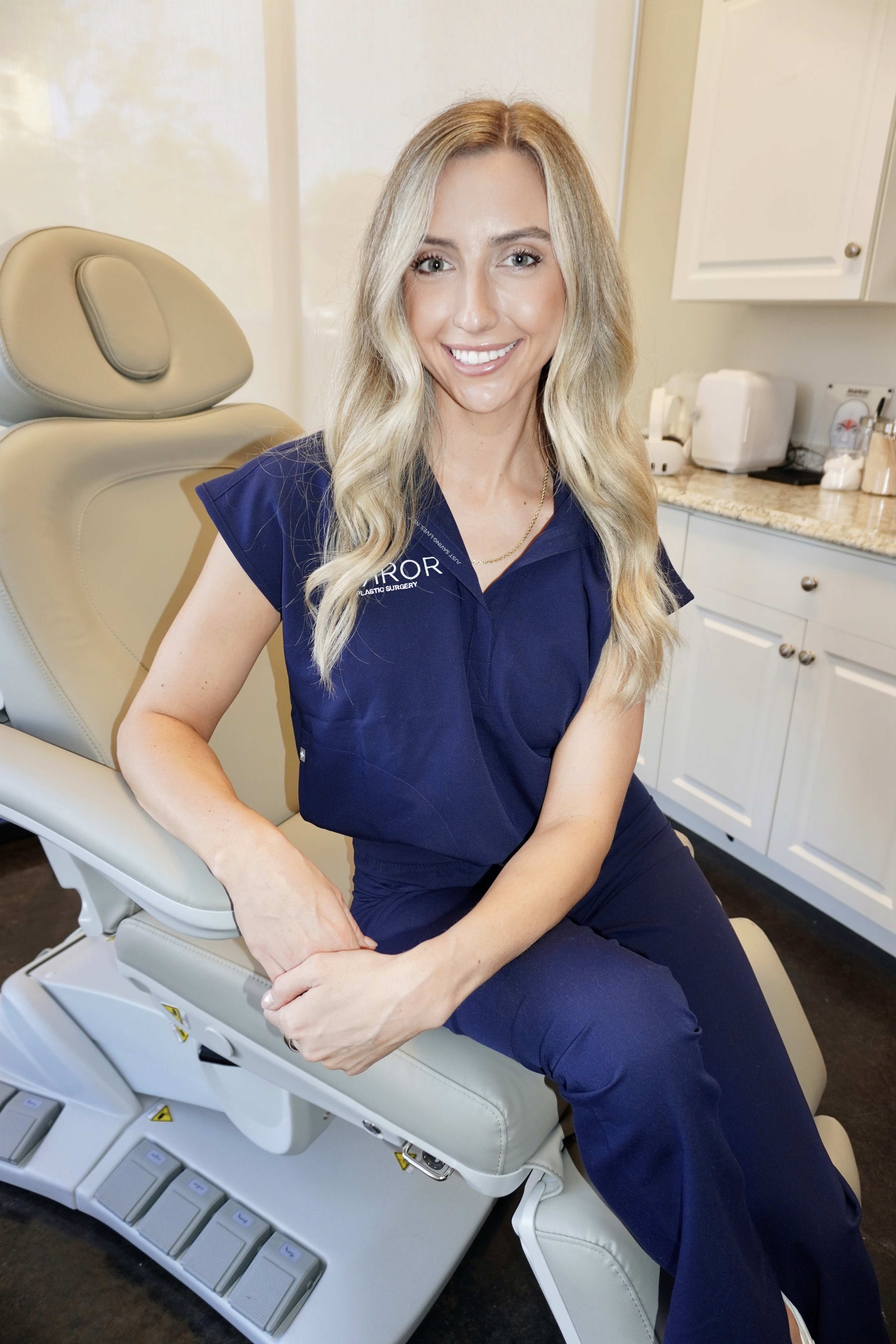
Written by: Ellie Pranckevicius, FNP-BC, Aesthetic Nurse Practitioner & Aesthetic Injector | Facial Restoration & Regenerative Injectable Specialist, Mirror Plastic Surgery
Key Takeaways on BBL Risk and Safer Alternatives
- Brazilian butt lift (BBL) surgery has one of the most closely watched risk profiles in elective plastic surgery, so adults considering gluteal enhancement in 2026 need a careful, individualized risk review.
- Post-2018 safety guidelines and ultrasound guidance have substantially reduced BBL mortality when board-certified surgeons operate in accredited facilities, although meaningful residual risk remains.
- Primary complications include pulmonary fat embolism, DVT/PE, seroma, infection, and possible revision surgery due to fat reabsorption or asymmetry.
- Non-surgical biostimulatory filler techniques avoid general anesthesia, liposuction, and fat transfer, which creates a significantly lower systemic risk profile while still improving volume and contour.
- Patients who want personalized guidance on safer gluteal enhancement options should schedule a consultation with Ellie at Mirror Plastic Surgery to review non-surgical alternatives matched to their goals.
How a Surgical Brazilian Butt Lift Works and Why Risk Matters in 2026
A surgical BBL is an autologous fat transfer procedure. The surgeon harvests fat with liposuction from areas such as the abdomen, flanks, or thighs, processes it, and injects it into the buttocks to add volume and reshape contour. No implant is used. Because the procedure combines liposuction with fat injection near large gluteal blood vessels, it carries a distinct vascular risk profile that differs from most other elective surgeries. Technique evolution since 2018 has materially changed the mortality picture, so 2026 data look very different from figures commonly cited even five years ago. The following comparison table highlights how mortality and complication benchmarks have shifted across eras and procedure types, showing the safety gains from updated protocols.
BBL Mortality Rate Comparison in 2026
| Procedure Type | Mortality Rate / Complication Benchmark | Context |
|---|---|---|
| Surgical BBL, pre-guideline era | approximately 1 in 3,000 procedures | Before 2018 Multi-Society Task Force guidelines |
| Surgical BBL, post-guideline era | substantially reduced from pre-guideline rates | Following 2018 protocol adoption by board-certified surgeons |
| Surgical BBL, board-certified cohort 2019–2021 | low mortality observed in reviewed cases | Adherence to updated safety protocols required |
| Surgical BBL, overall complication rate | ASPS 2024 statistics report procedural volumes for buttock augmentation with fat grafting but do not include an overall complication rate for surgical BBL | Board-certified surgeons following current safety protocols |
| Non-surgical injectable BBL (biostimulatory fillers) | does not involve fat transfer so avoids associated embolism risks of surgical BBL | No fat harvesting or intravascular fat injection involved |
The mortality reduction from the pre-guideline era to post-guideline rates reflects meaningful improvement driven mainly by technique changes, especially the prohibition of intramuscular fat injection. The non-surgical column cannot use the same mortality unit because fatal fat embolism does not apply when no fat is injected. These risk profiles differ in mechanism, not just in number.
How Fat Embolism Happens and the Role of Ultrasound Guidance
Pulmonary fat embolism is the primary cause of BBL-related death. During fat injection into the buttocks, fat particles can enter the gluteal veins when injections are placed deep within or beneath the gluteal muscle, then travel to the lungs. The 2018 Multi-Society Task Force guidelines mandate subcutaneous-only fat placement to avoid intramuscular and submuscular injection, which is the zone where venous injury and fat entry are most likely.
Ultrasound guidance adds real-time visualization so the surgeon can confirm cannula position relative to gluteal vessels throughout the injection. This change correlates with the sharp mortality reduction seen in post-2018 cohort data. Ultrasound guidance, however, requires specific training and equipment, and not every facility offering BBL has adopted it.
DVT and Pulmonary Embolism Risk After BBL Surgery
Deep vein thrombosis (DVT) and pulmonary embolism (PE) form a separate thromboembolic risk category beyond fat embolism. BBL often involves prolonged operative time, positional changes, and significant tissue trauma, all of which increase DVT risk. Recovery adds another layer of risk because patients must avoid direct pressure on the buttocks for several weeks, which limits mobility and increases venous stasis.
Patients with elevated BMI, prior clotting history, or hormonal contraceptive use carry higher thromboembolic risk. These patients need individualized pre-operative assessment before any surgical gluteal procedure is considered appropriate.
Wound Healing, Seroma, and Infection After Surgical BBL
The liposuction portion of a surgical BBL creates multiple donor-site wounds, and each site has its own healing demands. Common post-operative complications include:
- Seroma: Fluid accumulation at liposuction donor sites that may require drainage and can extend recovery.
- Wound dehiscence: Incision separation, which occurs more often in patients with poor circulation or nutritional deficits.
- Infection: Bacterial contamination at donor or recipient sites, with higher risk in non-accredited facilities.
- Skin irregularities: Contour deformities, dimpling, or uneven texture at liposuction sites that sometimes need revision.
- Drainage odor and wound care burden: Daily wound management for two to four weeks, which many patients underestimate before surgery.
Discuss wound-free enhancement options with Ellie at Mirror Plastic Surgery if you want gluteal changes without donor-site healing.
Long-Term Results, Fat Survival, and Revision BBL Surgery
BBL results are semi-permanent rather than permanent. Transferred fat cells change over time as aging and shifts in skin elasticity affect how results look over a decade. When transferred fat survives and patients maintain stable weight, ten-year results usually show a sustained improvement in body contour, although gradual changes in shape and volume occur with natural aging.1
Fat survival is never guaranteed. A meaningful portion of transferred fat is reabsorbed in the months after surgery, and surgeons cannot fully predict final retained volume at the time of the procedure. Some BBL patients pursue revision to correct asymmetry or add volume. Each revision adds cumulative risk, including repeat anesthesia, additional liposuction trauma, and scar tissue at prior injection sites that can complicate new fat placement.
Long-term functional effects can include changes in sitting comfort, sensitivity at liposuction donor sites, and the psychological adjustment to a body contour that continues to evolve with weight and age.
BBL After 40: Age, Recovery, and Functional Demands
Age 40 does not automatically rule out a surgical BBL, but it introduces compounding variables that deserve honest discussion. Skin laxity increases with age, which affects how transferred fat integrates and how the overlying tissue responds to added volume. Healing capacity, cardiovascular reserve, and baseline thromboembolic risk also shift with age.
Many experts describe BBL as one of the hardest cosmetic surgeries to recover from because it combines liposuction recovery, strict positional restrictions, and the physical challenge of avoiding gluteal pressure for weeks. These demands often feel more taxing for patients in the 35 to 45 age range who juggle work, family, and physical activity obligations. Patients over 40 benefit from a provider who evaluates anatomy, skin quality, and health history in detail instead of applying a one-size-fits-all protocol.
Non-Surgical BBL Safety at Mirror Plastic Surgery
Non-surgical gluteal augmentation with biostimulatory fillers avoids fat harvesting and intravascular fat injection. At Mirror Plastic Surgery in St. Petersburg, Ellie Pranckevicius, FNP-BC, performs non-surgical BBL using biostimulatory agents, including Radiesse and AlloClae, to add volume, smooth cellulite, reduce the appearance of stretch marks, and correct asymmetries such as hip dips.1
Key features of the non-surgical approach at Mirror Plastic Surgery include:
- No general anesthesia: Removes anesthesia-related systemic risk.
- No liposuction: Eliminates donor-site wounds, seroma risk, and contour deformities at harvest sites.
- No fat transfer: Avoids the vascular entry risk profile linked to autologous fat injection.
- Anatomical precision: Ellie’s background in esthetics and advanced nursing, including four years in a Neuroscience ICU, supports precise product placement based on detailed surface and subdermal anatomy.
- Regenerative medicine integration: Biostimulatory fillers trigger the body’s own collagen production, which supports gradual, natural-looking volume and texture improvement.1
- Concierge-level individualization: Each treatment plan reflects the patient’s specific goals, whether significant volume, subtle enhancement, or targeted correction, rather than a fixed injection template.
Localized risks of injectable gluteal augmentation include bruising, swelling, nodule formation, and asymmetry. An experienced injector with appropriate product selection can usually manage these issues. These risks differ in severity from the systemic complications associated with surgical BBL.
Checklist for Choosing a Gluteal Procedure
Patients can use the following self-assessment points before pursuing any gluteal enhancement:
- BMI and donor fat availability: Surgical BBL requires enough harvestable fat, so patients with low BMI may not qualify.
- Age and skin laxity: Skin quality influences both surgical fat retention and injectable filler integration.
- Thromboembolic risk factors: Prior DVT, clotting disorders, hormonal contraceptive use, and smoking status all need disclosure and careful review.
- Facility accreditation: Surgical BBL belongs in an accredited surgical facility with clear emergency protocols.
- Surgeon or injector credentials: Board certification, fellowship training, and documented experience with the specific procedure are non-negotiable.
- Recovery capacity: Surgical BBL requires weeks of positional restrictions and wound care, so patients should weigh personal and professional obligations honestly.
- Volume goals: Patients who want dramatic volume increase may need surgery, while those who want moderate enhancement, texture improvement, or targeted correction often fit non-surgical approaches well.
- Long-term maintenance commitment: Both surgical and non-surgical results change over time, so patients should understand maintenance expectations before committing.
How New Mortality Data and Non-Surgical Options Shape Decisions
Post-2018 mortality data show that surgical BBL performed by board-certified surgeons in accredited facilities under current protocols is substantially safer than a decade ago. Risk, however, does not disappear, and complication rates still matter for any elective procedure. The American Society of Plastic Surgeons 2024 statistics track procedure volumes for buttock augmentation with fat grafting but do not provide overall complication rates. For patients whose goals match what biostimulatory injectable techniques can deliver, the non-surgical pathway offers a significantly lower systemic risk profile without general anesthesia, liposuction, or extended positional recovery.
Gluteal enhancement decisions rarely sit between “maximum surgical result” and “no enhancement.” A detailed consultation with an experienced injector clarifies whether non-surgical techniques can meet a patient’s goals, and in many cases they can.
Limits of Current BBL and Filler Safety Data
Published BBL complication and mortality data mainly reflect outcomes from board-certified surgeons in accredited facilities. Results from non-accredited settings or uncredentialed providers are underreported and likely worse. Individual anatomy, provider technique, anesthesia choices, and post-operative compliance all influence outcomes in ways that aggregate statistics cannot fully capture.
Guidelines continue to evolve as ultrasound-guidance adoption expands and longer-term injectable outcome data accumulate. No published data set replaces the need for individualized clinical assessment.
Key Points to Remember About Brazilian Butt Lift Risks
- Surgical BBL mortality has decreased since the 2018 guideline adoption discussed earlier, but residual risk remains.
- Fat embolism remains the primary fatal mechanism and relates directly to intramuscular injection depth; ultrasound guidance reduces but does not fully remove this risk.
- DVT, infection, seroma, and revision surgery form additional complication categories with real incidence.
- Some surgical BBL patients pursue revision within the first few years.
- Non-surgical biostimulatory filler techniques avoid fat transfer and therefore carry a categorically different risk profile.
- Age, BMI, skin quality, and recovery capacity all play significant roles in procedure selection.
- Provider credentials and facility accreditation remain the most controllable risk factors available to patients.
Schedule your personalized risk assessment with Ellie at Mirror Plastic Surgery in St. Petersburg.
Frequently Asked Questions
What is the current BBL mortality rate in 2026?
After adoption of the Multi-Society Task Force safety guidelines in 2018, the mortality rate for surgical BBL performed by board-certified surgeons dropped from the 1-in-3,000 rate documented in the pre-guideline era to lower levels. Reviews of cases performed by board-certified surgeons who follow updated protocols show low mortality. These figures apply to accredited facilities with credentialed surgeons. Outcomes in non-accredited settings are not captured in these statistics and are likely worse. The ASPS 2024 report tracks procedure volumes but not complication rates.
What happens 10 years after a BBL?
At ten years, patients who maintain stable weight and have good fat survival usually retain an improved gluteal contour. Natural aging, changes in skin elasticity, and lifestyle factors still cause gradual shifts in shape and volume. BBL results function as semi-permanent rather than permanent. Some patients seek revisions for asymmetry or volume concerns, and long-term revision needs depend heavily on individual aging patterns and weight stability. Fatal BBL complications do not occur on a ten-year timeline because they happen during or shortly after surgery.
Is 40 too old for a BBL?
Age 40 does not automatically disqualify a patient from surgical BBL, but it introduces variables such as reduced skin elasticity, higher baseline thromboembolic risk, and longer recovery demands that require individualized evaluation. BBL ranks among the most physically demanding cosmetic surgeries to recover from because of positional restrictions, wound care, and the combined trauma of liposuction and fat injection. Patients in their late 30s and 40s often find that non-surgical biostimulatory filler techniques can meet their goals with a much lower recovery burden and systemic risk profile. A thorough consultation with an experienced provider offers the best starting point for patients in this age range.
What is a non-surgical BBL and how does its safety compare?
A non-surgical BBL uses injectable biostimulatory agents, such as Radiesse or AlloClae, to add volume, improve texture, smooth cellulite, reduce the appearance of stretch marks, and correct contour concerns like hip dips without harvesting or injecting fat. This approach differs from surgical BBL because there is no general anesthesia, no liposuction, and no donor-site wound healing. Localized risks such as bruising, swelling, and nodule formation are usually manageable with an experienced injector.
At Mirror Plastic Surgery, Ellie Pranckevicius performs non-surgical BBL with anatomical precision informed by her advanced nursing background and extensive injection training. The concierge practice framework prioritizes safety, function, and individualized care.
How do I choose between surgical and non-surgical gluteal augmentation?
The choice depends on desired volume change, available donor fat, skin quality, age, health history, thromboembolic risk factors, and realistic recovery capacity. Patients who want dramatic volume increase, have sufficient donor fat, and meet surgical candidacy criteria may be appropriate for surgical BBL with a board-certified plastic surgeon in an accredited facility. Patients who want moderate enhancement, texture improvement, symmetry correction, or hip dip treatment, or who want to minimize systemic risk and downtime, often fit non-surgical biostimulatory filler techniques well.
A comprehensive, individualized consultation is the only reliable way to match a pathway to a specific patient’s anatomy, goals, and risk tolerance. Mirror Plastic Surgery’s consultation process dedicates up to an hour to this assessment, covering anatomy, emotional drivers, long-term goals, and clear risk communication before any recommendation.
Disclaimer: Results may vary from person to person. Editorial content, before and after images, and patient testimonials do not constitute a guarantee of specific results.
1 Results may vary from person to person. Editorial content, before and after images, and patient testimonials do not constitute a guarantee of specific results.