Written by: Ellie Pranckevicius, FNP-BC, Aesthetic Nurse Practitioner & Aesthetic Injector | Facial Restoration & Regenerative Injectable Specialist, Mirror Plastic Surgery | Last updated: June 29, 2026
Key Takeaways
- BBL candidacy depends on having enough donor fat, a BMI in the 18.5–30 range, stable weight, good skin elasticity, and no uncontrolled medical conditions.
- Key disqualifiers include insufficient fat, BMI above 30–32, active smoking, uncontrolled chronic disease, severe skin laxity, and an inability to follow six-to-eight-week sitting restrictions.
- Modern safety protocols, including subcutaneous-only injection, ultrasound guidance, and large-bore cannulas, significantly reduce fat-embolism risk when a board-certified plastic surgeon performs the procedure.
- Patients who do not meet surgical criteria or prefer to avoid surgery can still achieve natural gluteal enhancement with non-surgical biostimulatory fillers that also improve skin quality.1
- Schedule your personalized assessment to determine whether surgical or non-surgical gluteal enhancement is right for you.
BBL Candidacy Checklist: 8 Core Eligibility Criteria
- Sufficient donor fat: You need enough harvestable fat in areas such as the abdomen, flanks, back, or thighs to create a noticeable change after processing losses.
- BMI within a safe surgical range: Most board-certified plastic surgeons operate within a BMI window of approximately 18.5–30. Candidates outside this range face higher anesthesia and wound-healing risks.
- Stable body weight: Weight changes of more than 10 lbs after BBL surgery, or an unstable weight beforehand, can reduce transferred fat volume and change your overall contour.
- Good skin quality and elasticity: Your skin should be able to redrape smoothly over the new contour without extra laxity that would call for a separate lift procedure.
- Non-smoker or willing to quit: Nicotine impairs microvascular circulation, which lowers fat graft survival and increases wound-healing complications.
- No active or uncontrolled systemic disease: Conditions such as uncontrolled diabetes, autoimmune disorders, or active infection disqualify candidates until they are adequately managed.
- Realistic expectations: You understand that transferred fat volume partially reabsorbs, typically 20–40%, and that final results appear around three to six months after surgery.1
- Ability to comply with post-operative restrictions: You can commit to avoiding direct sitting pressure on the buttocks for at least six to eight weeks, which has significant lifestyle implications in Florida’s active, outdoor culture.
If you are unsure where you fall on this checklist, a concierge consultation offers a direct path to clarity. Schedule your candidacy assessment at Mirror Plastic Surgery in St. Petersburg to receive a personalized, evidence-based evaluation.
What Disqualifies You for a BBL?
Several factors represent firm or relative contraindications to surgical BBL. Knowing these limitations in advance prevents patients from pursuing a procedure that carries disproportionate risk compared with its benefit.
- Insufficient donor fat: Very lean individuals lack the fat volume needed for meaningful augmentation. Attempting transfer with inadequate donor supply increases complication risk without delivering proportional aesthetic improvement.
- BMI above 30–32: Elevated BMI is associated with higher rates of fat necrosis, infection, seroma formation, and anesthesia complications. Many surgeons set a firm upper BMI threshold.
- Active smoking: Nicotine use within four to six weeks of surgery is a common disqualifier because it directly impairs fat graft survival and tissue healing.
- Uncontrolled chronic conditions: Unmanaged diabetes, bleeding disorders, cardiovascular disease, or immunosuppression raise surgical and anesthetic risk to unacceptable levels.
- Severe skin laxity: Significant excess skin in the gluteal region calls for a buttock lift, not a fat transfer. Performing BBL alone on a patient with severe laxity often produces a suboptimal and sometimes distorted result.
- Unrealistic volume expectations: Candidates who expect dramatic, disproportionate augmentation beyond what their anatomy can safely support are not appropriate surgical candidates.
- Inability to comply with sitting restrictions: Patients whose work, caregiving, or lifestyle obligations make six to eight weeks of modified sitting impossible face significantly compromised fat survival and results.
- Recent significant weight loss: Rapid or recent weight loss changes skin quality and fat distribution in unpredictable ways, which makes surgical planning unreliable.
BMI and Fat Availability Criteria
BMI serves as a quick screening tool for both anesthetic risk and donor fat availability. A BMI below 18.5 usually indicates insufficient subcutaneous fat for meaningful harvest. Higher BMIs can introduce compounding surgical risks, including poor wound healing and deep vein thrombosis. The ideal BMI range for Brazilian Butt Lift (BBL) candidates is typically between 22 and 30, where donor fat is adequate and systemic risk remains manageable.
However, BMI alone does not tell the complete story. Fat availability is assessed not just by total body fat percentage but also by its regional distribution. A patient may carry adequate overall fat yet have it concentrated in areas that are technically difficult or unsafe to harvest. A thorough liposuction donor-site assessment, including the abdomen, flanks, lower back, inner thighs, and arms, is essential for an honest candidacy determination.
Skin Quality and Elasticity Requirements
Skin elasticity determines whether the gluteal envelope can accept transferred volume without contour irregularities, dimpling, or excess laxity. Younger skin with good collagen density and recoil tends to adapt more predictably to added volume. Skin that has been significantly stretched by pregnancy, major weight fluctuation, or aging may lack the structure needed to create a smooth, lifted result from fat transfer alone.
Stretch marks signal dermal disruption but do not automatically disqualify you. What matters more than their presence is their extent, depth, and location, which together shape the overall skin quality assessment. Patients with moderate stretch marks in limited zones may still qualify for surgery. Those with diffuse, deep striae across the entire gluteal region may see better results from non-surgical biostimulatory approaches that also improve skin texture.
Recovery and Sitting Restrictions for Florida Lifestyle
BBL recovery requires a behavioral commitment that many patients underestimate. For the first six to eight weeks after surgery, you must avoid placing direct pressure on the buttocks. This means no conventional sitting. Patients use specialized BBL pillows that shift weight to the thighs, sleep on their stomach or sides, and spend most of the day standing or lying down.
For Tampa Bay residents, this restriction affects daily life in very practical ways. Driving, which is essential in the greater Tampa–St. Petersburg area, is limited for several weeks. Florida’s warm climate encourages outdoor activity, beach visits, and water sports, yet these remain off-limits during early recovery. Patients with desk-based jobs face particular challenges and may need extended medical leave. Honest pre-operative counseling about these realities is a prerequisite for informed consent and realistic expectations.
Modern Fat-Embolism Safety Protocols
Fat embolism syndrome, especially pulmonary fat embolism from inadvertent intravascular fat injection, has historically been the main driver of BBL-related mortality. The problem occurs when fat enters or approaches the gluteal blood vessels, particularly the superior and inferior gluteal veins, and then travels to the lungs.
Contemporary safety protocols have reshaped surgical technique in response to this risk. Current evidence-based standards include injecting fat only into the subcutaneous plane instead of the intramuscular plane, using large-bore cannulas that lower injection pressure, performing continuous ultrasound guidance to confirm cannula position, and limiting total injection volumes per session. Board-certified plastic surgeons who follow these protocols have shown meaningful reductions in complication rates. Patients considering surgical BBL should confirm that their surgeon follows subcutaneous-only injection standards and uses intraoperative imaging guidance.
Realistic Expectations and Timeline After BBL
Beyond safety protocols, understanding what to expect after surgery is equally critical to candidacy assessment. Transferred fat follows a predictable reabsorption pattern. As noted earlier, the body reabsorbs a portion of injected fat within the first three to six months as the grafted fat establishes its blood supply.
The fat that remains after this period, often called “take,” usually behaves like native fat tissue and changes with body weight.1 Final results do not appear until swelling resolves, typically around three to six months.1 Patients who judge their outcome at six weeks are looking at an incomplete picture. Multiple sessions may be needed to reach a target volume, especially in patients with limited donor fat. Maintaining a stable body weight after surgery remains the most controllable factor in preserving long-term results.
Non-Surgical BBL Alternatives for Borderline Candidates
Women who do not meet surgical candidacy criteria, or who prefer to avoid surgery, still have effective options. Non-surgical gluteal enhancement with biostimulatory fillers offers a clinically sound alternative. At Mirror Plastic Surgery, these treatments are performed by Ellie Pranckevicius, FNP-BC, an Aesthetic Nurse Practitioner whose combined background in esthetics and advanced nursing supports a precise, anatomy-focused injection style.
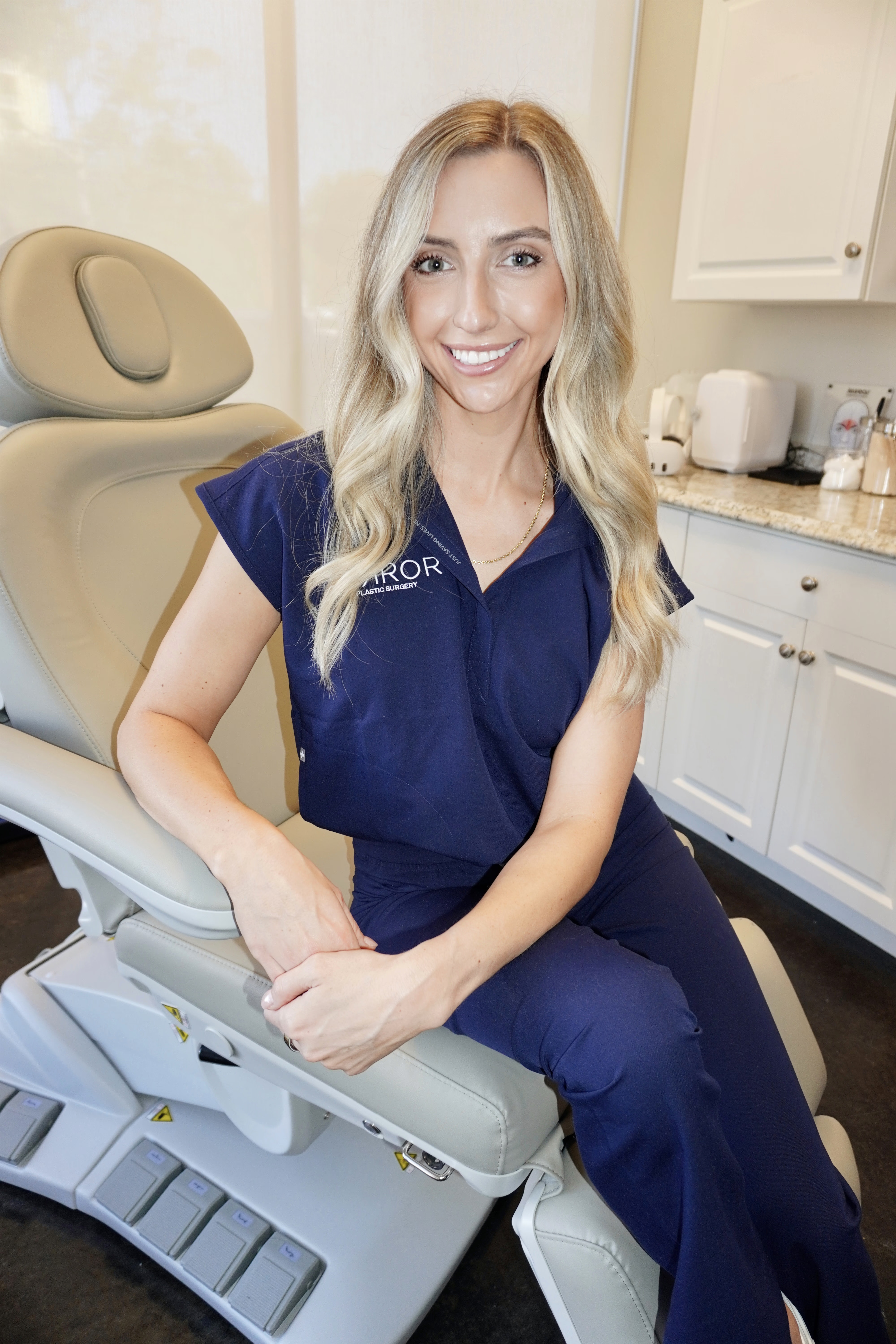
Ellie’s non-surgical BBL protocol uses biostimulatory fillers, including Radiesse and AlloClae, to refine shape, soften the look of cellulite and stretch marks, address hip dips, and improve gluteal symmetry. Unlike surgical fat transfer, biostimulatory fillers stimulate the body’s own collagen production over time. This process improves both volume and skin quality at the same time, which is especially helpful for patients who care about skin texture as much as contour.
This approach aligns with Mirror Plastic Surgery’s guiding philosophy: safety first, function second, aesthetics third. For many borderline surgical candidates, including those with insufficient donor fat, BMI outside the surgical window, or lifestyle limits that make six-to-eight weeks of sitting restriction unrealistic, non-surgical injectable treatment is not a compromise. It is the appropriate first-line recommendation based on anatomy and realistic goals.
Her ICU background at Tampa General Hospital sharpens Ellie’s clinical judgment in ways that extend beyond aesthetic training alone. This comprehensive medical perspective shapes every patient interaction. Ellie’s initial consultation follows the same top-to-bottom assessment framework used across Mirror Plastic Surgery. She evaluates the gluteal region thoroughly, explores the patient’s emotional drivers and long-term goals, and presents an evidence-based treatment plan tailored to individual anatomy rather than a one-size-fits-all protocol.
For patients who may later pursue surgical BBL, non-surgical treatment can serve as a meaningful interim step. It can improve skin quality, address asymmetry, and provide a baseline experience of what volume enhancement looks and feels like before committing to surgery.
Explore non-surgical options with Ellie to determine whether biostimulatory fillers are the right starting point for your anatomy and goals.
Frequently Asked Questions
How much fat do you need for a BBL?
There is no universal minimum fat volume, because the amount required depends on your goals and the efficiency of the liposuction and processing technique. In general, surgeons aim to harvest enough fat to inject several hundred milliliters per side after processing losses and expected reabsorption. Patients with very low body fat percentages, often those with a BMI under 20, usually lack sufficient donor fat for a meaningful surgical result and often do better with non-surgical alternatives.
Can you get a BBL if you are thin?
Very lean patients present a genuine surgical challenge. Limited subcutaneous fat restricts both the volume available for transfer and the ability to achieve meaningful liposuction contouring of donor sites. Attempting BBL in a patient with inadequate fat supply raises the risk of contour irregularities, fat necrosis, and unsatisfactory volume. For lean patients seeking gluteal enhancement, biostimulatory injectable treatments provide a realistic path that does not depend on donor fat.
What is the safest way to get a BBL?
The safest surgical BBL is performed by a board-certified plastic surgeon who injects fat only into the subcutaneous plane, uses intraoperative ultrasound guidance to confirm cannula position, employs large-bore cannulas to reduce injection pressure, and limits total session volume. Careful patient selection is equally important. Operating on candidates who fall within safe BMI parameters, do not smoke, and have no uncontrolled systemic conditions substantially lowers complication risk. For patients who are not strong surgical candidates, non-surgical biostimulatory filler treatments remove fat-embolism risk entirely.
How long do you have to avoid sitting after a BBL?
Most surgeons recommend six to eight weeks of avoiding direct pressure on the buttocks after surgical BBL. During this time, patients use specialized BBL pillows that redirect weight to the thighs, sleep on their stomach or sides, and limit activities that require standard sitting. This restriction plays a direct role in fat graft survival and final contour. Patients who cannot realistically maintain this pattern because of work or lifestyle demands should discuss it openly during their pre-operative consultation, since it meaningfully affects candidacy.
Is a non-surgical BBL a good option if I do not qualify for surgery?
For patients who do not meet surgical candidacy criteria because of insufficient donor fat, BMI outside the safe surgical range, medical contraindications, or lifestyle constraints, non-surgical gluteal enhancement with biostimulatory fillers is a clinically appropriate alternative. Biostimulatory fillers such as Radiesse and AlloClae stimulate collagen production, improve skin texture, add contour, and address concerns like hip dips and cellulite without surgery, anesthesia, or extended recovery. Results require maintenance over time, and volume capacity differs from surgical fat transfer, but many patients achieve meaningful, natural-looking improvement with a much lower risk profile.1
Start With a Thorough Assessment
Determining whether you are a realistic BBL candidate, surgical or non-surgical, requires more than a checklist. You need an honest, anatomy-specific evaluation from a provider who prioritizes your safety and long-term well-being over procedure volume. At Mirror Plastic Surgery in St. Petersburg, every assessment begins with who you are, what you want, and what your anatomy can realistically support.
Schedule a comprehensive consultation with Ellie at Mirror Plastic Surgery and receive the thorough, unbiased assessment your decision deserves.
Disclaimer: Results may vary from person to person. Editorial content, before and after images, and patient testimonials do not constitute a guarantee of specific results.
1 Results may vary from person to person. Editorial content, before and after images, and patient testimonials do not constitute a guarantee of specific results.