
Written by: Ellie Pranckevicius, FNP-BC, Aesthetic Nurse Practitioner & Aesthetic Injector | Facial Restoration & Regenerative Injectable Specialist, Mirror Plastic Surgery
Key Takeaways for Tampa Bay Patients
- Patients in 2026 increasingly prefer natural, undetectable aesthetic results over overdone appearances, which drives demand for anatomy-first approaches.
- The modern anti-aging toolkit includes neuromodulators, biostimulatory fillers, resilient hyaluronic acid, PRP/PRF, exosomes, and energy-based devices, and each targets a different aging mechanism.
- Concierge medical spas prioritize thorough anatomical assessment, longer consultations, and supplier-neutral recommendations, while many high-volume clinics focus on speed and throughput.
- Choosing a qualified provider requires verifying credentials, confirming emergency protocols like on-site hyaluronidase, and ensuring the injector will decline inappropriate treatments.
- Book a consultation with Ellie at Mirror Plastic Surgery to receive a personalized, full-face assessment and a treatment plan tailored to your anatomy and goals.
2026 Anti-Aging Trends in Injectables and Regenerative Treatments
The treatment landscape in 2026 centers on longevity, tissue quality, and movement preservation rather than static volume addition. Key categories include:
- Movement-preserving neuromodulators. Patients increasingly request baby Botox and lower-dose neurotoxin protocols to preserve natural expression rather than achieve a frozen appearance, which requires advanced facial anatomy knowledge for precise dosing. Daxxify, a longer-lasting neuromodulator, is gaining traction among patients who want extended intervals between appointments.
- Biostimulatory fillers. Galderma’s overall net sales grew 25.5% in Q1 2026 while its Sculptra product grew at double-digit rates. Sculptra stimulates collagen production via fibroblasts, with results building over six weeks to three months after a typical series of two to three sessions and lasting two years or more.1
- Resilient hyaluronic acid fillers. RHA is the first hyaluronic acid filler collection with FDA approval for dynamic wrinkles and folds and is designed to adapt with facial expressions.
- PRP and PRF regenerative protocols. Meta-analyses of randomized controlled trials show that autologous PRP can increase dermal collagen and elastin, which leads to improvements in wrinkle depth after multiple sessions.1
- Exosome adjuncts. Exosomes are used via microinjection and post-procedure protocols to address photodamage, rosacea, chronic inflammation, and recovery after ablative fractional laser or radiofrequency microneedling, typically in two to three sessions at four-week intervals with semiannual maintenance.1
- Energy-based skin tightening. Energy-based collagen-stimulating treatments such as radiofrequency and ultrasound-based devices posted strong gains in Q1 2026, and patients increasingly combine them with injectables for layered rejuvenation plans focused on skin quality.
Your Treatment Journey at a Concierge Medical Spa
A concierge model structures the patient experience around assessment depth rather than appointment volume. The journey typically unfolds across several distinct phases.
The initial consultation ideally lasts up to an hour and covers medical history, prior treatments, lifestyle factors, and the emotional motivations behind seeking care. What distinguishes a concierge consultation from a high-volume appointment is the depth of the anatomical assessment that follows. The provider conducts a full-face evaluation, examining the patient both at rest and during animation. Dynamic versus static assessment reveals how muscles interact with overlying fat pads, and palpation of bony landmarks and fat thickness is used alongside visual inspection to map vascular pathways and establish baseline capillary refill.
Candidacy review follows and focuses on safety and feasibility. The provider identifies contraindications, flags anatomically complex zones, and determines whether the patient’s goals are achievable nonsurgically or require a staged approach. A personalized treatment plan then outlines the rationale for each modality, realistic timelines, and maintenance expectations. High-quality practices schedule treatment separately from the consultation. Post-treatment follow-up confirms outcomes and adjusts the long-term plan as anatomy and goals evolve.
7 Questions to Ask Before Booking Anti-Aging Injections
Use this checklist before committing to any provider so you can gauge whether their practice supports safe, natural-looking outcomes.
- What are your credentials, and are you operating within your licensed scope of practice? Board-certified plastic surgeons, dermatologists, facial plastic surgeons, and nurse practitioners with specialized aesthetic training represent the credentialed tiers for injectable procedures, while licensed aestheticians and cosmetologists cannot legally inject in any state.
- Do you perform a full-face anatomical assessment before recommending treatment? Effective full-face rejuvenation requires evaluating facial proportions, identifying age-related volume loss patterns, assessing skin quality, recognizing prior treatments, and managing expectations before any injections occur.
- Do you stock hyaluronidase on-site and have a vascular occlusion protocol? Clinics performing hyaluronic acid filler injections must stock hyaluronidase on site with immediate accessibility as the emergency treatment for vascular occlusion.
- Are you supplier-neutral, or do you have quotas tied to specific product brands? Supplier-neutral practices select products based on individual anatomy and goals rather than commission structures or manufacturer agreements.
- Will you decline a treatment if it is not appropriate for my anatomy? A strong provider profile includes the willingness to decline inappropriate treatments rather than agreeing to every patient request.
- Can you verify that your products are sourced from authorized distributors? The clinic chosen is now a more important variable than the specific product brand, because regulatory compliance, credentialing, and documentation differentiate safe providers from those using grey-market channels.
- What does realistic maintenance look like for my anatomy and goals? Longevity varies by product, treatment area, metabolism, and lifestyle. A trustworthy provider sets honest expectations instead of promising permanent results from a single session.
High-Volume vs. Concierge Consultation Models in Tampa Bay
High-volume aesthetic clinics typically schedule multiple injection appointments per hour, which limits the time available for anatomical assessment, patient education, and individualized treatment planning. This time constraint is built into the economic model that prioritizes throughput over customization and can create pressure to recommend standardized protocols regardless of individual anatomy. The same structural constraints that compress consultation time also help explain why complication management capacity varies widely across these settings.
A concierge model inverts these priorities. Appointments are longer, daily patient volume is deliberately limited, and the provider’s attention is concentrated on a smaller number of cases. Achieving undetectable aesthetics requires a holistic full-face consultation strategy in which product selection, quantity, and precise placement are tailored to the patient’s unique anatomy rather than using standardized high-volume approaches. The concierge model also supports continuity, because the same provider tracks how a patient’s anatomy responds over time and adjusts the plan rather than treating each visit as a standalone transaction.
For Tampa Bay patients who have experienced rushed consultations or upselling, this structural difference between models often predicts long-term satisfaction more reliably than brand names or price alone.
Common Misconceptions About Anti-Aging Injections
More product equals better results. Repeated over-treatment with dermal fillers before prior product has fully dissolved can cause filler migration or accumulation, which leads to a puffy, overfilled appearance that is difficult to correct, particularly in the lips. Skilled injectors use the minimum effective amount for each anatomical zone.
Any licensed injector is equally qualified. Licensure establishes a baseline but does not create equal expertise. True competency requires six to twelve months of mentored practice after initial training, and certification alone does not confer expertise. Anatomical training depth, cadaver lab experience, and complication management protocols vary significantly across providers.
Results last the same amount of time for everyone. Hyaluronic acid dermal filler longevity varies by product type, volume, patient metabolism, exercise habits, smoking, and sun exposure, so two patients receiving the same product in the same area may experience meaningfully different durations.1
Risks, Side Effects, and Maintenance Timelines
Common temporary side effects include bruising, swelling, redness, and mild tenderness at injection sites. Rare but serious complications include vascular occlusion, which can lead to tissue necrosis, vision impairment, or blindness, as well as infection, nodule formation, allergic reaction, and Tyndall effect. Eyelid ptosis from periorbital neuromodulator treatment is temporary and resolves within two to six weeks as the medication wears off.
Maintenance intervals depend on the modality. Neuromodulators typically require retreatment every three to six months, with longer-acting formulations extending that window. Biostimulatory fillers like Sculptra offer the longest maintenance intervals, as discussed earlier. PRP-plus-energy-device combination benefits peak at three to six months and last six to eighteen months when maintenance boosters are given every six to twelve months.1 Patients with neuromuscular conditions, pregnancy, or a history of prior complications require thorough evaluation before any injectable treatment.
Choosing a Provider Who Matches Your Goals
Provider selection works best when you combine credential verification, assessment depth, and communication transparency. Confirm that the injector holds active licensure appropriate to their scope, has completed anatomy-focused training beyond product-specific courses, and practices in a setting that maintains emergency protocols, including on-site hyaluronidase.
An anatomy-based assessment, which covers the dynamic evaluation, palpation, and vascular mapping described earlier, must result in fully tailored treatment plans rather than cookie-cutter templates. Providers who skip these steps in favor of faster appointments are structurally unable to deliver the individualized outcomes that undetectable aesthetics require.
Communication standards matter just as much. A provider who explains the physiology behind each recommendation, acknowledges when a treatment is unnecessary, and sets realistic maintenance expectations demonstrates the kind of transparency that supports long-term outcomes instead of short-term sales.
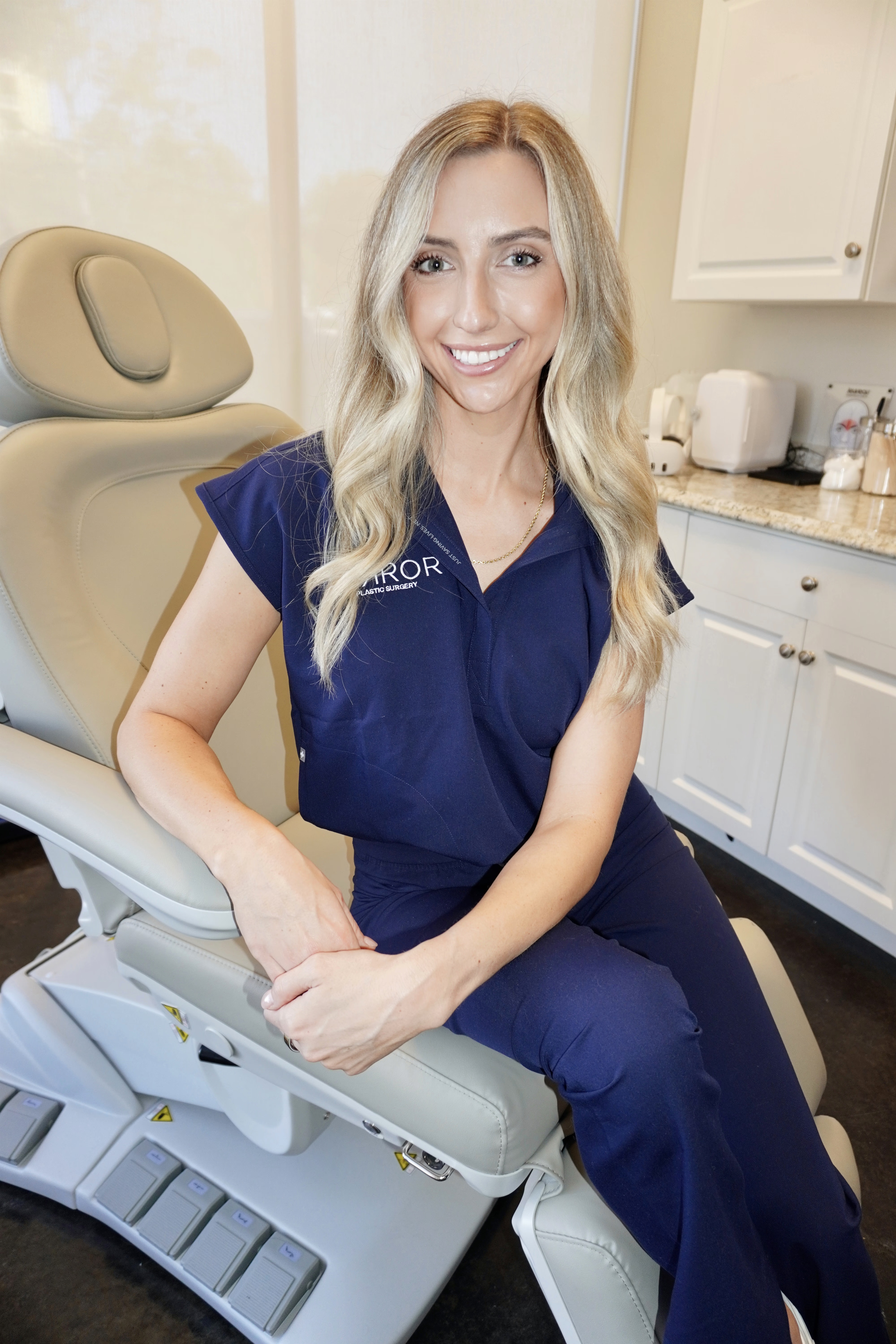
At Mirror Plastic Surgery in St. Petersburg, Ellie Pranckevicius, FNP-BC, leads non-surgical injectable treatments with a dual background in esthetics and advanced nursing, including four years in the Neuroscience ICU at Tampa General Hospital. Her full-face approach prioritizes foundational restoration before volume augmentation. She is known for advising patients when an expensive service is not yet necessary, which builds trust over time. When surgical considerations arise, Ellie’s work is complemented by Dr. Akash Chandawarkar, a Harvard-educated, Johns Hopkins-trained plastic surgeon with fellowship training at Manhattan Eye Ear & Throat Hospital.
Conclusion: Making Confident, Informed Choices
In 2026, the gap between a satisfying aesthetic outcome and an overcorrected one most often reflects the quality of the assessment that preceded treatment, not the brand of product used. The global aesthetic injectable market was estimated at USD 11.1 billion in 2025 and is projected to reach USD 24.1 billion by 2033, growing at a CAGR of 10.0% from 2026 to 2033. As the number of providers expands, patients benefit from a clear framework for comparison.
The checklist above, combined with an understanding of 2026 treatment categories and realistic maintenance expectations, gives Tampa Bay patients practical tools to distinguish anatomy-first concierge care from high-volume alternatives. The best provider for your goals will spend the time to understand your anatomy, communicate honestly about what is and is not appropriate for you, and build a long-term plan that evolves as you do.
Frequently Asked Questions
How Mirror Plastic Surgery Differs From Other Tampa Bay Medical Spas
Mirror Plastic Surgery operates on a concierge medicine model that limits daily patient volume so each person receives undivided attention before, during, and after their procedure. Consultations with Ellie Pranckevicius can extend up to an hour and cover a full top-to-bottom anatomical assessment, emotional motivations, medical history, and long-term goals. The practice is supplier-neutral, so product recommendations are based solely on what fits each patient’s anatomy rather than manufacturer agreements or sales quotas. This structure contrasts with many high-volume clinics that schedule multiple injection appointments per hour with limited individualized assessment. When nonsurgical treatments intersect with surgical considerations, Ellie’s work is supported by Dr. Akash Chandawarkar, a Harvard-educated, Johns Hopkins-trained plastic surgeon with fellowship training in aesthetic surgery in New York.
How to Find the Right Anti-Aging Injectable or Regenerative Treatment
The appropriate treatment depends on your specific pattern of facial aging, skin quality, anatomy, lifestyle, and goals, and these factors cannot be accurately assessed without a thorough in-person evaluation. Neuromodulators address dynamic muscle activity and expression lines. Biostimulatory fillers like Sculptra rebuild collagen over months for broad volume restoration. Resilient hyaluronic acid fillers such as RHA suit dynamic zones where movement preservation matters. PRP and PRF protocols target tissue quality and regeneration and are often paired with energy-based devices for enhanced collagen stimulation. Exosome adjuncts support recovery and address photodamage. A full-face assessment by a qualified injector remains the only reliable way to determine which combination, and in what sequence, serves your anatomy and long-term goals.
What to Expect From Results and Maintenance
Realistic expectations depend on the modality, the treatment area, and individual factors such as metabolism, sun exposure, exercise habits, and skin quality.1 Neuromodulators follow the three to six month maintenance cycle noted earlier, although longer-acting formulations can extend that interval. Biostimulatory fillers like Sculptra build results gradually over six weeks to three months and can last two years or more after a series of sessions.1 Resilient hyaluronic acid fillers in dynamic zones typically last twelve to fifteen months.1 PRP and energy-based combination protocols produce benefits that peak at three to six months and are sustained with maintenance sessions every six to twelve months. Ellie approaches aesthetics the way a dentist approaches oral health. Professional treatments deliver results, and lasting outcomes require understanding the physiology and committing to consistent maintenance. She will provide honest, anatomy-specific timelines during your consultation rather than overpromising outcomes.
Safety of Combining Multiple Injectable Treatments
Combination protocols are common and, when planned by a qualified provider, can be both safe and more effective than single-modality treatments. The sequencing, product selection, and volume used must be tailored to individual anatomy. Layering treatments without a full-face assessment increases the risk of overcorrection, asymmetry, or filler accumulation. At Mirror Plastic Surgery, Ellie’s approach prioritizes foundational restoration before volume augmentation so each treatment zone is addressed in the correct order and with the appropriate product. She also identifies contraindications, such as prior filler that has not fully dissolved, anatomically complex zones, or medical history factors, before recommending any combination protocol.
How to Verify That a Medical Spa Operates Safely
Start by confirming that the injector holds active licensure appropriate to their scope of practice in Florida and that a supervising physician has examined you and established an individualized treatment plan. Ask whether the clinic stocks hyaluronidase on-site for emergency management of vascular occlusion. Request confirmation that products are sourced from authorized distributors and that the provider can supply brand names and lot numbers. Evaluate whether the consultation includes a full anatomical assessment or is structured primarily around product recommendations. A provider who declines a treatment because it is not appropriate for your anatomy demonstrates the kind of clinical integrity associated with safe outcomes. Mirror Plastic Surgery meets each of these standards and welcomes questions about its protocols, credentials, and product sourcing.
Disclaimer: Results may vary from person to person. Editorial content, before and after images, and patient testimonials do not constitute a guarantee of specific results.
1 Results may vary from person to person. Editorial content, before and after images, and patient testimonials do not constitute a guarantee of specific results.