

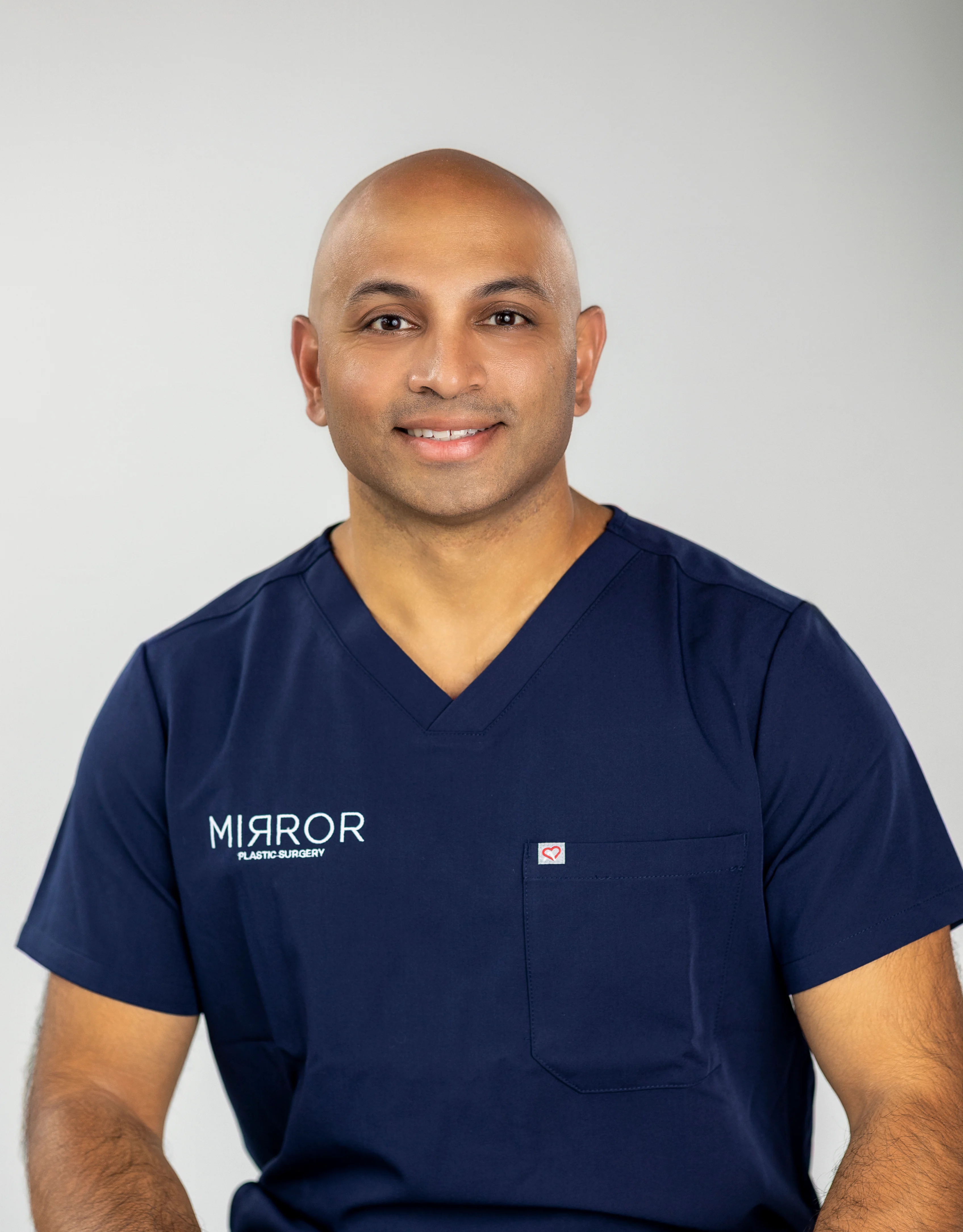
Written by: Dr. Akash Chandawarkar, Board Certified Plastic Surgeon, Mirror Plastic Surgery
Key Takeaways
- Board certification by the American Board of Plastic Surgery (ABPS) is the most reliable predictor of safe, natural lip filler results.1
- Fellowship training in aesthetic surgery and deep anatomical expertise significantly reduce complication risks compared to general injectors.1
- A conservative, staged approach to lip filler produces longer-lasting, more natural results than aggressive single-session volumizing.1
- Top surgeons maintain comprehensive complication preparedness, including on-site hyaluronidase for immediate reversal when needed.
- Patients seeking expert lip filler care can schedule a consultation with Mirror Plastic Surgery to experience board-certified expertise firsthand.
The Research Problem: Why “Top Plastic Surgeon” Is an Undefined Claim
Searching for “top plastic surgeons for lip filler” returns fragmented local results and marketing pages that list names without explaining qualifications. The credentialing gap is significant: as of 2026, there are no national standards for training or board certification in aesthetic medicine in the United States, so patients cannot rely on a uniform credentialing system.
The scale of this problem keeps growing. The American Med Spa Association reported 10,488 U.S. medical spas in 2023, up 17.9% from 2022, which means patients increasingly receive injections from providers with widely varying training backgrounds. The consequence is measurable: complication rates are under 1% with board-certified physicians but rise to 5–10% with untrained providers.1
This report defines the verifiable criteria that distinguish a top plastic surgeon for lip filler and applies them to Mirror Plastic Surgery.
Research Methodology: How This Report Evaluated Lip Filler Surgeons
This report synthesizes data from the American Society of Plastic Surgeons (ASPS), peer-reviewed studies in JAMA Dermatology, meta-analyses from Aesthetic Surgery Journal, and credentialing standards from ABMS-recognized boards. Five evaluation criteria form the framework:
- Board Certification by the American Board of Plastic Surgery (ABPS), the only ABMS-recognized board for plastic surgery
- Fellowship Training in aesthetic surgery beyond residency
- Anatomical Expertise specific to perioral injection safety
- Conservative Technique Philosophy that prioritizes natural results
- Complication Preparedness, including on-site hyaluronidase
Primary data sources include ASPS 2024 statistics, a JAMA Dermatology retrospective study by Alam et al. (2021) involving 370 board-certified dermatologists and approximately 1.7 million filler syringes, and a meta-analysis of lip augmentation outcomes by Czumbel et al. (2021).
Research Finding 1: Board Certification Is the Non-Negotiable Baseline
ABPS board certification is the most reliable predictor of safe lip filler outcomes. “Cosmetic surgeon” is a descriptive term, not a guarantee of ABMS-recognized plastic surgery certification, so patients need to verify the exact board name and specialty.
Board-certified plastic surgeons complete years of structured residency training, pass rigorous examinations, and maintain continuing education requirements. This training standard translates to safer outcomes and natural-looking results.1 The complication data supports this: the Alam et al. (2021) JAMA Dermatology study found one vascular occlusion per 6,410 syringes used with needles and one per 40,882 with cannulas when board-certified physicians performed the injections.1
Dr. Akash Chandawarkar, founder of Mirror Plastic Surgery, meets this standard at the highest level. Harvard-educated and Johns Hopkins-trained, he is board-certified by the American Board of Plastic Surgery and holds fellowship training in aesthetic surgery at the Manhattan Eye Ear & Throat Hospital (MEETH)/Lenox Hill Hospital. These credentials place him among the most rigorously trained injectors in the country.
To see how this expertise translates into your results, book a consultation with Ellie at Mirror Plastic Surgery.
Research Finding 2: Fellowship Training and Anatomical Expertise Reduce Risk
Specialized fellowship training in aesthetic surgery and a deep understanding of perioral vascular anatomy set top surgeons apart from general injectors. The anatomical stakes are significant: the major lip arteries typically run within or just beneath the orbicularis oris muscle, so deep intramuscular injections represent a high-risk plane that increases the chance of vascular injury or compression.
Instrument selection plays a major role as well. Cannula use correlates with 77.1% lower odds of vascular occlusion compared to needles.1 but only when the injector understands when and how to use each tool safely. Fellowship training in aesthetic or cosmetic surgery provides an additional marker of specialized expertise beyond standard residency requirements.
Dr. Chandawarkar’s aesthetic surgery fellowship at MEETH/Lenox Hill reflects this level of post-residency specialization. His advisory board roles with Merz Aesthetics and Tiger Aesthetics keep him at the forefront of injectable product development and technique, which signals command of both anatomy and product science.
Research Finding 3: Conservative Technique Produces Natural, Safer Results
Clinical evidence strongly supports a conservative, staged approach to lip filler instead of aggressive single-session volumizing. The Czumbel et al. (2021) meta-analysis found that 74% of patients remained responders at six months, falling to 46% at 12 months.1 These findings show that gradual, staged treatment produces lasting results without overcorrection.
The classic overfilled “duck lips” appearance often results from placing too much product in the body of the lip, especially the upper lip, while ignoring natural facial proportions. Experienced injectors recommend starting with 0.5–1 mL and using micro-aliquots of 0.01–0.05 mL for controlled placement.
The science of attractiveness also favors restraint. A Scientific Reports study (Hernandez et al., 2023) found that adding 1 mL of filler to women who already had fuller lips decreased attractiveness ratings from 6.38 to 5.82, a statistically significant decline.1 More volume did not increase attractiveness.
Dr. Chandawarkar’s philosophy aligns with this evidence. He first revitalizes inherent facial characteristics, then considers volume augmentation as needed. His full-face approach prevents an “overdone” look. He uses a supplier-neutral selection across multiple filler brands, including Juvederm, RHA, and Restylane, and tailors product choice to each patient’s anatomy and goals.
Research Finding 4: Complication Preparedness Defines Top-Tier Safety
A top surgeon’s value includes both injection skill and comprehensive complication management. The FDA’s 2025 advisory document reported 17,768 serious injury reports involving dermal filler product codes, with frequently reported problems including abscess (1,235), nodules (1,038), and vascular occlusion (986).
A top lip filler provider stays prepared to handle complications and keeps hyaluronidase on site for reversal, a standard Dr. Chandawarkar meets. When vetting any aesthetic provider, watch for red flags: pressure to book immediately, vague credentials, a menu-first approach, and no discussion of complications. Mirror Plastic Surgery takes the opposite approach with an hour-long, top-to-bottom assessment.
That assessment is backed by a practice that limits daily procedures and follows a safety-first, function-second, aesthetics-third philosophy. This structure directly addresses the rushed-consultation experience that often characterizes high-volume “mill” practices.
Research Finding 5: Expertise and Personalization Drive Overall Value
Lip filler cost varies widely based on provider credentials and treatment planning. Board-certified plastic surgeons typically charge more than nurse injectors at med spas, largely because of their advanced anatomical knowledge, refined technique, and ability to manage complications safely.
Choosing an untrained provider to reduce cost introduces its own financial risk. About 70% of dissatisfied lip filler patients need partial adjustments, and dissolving filler requires additional sessions beyond the original treatment. Each patient at Mirror Plastic Surgery receives a personalized quote during consultation that reflects their unique anatomy and treatment goals.
This transparency extends to recommendations. Dr. Chandawarkar sometimes advises patients that a higher-cost service is not yet necessary for them, which reflects a philosophy focused on long-term value and trust.
Research Finding 6: Longevity Depends on Product, Technique, and Assessment
Lip filler longevity depends on product formulation, patient metabolism, and lifestyle. Juvederm Ultra XC often lasts 9–12 months for balanced volume and definition, Juvederm Volbella XC lasts about 12 months for subtle volume and fine vertical lines, and Restylane Kysse lasts 10–12 months for natural movement and soft volume.
MRI research shows that filler can persist in tissue long after the visible result fades. A 2024 MRI study detected signal compatible with filler in all 33 patients studied at 2+ years after injection, including one case with compatible signal 15 years after treatment. Top-ups should therefore follow clinical assessment of what remains rather than a fixed calendar schedule.
Patients who maintain consistent touch-ups every 9–12 months often need slightly less product over time as lip tissue holds onto residual filler. Dr. Chandawarkar’s assess-then-treat approach ensures each session matches what the patient actually needs.
Research Finding 7: The Consultation Is Your Best Evaluation Tool
The consultation reveals more about a surgeon’s expertise than any website or before-and-after gallery. A provider’s clinical judgment, including knowing when not to inject and how to manage complications, matters more than the product used.
The following questions help you evaluate any lip filler provider:
- Are you board-certified by the American Board of Plastic Surgery?
- How many lip filler procedures do you perform annually?
- What is your approach to achieving natural-looking results?
- Can you show me before-and-after photos of patients with similar lip structure?
- What type of filler do you recommend and why?
- How do you handle complications, and is hyaluronidase on site?
At Mirror Plastic Surgery, Dr. Chandawarkar spends up to an hour in consultation and conducts a comprehensive top-to-bottom assessment. He explains the physiology of the skin in relatable terms, helps patients understand why each treatment is recommended, and prioritizes safety, function, and aesthetics in that order.
Comparison: Board-Certified Plastic Surgeon vs. Med-Spa Nurse Injector
The table below summarizes how board-certified plastic surgeons and med-spa nurse injectors differ across key evaluation criteria, highlighting why credentials drive safer, more predictable outcomes.
| Evaluation Criterion | Board-Certified Plastic Surgeon | Med-Spa Nurse Injector | Why It Matters |
|---|---|---|---|
| ABPS Board Certification | Required | Not required | ABMS-recognized certification signals formal specialty training and rigorous examination |
| Fellowship in Aesthetic Surgery | Common among top surgeons | Rare | Additional specialized training beyond residency correlates with reduced adverse event rates |
| Vascular Occlusion Rate | 1 per 6,410 syringes (needle) with board-certified physicians | 5–10% overall complication rate with untrained providers | Board-certified physicians demonstrate significantly lower complication rates |
| Consultation Length | 30–60 minutes typical | 10–15 minutes typical | Thorough assessment enables conservative, anatomy-based treatment planning |
Research Conclusion: Why Mirror Plastic Surgery Meets Every Criterion
Across all five evaluation criteria, Mirror Plastic Surgery and Dr. Akash Chandawarkar meet or exceed the benchmarks established by clinical evidence. These criteria include board certification, fellowship training, conservative technique, complication preparedness, and a patient-centered philosophy.
As detailed earlier, Dr. Chandawarkar’s credentials, including Harvard education, Johns Hopkins training, ABPS board certification, and MEETH fellowship, place him among the top injectors. He also serves on advisory boards for Merz Aesthetics and Tiger Aesthetics, which keeps him closely involved with injectable innovation. His practice emphasizes hour-long consultations, supplier-neutral product selection, limited daily procedures, and a safety-first philosophy that supports long-term care rather than one-off treatments.
To experience the difference of a top plastic surgeon for lip filler, schedule a consultation with Dr. Chandawarkar at Mirror Plastic Surgery in St. Petersburg, FL.
Frequently Asked Questions
How Long Do Lip Fillers Last?
Most lip fillers deliver visible results for 6–12 months, with specific products varying in duration.1 Juvederm Ultra XC typically lasts 9–12 months, Juvederm Volbella XC lasts approximately 12 months, and Restylane Kysse lasts 10–12 months.1 Individual factors such as metabolism, lip movement frequency, lifestyle habits like smoking or intense exercise, and sun exposure all influence how quickly the body processes the product. MRI research has shown that filler material can persist in tissue well beyond the visible result, sometimes for years, so top surgeons recommend assessment-based touch-ups every 9–12 months instead of automatic refills on a fixed schedule. Patients who maintain consistent touch-ups often find they need slightly less product over time as residual filler remains in the tissue.
Do Lip Fillers Look Natural?
Lip fillers can look very natural when a board-certified plastic surgeon uses a conservative technique. Natural results depend on three factors: the product selected, the injection technique applied, and the total volume injected. Top surgeons start conservatively, typically with 0.5–1 mL, and build volume gradually over multiple sessions rather than attempting significant augmentation in a single appointment. Proper placement into the correct tissue planes, preservation of the philtral columns and Cupid’s bow, and maintaining the natural upper-to-lower lip ratio all help avoid an overfilled appearance. A surgeon who understands full-face balance, treating the lips in the context of the nose, chin, and jawline, consistently produces results that look like the patient’s own lips, only enhanced.
What Is The Best Lip Filler Brand?
There is no single best brand for every patient. Top surgeons select from multiple FDA-approved options, including Juvederm, Restylane, and RHA, based on each patient’s anatomy, goals, and lip tissue characteristics. Different fillers have distinct properties related to firmness, flexibility, cross-linking technology, and longevity. Softer, more pliable formulations are generally preferred for lips because they move naturally during animation. A supplier-neutral practice like Mirror Plastic Surgery recommends the product best suited to each individual patient, without relying on brand relationships or commission structures. This approach keeps the recommendation focused on clinical appropriateness.
How Do I Choose Between a Plastic Surgeon and a Med Spa?
Board-certified plastic surgeons complete years of structured residency training, pass rigorous written and oral examinations, and maintain the anatomical expertise required for safe perioral injection. As noted earlier, complication rates are dramatically lower with board-certified physicians.1 The lip area is anatomically unforgiving because the major labial arteries run within or just beneath the orbicularis oris muscle, and vascular injury in this zone requires immediate, expert management. A board-certified plastic surgeon brings both injection skill and surgical training to recognize and manage complications that a med-spa injector may not be equipped to handle. For lip filler, where the anatomy is complex and the consequences of error are serious, the surgeon’s credentials serve as the primary safety factor.
Is Lip Filler Painful?
Most patients rate lip filler discomfort at 3–5 on a 10-point scale. Topical numbing cream is applied before treatment and achieves significant numbness for most people. The actual injection process usually takes only 15–20 minutes. Mild swelling is the most common side effect, affects the majority of patients, and peaks at 24–48 hours before resolving within 7–10 days. Bruising occurs in roughly half of patients and also resolves within the first week. Final results, with swelling fully resolved, are typically visible by the end of the second week. Patients with a history of cold sores should inform their provider in advance, as prophylactic antiviral medication can reduce outbreak risk associated with lip procedures.
1 Results may vary from person to person. Editorial content, before and after images, and patient testimonials do not constitute a guarantee of specific results.


