
Written by: Ellie Pranckevicius, FNP-BC, Aesthetic Nurse Practitioner & Aesthetic Injector | Facial Restoration & Regenerative Injectable Specialist, Mirror Plastic Surgery
Key Takeaways for Tampa Bay Injectable Patients
- An anatomy-first injector prioritizes structured training, supervised cases, and complication-management protocols over marketing claims or pricing.
- Minimum safe training benchmarks include 8 hours for neuromodulators and 16+ hours for fillers, plus 6–12 months of supervised practice before independent work.
- ICU-level physiology experience, like Ellie Pranckevicius’s four years in the Neuroscience ICU, supports faster recognition of vascular problems during injectable procedures.
- High-volume med-spas scheduling five to ten procedures daily often compress consultations and increase adverse-event risk compared with practices limiting cases to one or two per day.
- Patients seeking anatomy-first injectable care can schedule a consultation with Ellie at Mirror Plastic Surgery to discuss full-face goals with a clinician whose training spans 600 esthetics hours and four years in a Neuroscience ICU.
Questions That Reveal Real Injector Anatomy Training
Minimum benchmarks for safe injectable training are documented by professional organizations, and patients can use them as a baseline when vetting any provider.
Reputable Botox training programs provide 8 hours of combined didactic and hands-on instruction, including supervised live-patient practice with direct instructor supervision. Legitimate dermal filler certification programs require a minimum of 16 or more hours of practical hands-on training with live patient treatments, and most experts recommend 6–12 months of supervised or mentored practice after initial certification before a provider considers themselves independently proficient.
Core curriculum must cover more than injection mechanics. Quality dermal filler training must include detailed facial anatomy covering layered tissue structure and vascular danger zones such as the facial and angular arteries, filler science and rheology, patient assessment, injection techniques, and emergency complication management protocols for vascular occlusion. Formal certifications from organizations like the Plastic Surgical Nursing Certification Board (PSNCB) require passing examinations or demonstrating practical skills to an established standard, rather than merely documenting training attendance.
Post-certification mentorship also shapes safety. Reputable aesthetic training programs provide post-training consultation access and mentorship. Programs offering certification entirely online with no in-person hands-on practice do not meet this standard.
How Neuroscience ICU Experience Elevates Injector Safety
Ellie Pranckevicius, FNP-BC, holds a Bachelor’s in Health Science from Boston University, completed a 600-hour esthetics licensure program, and earned both her Bachelor’s and Master’s in Nursing from the University of South Florida. Before joining Mirror Plastic Surgery, she spent four years in the Neuroscience ICU at Tampa General Hospital managing critically ill patients. That environment demands rapid recognition of vascular compromise, precise pharmacological judgment, and real-time clinical decision-making under pressure.
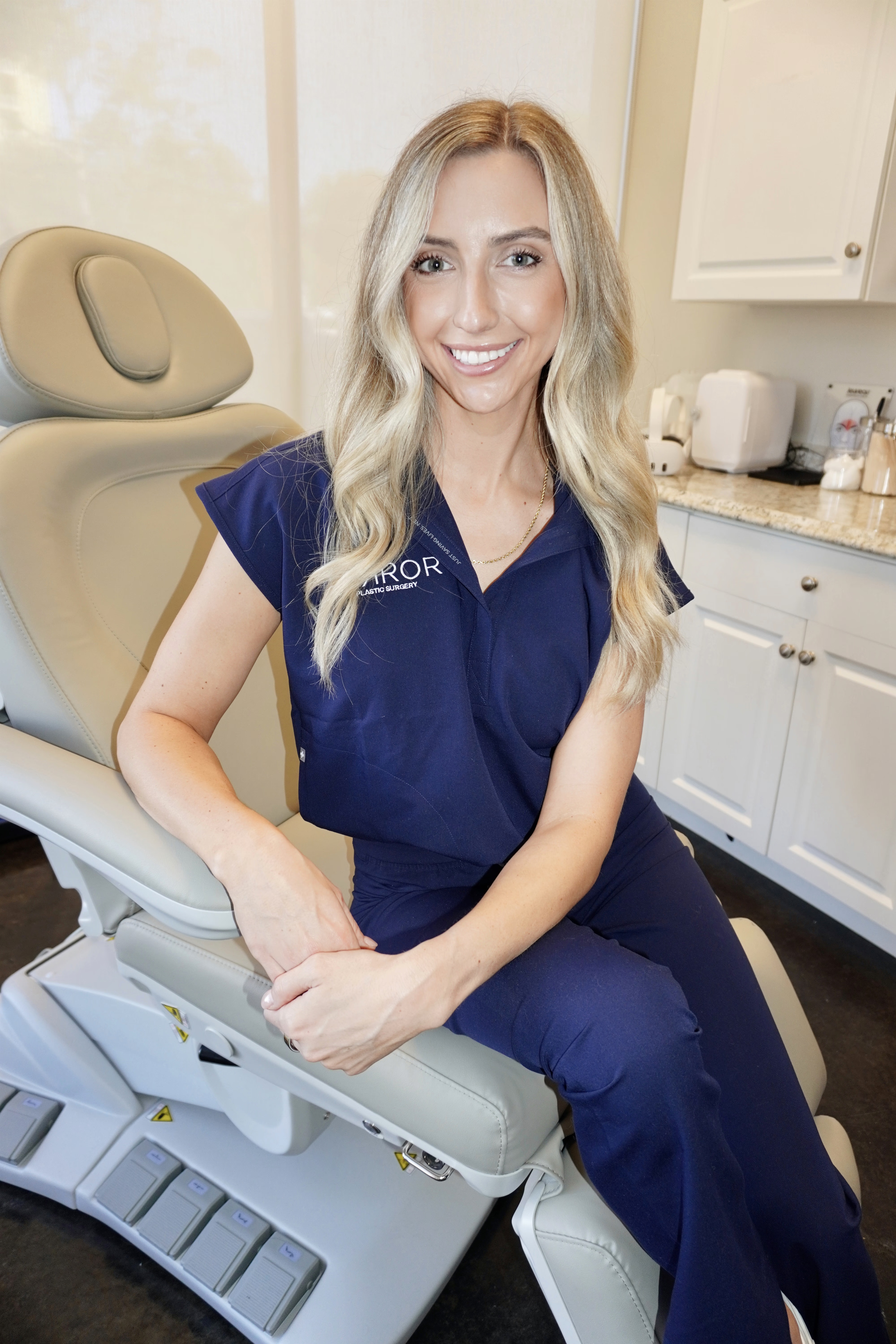
That background is directly relevant to injectable safety. Longer and more structured injector training is associated with lower rates of significant adverse events, faster recognition of vascular events, and better documented outcomes, whereas the largest published case series of catastrophic events are dominated by practitioners whose training consisted of short, didactic-heavy courses with limited live supervised practice. ICU-level physiology training, where vascular assessment is a daily clinical task, translates directly into that recognition advantage, particularly for the early signs of occlusion compared with providers whose only exposure to vascular anatomy came from a weekend course.
A 2021 JAMA Dermatology retrospective cohort study of 370 US dermatologists analyzing more than 1.6 million syringes found vascular occlusion rates of 1 in 6,410 for needles versus 1 in 40,882 for cannulas in filler injections. The margin between those figures underscores why technique selection and anatomical knowledge, not product choice alone, drive safety outcomes. That anatomical expertise also informs how an injector approaches treatment planning, whether they assess the face as an integrated system or treat isolated areas in sequence.
Full-Face Treatment Planning vs. Single-Area Injections
Patient preference data from 2025–2026 consistently favors structured, multi-treatment approaches over isolated single-area injections. Allergan Aesthetics’ Global Holistic Beauty Research, a November–December 2025 survey of more than 12,286 beauty-involved consumers across nine countries, found that 62% find multiple aesthetic treatments appealing, 59% are likely to adopt a structured multi-treatment approach, and 78% would feel more satisfied with an agreed long-term plan with their practitioner.
The clinical rationale matches the preference data. Single-area injections that ignore global facial balance create predictable risks. Asymmetry often appears when one zone is treated without accounting for adjacent structural support. Overcorrection occurs when volume is added to a region that appears deficient only because a neighboring area has lost projection. Patients in 2026 are increasingly requesting subtle improvements that preserve natural facial expression and individual features, leading physicians to emphasize facial balance, natural movement, and conservative approaches over excessive volume or overcorrection.
Ellie’s practice addresses this directly by implementing the full-face assessment model that current patient data supports. Her initial focus is on restoring inherent facial characteristics before considering volume augmentation, a sequence that avoids adding volume to compensate for structural imbalance. This approach ensures seamless transitions between the upper, middle, and lower facial regions and maintains the structural continuity that single-area protocols often sacrifice.
Recognizing High-Volume Injectable Practices
Daily case volume is one of the most reliable proxies for the level of individualized attention a patient will receive. Mirror Plastic Surgery limits injectable appointments to one to two procedures per day, with consultations extending up to 60 minutes. High-volume practices routinely schedule five to ten or more procedures daily, compressing consultation time to 10–15 minutes.
The market data explains why volume pressure exists. Medical spas held 48.52% of the United States facial injectables market share in 2025, maintaining volume leadership through convenience, accessible pricing, and membership models that process a high number of repeat visits. In Sun Belt states including Florida and Texas, rapid medspa expansion creates execution risk because fast clinic growth can outpace the availability of well-trained and properly supervised injectors.
Additional red flags that correlate with elevated adverse-event risk include:
- Aggressive package deals or significant price reductions used as primary marketing tools
- No documented complication protocol or on-site hyaluronidase
- Consultations conducted by a different person than the injector
- Inability to name the supervising physician or produce their license information
- Pressure to book additional treatments during the initial visit
Significant price reductions, package deals, or aggressive marketing at medical spas can indicate that safety protocols are being compromised to increase volume, according to guidance from the American Society of Plastic Surgeons.
Product-Neutral Choices and Realistic Treatment Limits
A supplier-neutral practice selects products based on individual patient anatomy and treatment goals rather than manufacturer rebate structures or quota agreements. Mirror Plastic Surgery works across multiple FDA-authorized neuromodulator and filler brands, including Botox, Dysport, Xeomin, Daxxify, Jeuveau, Juvederm, RHA, Versa, Restylane, Radiesse, and Evolysse, choosing the most appropriate option for each patient’s specific tissue characteristics.
Neurotoxins and dermal fillers must be sourced exclusively from authorized U.S. distributors or the manufacturer through an account held by the prescribing clinician or licensed medical entity, as gray-market or foreign product may be counterfeit and constitutes a 2026 enforcement priority. A compliant chart must record the exact product name, lot number, reconstitution details, and units placed at each anatomic site.
Reversibility also belongs in every informed-consent discussion. Hyaluronic acid fillers are reversible with hyaluronidase while biostimulators such as Sculptra (PLLA) and Radiesse (CaHA) are not, requiring stricter patient selection, injector experience, and explicit consent language disclosing irreversibility and nodule risk. Every practice injecting hyaluronic acid filler must also maintain an in-date hyaluronidase emergency kit on site with a rehearsed high-dose pulsed protocol.
Red Flags from Real Tampa Bay Patient Stories
Common complaints reported by patients who have sought corrective treatment after visiting high-volume practices follow a recognizable pattern. The underlying causes are consistently traceable to inadequate training or absent complication protocols.
- Asymmetry: Typically results from single-area injection without full-face assessment, or from inconsistent technique across bilateral treatment sites.
- Prolonged swelling or nodules: Delayed-onset nodules after certain HA fillers are reported at rates of 0.5–0.98%, while late inflammatory reactions occur in an estimated 0.01–0.1% of procedures overall.
- Lack of follow-up: Guidelines for vascular procedures recommend a follow-up call within the first week after surgery and an office or telehealth visit within one month, along with 30-day and longer-term surveillance. This interval schedule is rarely maintained in high-volume settings.
- Overcorrection: A 2024 MRI-based review found hyaluronic acid material physically detectable in the mid-face for 2–15 years post-injection, well beyond the 6–12 month visible aesthetic effect, highlighting risks of over-injection in high-volume practices focused on immediate revenue.
- Unverified products: Med spas must audit their supply chain for injectables and verify FDA clearances to prevent use of counterfeit botulinum toxin products that have caused hospitalizations.
Anatomy-First Injector Checklist
Use the table below to evaluate any injectable provider before booking. Every data point is drawn from published standards and cited inline.
| Credential Category | Minimum Standard | What to Ask | Mirror / Ellie Benchmark |
|---|---|---|---|
| Training Hours — Didactic | 8+ hours (combined didactic and hands-on with live-patient practice) | How many didactic hours did your certification program include? | 600-hour esthetics licensure program + USF BSN/MSN curriculum |
| Supervised Live-Patient Cases | Supervised live-patient practice under direct instructor supervision, 16+ hours for filler certification | How many live-patient cases did you complete under direct supervision before practicing independently? | Supervised clinical training across esthetics program, advanced nursing clinical rotations, and 4 years Neuroscience ICU at Tampa General Hospital |
| Complication Protocol | Written complication protocol, in-date hyaluronidase on premises, defined escalation pathways, and follow-up contact within the first week and visit within one month with 30-day surveillance | Do you have a written vascular occlusion protocol and hyaluronidase on site? What is your escalation pathway? | Physician-supervised practice (Dr. Akash Chandawarkar, Johns Hopkins-trained plastic surgeon) with on-site complication management capability |
| Consultation Length | Initial face-to-face consultation with the treating provider who establishes a practitioner-patient relationship, documents diagnosis and treatment plan, and obtains informed consent | How long is the initial consultation, and will the person consulting me be the same person injecting me? | Up to 60-minute consultations, 1–2 procedures per day maximum |
Ten Anatomy-First Questions to Bring to Your Consultation
Print or screenshot the following questions and bring them to any injectable consultation. A qualified provider will answer each one without hesitation.
- What is your professional license type, and are you operating within your state-defined scope of practice for injectables?
- How many structured training hours, didactic and hands-on with live patients, did your injectable certification program include?
- How many supervised live-patient cases did you complete before practicing independently?
- Do you have a written vascular occlusion protocol, and is in-date hyaluronidase available on site right now?
- Who is the supervising physician, and are they actively involved in clinical oversight, not just a name on a contract?
- Are your products sourced exclusively from authorized U.S. distributors, and can you provide lot-number documentation?
- Will you be performing a full-face assessment before recommending any single-area treatment?
- What is your follow-up protocol after treatment, and at what intervals will you check in?
- For biostimulatory fillers: will you document irreversibility in my informed consent before proceeding?
- How many injectable procedures do you perform per day, and how long is this consultation scheduled for?
Limits of Checklists and When You Need Extra Evaluation
Individual anatomy, skin quality, age-related tissue changes, prior treatment history, and personal aesthetic goals all influence injectable outcomes independently of injector credentials. The checklist and benchmarks above represent evidence-based minimums, not guarantees of any specific result. Patients with complex anatomical considerations, prior filler accumulation, or medical comorbidities may require additional evaluation before a treatment plan is finalized.
Frequently Asked Questions
What makes an “anatomy-first” injector different from a standard med-spa injector?
An anatomy-first injector has completed structured training that goes beyond basic injection mechanics to include detailed vascular anatomy of danger zones, layered tissue structure, complication recognition, and emergency management protocols. The distinction matters because the most serious injectable complications, including vascular occlusion, skin necrosis, and vision changes, are directly related to anatomical knowledge and the speed of clinical response when something goes wrong. A provider with ICU-level physiology training, like Ellie Pranckevicius at Mirror Plastic Surgery, has spent years making rapid vascular assessments in high-stakes clinical environments. That background is not replicated by a weekend certification course. When evaluating any injector, ask specifically about supervised live-patient case volume, danger-zone anatomy coverage in their training curriculum, and whether a written complication protocol with on-site hyaluronidase is in place.
Why does Mirror Plastic Surgery limit injectable appointments to one or two per day?
The one-to-two-procedure daily limit reflects Mirror’s concierge medicine philosophy, which places safety first, function second, and aesthetics third. High-volume practices scheduling five to ten or more procedures daily compress consultation time and reduce the individualized attention available to each patient before, during, and after treatment. Mirror’s limit ensures that Ellie and the entire clinical team can dedicate full attention to each patient’s anatomy, goals, and post-treatment monitoring. Consultations extend up to 60 minutes, allowing for a comprehensive top-to-bottom facial assessment rather than a rushed single-area evaluation. This structure also supports the full-face approach that prevents the asymmetry and overcorrection commonly seen when isolated treatments are performed without accounting for global facial balance.
What does “product neutrality” mean, and why does it matter for injectable safety?
Product neutrality means that a practice selects injectables based solely on what is most appropriate for a patient’s individual anatomy, skin characteristics, and treatment goals, not on manufacturer rebate agreements, quota requirements, or brand exclusivity contracts. At Mirror Plastic Surgery, Ellie works across multiple FDA-authorized neuromodulator and filler brands, choosing the formulation whose rheological properties, longevity profile, and tissue integration characteristics best match each patient’s needs. This matters for safety because a provider locked into a single brand may use a product that is not optimal for a specific anatomical zone or tissue plane. Product neutrality also requires strict supply-chain compliance. All injectables must be sourced from authorized U.S. distributors with complete lot-number traceability, and biostimulatory fillers like Radiesse require explicit informed consent disclosing their irreversibility before treatment begins.
How should I evaluate a med spa’s complication management readiness before booking?
Four specific questions reveal most of what you need to know before any injectable appointment. First, ask whether the practice has in-date hyaluronidase on site with a rehearsed high-dose pulsed protocol for vascular occlusion. Second, confirm that a written, dated complication protocol exists and that staff have reviewed it recently. Third, ask about escalation pathways if a serious adverse event occurs, including access to ophthalmology within hours if vision is affected. Fourth, clarify the follow-up schedule after treatment. Standard follow-up protocols call for contact within the first week and a visit within 30 days, the intervals described earlier in this article. A practice that cannot answer these questions clearly, or that has no physician actively involved in clinical oversight, does not meet the safety standards recommended by the American Society of Plastic Surgeons and current 2026 med-spa compliance guidance. At Mirror Plastic Surgery, Ellie’s injectable work occurs within a physician-supervised practice led by Dr. Akash Chandawarkar, a Johns Hopkins-trained plastic surgeon, providing an additional layer of clinical oversight that is absent in many standalone med-spa settings.
Is a full-face assessment necessary even if I only want treatment in one area?
A full-face assessment remains clinically relevant even for patients seeking a single-area treatment because facial anatomy functions as an integrated system. Volume loss, muscle hyperactivity, or structural asymmetry in one zone directly affects the appearance of adjacent zones. Treating the lips without assessing perioral support, or addressing under-eye hollowing without evaluating mid-face volume, frequently produces results that look isolated or unnatural because the surrounding context was not accounted for. Allergan Aesthetics’ 2025 global research found that 78% of patients would feel more satisfied with an agreed long-term plan with their practitioner than with one-off treatments. Ellie’s approach at Mirror Plastic Surgery begins with restoring inherent facial characteristics and evaluating the full face before any volume augmentation is considered. That sequence ensures that single-area treatments sit within a coherent structural framework rather than in isolation.
Disclaimer: Results may vary from person to person. Editorial content, before and after images, and patient testimonials do not constitute a guarantee of specific results.