
Written by: Ellie Pranckevicius, FNP-BC, Aesthetic Nurse Practitioner & Aesthetic Injector | Facial Restoration & Regenerative Injectable Specialist, Mirror Plastic Surgery
What This Concierge Med Spa Report Reveals
- A true concierge-style medical spa limits daily patient volume, reserves 30–60 minutes per consultation, and maintains genuine on-site physician oversight instead of remote or nominal medical directorship.
- Five criteria define concierge care: physician credentials, injector expertise, consultation length, safety philosophy, and surgical integration. Only one Tampa Bay practice meets all five.
- Most med spas fall short because injectors lack depth of training, physicians are rarely on site, and rushed consultations miss underlying anatomical causes.
- Mirror Plastic Surgery stands apart with a Harvard/Johns Hopkins/MEETH-trained plastic surgeon as active medical director and an FNP-BC injector whose credentials include esthetician licensure, advanced nursing degrees, and ICU experience.
- Patients who want physician-led, anatomically grounded care with seamless surgical backup can schedule a consultation at Mirror Plastic Surgery to experience this concierge model firsthand.
How Tampa Med Spas Compare Across Five Concierge Criteria
The table below evaluates five practice tiers in Tampa Bay using the five criteria that define concierge-style medical spa care. Florida law requires every med spa to operate under a licensed physician, and 2026 Florida regulations specify that medical directors must provide genuine rather than nominal oversight, including regular chart reviews and documented availability. Florida law permits physicians (MD/DO), nurse practitioners, physician assistants, and registered nurses (under physician delegation and supervision) to perform med spa treatments such as injectables and certain lasers, which makes on-site physician involvement the primary variable affecting outcomes. The table highlights how widely practices differ across these criteria and shows that only one tier delivers concierge-level care in every category.
| Practice Tier | Physician Credentials & Oversight | Injector Expertise | Consultation Length | Safety Philosophy & Surgical Integration |
|---|---|---|---|---|
| Tier 1 — High-Volume Med Spa | Remote or nominal medical director, AHCA enforces against ghost-MD arrangements | Rotating injectors, certificate-only training common | Brief consultations typical in high-volume models | No on-site surgical backup, complication protocols variable |
| Tier 2 — General Aesthetic Clinic | Board-certified MD on record, limited on-site presence | Single-specialty injector, limited full-face training | 20–30 minutes, intake often delegated to coordinators | Referral-based surgical backup, no integrated protocol |
| Tier 3 — Boutique Med Spa | Board-certified MD or DO, periodic on-site involvement | NP or PA with aesthetic certification, moderate experience | 30–45 minutes for first appointments | Partial surgical integration, complication management protocols vary |
| Tier 4 — Plastic Surgery–Adjacent Med Spa | Board-certified plastic surgeon on staff, regular chart review | FNP or PA with dedicated aesthetic training, continuity of care | 30–45 minutes, structured assessment framework | Surgical backup available, safety protocols documented |
| Tier 5 — Mirror Plastic Surgery (Concierge Model) | Board-certified plastic surgeon with Ivy League training and MEETH fellowship serving as hands-on medical director | FNP-BC with 600-hour esthetician licensure, USF MSN, and four years of Neuroscience ICU experience, full-face harmonization approach | Up to 60 minutes, symptom-based severity-scale assessment covering emotional drivers and long-term goals | Safety-function-aesthetics hierarchy, on-site hyaluronidase, seamless surgical escalation within the same practice |
Why Most Med Spas Lack True Physician Depth
Complications from nonsurgical cosmetic procedures correlate with the expansion of providers who have insufficient training. The single biggest risk factor for med spa complications is not the treatment itself but who is performing it.
Regulators in Florida and four other states now enforce a “real, not nominal” oversight standard and treat paper directorships as professional misconduct or unlicensed practice of medicine. A genuine medical director reviews clinical protocols, performs or oversees good-faith exams, issues standing orders, reviews charts on a defined cadence, and handles adverse events. A remote sign-off arrangement cannot meet those expectations.
A 2023 University of Florida outpatient safety study found that serious adverse events were disproportionately associated with non-board-certified or non-plastic-surgery-trained providers. Board certification in plastic surgery requires at least six years of surgical training, including a minimum of three years of plastic surgery residency, plus passage of comprehensive written and oral examinations.
Over 9.4 million botulinum toxin procedures were performed in the United States in 2024, and millions of minimally invasive procedures occur annually. That volume highlights why physician depth must exist at the practice level, not just on paper.
Mirror’s Top-to-Bottom Consultation Experience
Mirror Plastic Surgery’s initial consultation runs up to 60 minutes and follows a structured diagnostic framework. The visit starts with the emotional drivers behind a patient’s goals, then moves into a detailed physical assessment.
Symptom-based severity scales evaluate temporal hollowing, volume loss, and skin laxity across the upper, middle, and lower face as one connected system. This approach replaces the common habit of treating isolated zones without considering how they interact.
Concierge aesthetic appointments typically run 30–60 minutes and often exceed 45 minutes, compared with the 12–18 minute average in traditional primary care settings, allowing thorough skin analysis, lifestyle review, and treatment planning. The contrast with a 10–15-minute high-volume slot affects more than scheduling. It determines whether a provider can identify the anatomical root of a concern or simply react to the symptom a patient mentions.
Patients who have experienced upselling or overdone results at previous practices often describe rushed consultations with no space for honest discussion about what was unnecessary. Mirror’s model addresses that concern directly. Ellie Pranckevicius frequently advises patients when an expensive service is not yet warranted, which builds long-term trust instead of short-term revenue.
Ellie Pranckevicius’s Dual Training and Full-Face Approach
Ellie Pranckevicius, FNP-BC, holds a Bachelor’s in Health Science from Boston University, completed a 600-hour hands-on aesthetics licensure program, and earned both her Bachelor’s and Master’s in Nursing from the University of South Florida. Before joining Mirror Plastic Surgery, she spent four years in the Neuroscience ICU at Tampa General Hospital, which sharpened her clinical judgment, pattern recognition, and high-stakes decision-making.
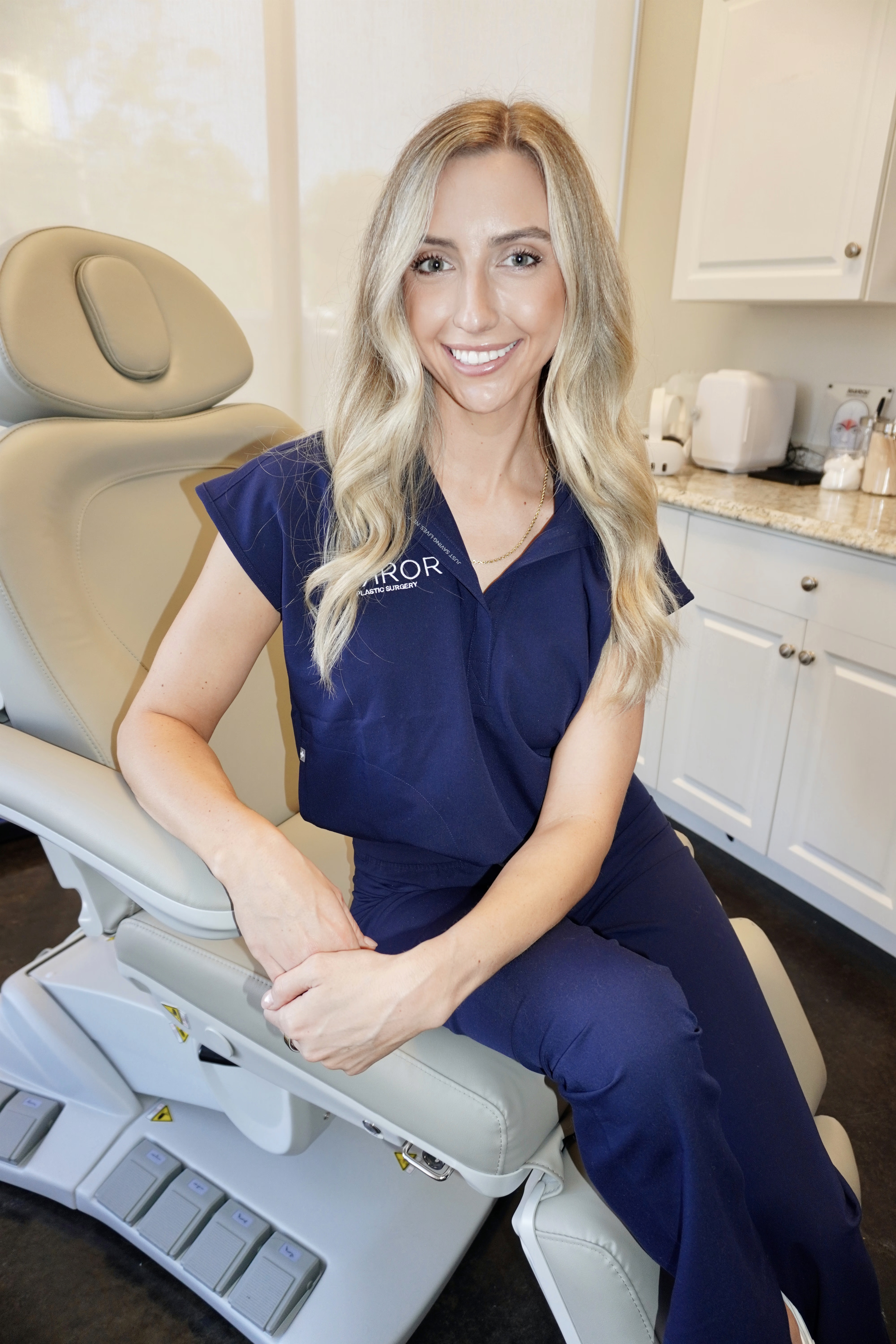
Her career began in 2019 at a high-end medical spa on Newberry Street in Boston, where she progressed from esthetician to medical esthetician before advancing to her FNP credential. Practitioners with broader aesthetic training beyond toxin and dermal fillers can assess patients holistically, design personalized treatment plans, combine treatments strategically, and deliver subtle, natural results by addressing multiple layers of facial aging including skin quality changes, collagen decline, fat compartment shifts, ligament weakening, and bone remodeling.1
Ellie’s full-face philosophy prioritizes foundational restoration before volume augmentation. She focuses on smooth transitions between upper, middle, and lower facial regions to avoid the asymmetry and overdone appearance that arise from single-area injections.
Good injectors decline inappropriate treatments by stating reasons such as unsuitable facial anatomy or unnecessary muscle groups, rather than agreeing to every patient request. Ellie applies that standard consistently.
Safety-First Care and On-Site Complication Management
Mirror Plastic Surgery follows an explicit three-tier hierarchy: safety first, function second, aesthetics third. Every treatment recommendation is checked against this sequence before it reaches the patient.
A clinic that stocks hyaluronidase on site can immediately manage vascular occlusion, a rare but potentially devastating complication of dermal filler, and absence of hyaluronidase is a hard disqualifier for safe filler practice. Mirror maintains on-site hyaluronidase as a non-negotiable protocol element. Vascular occlusion from dermal fillers remains rare but serious, and incidence is highly operator-dependent.
When a clinical situation exceeds the scope of nonsurgical intervention, Dr. Akash Chandawarkar, Mirror’s medical director, is available within the same practice. The American Society of Plastic Surgeons states: “The first and most important step in safe plastic surgery is choosing a board-certified plastic surgeon who is an ASPS member.” That level of oversight extends to Mirror’s nonsurgical services through Dr. Akash’s active, on-site role.
How to Vet Any Tampa Med Spa in 2026
Patients can use the checklist below to evaluate any Tampa Bay med spa before scheduling treatment.
- Medical director board certification: Confirm the director is board-certified in plastic surgery, dermatology, or facial plastic surgery, not a general practitioner signing remote protocols. 2026 Florida regulations specify that medical directors should be board-certified or board-eligible in dermatology or plastic surgery, with limits on the number of spas they may supervise.
- Chart-review cadence: Ask how frequently the medical director reviews patient charts and whether that review is documented. A genuine medical director reviews charts on a defined cadence and handles adverse events, not just protocols.
- Injector credentials and training stack: Verify the injector holds an active APRN, PA, or MD license, has completed anatomy-focused injectable training, and has supervised clinical hours beyond weekend courses. An RN or NP license provides the legal authority to inject, while certificates document training but do not change legal scope of practice.
- Hyaluronidase availability: Confirm the practice stocks hyaluronidase on site for immediate vascular occlusion management.
- Consultation length and structure: A legitimate consultation includes medical history review, a physical assessment, goal alignment, and a written treatment plan, not a sales pitch with package pricing. Red flags include time-limited pricing pressure during consultations and reluctance to discuss risks or realistic limitations of treatments.
Long-Term Maintenance and Natural-Looking Results
Sophisticated patients in the 40–55 demographic are not seeking a single appointment; they are building a multi-year aesthetic strategy. That strategy depends on a provider who learns how their unique anatomy responds over time. Provider continuity across multiple years allows accumulation of detailed knowledge about how a patient’s skin responds to neuromodulators, how pigmentation shifts seasonally, and which treatments consistently deliver results, making each subsequent treatment more accurate than fragmented care.1
Mirror Plastic Surgery is supplier-neutral, so product selection is driven by individual anatomy, skin quality, and treatment goals, not brand quotas or commission structures. Ellie compares aesthetic maintenance to dentistry. Professional treatments create change, but lasting outcomes require clear guidance and consistent home care.
This framework positions patients as informed participants in their long-term care instead of passive recipients of a rotating menu. Patients today seek natural aesthetic treatments, preventative aging strategies, skin health improvement, regenerative facial treatments, and long-term results rather than quick fixes, which increases demand for injectors with multi-skill credentials who can evaluate the face holistically.1
Frequently Asked Questions
Which med spa in Tampa is the best?
The best med spa in Tampa Bay depends on a patient’s priorities. For patients who value physician-led oversight, extended consultations, anatomical depth, and seamless surgical backup, Mirror Plastic Surgery in St. Petersburg stands apart.
Its combination of a Harvard/Johns Hopkins/MEETH-trained plastic surgeon as active medical director and an FNP-BC injector with dual esthetician and advanced nursing credentials does not appear elsewhere in the market. Patients who have experienced upselling, overdone results, or rushed 10–15-minute appointments often identify this integrated expertise as the key difference.
What is concierge medicine in aesthetics?
Concierge medicine in aesthetics is a care model that deliberately limits patient volume to prioritize depth of attention over throughput. In practice, consultations run 30–60 minutes instead of 10–15, and the same provider evaluates, plans, and performs treatments rather than rotating staff.
Follow-up is proactive instead of portal-only, and the medical director participates in clinical protocols, chart reviews, and adverse-event management, not just signatures. Mirror Plastic Surgery applies this model to both surgical and nonsurgical services, limiting daily surgical volume to one or two cases and structuring nonsurgical consultations around a top-to-bottom assessment framework.
How long should a med spa consultation last?
A legitimate initial consultation at a concierge-style med spa should run at least 30 minutes and ideally up to 60 minutes for new patients with complex or multi-area concerns. That time allows for a medical history review, structured physical assessment, goal alignment, and a written treatment plan with clear rationale.
Consultations that function mainly as sales presentations, quoting package prices before gathering health information, do not meet this standard. At Mirror Plastic Surgery, the initial consultation often extends to a full hour and includes a symptom-based severity-scale evaluation of facial and body areas along with discussion of emotional drivers and long-term goals.
What credentials should I verify before choosing an injector?
Patients should verify an active APRN (FNP-BC or similar), PA-C, or MD license in Florida, completion of anatomy-focused injectable training beyond basic product certification, supervised clinical hours with documented competency in complication management including vascular occlusion protocols, and a clear supervisory relationship with a board-certified physician who is genuinely present at the practice.
In Florida, aesthetic medicine procedures such as neuromodulators and dermal fillers require physician involvement under a written protocol regardless of the NP’s experience level. Ellie Pranckevicius meets all of these criteria and practices under the direct oversight of Dr. Akash Chandawarkar, whose board certification in plastic surgery and fellowship training at MEETH represent the highest tier of aesthetic surgical credentialing.
Why Mirror Plastic Surgery Stands Apart
Mirror Plastic Surgery is the only Tampa Bay practice that combines all of the following within a single concierge-model setting:
- An Ivy League-trained, fellowship-certified plastic surgeon serving as an active, on-site medical director
- Ellie Pranckevicius, whose dual esthetician and advanced nursing background was detailed earlier
- Up to 60-minute consultations structured around a symptom-based, top-to-bottom assessment framework
- A safety-function-aesthetics hierarchy with on-site hyaluronidase and seamless surgical escalation within the same practice
- Supplier-neutral product selection driven by patient anatomy rather than brand quotas
- A full-face harmonization philosophy that avoids the overdone, asymmetric results common in single-area injection practices
Disclaimer: Results may vary from person to person. Editorial content, before and after images, and patient testimonials do not constitute a guarantee of specific results.
1 Results may vary from person to person. Editorial content, before and after images, and patient testimonials do not constitute a guarantee of specific results.