Written by: Dr. Akash Chandawarkar, Board Certified Plastic Surgeon, Mirror Plastic Surgery | Last updated: September 9, 2026
Key Takeaways
- Subcision is the only cellulite treatment that physically cuts the fibrous septae that cause dimpling, rather than treating only skin or fat.
- Three main approaches exist: manual subcision (operator-dependent and cost-effective), Cellfina (longest durability data at 3+ years), and Avéli (precise, light-guided treatment with gentler recovery).
- Ideal candidates have moderate to severe dimpled cellulite on the buttocks or thighs with good skin elasticity; other concerns may need different treatments.
- Results develop over 3–6 months as collagen remodels, with satisfaction rates of 79–96% depending on the method; treated dimples improve durably, while new ones may appear elsewhere.1
- Schedule a personalized consultation at Mirror Plastic Surgery to match the right subcision approach to your cellulite pattern and goals.
What Is Subcision?
Subcision is a minimally invasive procedure that treats cellulite by inserting a needle or specialized blade beneath the skin to cut the fibrous septae, the tight connective tissue bands that pull the skin downward and create dimples. Once these bands are released, the skin surface lifts and appears smoother. The procedure uses local anesthesia and is FDA-cleared when performed with devices such as Cellfina and Avéli.
In women, subcutaneous fat lobules are large and rectangular, surrounded by vertically oriented fibrous septa that pull the skin downward; in men, septa are arranged in a crosshatch pattern, which prevents cellulite formation. This anatomical difference explains why cellulite affects women far more often than men.
Subcision also triggers a healing response that builds collagen and remodels the skin after the tethering bands are cut, which supports gradual improvement over three to six months. Manual subcision has been performed for decades. Device-based methods, including Cellfina (FDA clearance K150505, 2015) and Avéli (FDA clearance K221336, 2022), add more precision and consistency.
Who Is a Good Candidate for Subcision?
Good candidates have moderate to severe dimpled cellulite (grades 2–3 on the Cellulite Severity Scale) on the buttocks or thighs, with discrete dimples visible at rest and reasonably good skin elasticity.
Concerns that require different treatments include:
- Loose or sagging skin (laxity), which often responds better to energy-based tightening or surgical lifting
- Generalized fat accumulation
- Diffuse “wave” texture without distinct tethered depressions
Liposuction is a body-contouring procedure and does not treat cellulite, because fat removal does not affect fibrous septa and may worsen dimpling in some cases. A thorough consultation is essential to assess candidacy accurately, and Mirror Plastic Surgery’s comprehensive top-to-bottom assessment supports that decision.
Schedule a consultation with Ellie to learn whether subcision fits your specific cellulite pattern.
Once candidacy is clear, the next step is choosing the most appropriate subcision method.
Manual Subcision Vs. Cellfina Vs. Avéli: A Detailed Comparison
These three methods differ most in how they cut the fibrous bands, their FDA status, and the recovery they involve. The table below summarizes these differences at a glance.
Manual Subcision
Manual subcision is the foundational technique and has been performed for years by skilled practitioners. A retrospective study of 232 subjects reported approximately 79% satisfaction after a single session of manual subcision for cellulite.1 Because the surgeon cuts each fibrous band by hand, results depend heavily on operator skill. Sharp needles tend to cause more tissue trauma, bleeding, and bruising, while blunt cannulas are gentler but require greater expertise. For these reasons, the surgeon’s experience is the most important factor in manual subcision outcomes.
Cellfina
Cellfina uses vacuum acquisition to pull skin and fat into a suction chamber, then a motorized reciprocating microblade cuts all tissue within the chamber at a fixed depth. Because this technique is “blind,” it can cut healthy, non-tethered fat and connective tissue, which explains the significant post-treatment bruising, swelling, and seroma. In its pivotal study, patient-reported satisfaction rose from 85% at 3 months to 94% at 1 year and 96% at 2 years, with no reduction in treatment benefit at the 3-year follow-up (Kaminer et al., 2017).1 This durability record is the longest published for any FDA-cleared cellulite device.
Avéli
Avéli’s mechanism works in several steps. First, the surgeon inserts a thin probe with an integrated LED light and uses transillumination to visualize the tip. The surgeon then hooks individual fibrous septae with a manual lever and gently pulls to confirm that the dimple retracts. After confirming capture, the surgeon cuts the band, which allows real-time verification that each dimple has been released. The CONFFIRM pivotal trial (Stevens et al., 2023) showed that at 12 months, 93.9% of patients improved on the GAIS score, and 73.8% achieved a ≥1-point reduction on the cellulite severity scale.1 Patient satisfaction was approximately 90% at one year.
Dr. Akash Chandawarkar serves on the advisory board for Tiger Aesthetics, Avéli’s parent company, which provides insight into device development and optimal technique that few practices can match.
Key takeaway: Cellfina offers the strongest long-term durability data, Avéli provides greater precision with a typically gentler recovery, and manual subcision is the most cost-conscious option but depends most on surgeon skill. The best choice depends on your dimple pattern, anatomy, and goals.
What to Expect During and After the Procedure
A typical subcision session follows this sequence:
- Consultation and marking: Your provider assesses your cellulite pattern while you stand and marks each dimple to be treated.
- Local anesthesia: The treatment area is numbed with tumescent local anesthesia (dilute lidocaine with epinephrine).
- Subcision: The provider performs manual subcision, Cellfina, or Avéli, releasing the fibrous bands beneath each marked dimple. The procedure usually takes 30–60 minutes.
- Compression garment: You are fitted with a compression garment to manage swelling and support healing.
Recovery Timeline
Recovery from cellulite subcision follows a predictable pattern of bruising, swelling, and gradual smoothing. Here is what most patients experience over time:
- Days 1–3: Plan to rest. Significant bruising, swelling, and soreness are normal, so apply cold compresses to ease discomfort. Many patients return to desk work within 24–48 hours if they feel comfortable with visible bruising.
- Days 4–7: Resume light daily activities gradually. Bruises may darken to a purple-blue shade before they begin to fade, so avoid strenuous exercise, alcohol, and saunas during this phase.
- Weeks 2–3: Bruising fades substantially and tenderness improves. Some firmness or small lumps under the skin are common as tissue heals and organized hematoma resolves.
- Weeks 4–8: Swelling continues to resolve, and early smoothing becomes visible as collagen remodeling starts.
- Months 3–6: Full results appear as collagen and elastin mature and the skin surface smooths, supported by histologic evidence of extracellular matrix remodeling.
“Social downtime” from bruising is often 1–2 weeks with Cellfina and about 1 week with Avéli, so plan around events or travel.
How Much Does Subcision Cost?
Subcision pricing depends on treatment area size, number of dimples, method used, and provider expertise. Cellulite treatment is cosmetic and does not receive insurance coverage. At Mirror Plastic Surgery, you receive a personalized quote after consultation, based on your anatomy and treatment plan rather than sales targets.
Once you understand the investment, the next step is to consider the results and how long they last.
Results and Longevity: What to Expect
Subcision results build gradually. Early changes often reflect swelling, while true improvement develops over 2–3 months as collagen remodels. Published clinical data shows:
- Cellfina: Results remained stable at 3 years with no loss of treatment benefit, and patient satisfaction reached 96% at 2 years.1
- Avéli: Clinically significant improvement persisted at 12 months in the CONFFIRM trial, with 93.9% of patients improved on the GAIS score.1
- Manual subcision: Retrospective data reports approximately 79% satisfaction after one session.1
Once a fibrous septa band is cut, it retracts and does not regrow or reconnect, so improvement in treated dimples is durable.1 New dimples can still appear in untreated areas with aging, hormonal shifts, or major weight changes. Stable weight, good hydration, and strength training to support muscle tone all help maintain results.
Cellulite behaves as a chronic structural condition. Subcision provides meaningful improvement, and clinical data supports that goal more reliably than a promise of perfection.
Risks and Side Effects
Common side effects include bruising, which is nearly universal and lasts 1–2 weeks, along with swelling, soreness, and temporary numbness. An analysis of the FDA MAUDE database (extract dated June 10, 2026) found 49 adverse event reports for Cellfina and 30 for Avéli under product code OUP, with frequent events such as bruising lasting over 4 weeks, post-inflammatory hyperpigmentation in darker skin types (Fitzpatrick IV–VI), induration or nodules resolving over 3–6 months, and rare infections (3 for Cellfina, 2 for Avéli) requiring oral antibiotics.
Choosing a board-certified plastic surgeon helps reduce these risks. Dr. Akash’s training supports precise technique and appropriate management if complications occur.
After understanding safety, many patients want clarity on what subcision does and does not do.
Common Misconceptions About Subcision
- “Subcision removes fat.” This procedure targets the structural cause of cellulite. Subcision cuts fibrous septae rather than reducing fat volume.
- “Results are permanent.” Treated dimples stay improved because the cut bands do not regrow, while new dimples may appear in other areas over time.
- “It’s extremely painful.” Most patients describe pressure rather than sharp pain because of local anesthesia. Post-procedure soreness usually responds to over-the-counter pain relief.
- “All subcision is the same.” Manual subcision, Cellfina, and Avéli differ in precision, tissue trauma, recovery, and consistency, and provider skill strongly influences outcomes.
- “Reddit says it’s not worth it.” Online forums often highlight extreme stories. Clinical studies show 79–96% satisfaction rates across methods. Careful patient selection and an experienced provider are crucial.
FAQ: Subcision Cellulite Treatment
Does Subcision Work for Cellulite?
Subcision works well for dimpled cellulite caused by fibrous septae and directly treats the structural tether responsible for dimpling. Clinical studies across manual subcision, Cellfina, and Avéli report satisfaction rates of 79–96%, with improvement lasting 2–3 years or longer.1 Results are strongest for discrete dimples visible at rest on the buttocks and thighs and more limited for diffuse wave-type texture without clear tethered bands.
How Long Does Recovery Take?
Most patients return to desk work within 24–48 hours. Bruising peaks during the first 2–3 days and usually fades within 1–2 weeks, depending on the method, and Avéli often causes less bruising than Cellfina because of its targeted, non-vacuum approach. Small lumps or firmness under the skin are common during weeks 2–3 as tissue heals. Full results appear over 3–6 months as collagen matures, and many patients plan for about 1 week of social downtime with Avéli and up to 2 weeks with Cellfina.1
How Long Do Results Last?
Cellfina currently has the most extensive durability data, with results maintained at 3 years and 96% patient satisfaction at 2 years.1 Avéli’s CONFFIRM trial shows clinically significant improvement at 12 months, with longer-term data still in progress.1 Manual subcision offers the satisfaction rate described earlier. Because cut fibrous bands retract and do not regrow, treated dimples remain improved, while new dimples can appear in untreated areas as you age or experience hormonal or weight changes.
Can Subcision Be Combined With Other Treatments?
Combination treatment can address both dimples and overall skin quality. Subcision treats the structural tether, while radiofrequency skin tightening, biostimulatory fillers, or other energy-based treatments can improve laxity and texture. A 2026 prospective study combining Avéli with helium plasma radiofrequency showed progressive improvement through Day 180, with physician-assessed improvement in 77–82% of patients. The best combination depends on your anatomy and goals and is refined during a comprehensive consultation.
Who Is Not a Good Candidate for Subcision?
People whose main concern is loose or sagging skin, diffuse wave-type cellulite without distinct dimples, or fat reduction usually need different treatments. Subcision also does not replace liposuction, and liposuction does not treat cellulite. Patients with active skin infections, bleeding disorders, or certain connective tissue conditions may not qualify. An in-person assessment remains the most reliable way to determine candidacy because cellulite type and skin quality vary widely.
Why Choose Mirror Plastic Surgery For Your Cellulite Treatment?
Mirror Plastic Surgery is a concierge plastic surgery practice in St. Petersburg, Florida, built on a philosophy of safety first, function second, and aesthetics third. Dr. Akash Chandawarkar is a Harvard-educated, Johns Hopkins-trained, board-certified plastic surgeon with fellowship training in aesthetic surgery at the Manhattan Eye Ear & Throat Hospital/Lenox Hill Hospital. His advisory role with Tiger Aesthetics, Avéli’s parent company, provides first-hand insight into the device and technique that typical aesthetic clinics do not have.
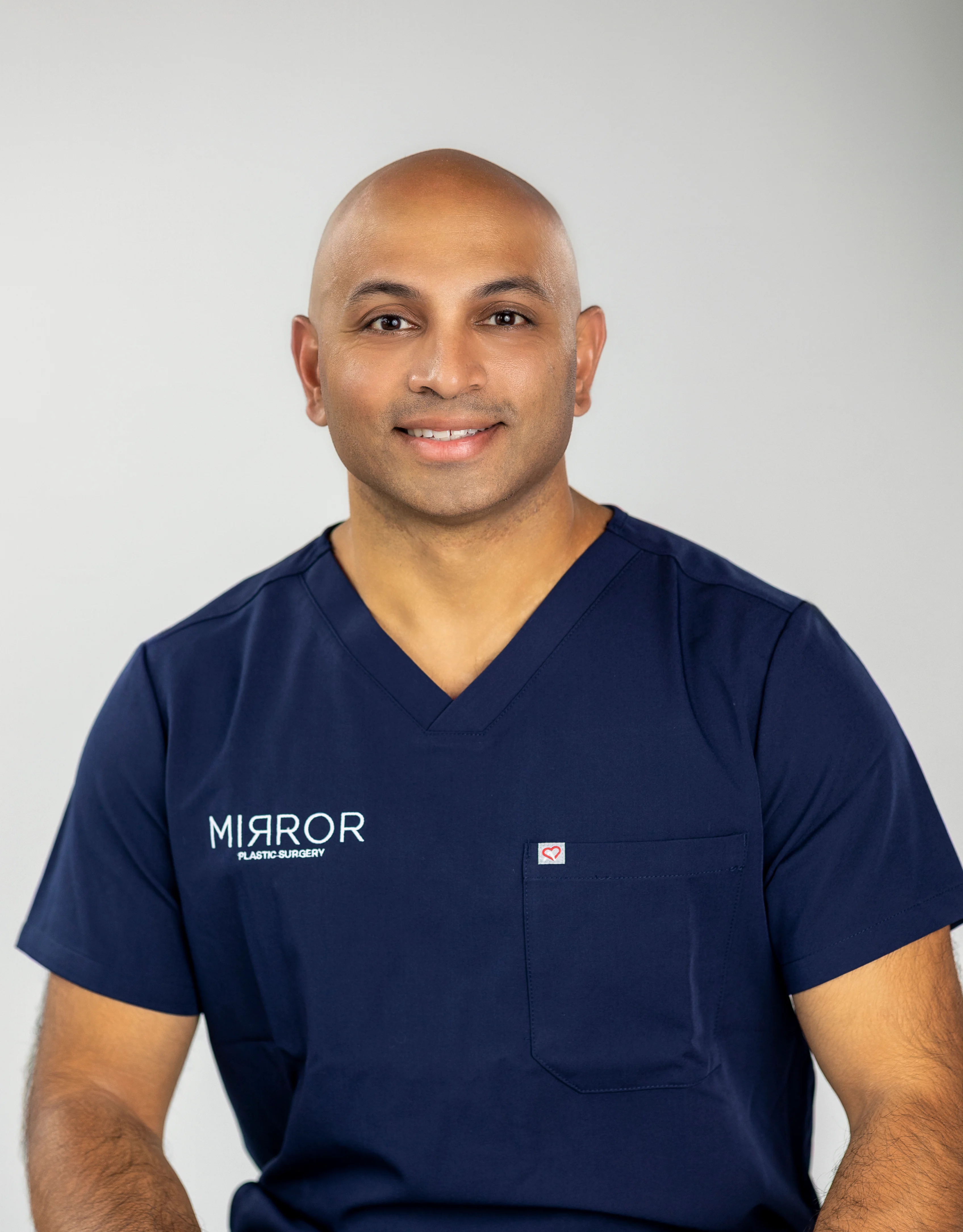
Every consultation at Mirror Plastic Surgery includes up to an hour of dedicated time, a comprehensive top-to-bottom assessment, and honest, evidence-based recommendations. The practice schedules one to two procedures per day, which allows the entire clinical team to focus fully on each patient before, during, and after the procedure. When subcision is not the right fit for your anatomy, Dr. Akash explains alternative options clearly.
To explore whether subcision aligns with your goals, book a cellulite consultation with Ellie at Mirror Plastic Surgery. Call 727-361-6515, email hello@mirrorplasticsurgery.com, or visit 780 4th Ave S, St. Petersburg, FL 33701.
Disclaimer: Results may vary from person to person. Editorial content, before and after images, and patient testimonials do not constitute a guarantee of specific results.
1 Results may vary from person to person. Editorial content, before and after images, and patient testimonials do not constitute a guarantee of specific results.