

Written by: Dr. Akash Chandawarkar, Board Certified Plastic Surgeon, Mirror Plastic Surgery | Last updated: September 9, 2026
Key Takeaways
- Cellulite is a structural condition caused by fibrous septae tethering the skin, which explains why topical treatments and lifestyle changes produce limited results.
- FDA-cleared subcision treatments like Avéli and Cellfina deliver measurable, durable improvement for dimple-type cellulite, with published long-term satisfaction data.1
- Realistic outcomes include a one-to-two-grade improvement on cellulite severity scales, with visible reduction in dimple depth and number rather than complete elimination.1
- Results are maintained long term, with Avéli showing durability at 12 months and Cellfina demonstrating longevity out to several years, although new dimples can form over time.1
- Schedule a personalized consultation with Dr. Akash Chandawarkar at Mirror Plastic Surgery for an evidence-based assessment and clear expectations for your cellulite treatment.
Why Cellulite Is Structurally Difficult To Treat: The Science Behind The Dimples
Cellulite is a structural condition, not a consequence of weight, fitness, or toxins. Vertical fibrous septae, or connective tissue bands, tether the skin to deeper fascia. When subcutaneous fat expands or the dermis thins with age, these bands pull downward while fat lobules push upward. This interaction creates the familiar dimpled appearance often described as “cottage cheese” skin.
This anatomical mechanism explains why topical creams, massage, foam rolling, and lifestyle changes produce limited results. These approaches do not release the fibrous bands causing the dimples. Cellulite arises from fibrous connective tissue bands that pull the dermis downward while fat lobules push upward, so surface treatments alone rarely create lasting change. Effective treatment must address this anatomical cause directly.
Female anatomy increases the likelihood of visible cellulite. Women typically have vertical connective bands, while men more often have a crisscross pattern that better contains fat. Estrogen also influences fat storage and collagen turnover, which is why cellulite often becomes more noticeable around hormonal transitions such as pregnancy, perimenopause, and menopause. Understanding this structural basis prepares you to evaluate why certain treatments, including FDA-cleared subcision devices, achieve more consistent results than surface therapies.
The Evidence Base: What Clinical Trials Report For Avéli And Cellfina
Avéli: CONFFIRM Pivotal Trial Results
Avéli, developed by Revelle Aesthetics, received FDA 510(k) clearance (K221336) on August 5, 2022, for the long-term reduction of cellulite in the buttocks and thighs of adult women. The CONFFIRM multicenter pivotal study reported the following key findings:
- 95.6% of patients improved on the Global Aesthetic Improvement Scale at 3 months1
- Patient satisfaction was 72.1% at 3 months and 69.2% at 12 months (or 73% and 70.4% when including roll-in participants), while GAIS improvement was 95.6% at 3 months and 93.9% at 12 months1
- Mean Cellulite Severity Scale improvement of 1.50 points at 3 months, sustained at 1.48 points at 1 year1
- In the Avéli CONFFIRM pivotal trial, no device-related serious adverse events were reported at 30 days, and all related adverse events were mild or moderate
Cellfina: Pivotal Study And Long-Term Follow-Up
Cellfina received its initial FDA 510(k) clearance (K150505) on July 29, 2015, with an indication for long-term improvement in cellulite appearance supported by data up to two years. This indication was updated in October 2016 (K161885) to reflect long-term improvement lasting up to three years. The pivotal study data shows:
- 93% of subjects showed at least a one-grade improvement in cellulite severity at 3 months, rising to 94% at 1 year1
- Patient satisfaction reached 96% at 2 years1
- A dedicated three-year follow-up study (Kaminer et al., 2017) found no reduction in treatment benefit out to three years
How The Data Translates To Real-World Results
A 1.5-point improvement on the Cellulite Severity Scale translates to a visibly smoother appearance. Dimples become shallower and less numerous, although they do not disappear completely.1 The realistic endpoint for cellulite treatment is improvement, not elimination.1 No treatment produces perfectly smooth skin in every position or light. Because these are average results from clinical trials, individual outcomes vary based on cellulite severity, skin quality, and provider skill.
What Cellulite Treatment Before And After Results Actually Look Like
Most patients see a noticeable reduction in the depth and number of dimples rather than perfectly smooth skin. Results typically correspond to a one-to-two-grade improvement on standardized cellulite severity scales. The Nürnberger-Müller scale grades cellulite from Grade 0 (no visible dimpling at rest or when pinched) to Grade 3 (dimpling visible while standing and lying down, with pronounced raised and depressed areas). In a 2023 survey of 114 women, most participants (84.2%) had Grade I or Grade II cellulite on the Nürnberger-Müller scale, with 55.3% at Grade II and 28.9% at Grade I. At these grades, pinching or muscle contraction reveals texture that subcision treatments can meaningfully improve.
Reputable providers show unretouched photos of their actual patients, not stock images or only their most dramatic outcomes. The American Board of Cosmetic Surgery offers guidance on what constitutes realistic improvement. Before-and-after images from Mirror Plastic Surgery’s gallery are available for review during your consultation, with the clear understanding that individual results vary.
Treatment Timeline: When You Will See Results
The following timeline reflects clinical evidence from the CONFFIRM trial and published recovery data:
- Days 1–3: Bruising, swelling, and soreness are expected. Most patients resume normal activities within 24–48 hours.
- Weeks 1–2: Initial improvement may be visible as swelling subsides, although bruising can temporarily mask results.
- Weeks 2–4: Noticeable reduction in dimple appearance as bruising resolves. Many patients see clear results at 4 weeks.
- Months 1–3: Progressive improvement continues as collagen remodeling occurs. Final results are typically apparent at 3 months.
- Long term: Clinical studies show durable results for both Avéli and Cellfina, with treated dimples not returning. New dimples may form with significant weight changes or aging.
Avéli Vs. Cellfina: Comparing The Two Gold-Standard Treatments
| Attribute | Avéli | Cellfina |
|---|---|---|
| Mechanism | Light-guided manual hook; targeted cutting of individual fibrous septae with real-time verification | Vacuum-stabilized motorized microblade; fixed-depth subcision at 6 mm or 10 mm |
| FDA Clearance | 2022 (K221336) | 2015 (K150505), updated for 3-year longevity |
| Recovery Time | Minimal downtime; most patients return to normal activities within 24–48 hours | 2–3 days of downtime typical |
| Patient Satisfaction | Reported long-term satisfaction at 12 months in the CONFFIRM trial | High satisfaction maintained in long-term follow-up studies |
Avéli’s light-guided approach allows targeted release of only the bands causing dimples, preserving surrounding tissue and minimizing trauma. This precision may reduce bruising, although faster recovery has not been explicitly documented in head-to-head trials. Cellfina’s vacuum-assisted subcision approach works well for discrete, dimple-type cellulite on the buttocks. It is designed for focused treatment zones rather than broad or diffuse rippling cellulite. Both are single-session procedures with durable results. Choosing between them depends on your cellulite type and anatomy, which is best determined in consultation with an experienced surgeon.
Real Patient Experiences: What Clinical Studies And Forums Reveal
Patients consistently report satisfaction with dimple reduction alongside temporary bruising and soreness. An analysis of the FDA MAUDE database (extract dated June 10, 2026) found adverse event reports for Cellfina and Avéli under product code OUP. Commonly reported events included persistent bruising, hyperpigmentation, induration, nodules, and rare infections. These figures reflect passive reporting and do not represent incidence rates from clinical trials.
Real-world patient accounts align with the clinical data. One patient described the experience this way: “I had about 12 dimples on the back of my thighs that I’ve hated for years. One session and they’re gone. The bruising was worth it.” Another noted: “I tried RF cellulite treatments twice before with temporary results. Avéli actually fixed the problem. Should have done this first.” These accounts, combined with the MAUDE data, highlight the balance between meaningful improvement and short-term side effects.
Together, the clinical evidence and patient stories underscore why a thorough consultation with a board-certified plastic surgeon is essential. This visit allows careful assessment of candidacy, review of potential risks, and clear discussion of realistic outcomes before any treatment decision.
How To Choose The Right Treatment For Your Cellulite Type
Cellulite presents differently across patients, so treatment selection must match your specific pattern. Discrete, circular dimples caused by fibrous septae respond best to subcision-based treatments like Avéli or Cellfina. Diffuse, undulating texture or skin laxity, which appears as loose, draping skin, often benefits more from energy-based tightening or combination approaches.
This distinction matters clinically. Subcision does not improve laxity and can occasionally worsen it. Cellulite dimples appear as discrete, circular depressions caused by vertical fibrous septae, while skin laxity shows up as wavy lines or horizontal folds that respond better to tightening or lifting procedures.
Avéli is often chosen for thigh cellulite and complex dimples because its light-guided probe can navigate curved, fibrous surfaces without relying on suction. Cellfina is well suited for discrete buttock dimples because its vacuum-assisted tissue capture platform provides precise control of depth and area of release, yielding consistent results. However, it is less effective for broad, diffuse, or wavy cellulite.
Cost Considerations: What You Should Know Before Booking
Cellulite treatments are cosmetic procedures and are not covered by insurance. Published national averages provide a general planning benchmark, but real costs vary widely. Factors include the number of dimples treated, the size of the treatment area, and whether combination therapies are recommended. Every patient at Mirror Plastic Surgery receives a personalized quote during consultation. Schedule a consultation with Ellie to receive an honest, individualized assessment without upselling pressure.
Questions To Ask Your Provider Before Treatment
The following questions help you evaluate whether a provider has the expertise and transparency to deliver safe, natural-looking results:
- What is your experience with this specific treatment, and how many procedures have you performed?
- What results can I realistically expect based on my cellulite type and severity?
- What are the risks and side effects, and how do you manage complications?
- How many treatment sessions will I need?
- Can you show me before-and-after photos of your actual patients, not stock images?
- What is your approach to managing bruising and recovery?
Why Mirror Plastic Surgery Is The Right Choice For Cellulite Treatment In St. Petersburg
Mirror Plastic Surgery, located at 780 4th Ave S, St. Petersburg, FL, is led by Dr. Akash Chandawarkar, a Harvard-educated physician and Johns Hopkins-trained plastic surgeon with fellowship training in aesthetic surgery at the Manhattan Eye Ear & Throat Hospital (MEETH)/Lenox Hill Hospital. Dr. Akash is board-certified by the American Board of Plastic Surgery and serves as an advisory board member for Tiger Aesthetics, the manufacturer of Avéli. This role gives him direct insight into patient selection criteria, technique, and emerging clinical evidence.
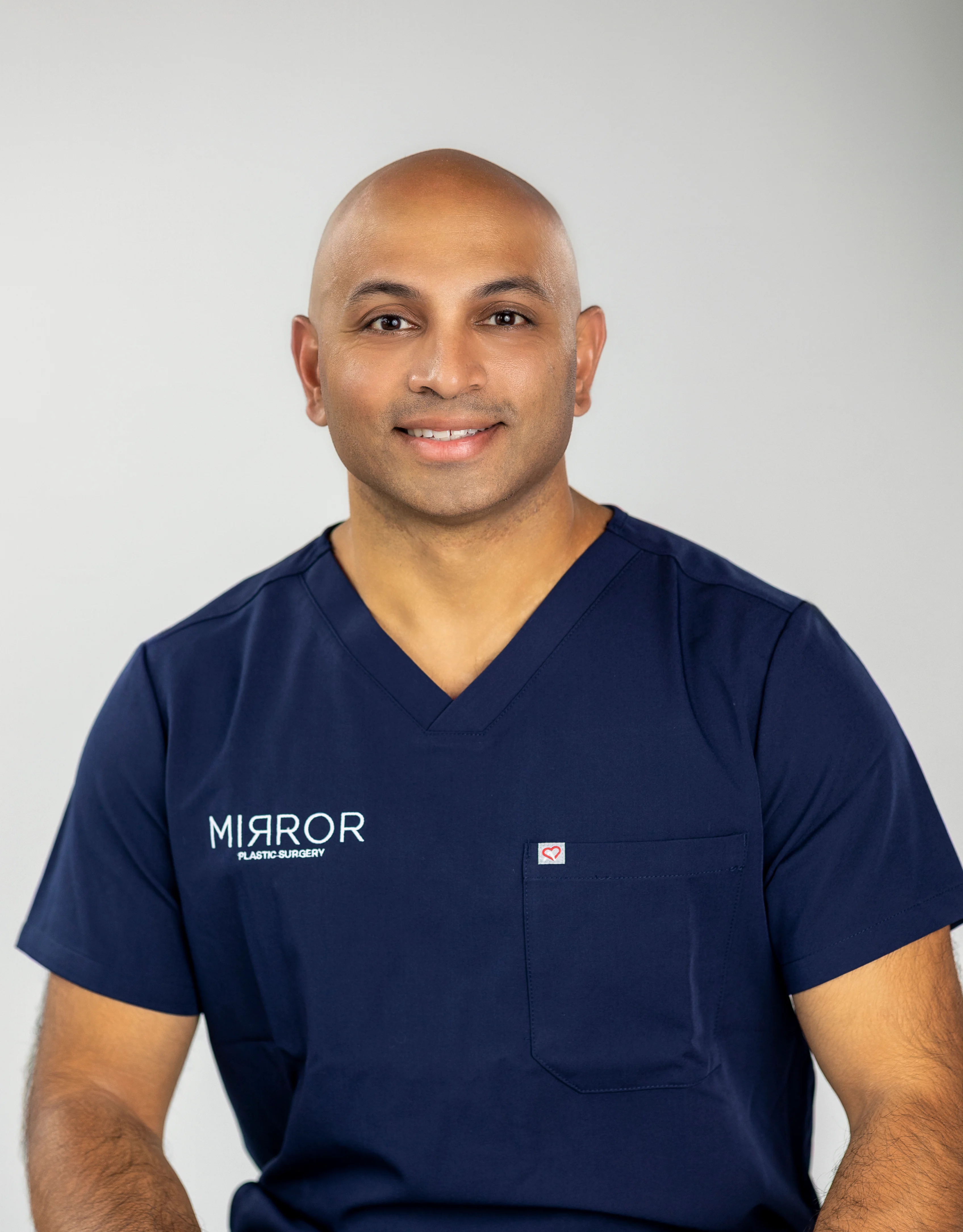
The practice follows a concierge medicine philosophy. Consultations last up to an hour, rather than the rushed 10-minute assessments common at high-volume clinics. Dr. Akash personally performs all treatments, providing surgical precision and detailed anatomical understanding at every step. The practice’s guiding principle, “safety first, function second, aesthetics third,” ensures that patients receive honest recommendations, including clear guidance when a procedure does not match their anatomy or goals.
Patients in the St. Petersburg and Tampa Bay area who want a provider combining clinical rigor with genuine transparency often find that Mirror Plastic Surgery offers a level of care that mill-style practices do not provide. Start your journey with a consultation at Mirror Plastic Surgery and discuss whether cellulite treatment is appropriate for you.
Frequently Asked Questions
Is There A Cellulite Treatment That Actually Works?
FDA-cleared subcision treatments, Avéli and Cellfina, directly address the fibrous bands causing cellulite dimples by physically cutting them so the skin can release and smooth. Clinical trials report patient satisfaction for Avéli at 12 months as approximately 69–70%, while the 93.9% figure refers to physician-rated GAIS improvement, not patient satisfaction. These treatments have published data demonstrating durable, structural improvement. Non-invasive options like radiofrequency and acoustic wave therapy generally produce temporary texture improvement and require ongoing maintenance sessions, although acoustic wave therapy can mechanically disrupt fibrous septae and a specific non-invasive acoustic subcision device (Resonic) has shown long-term improvement after a single treatment. Topical creams, massage, and lifestyle changes have not been shown to create lasting structural cellulite reduction.
How Much Does Cellulite Treatment Cost?
Cellulite treatment is cosmetic and not covered by insurance. At Mirror Plastic Surgery, every patient receives a personalized quote during consultation, because cost depends on the number of dimples treated and the size of the area involved. The team focuses on an honest assessment of what is clinically appropriate for your anatomy, without upselling.
Do Cellulite Treatment Results Last?
Clinical studies show durable results for both Avéli and Cellfina, with long-term follow-up supporting the structural nature of subcision. Once a fibrous band is cut, it retracts and does not reconnect. Treated dimples do not return. However, new dimples may form in untreated areas with significant weight changes, hormonal shifts, or natural aging. Accurate patient selection and realistic expectations remain essential before treatment.
What Is The Recovery Like After Avéli Or Cellfina?
Most patients resume normal activities within 24–48 hours of Avéli treatment. Bruising and tenderness typically resolve within 2–4 weeks. Strenuous exercise should be avoided for the first week. Avéli usually involves minimal downtime, while Cellfina may require 2–3 days of reduced activity, with broadly similar overall recovery timelines. Compression garments are typically recommended for one to two weeks. Final results are usually apparent at 3 months as collagen remodeling completes.
Are There Any Side Effects?
Common side effects for both Avéli and Cellfina include bruising, swelling, soreness, and tenderness, which typically resolve within 2–4 weeks. Seroma risk varies by procedure and patient anatomy, and your surgeon will discuss specific risks during consultation. Rare complications include infection, hyperpigmentation, nodules, and contour irregularities. In the Avéli CONFFIRM pivotal trial, no device-related serious adverse events were reported at 30 days, and no related serious adverse events, serious adverse device effects, or unanticipated adverse device effects were observed throughout the 12-month follow-up. Choosing an experienced, board-certified plastic surgeon with specific training on the device is the most important factor in minimizing these risks and achieving natural-looking results.
Conclusion: Making An Informed Decision About Cellulite Treatment
Cellulite is a structural condition, independent of health, effort, or body weight. Meaningful, lasting improvement requires a procedure that addresses its root cause, the fibrous bands tethering the skin to deeper tissue. Clinical data from FDA-cleared subcision treatments shows that real, visible improvement is achievable. Outcomes depend on accurate diagnosis of cellulite type, skilled technique, and honest expectations set before treatment begins.
Choosing an experienced, board-certified plastic surgeon remains the single most important factor in achieving safe, natural-looking results. Mirror Plastic Surgery, led by Dr. Akash Chandawarkar, offers clinical expertise, an evidence-based approach, and concierge-level care that help patients feel informed and supported at every step. Meet with Ellie to discuss your cellulite treatment options at Mirror Plastic Surgery in St. Petersburg, FL, and learn what cellulite treatment before and after can realistically achieve for you.
Disclaimer: Results may vary from person to person. Editorial content, before and after images, and patient testimonials do not constitute a guarantee of specific results.
1 Results may vary from person to person. Editorial content, before and after images, and patient testimonials do not constitute a guarantee of specific results.


