

Written by: Dr. Akash Chandawarkar, Board Certified Plastic Surgeon, Mirror Plastic Surgery | Last updated: September 9, 2026
Key Takeaways
- Natural upper lip filler results depend on detailed knowledge of the vermilion border, Cupid’s bow, and philtrum.
- Filler restores volume, refines asymmetry, and sharpens Cupid’s bow definition, while other treatments address gummy smiles and long philtrums.
- Precise techniques, conservative volumes of about 0.5–1 mL, and staged treatments help prevent an overfilled or artificial look.
- Most patients see final results in 2–4 weeks, and many fillers maintain visible improvement for about 9–12 months.1
- Working with a board-certified plastic surgeon improves safety and precision; schedule your personalized consultation to explore your options.
Step 1: Understand Your Upper Lip Anatomy
Three key landmarks guide every upper lip filler decision. Knowing them creates a shared language between you and your injector.
The vermilion border is the pale, slightly raised line where the colored vermilion tissue meets the surrounding facial skin. A crisp, well-defined border reads as youthful regardless of lip volume. A blurred border reads as aged and tired. This border is the primary landmark for upper lip filler planning.
The Cupid’s bow is the double-curved M-shaped contour at the center of the upper vermilion border, with two peaks and a central dip. Its sharpness, width, and height drive much of what people perceive as lip shape from the front. These features strongly influence whether a result looks natural or overfilled.
The philtrum is the vertical groove running from the base of the nose to the upper lip, bounded by two raised ridges called the philtral columns that flare outward and terminate at the peaks of the Cupid’s bow. Its length and the prominence of those columns shape how the upper lip appears in profile and from the front.
With age, the vermilion thins as collagen and elastin decline. The philtrum lengthens, and the upper lip rolls inward. The Cupid’s bow loses definition as the philtral columns flatten, and the commissures descend. The upper lip often shows aging before the lower. Filler placement focuses on sculpting these landmarks and restoring structure rather than simply adding bulk.
Step 2: Know What Filler Can and Cannot Fix
Clear expectations create better outcomes. Dr. Akash Chandawarkar explains what upper lip filler can address and where other treatments work better.
- Thin upper lip: Filler adds volume and projection to create a fuller, more balanced upper lip.
- Asymmetry: A skilled injector can balance uneven sides by placing slightly more filler on the deficient side and assessing the lip both at rest and in motion.
- Loss of Cupid’s bow definition: Targeted volume at the two peaks of the upper lip refines the natural M-shape and restores a sharper outline.
- Fine vertical lines (smoker’s lines): Superficial micro-droplet injections can soften mild lines. Deep, etched vertical lip lines respond better to resurfacing the entire upper-lip subunit with laser, chemical peel, or dermabrasion rather than filler alone.
- Long philtrum: Filler does not shorten the distance between the nose and the upper lip. A surgical lip lift directly and permanently shortens a long philtrum, while non-surgical options like fillers and lip flips target other lip concerns.
- Gummy smile or limited vermilion show: Patients whose upper lip rolls inward when smiling usually benefit more from a Botox lip flip than from filler.
This level of honesty reflects the standard of care. A provider who explains both the strengths and limits of filler helps you make safer, more confident choices.
Schedule a consultation to learn what upper lip filler can realistically achieve for your anatomy.
Step 3: What Happens During Your Consultation
A thoughtful consultation looks at your whole face, not just your lips. Lip proportion depends on the nose, chin, jaw, and overall facial balance.
At Mirror Plastic Surgery, consultations can run up to an hour. This time allows Dr. Akash Chandawarkar to complete a detailed top-to-bottom assessment instead of a rushed, high-volume visit.
During the consultation, Dr. Akash reviews your medical history, examines your lip anatomy, discusses your goals, and explains what filler can and cannot do for your structure. Expert frameworks for natural-looking lip augmentation group patient goals into hydration, restoration, volume enhancement, asymmetry management, smile correction, and perioral refinement. This structure turns your wishes into a precise, personalized plan instead of a generic injection pattern.
The outcome of this visit is informed consent. You leave knowing what will be done, why it is recommended, and what you can realistically expect.
Step 4: Injection Techniques for the Upper Lip
Upper lip filler techniques are chosen based on your anatomy and your primary concern. Your injector selects from several methods to match those goals.
Border definition: Small amounts of filler are placed at the junction of the vermilion border and cutaneous lip using horizontal retroinjection lines within the dermal or subdermal plane. Each line receives approximately 0.02–0.03 mL. This sharpens the Cupid’s bow and creates a crisp, defined edge.
Vertical height (tenting): Vertical retroinjection lines placed in the vermilion body, about 0.02 mL each and spaced 1–2 mm apart, add height rather than forward projection. This approach helps avoid the “duck lip” look that comes from pushing the lip outward instead of upward.
Cupid’s bow restoration: Micro-aliquots of approximately 0.05 mL per side are injected into the superficial dermis at the bow peaks. These small deposits restore the M-shape that often softens with age.
Fine line correction: Superficial micro-droplet injections can soften mild vertical lines above the lip. Deep etched lines usually respond better to resurfacing treatments that target the skin surface.
Cannula vs. needle: Sharp needles provide precise placement for border definition and Cupid’s bow work, while blunt cannulas reduce bruising risk and suit overall volumizing of the lip body. Many experienced clinicians use both tools, choosing based on the technique and the patient’s anatomy.
Expert consensus advises limiting total volume to about 1 mL of product into the vermilion in a single session and favoring a conservative, staged approach for first-time patients. For lips that have never been filled, a first treatment of 0.5–0.8 mL total usually creates visible improvement while keeping overfilling risk low.
Step 5: Aftercare and Recovery Timeline
Knowing the typical recovery timeline helps you plan and reduces anxiety about normal post-treatment changes.
- Immediately After: Swelling, redness, and possible bruising are common. The lips look fuller than the final result.
- 24–48 Hours: Swelling peaks; avoid strenuous exercise, alcohol, and blood-thinning medications. Apply cold compresses gently and avoid pressing, massaging, or puckering the lips.
- 1–2 Weeks: Swelling settles and the filler integrates with the tissue. Most patients see their final appearance two to four weeks after treatment1.
- 2 Weeks: A follow-up visit allows your injector to assess the settled result and decide whether a touch-up is appropriate.
Most lip fillers last between 6 and 18 months, with many popular options maintaining visible volume for about 9 to 12 months1. Product choice, metabolism, and lifestyle factors such as intense exercise and sun exposure influence longevity.
Discuss your upper lip goals and build a personalized treatment plan with Dr. Akash Chandawarkar.
Step 6: Risks, Complications, and Safety
Safety guides every decision at Mirror Plastic Surgery. Understanding potential risks helps you recognize normal healing versus warning signs.
Common side effects include swelling, bruising, tenderness, and temporary firmness. Swelling occurs in about 78% of patients and usually resolves within 48 hours1.
Vascular occlusion is the most serious risk. Inadvertent injection of filler into an artery can cause vascular occlusion, which may lead to tissue damage, scarring, visual loss, or stroke, and affects approximately 0.015% of patients1. This rare event requires rapid recognition and treatment. Warning signs include blanching, livedo reticularis, disproportionate pain, and delayed skin discoloration.
Reversal agent as an antidote: The reversal agent is the gold standard for managing filler-associated vascular occlusion, with high-dose repeated protocols recommended by the American Society for Dermatologic Surgery. The ability to dissolve filler provides a major safety advantage compared with non-reversible options.
Lip filler migration occurs when product moves from the intended injection site. Migration often happens when dermal access is made in the cutaneous portion of the lips outside the vermilion border, allowing product to track to that point and creating unnatural volume above the lip. Conservative volumes, precise depth, and an experienced injector reduce this risk.
At Mirror Plastic Surgery, Dr. Akash Chandawarkar performs all injections himself. His board certification and fellowship-level aesthetic training mean each injection reflects a surgeon’s command of facial and subdermal anatomy, which supports both safety and precision.
Step 7: When Filler Is Not the Best Answer
Sometimes another treatment serves your goals better than filler. A trusted advisor explains these options clearly.
- Long philtrum: When the upper lip is elongated or dental show is reduced, lip lift strategies become important. As discussed earlier, a lip lift is the procedure that directly shortens this distance.
- Gummy smile or limited vermilion show: Botulinum toxin along the superior vermilion border relaxes the superior orbicularis oris muscle, causing vermilion eversion and the appearance of greater fullness without added volume. This lip flip suits patients seeking subtle eversion rather than true augmentation.
- Deep etched vertical lines: Resurfacing treatments such as ablative laser, chemical peel, or dermabrasion treat the skin surface itself, which filler cannot repair.
- Desire for longer-lasting results: Fat transfer can offer more durable volume, though results are less predictable and not reversible like hyaluronic acid fillers.
Once you know whether filler or an alternative fits your goals, the next key decision is who will perform your treatment.
Step 8: How To Choose Your Injector
The person holding the syringe has the greatest impact on your outcome. The criteria below work together to screen for safety, skill, and judgment.
- Confirm board certification in plastic surgery or dermatology, which signals rigorous training in facial anatomy and aesthetics.
- Ask how many lip injections the provider performs regularly and review before-and-after photos to see their aesthetic style.
- Ask, “What is your approach to avoiding vascular complications?” to gauge their understanding of anatomy and safety protocols.
- Confirm that hyaluronidase is available on site and that the provider follows a written emergency protocol for vascular occlusion.
- Notice whether the consultation feels thorough or rushed. A visit shorter than about 15 minutes rarely allows a proper anatomical assessment.
At Mirror Plastic Surgery, Dr. Akash Chandawarkar personally performs all injectable treatments. As a Harvard-educated, Johns Hopkins-trained plastic surgeon with aesthetic fellowship training at the Manhattan Eye Ear & Throat Hospital, he brings surgical-level anatomical knowledge to every filler appointment. He also serves on the advisory board for Merz Aesthetics, reflecting his standing in the field and his commitment to evidence-based practice.
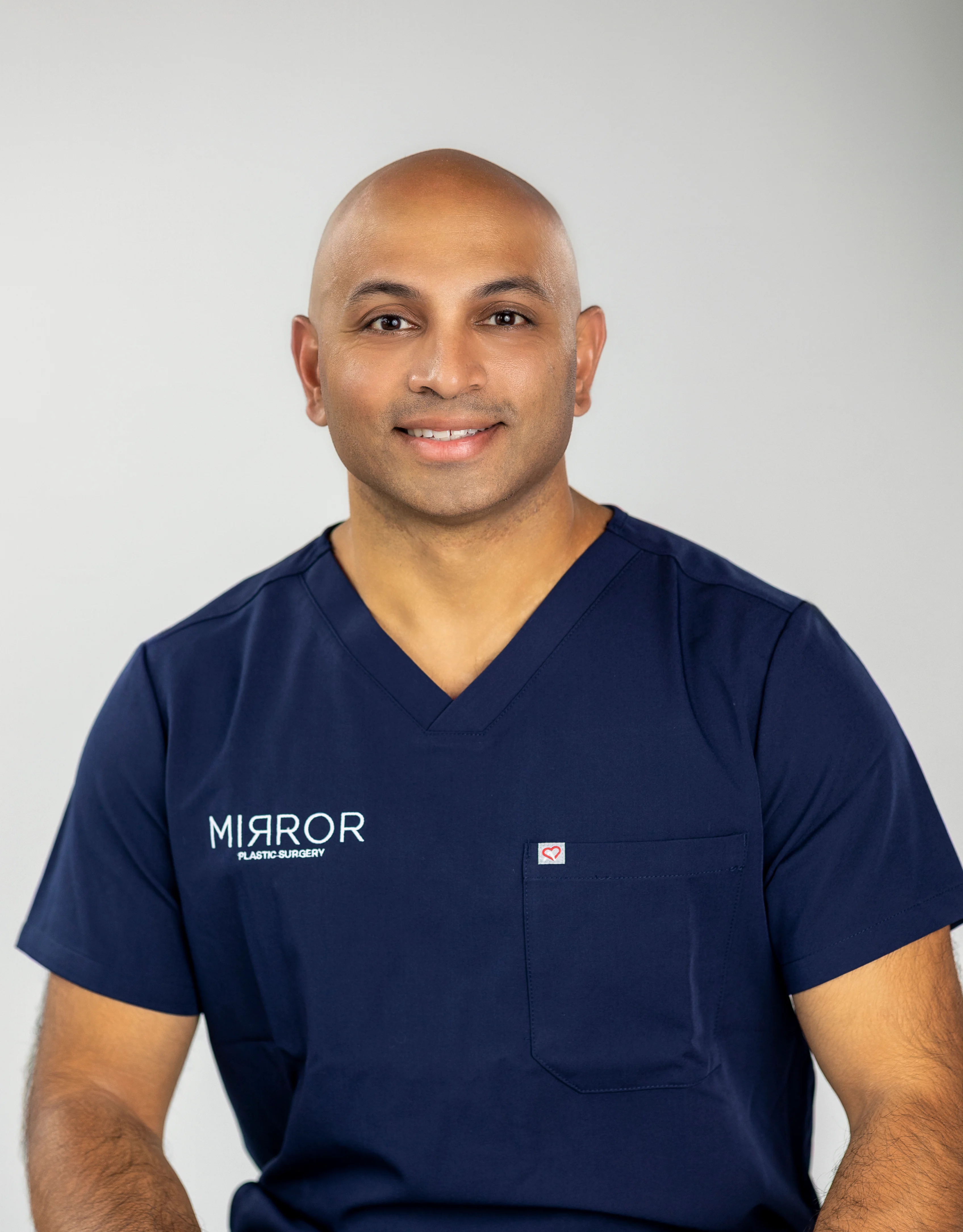
Experience a surgeon-led approach to upper lip filler by booking your consultation.
Frequently Asked Questions
Can You Get Filler Only on the Top Lip?
Upper lip filler can be placed without treating the lower lip. A skilled injector still evaluates overall lip proportion before proceeding. The upper and lower lips exist in relationship to each other, and treating only the upper lip without considering that balance can create a top-heavy look. Expert consensus cites an upper-to-lower lip height ratio of about 1:1.6 to 1:2 as a natural reference point in many patients, while allowing for variation by ethnicity and individual anatomy.
How Long Does Upper Lip Filler Last?
As noted earlier, most lip fillers last 6–18 months, with many maintaining optimal results for around 9–12 months. Products formulated specifically for the lips, such as Restylane Kysse and Juvéderm Volbella XC, often fall within this range in clinical practice. Your metabolism, the volume injected, and lifestyle factors such as exercise, smoking, and sun exposure influence how long results remain visible.
What Is the Most Natural-Looking Lip Filler Technique?
Natural-looking results come from a shape-first, anatomy-driven approach that prioritizes border definition and proportion over sheer volume. This approach sharpens the vermilion border and Cupid’s bow with small, precise deposits and favors vertical height over forward projection. Conservative volumes, as outlined in Step 4, support a subtle, refined outcome. The most reliable predictor of a natural result is an injector who assesses carefully before treating and uses the minimum effective volume.
What Is Lip Filler Migration and How Can You Avoid It?
Migration occurs when filler moves away from the intended injection site and often appears as a blurred or puffy zone above the vermilion border. Overfilling, incorrect injection depth, or placement outside the vermilion boundary commonly contribute. When access occurs in the cutaneous skin above the border, product can track to that point instead of staying within the lip. Avoiding migration requires conservative dosing, precise technique, correct depth, and an injector who understands lip compartment anatomy. Choosing a board-certified plastic surgeon with dedicated lip injection experience offers strong protection against this issue.
The Takeaway
Fixing the upper lip with fillers centers on anatomy, not just volume. Careful work along the vermilion border, Cupid’s bow, and philtrum restores definition, balance, and proportion. Filler can beautifully address a thin upper lip, asymmetry, and a softened Cupid’s bow. Other concerns, such as a long philtrum, gummy smile, or deeply etched lines, often respond better to surgical or resurfacing options.
The upper lip is a delicate, highly mobile structure that moves thousands of times a day. It benefits from a surgeon-level understanding of anatomy rather than a one-size-fits-all approach. The safest and most effective path begins with a thorough consultation with a board-certified plastic surgeon.
Mirror Plastic Surgery is located at 780 4th Ave S, St. Petersburg, FL 33701. To schedule your consultation with Dr. Akash Chandawarkar, book a consultation with Ellie today.
Disclaimer: Results may vary from person to person. Editorial content, before and after images, and patient testimonials do not constitute a guarantee of specific results.
1 Results may vary from person to person. Editorial content, before and after images, and patient testimonials do not constitute a guarantee of specific results.


