
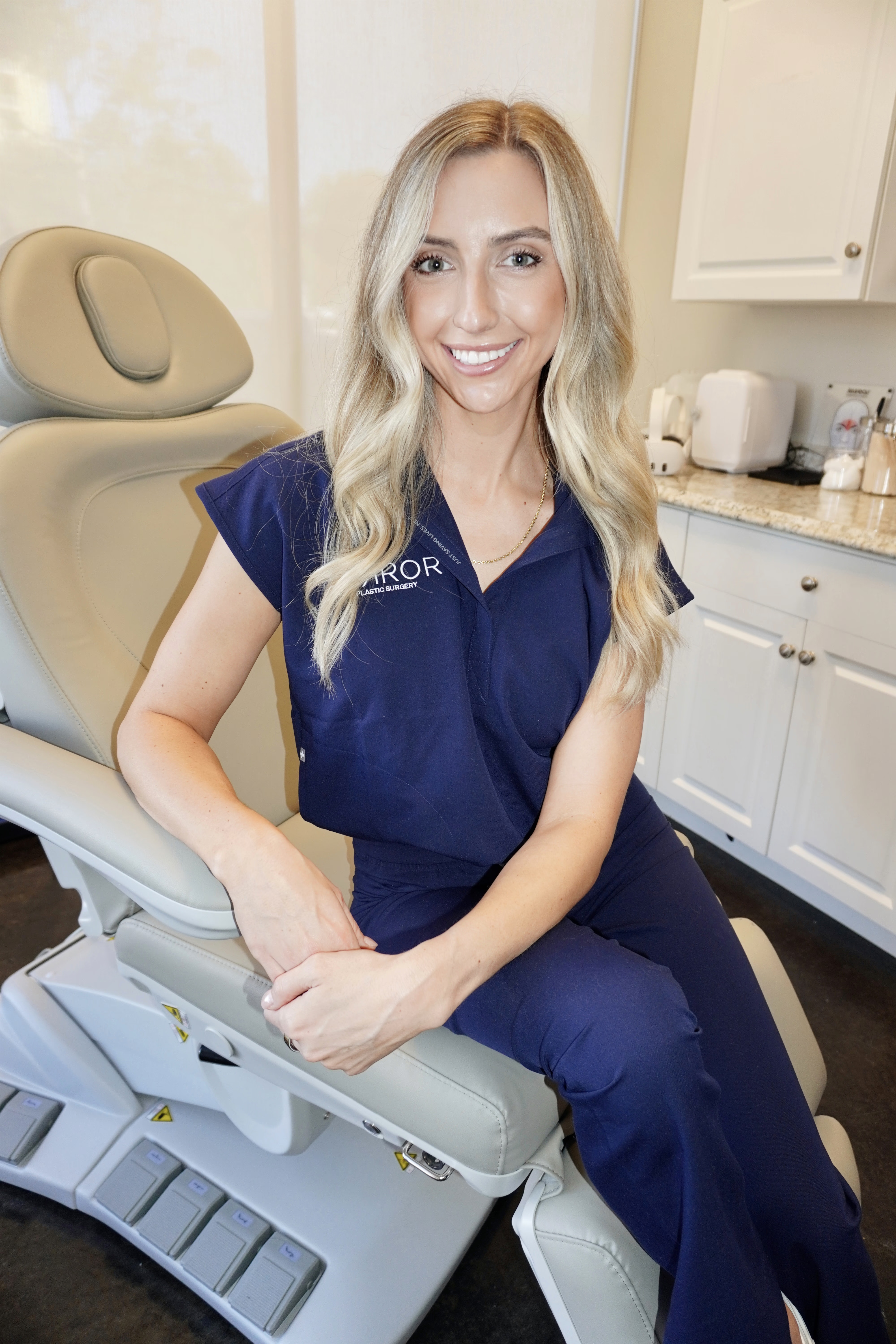
Written by: Ellie Pranckevicius, FNP-BC, Aesthetic Nurse Practitioner & Aesthetic Injector | Facial Restoration & Regenerative Injectable Specialist, Mirror Plastic Surgery | Last updated: July 30, 2026
Florida Filler Safety: What To Know Before You Book
- Florida limits dermal filler injections to licensed MDs, DOs, NPs, PAs, and RNs working under physician delegation. Estheticians and unlicensed individuals cannot inject.
- Compliant practices keep documented physician supervision, written delegation orders, and on-site emergency kits with hyaluronidase for vascular occlusion reversal.
- Single-use syringes, lot tracking, and strict aseptic technique protect you from infection. You should see your product opened in the room.
- Common red flags include Groupon-style deals, mobile or party injections, missing medical director credentials, and no written emergency protocols.
- Schedule a one-hour top-to-bottom assessment with Ellie Pranckevicius, FNP-BC at Mirror Plastic Surgery for protocol-driven, concierge-level injectable care in St. Petersburg.
Your Five-Point Florida Filler Safety Checklist
Before you schedule any dermal filler appointment in Florida, walk through five safety checks. Each one focuses on a specific legal or clinical safeguard that protects you from complications and non-compliant providers. The sections below explain each checkpoint in plain language so you can feel confident asking direct questions.
- Florida Licensing Hierarchy and Supervision Rules – Confirm who is legally allowed to inject and how they are supervised.
- Aseptic Technique and Single-Use Protocols – Check that sterile technique and single-use supplies are non-negotiable.
- Product Authenticity and Lot Tracking – Verify that your filler is genuine and traceable to the source.
- Vascular Occlusion Emergency Kit Requirements – Make sure life- and vision-saving medications are on-site and in date.
- Red Flags Including Groupons and Mobile Injections – Recognize warning signs that a clinic cuts corners on safety.
Each section below walks through one checklist item in detail and gives you specific questions to ask your injector.
Checklist Item 1: Who Can Legally Inject Fillers in Florida?
Licensed estheticians, cosmetologists, medical assistants, and any unlicensed individuals cannot legally inject dermal fillers in Florida under any circumstances. Performing such injections counts as practicing medicine without a license, a third-degree felony under Florida Statute 458.327. Estheticians and non-licensed staff in Florida med spas may perform only non-medical cosmetic services such as facials and superficial peels and are strictly prohibited from injectables, lasers, or any procedure that penetrates the skin or uses prescription products.
The Florida licensing hierarchy for dermal filler injections is clear:
- MD/DO: May inject independently and does not need delegation.
- ARNP/NP: May inject under a written collaborative practice agreement with a supervising physician (Florida Statute 464.012). The physician must remain available by phone or electronic means.
- PA: May inject under a supervising physician’s written delegation agreement (Florida Statute 458.347).
- RN: May inject only under a specific physician order or standing order protocol (Florida Statute 464.003). The physician must be immediately reachable by phone during the injection session.
- Esthetician, medical assistant, unlicensed individual: Prohibited from injecting in all situations.
At Mirror Plastic Surgery, non-surgical injectable treatments are led by Ellie Pranckevicius, FNP-BC, a board-certified Family Nurse Practitioner. Ellie holds a Bachelor’s in Health Science from Boston University, completed a 600-hour hands-on aesthetics licensure program, and earned both her BSN and MSN from the University of South Florida. She spent four years in the Neuroscience ICU at Tampa General Hospital, which sharpened her anatomical knowledge and complication-response skills. Her injectable work is supported by Dr. Akash Chandawarkar, MD, a Harvard-educated physician, Johns Hopkins-trained plastic surgeon, and fellowship-trained aesthetic surgeon at the Manhattan Eye Ear & Throat Hospital (MEETH)/Lenox Hill Hospital, who also completed medical innovation training at Stanford University.
Questions to Ask Your Injector: What is your Florida license type and number? Do you work under a written collaborative practice agreement or delegation order? Who is your supervising physician, and how are they available during your injection sessions?
Once you know your injector is properly licensed and supervised, you can focus on how they handle your products and maintain a sterile environment.
Can an RN Do Botox and Fillers in Florida?
An RN in Florida can administer dermal fillers only when strict supervision and documentation rules are met. A compliant Florida physician delegation order for RN injection must identify authorized providers by name or role, specify exact products and procedure types, define patient selection criteria, set dose parameters, detail supervision and physician availability requirements, list documentation standards, and bear the current Medical Director’s signature and date.
Florida Board of Nursing declaratory statements clarify supervision requirements for RNs who administer injectable cosmetics. An APRN or NP cannot satisfy the supervising physician requirement for RN-administered aesthetic injections. Delegation and direct supervision must come from a physician, not a nurse practitioner.
Many Florida med spas rely on APRN oversight or remote physician supervision, which often fails current expectations. In 2026, AHCA enforcement continued to focus on medical director oversight failures including ghost directors, undocumented chart review, and missing or expired signed protocols.
Questions to Ask Your Injector: If you are an RN, what are the physician supervision arrangements during your injection? Can you show me the signed delegation order that authorizes your specific procedures? Has your medical director reviewed your protocols within the past year?
Checklist Item 2: Aseptic Technique and Single-Use Protocols
Florida med spas using injectable prescription drugs face increasing scrutiny on sourcing from authorized distributors, lot tracking, storage including refrigeration logs, and disposal, following the April 2026 FDA warning letter issued to a Texas med spa. AHCA inspectors expect med spas to produce within the first 10–15 minutes of an unannounced visit the AHCA registration, Medical Director Agreement, current signed treatment protocols, clinical staff license verifications, OSHA bloodborne pathogen training records, and HIPAA policies.
Aseptic technique requirements for dermal filler procedures include several specific steps that reduce infection risk:
- A no-touch technique that reduces activity in the procedure area, checks sterile packs for damage or moisture, confirms all materials are in date, and keeps contaminated equipment out of the clean field.
- Disinfection of patient skin with 2% chlorhexidine gluconate in 70% alcohol before treatment.
- One syringe for one patient only, with no sharing between patients even if product remains. Once opened, remaining filler must be discarded after treatment rather than saved for a future visit.
- Needles, cannulas, and syringes must not be reused between patients and must go into a sharps container immediately after use.
- If any contamination occurs during injection, the provider must stop, change gloves, decontaminate hands, and replace the cannula or needle.
Questions to Ask Your Injector: Will you open my filler packaging in the treatment room so I can verify the product and syringe? How do you dispose of used needles and remaining product? What skin disinfection protocol do you use before injection?
How to Check Florida Medical Director Requirements
Checklist Item 3: Product Authenticity and Lot Tracking
As of May 2026, Florida requires a Florida-licensed MD or DO to serve as medical director for any facility offering medical procedures such as injectables. A Florida med spa medical director must be a Florida-licensed MD or DO in good standing who is actively practicing. The role requires real, not merely paper, supervision, including oversight of clinical protocols, regular chart reviews, and documented availability for consultation.
Patients can verify a Florida medical director’s license at the Florida Department of Health MQA license verification portal. At the February 2026 Florida Board of Medicine meeting, the Florida Society of Plastic Surgeons and the Florida Academy of Dermatology jointly petitioned for a new rule requiring med spa medical directors to prominently display their name, specialty board certification, contact information, and other med spa locations on both the website and a printed waiting-room sign.
Product authenticity and lot tracking give you a clear trail from manufacturer to your chart. Botox and dermal fillers in Florida must be purchased from FDA-licensed distributors and manufacturers, with all purchases made under a licensed prescriber’s DEA or medical license, documented storage requirements including refrigeration temperatures and expiration tracking, and lot numbers recorded in patient treatment notes. Florida med spas must document each injectable session with product name, lot number, expiration, injection sites and doses, provider name and license number, supervising physician availability confirmation, patient response, and post-treatment instructions.
Questions to Ask Your Injector: Can I see your medical director’s name and Florida license number? Where do you source your filler products, and can you show me the lot number for my syringe? How are lot numbers documented in my patient chart?
Vascular Occlusion Signs and Reversal
Checklist Item 4: Vascular Occlusion Emergency Kit Requirements
Dermal fillers carry a significantly higher complication risk profile than Botox, with vascular occlusion able to cause tissue necrosis, blindness, or stroke if not recognized and treated immediately. Early recognition requires immediate action on signs including disproportionate pain, immediate skin blanching, dusky or mottled discoloration, and delayed capillary refill, with any team member empowered to escalate without delay.
A compliant Florida dermal filler clinic maintains an on-site emergency kit designed to address the two most serious acute complications: vascular occlusion and anaphylaxis. The kit must include:
- Epinephrine auto-injectors within expiration for first-line treatment of anaphylactic reactions.
- Hyaluronidase for vascular occlusion reversal to dissolve hyaluronic acid filler and restore blood flow.
- A blood pressure cuff and pulse oximeter to monitor vital signs during a complication.
- Basic first-aid supplies and posted emergency contact numbers to support stabilization and rapid escalation.
- Antihistamines and injectable hydrocortisone as secondary medications for allergic reactions.
- A written vascular-occlusion protocol with a standing order that authorizes immediate administration and lists emergency escalation contacts.
Absence of these protocols is cited by DOH investigators as grounds for fines of $1,000–$10,000 per violation, license suspension, or practice shutdown. Each item in the kit supports a specific step in the emergency response, and the protocol ties those steps into a coordinated plan.
Questions to Ask Your Injector: Do you have hyaluronidase on-site and in date? Can you describe your vascular occlusion response protocol? When did your team last conduct an emergency drill?
Single-Use Needle Protocol for Dermal Fillers
Single-use needle and cannula protocols form a basic safety floor for any filler appointment. Florida-compliant dermal filler programs must maintain a dermal filler injection SOP as part of their documented compliance checklist, subject to AHCA inspector review. A safe dermal filler appointment includes product transparency, clean preparation, single-use syringe protocols (as detailed in the aseptic technique section above), appropriate sterile technique, and clear disposal after treatment.
Patients have the right to watch these safety steps in real time. A compliant practice will open filler packaging in the treatment room upon request so the patient can verify product identity, packaging integrity, and syringe before treatment begins. Single-use items must never be reused, and the provider must use sterile gloves with appropriate hand decontamination before the procedure.
Questions to Ask Your Injector: Will you open my filler in front of me before the procedure? How do you confirm that needles and cannulas are new for each patient? Where is your sharps disposal container located in the treatment room?
Hyaluronidase Emergency Protocol and Red Flags in St. Petersburg
Checklist Item 5: Red Flags Including Groupons and Mobile Injections
The medical director must adopt and sign a specific written hyaluronidase dosing protocol with unit counts per area and repeat intervals before any filler procedures occur, and a documented expiration-tracking process with monthly checks and a restock trigger must be maintained so that no expired hyaluronidase is present during an emergency. The hyaluronidase emergency kit and vascular-occlusion protocol must be approved by the medical director, with the kit checked on a scheduled basis for expiration and restocked before lapsing.
The following red flags suggest a clinic may not meet Florida dermal filler hygiene and safety standards. Print this checklist and bring it to any consultation:
- Injections offered at homes, parties, or non-medical facilities (“injection parties”).
- RNs or ARNPs advertising “independent” injectable services without mentioning physician oversight.
- No documented physician supervision for non-physician injectors.
- No patient medical history taken before treatment.
- Deeply discounted filler offers via Groupon or flash-sale platforms, which often signal high-volume, low-oversight environments.
- Medical director name and credentials not displayed on the website or in the waiting room.
- No documented emergency protocols covering vascular occlusion, anaphylaxis, syncope, infection, or criteria for calling 911.
- Inability to show lot numbers or product sourcing documentation on request.
- Filler packaging not opened in the treatment room.
- Social media advertising that implies greater clinical authority than the provider’s license allows.
Questions to Ask Your Injector: Is your hyaluronidase in date and on-site right now? Can you show me your signed vascular occlusion protocol? When was your emergency kit last inventoried?
Mirror Plastic Surgery: St. Petersburg’s Documented Standard
Every item on the checklist above appears in Mirror Plastic Surgery’s standard operating procedures. Ellie Pranckevicius, FNP-BC, works under a written collaborative practice agreement with Dr. Akash Chandawarkar, MD, whose Harvard, Johns Hopkins, and MEETH training shapes every injectable protocol at the practice. The concierge model gives each new patient a comprehensive, up-to-one-hour top-to-bottom assessment before any treatment is recommended.
Products come only from FDA-licensed distributors, lot numbers are documented in every patient chart, and emergency preparedness protocols are maintained and reviewed by Dr. Akash as medical director. This level of documented oversight matches Florida law and aligns with what sophisticated patients in St. Petersburg and Tampa expect from a modern aesthetic practice.
High-volume practices that perform procedures back-to-back rarely provide the same individualized anatomical assessment, candid communication, and safety infrastructure that Mirror Plastic Surgery treats as a baseline.
To schedule your one-hour top-to-bottom assessment, text or call Mirror Plastic Surgery at 727-361-6515, or visit the practice at 780 4th Ave S, St. Petersburg, FL 33701.
Frequently Asked Questions
Can an esthetician legally inject dermal fillers in Florida?
No. Florida law prohibits estheticians and unlicensed individuals from injecting fillers under any circumstances, and doing so is a third-degree felony. See the licensing hierarchy section above for details on who can inject and how supervision must work.
What supervision does an RN need to inject fillers in Florida in 2026?
In Florida, an RN may administer dermal fillers only under a physician’s written delegation order or standing order that specifies authorized providers by name or role, the exact products and procedure types permitted, patient selection criteria, dose parameters, documentation standards, and supervision arrangements. The physician must be available for supervision during the procedure. Patients receiving injections from an RN should confirm that the supervision protocol is followed and that the informed consent discloses the RN’s participation.
What should a Florida dermal filler clinic’s emergency kit contain?
A compliant Florida dermal filler clinic maintains an on-site emergency kit with supplies for reversal of vascular occlusion and treatment of anaphylaxis, as well as monitoring equipment, first-aid supplies, and emergency contact information. The kit must be accompanied by a physician-signed written vascular occlusion protocol specifying dosing and escalation steps. The medical director is responsible for approving the protocol, and the kit must be checked regularly for expiration and restocked as needed. Absence of these protocols can result in DOH fines, license suspension, or practice shutdown.
How do I verify a Florida med spa’s medical director credentials?
Florida requires any facility offering medical procedures such as injectables to have a Florida-licensed MD or DO serving as medical director in an active, non-nominal capacity. Patients can verify a physician’s license status and specialty at the Florida Department of Health’s MQA license verification portal. A compliant med spa will display the medical director’s name, specialty board certification, and contact information on its website and in the waiting room, a standard now moving toward formal rule after a 2026 petition by the Florida Society of Plastic Surgeons and the Florida Academy of Dermatology. Patients should also ask whether the medical director conducts regular chart reviews, signs current treatment protocols, and is available for real-time consultation during injectable procedures.
What are the biggest red flags when choosing a dermal filler provider in St. Petersburg?
The most significant red flags include injections offered at homes, private parties, or non-medical facilities, providers advertising independent injectable services without disclosing physician oversight, no patient medical history taken before treatment, inability to produce lot numbers or show product sourcing documentation, filler packaging not opened in the treatment room, and deeply discounted offers through flash-sale platforms that reward volume over safety. Additional concerns include no documented emergency protocols for vascular occlusion or anaphylaxis and a medical director whose name and credentials are not publicly displayed. Florida Department of Health investigations are frequently triggered by these indicators. Patients who encounter any of these signs should look for a provider who can demonstrate documented compliance with Florida’s licensing, aseptic technique, product authenticity, and emergency preparedness requirements.
Disclaimer: Results may vary from person to person. Editorial content, before and after images, and patient testimonials do not constitute a guarantee of specific results.