
Written by: Dr. Akash Chandawarkar, Board Certified Plastic Surgeon, Mirror Plastic Surgery | Last updated: September 9, 2026
Key Takeaways
- Peptide therapy lacks FDA approval, so your safety depends on provider qualifications, pharmacy sourcing, and hygiene protocols.
- Patients should confirm physician oversight, 503A or 503B pharmacy sourcing, and USP 797 sterile compounding compliance before treatment.
- CDC safe injection practices and batch-specific Certificates of Analysis help prevent contamination and dosing errors.
- Comprehensive lab screening, clear informed consent, and ongoing physician supervision separate safe providers from high-risk med spas.
- Schedule a consultation to experience physician-led peptide therapy that prioritizes safety and regulatory compliance.
What Are Medical Spa Peptide Therapy Safety Standards?
Medical spa peptide therapy safety standards cover the regulatory, clinical, and hygiene protocols that govern peptide therapy. These include physician oversight, FDA-registered pharmacy sourcing, USP 797 sterile compounding compliance, and CDC safe injection practices.
Because peptides lack FDA drug approval, these standards act as your safety net, and they vary widely between providers. Patients need to evaluate providers actively and ask direct questions. A provider who cannot clearly explain their sourcing, credentialing, and hygiene practices has not earned your trust.
Schedule a consultation to see how physician-led peptide therapy is delivered safely.
The Regulatory Landscape: Who Oversees Peptide Therapy?
The FDA regulates the compounding pharmacies that produce peptides and monitors adverse events through its reporting system. It does not approve peptides as finished drug products for most wellness indications. Two distinct pharmacy categories govern legal peptide sourcing:
- 503A Pharmacies are state-licensed and regulated primarily by state boards of pharmacy. They require a valid, patient-specific prescription before compounding any medication and cannot supply office stock for in-office administration without one. They must follow USP standards, including USP <797> for sterile preparations.
- 503B Outsourcing Facilities register directly with the FDA and can compound in bulk for office use without patient-specific prescriptions, but must comply with current Good Manufacturing Practices (cGMP) under 21 CFR Parts 210 and 211. Only 503B facilities can legally supply office stock for in-office administration.
The regulatory landscape continues to evolve. The FDA’s Pharmacy Compounding Advisory Committee voted in July 2026 to recommend six peptides, including BPC-157, TB-500, and KPV, for the 503A Bulks List. Formal rulemaking may take over a year, and companies face enforcement risk until peptides are formally added.
Florida regulates peptides through existing pharmacy and medical board frameworks rather than peptide-specific statutes, so compliance depends on a provider’s active engagement with evolving federal and state rules. This is why active physician oversight matters. Mirror Plastic Surgery operates under Dr. Akash Chandawarkar, a board-certified plastic surgeon, who ensures full compliance with Florida medical board and pharmacy regulations.
Staff Qualifications: Who Should Prescribe And Administer Peptide Injections At A Med Spa?
Peptide therapy should be prescribed and supervised by a licensed physician (MD or DO), with nurse practitioners or physician assistants working within state scope-of-practice rules. Registered nurses may administer injections under physician delegation, but the initial evaluation, prescription, and ongoing management remain physician-led.
Patients should verify the following before any treatment begins:
- Board Certification in a relevant specialty from a recognized body such as the American Board of Plastic Surgery
- Active State Medical License in the patient’s state of residence
- Documented Experience with peptide therapies and metabolic health
- Commitment To Ongoing Education in functional and integrative medicine
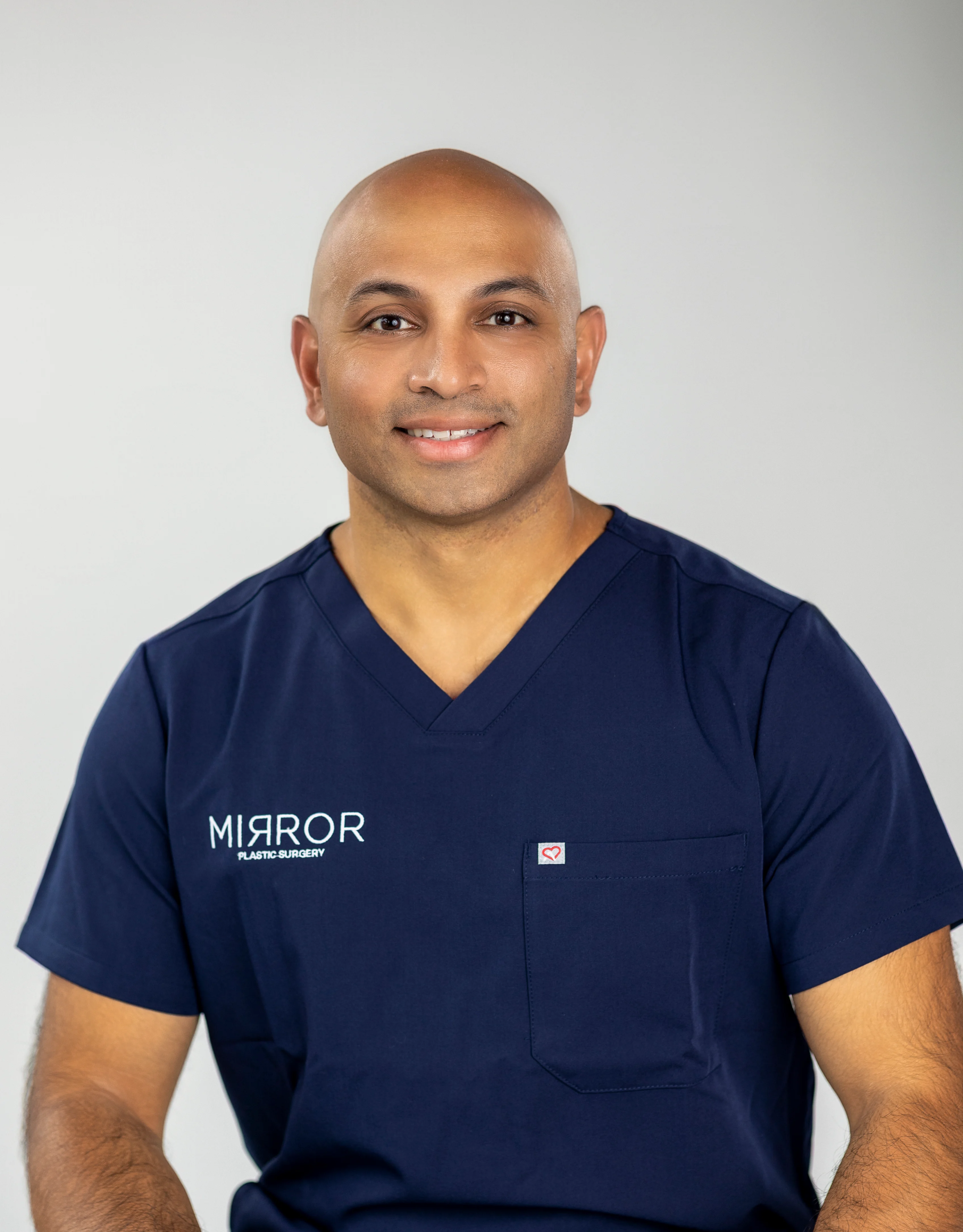
Dr. Akash Chandawarkar, founder of Mirror Plastic Surgery, is a Harvard Medical School graduate, Johns Hopkins-trained plastic surgeon, and Stanford Biodesign Innovation Fellow. He personally leads every peptide protocol at the practice. The most common structural defect in injectables programs is the absentee medical director, a physician who lends a name and signature but never meaningfully participates, a pattern state boards frequently cite in enforcement actions. At Mirror Plastic Surgery, Dr. Akash is present, accessible, and clinically accountable for every patient’s protocol.
Pharmacy Sourcing And Verification: Ensuring Product Quality And Purity
Sourcing often represents the greatest safety gap in peptide therapy. A Texas lab reported that one-third of peptide samples tested fail identity, purity, or quantity checks, and the FDA’s Adverse Event Reporting System includes records of a life-threatening incident and a hospitalization linked to suspected BPC-157 contamination, as well as a physician-reported case of heavy metal poisoning from peptide injectables.
Legitimate providers source exclusively from FDA-registered 503A or 503B compounding pharmacies that conduct third-party batch testing. Use this checklist when evaluating any provider:
- Confirm Pharmacy Certification: Verify the pharmacy holds 503A or 503B status with the FDA or relevant state board.
- Request Certificates Of Analysis: Batch-specific COAs should document purity, sterility, and endotoxin levels for every lot received.
- Verify State Licensure: The pharmacy must be licensed to ship into your state.
- Check Accreditation: PCAB or ACHC accreditation provides independent verification of compounding quality beyond basic licensing.
Peptides labeled “research use only” are treated by the FDA as misbranded unapproved drugs when intended for human use, regardless of labeling. Mirror Plastic Surgery sources peptides exclusively from reputable providers with rigorous batch testing, which supports product quality, purity, and accurate dosing.
Talk to our team about how we verify every batch of peptides we use.
Hygiene And Infection Control: CDC Safe Injection Practices And USP 797 Standards
During any peptide injection appointment, patients should observe the following:
- Hand Hygiene: The provider washes hands and wears gloves before any contact.
- Site Preparation: The injection site is disinfected with alcohol and allowed to dry completely.
- New, Sealed Equipment: A fresh needle and syringe are opened in front of the patient for each injection.
- Single-Dose Vials: Medication is prepared immediately before administration, not pre-drawn, and single-dose vials are used once and never re-entered with a used needle.
- Dedicated Preparation Area: Medications are prepared in a clean area separate from specimen collection or contaminated items.
USP General Chapter <797> governs the environment where compounded sterile preparations are made, requiring ISO-classified cleanrooms, environmental monitoring, and personnel competency testing. The key operational question for any med spa is whether peptides are merely administered there or actually compounded on-site, because compounding triggers full USP 797 obligations. Mirror Plastic Surgery follows CDC and USP 797 guidelines, and Dr. Akash provides detailed self-administration instructions with video demonstrations for at-home protocols.
Patient Screening And Informed Consent: The Non-Negotiables
Thorough medical history review and appropriate lab testing form the foundation of safe peptide therapy. For weight management or inflammatory conditions, Mirror Plastic Surgery reviews thyroid, liver, kidney, diabetes markers, and hormone panels to identify contraindications and tailor protocols.
Informed consent for peptide therapy should include the peptide’s FDA status, potential risks, benefits, and alternatives, documented in writing and signed by the patient before treatment begins. The consent should be updated whenever the treatment protocol changes or the regulatory status of a peptide shifts.
Dr. Akash spends up to an hour in consultation, reviews labs, and explains the physiology behind each recommendation in plain language. This thorough evaluation allows him to decide whether peptides are appropriate for you, because peptides do not fit every clinical picture. A responsible provider will decline treatment when the evidence does not support it.
Red Flags: Warning Signs Of Unsafe Peptide Therapy Providers
Specific patterns signal that a provider has not met the minimum safety threshold for peptide therapy:
- No Physician Involvement or a medical director who never appears on-site
- No Lab Work ordered or reviewed before prescribing
- Vague Sourcing Answers or inability to name the compounding pharmacy
- No Certificates Of Analysis available for the specific batch dispensed
- Pushy Sales Tactics or one-size-fits-all protocols with no individualization
- No Written Informed Consent disclosing the peptide’s FDA status
- Peptides Sourced Online or labeled “research use only”
- Staff Who Cannot Explain who is authorized to inject and under what supervision
If something feels off during a consultation or treatment, pause and reassess. Trust your instincts and seek a second opinion from a board-certified physician.
10 Questions To Ask Before Getting Peptide Therapy
After reviewing the red flags, you can use these questions as a practical checklist. Ask each one directly and pay attention to how clearly and confidently the provider answers.
- Are you a licensed physician, and what are your board certifications?
- Do you personally oversee my treatment, or does another clinician manage my care?
- Which specific peptides do you recommend for me, and what is the clinical rationale?
- Do you require lab testing before starting, and which panels do you order?
- Where do you source your peptides, and are they from a 503A or 503B compounding pharmacy?
- Can you provide batch-specific Certificates of Analysis for the peptides you use?
- What potential side effects and risks have you seen in your own patients?
- How do you ensure sterile injection practices, and will I see new needles and single-dose vials?
- What follow-up and ongoing support do you provide after treatment begins?
- Can you share de-identified patient outcomes or references that reflect your experience?
Why Mirror Plastic Surgery Sets The Gold Standard For Peptide Therapy Safety
Mirror Plastic Surgery applies every standard described in this guide in daily practice. The way the practice is structured creates meaningful safety advantages for patients.
- Physician-Led Care under Dr. Akash Chandawarkar, a board-certified plastic surgeon with Harvard, Johns Hopkins, and Stanford training, who personally directs each protocol.
- Concierge Model with consultations that run up to one hour, allowing time for detailed history, questions, and shared decision-making.
- Personalized Protocols built on the same comprehensive lab analysis described in the screening section, so dosing and peptide selection match your physiology.
- Rigorous Sourcing from reputable compounding pharmacies with batch testing that supports product quality, purity, and accurate dosing.
- 24/7 Direct Access to Dr. Akash via text for ongoing support, questions, and refill coordination.
- Remote Consultations available across the United States, including Hawaii and Alaska, with consistent safety standards.
Clients have experienced reversal of autoimmune conditions such as psoriasis, significant weight loss, improved lipid panels, and enhanced recovery from surgery.1 These outcomes illustrate what medically supervised, safety-first peptide care can achieve.
Conclusion: Your Safety Is Non-Negotiable
Peptide therapy safety rests on three pillars: physician oversight, verified pharmacy sourcing, and strict hygiene standards. In a market growing at 31% annually, with regulation still catching up, your choice of provider determines whether your protocol is safe or risky.
Peptide therapy can help manage inflammation, support weight loss, promote recovery, and address age-related vitality decline when delivered correctly.1 Safe care requires a qualified physician, verified batch-tested compounds, and rigorous injection protocols.
Disclaimer: Peptide therapy is not FDA-approved and results vary. Medical supervision is essential for safe and effective use.
Start your peptide therapy journey with a physician who puts safety first.
Frequently Asked Questions
Can A Med Spa Legally Sell Or Administer Peptides?
A med spa can legally administer compounded peptides when specific conditions are met. A licensed physician must prescribe the therapy based on a valid patient-physician relationship, the peptides must come from a properly licensed 503A or 503B compounding pharmacy, and the administering staff must operate within their state-defined scope of practice under appropriate physician supervision. Med spas cannot purchase peptides from unregulated online vendors, overseas suppliers, or sources labeled “research use only” and then administer them to patients. The legality of any specific peptide also depends on its current FDA compounding status, which is substance-specific and subject to change. A nominal medical director who signs paperwork but never participates in clinical oversight does not meet these requirements, and state medical boards actively investigate and discipline practices that use this model.
What Qualifications Should Med Spa Staff Have To Administer Peptide Injections?
The prescribing provider should be a licensed physician (MD or DO) or, in states that permit it, a nurse practitioner or physician assistant working within their scope of practice and any required collaborative agreement. Registered nurses may administer peptide injections under physician delegation, but they cannot independently prescribe protocols. The supervising physician should conduct a genuine good-faith examination, review medical history, assess contraindications, and document clinical rationale before any injection occurs.
Staff who administer injections should receive training in subcutaneous injection technique, reconstitution procedures, dosing protocols, and adverse reaction management. A certificate of completion from a training course does not replace a medical or nursing license or expand prescribing authority. Patients should ask who will perform their injection, what license that person holds, and what supervision structure applies.
What Is USP 797 And Why Does It Matter For Peptide Therapy?
USP General Chapter <797> is the national pharmaceutical standard that governs the preparation of sterile compounded preparations in the United States. It applies to any entity that prepares sterile injections outside a narrow immediate-use exclusion. For peptide therapy, USP 797 matters because most peptide injectables qualify as compounded sterile preparations. Their preparation must meet requirements for ISO-classified cleanrooms, environmental monitoring, personnel competency testing, and beyond-use dating.
The 2023 revision of USP 797 introduced stricter beyond-use date requirements, enhanced environmental monitoring, and a new Category 1 and Category 2 framework. When evaluating a peptide provider, patients should ask whether the compounding pharmacy supplying their peptides provides batch-specific Certificates of Analysis documenting purity, sterility, and endotoxin levels. These documents serve as practical evidence of USP 797 compliance.
What Are The Risks Of Getting Peptide Therapy From An Unregulated Source?
The risks from unregulated peptide sources are significant and well documented. As noted earlier, independent testing found that one-third of peptide samples fail quality checks, and the FDA has recorded serious adverse events linked to contaminated peptides. Regulatory authorities in Australia have also documented unapproved peptide products causing liver damage, severe allergic reactions requiring hospitalization, and other serious complications.
Unregulated sources provide no dosing guidance, no screening for contraindications, no monitoring for adverse effects, and no accountability when harm occurs. Peptides labeled “research use only” or “not for human consumption” still qualify as misbranded unapproved drugs in the FDA’s view when the intended use is clinical.
How Does Mirror Plastic Surgery Approach Peptide Therapy Differently From A Standard Med Spa?
Mirror Plastic Surgery operates on a concierge medicine model that differs from high-volume med spas. Dr. Akash Chandawarkar, a board-certified plastic surgeon with Harvard, Johns Hopkins, and Stanford credentials, personally leads every peptide protocol. Consultations run up to one hour, during which he reviews the same comprehensive lab panels described earlier before designing any protocol.
Peptides are sourced exclusively from reputable providers with rigorous batch testing. Patients receive 24/7 direct access to Dr. Akash via text for ongoing support, questions, and refills, rather than routing through a call center. For patients who cannot visit the St. Petersburg, Florida location in person, the entire process from consultation to prescription and shipping can occur remotely across the United States. This level of physician involvement, sourcing transparency, and ongoing support represents the standard patients should expect from any peptide therapy provider.
1 Results may vary from person to person. Editorial content, before and after images, and patient testimonials do not constitute a guarantee of specific results.
Peptide therapy is intended for wellness and optimization purposes and is not prescribed to diagnose, treat, cure, or prevent disease unless specifically stated. Many peptides are not FDA-approved and may be used off-label. Some have limited long-term safety data, with a potential for unknown risks, complications, or desensitization with prolonged use.