
Written by: Ellie Pranckevicius, FNP-BC, Aesthetic Nurse Practitioner & Aesthetic Injector | Facial Restoration & Regenerative Injectable Specialist, Mirror Plastic Surgery | Last updated: July 1, 2026
Key Takeaways
- Top semaglutide and GLP-1 providers in 2026 focus on close medical supervision, mandatory lab monitoring, transparent sourcing, and realistic expectations instead of marketing claims.
- High-volume telehealth platforms and direct-to-consumer pharmacies often lack full oversight and verified sourcing, which raises patient risk compared with concierge models.
- GLP-3R offers a newer option that may cause fewer gastrointestinal side effects and better protect muscle than many traditional semaglutide protocols.1
- Patients should confirm eligibility with baseline labs (thyroid, kidney, liver, glucose, lipids) and commit to ongoing monitoring and a structured maintenance plan.
- Mirror Plastic Surgery provides a lab-driven, concierge GLP-3R protocol with direct practitioner access; schedule your consultation today to see whether this approach fits your health profile.
How Different Semaglutide Provider Models Compare in 2026
The table below compares eight provider model types operating in the United States as of 2026. Each model is evaluated using consistent structural metrics: supervision tier (practitioner type involved), lab monitoring inclusion (yes, no, or optional add-on), sourcing transparency (batch-tested documentation available), and personalization level (protocol individualized per lab results versus standardized dosing ramp).
| Provider Model | Supervision Tier | Lab Monitoring | Batch-Tested Sourcing |
|---|---|---|---|
| High-volume telehealth subscription (async) | Automated intake, MD review on file | Optional add-on, not standard | Not disclosed |
| High-volume telehealth subscription (sync) | Brief video consult, MD or NP | Optional add-on, not standard | Varies by platform |
| Direct-to-consumer compounding pharmacy | None | None | Not verified at point of sale |
| Primary care physician (in-person) | MD, ongoing relationship | Standard at baseline, interval varies | FDA-approved branded only |
| Endocrinology or obesity medicine specialist | MD specialist, structured follow-up | Comprehensive, protocol-driven | FDA-approved branded only |
| Medical spa (non-supervised) | Esthetician or unlicensed staff | None | Not disclosed |
| General telemedicine with NP oversight | NP, limited follow-up cadence | Baseline only in most cases | Varies |
| Concierge clinic with lab-driven protocol | Board-certified FNP, ICU-trained, surgeon oversight available | Comprehensive baseline plus ongoing review | Batch-tested, documented |
The table shows a clear pattern. Oversight intensity and sourcing transparency tend to drop as volume and automation increase. High-volume telehealth platforms often focus on subscriber acquisition, and lab monitoring frequently appears as an optional upsell instead of a standard of care. Direct-to-consumer compounding channels carry the highest risk profile because no practitioner reviews contraindications, drug interactions, or metabolic markers before dispensing. Concierge models with mandatory lab review sit at the opposite end of the spectrum, with lower patient volume and higher practitioner time per case, which reflects a deliberate structural choice at this practice. Within these concierge models, the specific compound prescribed matters as much as the oversight structure, so understanding newer options like GLP-3R becomes essential.
GLP-3R as a Newer Option for Weight Loss and Metabolic Health
GLP-1 alternatives in 2026 now include a newer compound class called GLP-3R. This class shares the weight-management and insulin-sensitizing mechanisms of first-generation GLP-1 receptor agonists like semaglutide. It also presents a distinct side-effect and muscle-preservation profile. Traditional semaglutide and tirzepatide protocols are associated with gastrointestinal effects, including nausea, vomiting, and delayed gastric emptying, which drive early discontinuation for many patients. Muscle wasting, driven by rapid caloric restriction rather than fat-selective loss, creates a second concern that standard GLP-1 protocols often fail to address directly.
GLP-3R formulations are reported to produce fewer gastrointestinal symptoms, reduce the likelihood of muscle wasting, and support broader metabolic indications such as insulin resistance management and cardiovascular risk factor reduction.1 These properties make GLP-3R a practical option for patients who stopped semaglutide because of GI intolerance or who have documented concerns about lean mass preservation. Because GLP-3R is a compounded peptide rather than an FDA-approved pharmaceutical, formulation quality depends entirely on the sourcing and batch-testing practices of the prescribing clinic. This reality reinforces why provider selection remains the primary driver of outcome quality.
Mirror Plastic Surgery’s GLP-3R protocol is individualized based on lab results and, when appropriate, stacked with complementary peptides. This approach differs from standardized dosing ramps used in many subscription telehealth models.
Who Typically Qualifies for GLP-3R and Similar Peptides
Candidates for supervised weight loss peptides, including GLP-3R, usually meet the following baseline criteria. This checklist is educational and does not replace a clinical evaluation.
- BMI of 27 or above with at least one weight-related comorbidity such as insulin resistance, hypertension, or dyslipidemia, or BMI of 30 or above without comorbidities
- No personal or family history of medullary thyroid carcinoma or Multiple Endocrine Neoplasia syndrome type 2
- No active pancreatitis or documented history of severe pancreatitis
- No current pregnancy and no planned pregnancy within the treatment window
- Stable kidney and liver function confirmed by recent labs
- No uncontrolled psychiatric conditions that would complicate appetite-suppressive therapy
- Willingness to engage in ongoing monitoring and follow-up appointments
Key lab markers reviewed before starting a GLP-3R protocol often include TSH and free T4 for thyroid function, a comprehensive metabolic panel for kidney and liver function and electrolytes, fasting glucose and HbA1c for glycemic status, and a fasting lipid panel for cardiovascular risk baseline. Hormone panels are added when clinically indicated. These markers serve two purposes. They help rule out contraindications and create a baseline for measuring treatment response over time.
How to Avoid Common Pitfalls with Weight Loss Peptides
GI side-effect management often becomes the main reason patients stop GLP-1 and GLP-3R therapies early. Careful dose titration, which starts at the lowest effective dose and increases in small steps, provides the primary mitigation strategy. Patients who skip titration phases or self-escalate doses without guidance face higher rates of nausea and vomiting. Smaller, lower-fat meals and consistent hydration further reduce symptom severity during the first weeks of therapy.
Muscle preservation requires deliberate attention because rapid weight loss from any cause, including peptide-assisted caloric restriction, can reduce lean mass if protein intake and resistance exercise are not maintained. This risk explains why a supervised protocol sets protein targets relative to lean body mass and tracks adherence. Where lab markers show a need for additional support, the protocol may also stack growth hormone-releasing peptides such as Sermorelin or Ipamorelin to further protect muscle retention.
Post-treatment maintenance functions as a core planning requirement rather than an optional add-on. Metabolic adaptations that drive weight regain after GLP-1 discontinuation are well documented. Patients who stop peptide protocols without a structured maintenance plan, including dietary adjustments, activity targets, and periodic lab review, face a higher risk of weight recurrence. A concierge provider addresses this from the start and not only at the point of discontinuation.
Practitioner Spotlight: Ellie Pranckevicius, FNP-BC
Ellie Pranckevicius is a board-certified Family Nurse Practitioner and the lead practitioner for peptide therapies at Mirror Plastic Surgery. Her academic background includes a Bachelor’s in Health Science from Boston University on the premedical track, followed by both a Bachelor’s and Master’s in Nursing from the University of South Florida. Before completing her NP credentials, Ellie spent four years as a clinician in the Neuroscience ICU at Tampa General Hospital, where she developed advanced competency in metabolic physiology, critical-care pharmacology, and complex patient management in high-acuity settings.
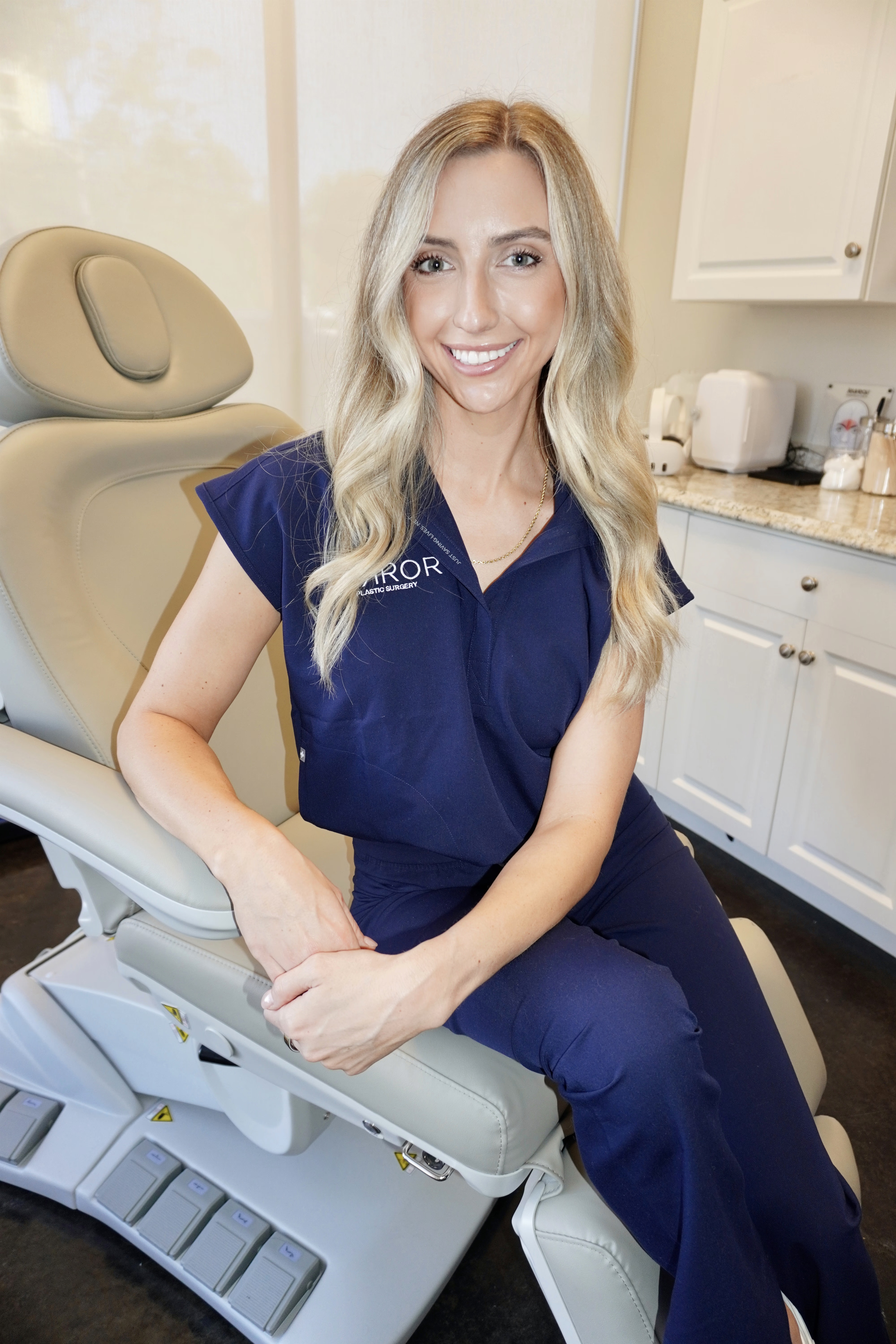
Ellie then built on this foundation at a high-end medical spa in Boston, where she combined formal esthetician training with clinical assessment skills. This dual background in aesthetic practice and advanced nursing gives her an uncommon ability to evaluate both the physiological and aesthetic dimensions of a patient’s goals. Her approach to peptide therapy is explicitly educational. She explains the mechanism behind each recommendation in accessible terms so patients understand the rationale, not just the protocol. She is also known for advising patients against treatments they do not yet need, which reflects a focus on long-term outcomes over short-term revenue. When surgical considerations arise, Ellie’s work is supported by Dr. Akash Chandawarkar, MD, who is Harvard-educated, Johns Hopkins-trained, and fellowship-trained at the Manhattan Eye Ear and Throat Hospital.
Inside Mirror Plastic Surgery’s Lab-Driven GLP-3R Concierge Protocol
Mirror Plastic Surgery’s GLP-3R protocol starts with a 30 to 60 minute consultation with Ellie. During this visit, she reviews a full medical history and either assesses existing lab panels or orders new ones. No protocol begins without confirmed lab data. Peptides are sourced exclusively from compounding pharmacies that meet the batch-testing standard described earlier, and each shipment includes documentation of purity, potency, and accurate dosage.
Protocols are individualized based on lab findings, health history, and patient goals. Where clinically appropriate, GLP-3R is stacked with complementary peptides, such as Sermorelin or Ipamorelin for muscle preservation or BPC-157 for systemic inflammation management. Patients receive detailed reconstitution and self-administration instructions, with video demonstrations available when needed.
Ongoing support functions as true concierge access. Patients communicate directly with Ellie by text message for questions, side-effect management, and refill requests, and they have scheduled telemedicine appointments throughout the protocol. The practice limits its daily patient volume to preserve the quality of this oversight, which creates a structural difference from high-volume telehealth platforms. The protocol is available both in-person at the St. Petersburg, Florida clinic and remotely across all 50 states.
Frequently Asked Questions
Is compounded semaglutide or GLP-3R safe to use?
Compounded peptides, including GLP-3R, are not FDA-regulated, so safety depends heavily on the sourcing and supervision practices of the prescribing provider. The primary risks associated with compounded weight-loss peptides include contamination, inaccurate dosing, and the absence of thorough contraindication screening. When a licensed practitioner prescribes peptides sourced from a compounding pharmacy that provides batch-testing documentation and has reviewed relevant lab markers, the risk profile is substantially reduced. Mirror Plastic Surgery sources exclusively from batch-tested suppliers and requires lab review before starting any protocol.
What happens to weight and muscle mass if I stop the protocol?
Discontinuing a GLP-3R or GLP-1 protocol without a structured maintenance plan usually results in gradual weight recurrence as appetite regulation and metabolic rate return to pre-treatment baselines.1 Muscle mass outcomes depend on whether the protocol included adequate protein intake and resistance exercise throughout treatment.1 A well-designed concierge protocol addresses both variables in advance and builds a maintenance phase into the overall plan instead of treating discontinuation as the endpoint.
How is Mirror Plastic Surgery’s protocol different from a telehealth subscription service?
High-volume telehealth subscription models often rely on automated intake processes, standardized dosing ramps, and optional lab add-ons. Mirror Plastic Surgery requires comprehensive lab review before starting any protocol, individualizes peptide stacks based on those results, and sources from batch-tested compounding pharmacies. The practice also provides direct 24/7 practitioner access via text throughout the treatment period. Daily patient volume remains limited so each patient receives focused clinical attention, which differs from platforms that manage thousands of concurrent subscribers.
Who is not a candidate for GLP-3R weight loss therapy?
Patients with a personal or family history of medullary thyroid carcinoma or Multiple Endocrine Neoplasia syndrome type 2 are not candidates. Active or severe pancreatitis, current pregnancy, and significantly impaired kidney or liver function also represent contraindications. Certain medications may interact with GLP-class peptides. A full contraindication assessment requires a clinical consultation and lab review, which forms the first step in Mirror Plastic Surgery’s intake process.
Can GLP-3R be combined with other peptides?
GLP-3R can be combined with other peptides when clinically appropriate. Mirror Plastic Surgery’s protocol may stack GLP-3R with peptides that address complementary goals, such as growth hormone-releasing peptides like Sermorelin or Ipamorelin to support lean mass preservation, or BPC-157 to manage systemic inflammation associated with metabolic dysfunction. Stacking decisions are based on individual lab results and health history, not a standardized menu. Ellie reviews each combination for interaction risk and adjusts protocols as lab markers change over the course of treatment.
Making an Informed Decision About Your GLP-3R Provider
Selecting a semaglutide or GLP-3R provider in 2026 is a medical decision with meaningful long-term consequences. The provider model determines not only which compound you receive, but also whether contraindications are screened, whether muscle preservation is addressed, whether sourcing is verifiable, and whether a practitioner is available when side effects arise. The provider model comparison presented earlier highlights a core trade-off between accessibility and individualized oversight. Mirror Plastic Surgery’s concierge protocol deliberately chooses individualized oversight, accepting lower patient volume in exchange for the lab review and direct practitioner access that high-volume platforms cannot consistently provide.
Begin your lab-reviewed, individually designed GLP-3R protocol at Mirror Plastic Surgery.
1 Results may vary from person to person. Editorial content, before and after images, and patient testimonials do not constitute a guarantee of specific results.
Peptide therapy is intended for wellness and optimization purposes and is not prescribed to diagnose, treat, cure, or prevent disease unless specifically stated. Many peptides are not FDA-approved and may be used off-label. Some have limited long-term safety data, with a potential for unknown risks, complications, or desensitization with prolonged use.