
Written by: Ellie Pranckevicius, FNP-BC, Aesthetic Nurse Practitioner & Aesthetic Injector | Facial Restoration & Regenerative Injectable Specialist, Mirror Plastic Surgery | Last updated: September 4, 2026
Key Takeaways
- Holistic health looks at your whole life, including physical, mental, emotional, social, and spiritual well-being, instead of isolated symptoms.
- The five pillars of holistic wellness are physical, mental, emotional, social, and spiritual health.
- Evidence-based options include mind-body techniques, body-based therapies, lifestyle changes, and biological tools such as medically supervised peptide therapy.
- Holistic approaches work alongside conventional medicine and have strong research support for chronic disease prevention, mental health, and pain management.
Ready to personalize your wellness plan? Book a consultation at Mirror Plastic Surgery to explore how peptide therapy can support your holistic health goals.
The 5 Pillars of Holistic Health
Many organizations use slightly different wellness models. The National Wellness Institute recognizes six dimensions, and the American College of Lifestyle Medicine identifies six clinical pillars. The five-pillar model below remains a practical starting point for understanding holistic health.
- Physical Health: Support the body through nutrition, movement, sleep, and preventive care. Harvard Health Publishing identifies movement as a “master signal” for health, improving insulin sensitivity, brain health, and bone density at the same time.1 Example practice: regular strength training combined with a whole-food, anti-inflammatory diet.
- Mental Health: Maintain cognitive sharpness, continuous learning, and healthy thought patterns. The intellectual dimension of wellness highlights mentally stimulating and creative pursuits as essential to overall well-being. Example practice: daily reading, puzzles, or learning a new skill.
- Emotional Health: Understand, process, and regulate emotions while building resilience. Emotional wellness includes managing emotions and behaviors, handling stress, and maintaining satisfying relationships. Example practice: journaling or working with a therapist.
- Social Health: Cultivate meaningful relationships and community connection. Social isolation raises the risk of coronary heart disease by about 30% and stroke by 32%, which shows how clinically important this pillar is. Example practice: weekly quality time with friends or family, or joining a club or group.
- Spiritual Health: Find purpose, meaning, and connection to something larger than yourself. The VA’s Whole Health model aligns care with what matters most to each person and asks “what matters to you?” Example practice: meditation, time in nature, or volunteering.
Some models expand to eight pillars by adding environmental, financial, and occupational health. Every version points to the same idea: lasting wellness grows from attention to several connected areas of life.
Holistic Health Practices Across Mind, Body, and Biology
Evidence-based holistic practices often fall into four broad categories.
- Mind-Body Practices: Meditation, yoga, tai chi, breathwork, and mindfulness-based stress reduction (MBSR). MBSR has been tested in over 200 clinical trials, with consistent benefits for chronic pain, anxiety, and immune function, and meta-analyses showing effect sizes of 0.5–0.8 for psychological outcomes.1
- Body-Based Practices: Massage therapy, chiropractic care, and acupuncture. A 2026 umbrella review of 23 systematic reviews found that acupuncture consistently improved pain and physical function in knee osteoarthritis, with effects comparable to nonsteroidal anti-inflammatory drugs.1
- Biological Practices: Nutritional supplements, herbal medicine, and peptide therapy.
- Lifestyle Practices: Sleep hygiene, regular exercise, stress management, and social connection. A 2020 study in The BMJ linked five low-risk lifestyle factors with 10 or more extra years of life expectancy.1
Within biological practices, peptide therapy represents an emerging, science-backed option. Peptides are short chains of amino acids that act as cellular messengers. They can support several pillars at once: physical health by reducing inflammation and supporting weight management, mental health by improving energy and easing anxiety, and aesthetic goals by promoting collagen production to address skin aging.1 Medically supervised peptide therapy relies on comprehensive lab analysis, personalized dosing, and ongoing clinical oversight instead of guesswork with unregulated products.
Schedule a consultation with Ellie at Mirror Plastic Surgery to explore whether peptide therapy belongs in your holistic health routine.
Holistic, Integrative, and Conventional Care: How They Fit Together
Holistic, integrative, and conventional medicine describe related but distinct ideas. Holistic medicine functions as a philosophy of whole-person care rather than a fixed list of treatments. The National Center for Complementary and Integrative Health (NCCIH) defines integrative medicine as a practice style that emphasizes holistic care and includes selected complementary therapies with evidence for safety and usefulness. Conventional medicine focuses on diagnosing and treating specific symptoms or diseases.
Holistic and integrative medicine work alongside conventional care by combining evidence-based standard treatments with complementary approaches. These frameworks align well and often overlap in real-world practice.
Benefits and Evidence: What the Research Shows
Research on holistic approaches is strongest in several key areas.
- Chronic disease management and prevention: The Diabetes Prevention Program showed that a lifestyle intervention combining diet, physical activity, and behavioral support reduced type 2 diabetes incidence more effectively than medication alone.1
- Cardiovascular health: Mediterranean diet trials involving over 7,000 participants demonstrated significant reductions in cardiovascular events, sometimes with effects similar to pharmaceutical interventions.1
- Mental health and stress resilience: Cognitive-behavioral therapy (CBT) and MBSR have strong evidence for depression, anxiety, insomnia, and chronic pain.1
- Pain management: A systematic review of 233 randomized controlled trials found moderate evidence that psychological therapies, MBSR, yoga, acupuncture, and massage improve chronic pain and function in the short term.1
Use of at least one complementary health approach among U.S. adults rose from 19.2% in 2002 to 36.7% in 2022. This shift reflects growing clinical evidence and mainstream acceptance of whole-person care.
How to Build a Personalized Holistic Health Routine
- Assess your current health: Identify your biggest concerns across all five pillars, including physical symptoms, stress levels, relationships, and sense of purpose. Honest self-assessment forms the base of any effective wellness plan.
- Set specific, realistic goals: Choose one or two focus areas instead of changing everything at once. Many people notice measurable shifts in sleep, mood, digestion, or energy within 4–12 weeks of consistent habits.1 and steady consistency usually beats intensity.
- Include practices from each pillar: Build a balanced routine that reaches beyond physical symptoms. A plan that blends movement, stress management, social connection, and purposeful activity often outperforms one that targets only a single dimension.
- Seek professional guidance: Work with practitioners who provide personalized, evidence-based recommendations, especially when you consider advanced therapies. This matters most for people with complex needs such as chronic inflammation, autoimmune conditions, weight challenges, or persistent fatigue, where medical supervision separates informed decisions from guesswork.
The Science-Backed Missing Piece: Peptide Therapy at Mirror Plastic Surgery
Some people reach a point where lifestyle changes help, yet deeper issues remain. For individuals whose holistic health goals extend beyond lifestyle modification, medically supervised peptide therapy can add a targeted biological layer that addresses root causes more directly.1
Mirror Plastic Surgery in St. Petersburg, Florida, offers concierge-level peptide therapy led by Ellie Pranckevicius, FNP-BC, a board-certified Family Nurse Practitioner. Ellie spent four years in the Neuroscience ICU at Tampa General Hospital, which gave her a strong foundation in physiology, metabolic health, and the body’s capacity for recovery. Her combined esthetician training and advanced nursing expertise help her connect aesthetic goals with the clinical science required to reach them safely.
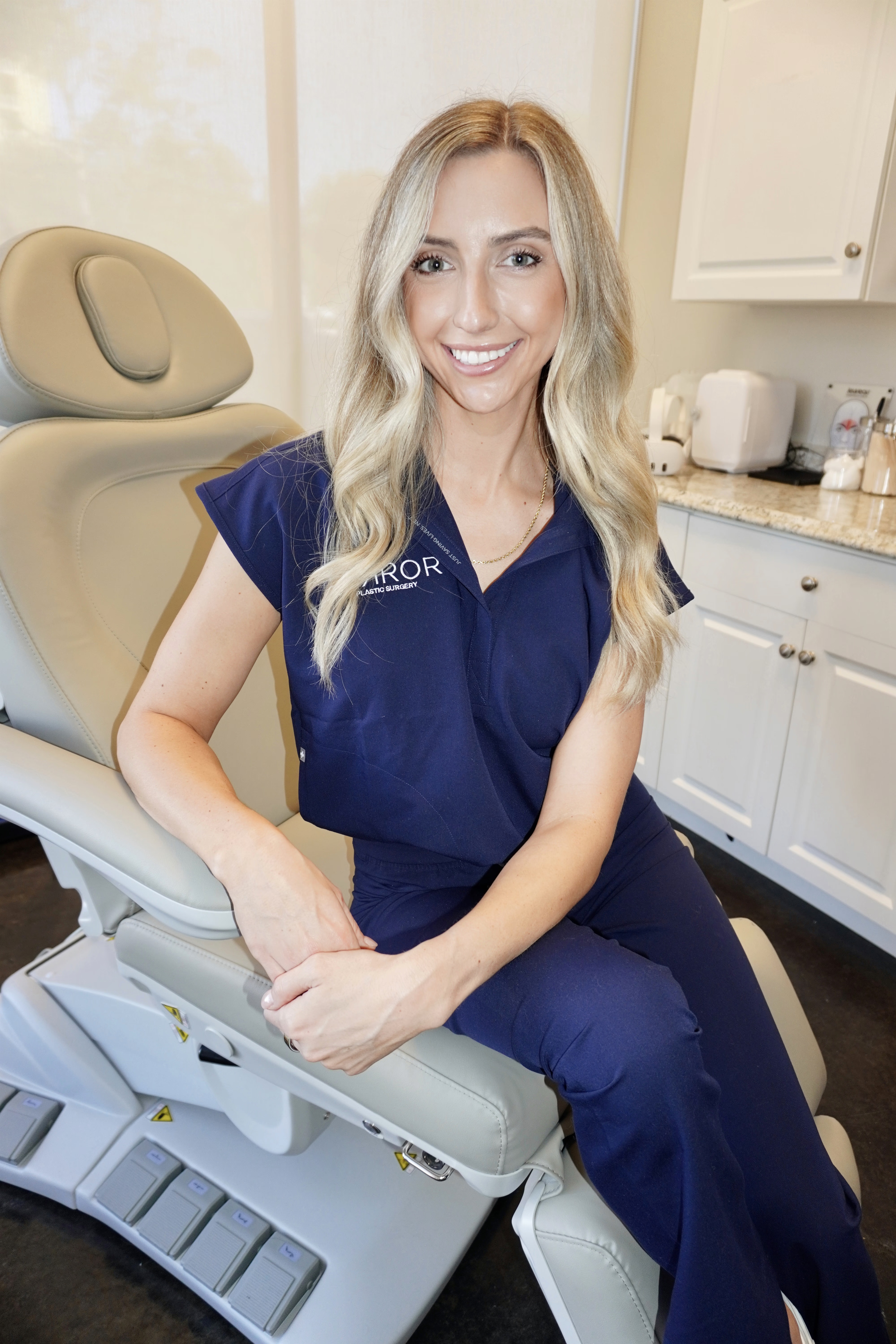
The Mirror Plastic Surgery approach to peptide therapy includes:
- In-depth consultations: 30–60 minute sessions that review medical history, current lab results, and individual health goals.
- Comprehensive lab analysis: Thyroid, liver, kidney, diabetes markers, and hormone panels to uncover root causes instead of only surface symptoms.
- Custom peptide stacks: Protocols tailored to individual physiology. Examples include BPC-157 and TB500 for systemic inflammation, GHK-Cu for collagen and skin health, NAD+ for cellular energy and healthy aging, GLP-3R compounding for weight management, and Selank for anxiety support.1
- Quality assurance: Peptides sourced from reputable providers with rigorous batch testing, which is crucial because many peptides are not FDA-regulated.
- Ongoing concierge support: Direct access to Ellie via text or telemedicine for questions, adjustments, and refills throughout your treatment.
This model contrasts with unregulated online peptide retailers, which often lack quality control, dosing guidance, and medical oversight, and with high-volume telemedicine clinics that rely on rushed consultations and standardized protocols. Ellie regularly advises clients when a service or product is unnecessary for them, and she prioritizes long-term results over short-term revenue.
Book a personalized assessment with Ellie to see how peptide therapy can support your holistic health goals.
Frequently Asked Questions About Holistic Health
To help you apply these ideas in real life, here are clear answers to common questions about holistic health, coverage, examples, and evidence.
Does insurance cover holistic health?
Insurance coverage for holistic services varies widely by therapy and plan. Chiropractic care is covered by about 89% of insurance plans, which makes it the most commonly covered complementary therapy. Acupuncture is covered by roughly 33% of plans, and Medicare Part B covers acupuncture for chronic low back pain within specific session limits. Most other holistic therapies, including massage, nutritional counseling, herbal medicine, and peptide therapy, are usually paid out of pocket. Some services qualify for HSA or FSA use, which can lower costs through pre-tax dollars. Mirror Plastic Surgery offers transparent pricing and can review payment options during your consultation.
What are the 8 pillars of holistic health?
The main article described the five-pillar model of physical, mental, emotional, social, and spiritual health. As mentioned earlier, some frameworks expand to eight pillars by adding environmental, financial, and occupational health. The National Wellness Institute’s six-dimensional model, for example, includes occupational wellness as a distinct category to reflect the role of meaningful work. These variations all reinforce the same message: wellness depends on several interconnected dimensions of life.
What is an example of holistic medicine?
Holistic medicine includes many evidence-based practices. Common examples include acupuncture for chronic pain, mindfulness-based stress reduction (MBSR) for anxiety and depression, yoga for cardiovascular health and flexibility, and nutritional therapy for inflammation and metabolic conditions. Lifestyle medicine programs that combine dietary changes, structured exercise, stress management, and social support rank among the most rigorously studied holistic approaches and show reduced cardiovascular risk and improved glycemic control. Peptide therapy adds a newer biological option that targets cellular pathways involved in inflammation, collagen production, and energy metabolism under medical supervision.
Is holistic health evidence-based?
Holistic health can be highly evidence-based when qualified practitioners use therapies supported by research. The NCCIH evaluates complementary approaches through rigorous scientific investigation, and a substantial body of peer-reviewed studies supports specific holistic practices for specific conditions. Acupuncture has strong evidence for several pain conditions, yoga supports glycemic control and cardiovascular health, and MBSR shows consistent benefits for anxiety, depression, and chronic pain. Working with trained professionals helps you focus on proven options and avoid unregulated or untested treatments.
Conclusion: Bringing Holistic Wellness and Peptide Therapy Together
Holistic health integrates the best of conventional and alternative medicine to address the whole person. Foundational lifestyle practices across the five pillars create the core of any effective wellness strategy. For people aiming to reduce chronic inflammation, manage autoimmune conditions, support healthy weight, address skin aging, or improve energy and mood, advanced biological therapies can add a targeted, science-backed layer of support.1
Mirror Plastic Surgery provides personalized, medically supervised peptide therapy in St. Petersburg, Florida, with remote services available across the United States. Every protocol reflects your individual physiology, lab results, and health goals rather than a generic template.
Ready to take your holistic health to the next level? Start your wellness journey with Ellie at Mirror Plastic Surgery and discover how personalized peptide therapy can help you reach your goals.
727-361-6515 | hello@mirrorplasticsurgery.com | 780 4th Ave S, St. Petersburg, FL 33701 | @mirrorplasticsurgery
Results may vary from person to person. Editorial content and patient testimonials do not constitute a guarantee of specific results. Peptide therapy is intended for wellness and optimization purposes and is not prescribed to diagnose, treat, cure, or prevent disease unless specifically stated. Many peptides are not FDA-approved and may be used off-label. Some have limited long-term safety data, with potential for unknown risks, complications, or desensitization with prolonged use.
1 Results may vary from person to person. Editorial content, before and after images, and patient testimonials do not constitute a guarantee of specific results.
Peptide therapy is intended for wellness and optimization purposes and is not prescribed to diagnose, treat, cure, or prevent disease unless specifically stated. Many peptides are not FDA-approved and may be used off-label. Some have limited long-term safety data, with a potential for unknown risks, complications, or desensitization with prolonged use.