
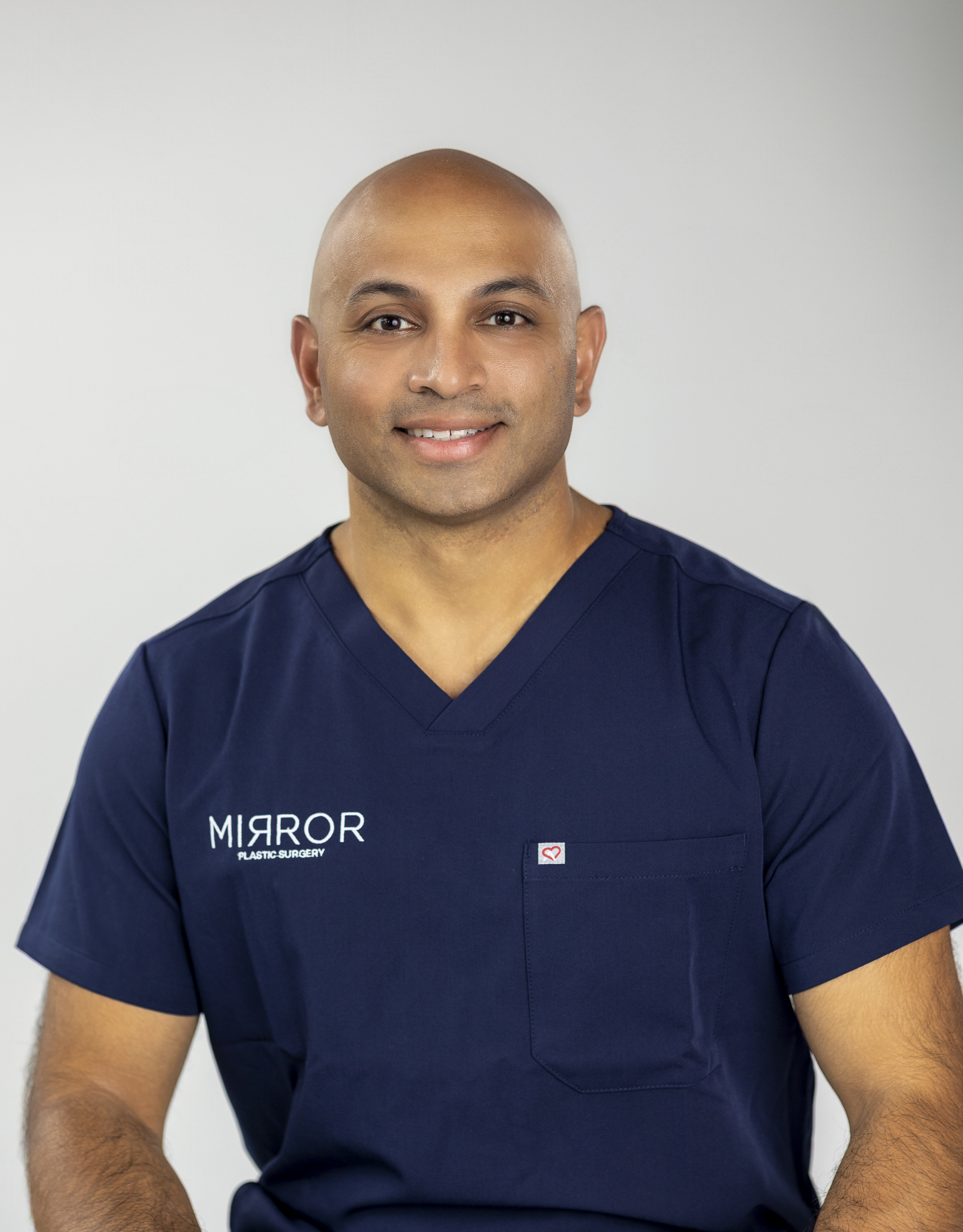
Written by: Dr. Akash Chandawarkar, Board Certified Plastic Surgeon, Mirror Plastic Surgery | Last updated: June 18, 2026
Key Takeaways for Natural-Looking Eyelid Surgery
-
Choosing a board-certified plastic surgeon with ABPS certification, aesthetic fellowship training, and high annual blepharoplasty volume is the single most important factor for natural, function-preserving eyelid results.
-
ABPS certification and active hospital privileges confirm verified surgical competence and create a safety net if complications occur during or after surgery.
-
Over-resection of eyelid skin or fat, skipping brow position assessment, and ignoring volume-preservation techniques are the main reasons eyelids can look hollow, older, or unnatural after blepharoplasty.
-
High satisfaction and low regret rates correlate with thorough preoperative evaluations, deep surgeon experience, and a safety-first philosophy that protects eyelid function as carefully as appearance.1
-
Patients who want subtle, natural eyelid rejuvenation should meet with the team at Mirror Plastic Surgery to confirm credentials and receive a personalized surgical plan.
Choosing the Right Surgeon for Eyelid Surgery
Step 1: Verify ABPS certification and fellowship training before you consider any other credential.
The eyelid is one of the most anatomically complex structures in facial surgery. It controls tear film distribution, protects the cornea, supports peripheral vision, and frames the entire face. A surgeon operating on the eyelid must understand all of these functions at once, not just the cosmetic surface. Selecting a surgeon with ABPS certification, specific blepharoplasty experience, and a portfolio of natural-looking results is the key decision that drives subtle, undetectable outcomes.
The title “cosmetic surgeon” has no standardized credentialing requirement in the United States. Any licensed physician can legally use it. ABPS certification, in contrast, requires completion of an accredited plastic surgery residency, successful written and oral board examinations, and maintenance of hospital privileges. Aesthetic fellowship training, such as programs accredited through the Manhattan Eye, Ear and Throat Hospital (MEETH), adds a focused year of high-volume facial surgery under expert supervision after residency.
Consultation duration reflects a surgeon’s philosophy. A 30-minute visit does not allow time for brow position assessment, eyelid support evaluation, facial asymmetry mapping, and functional visual field screening, all of which belong in a proper upper eyelid workup. Because these evaluations are non-negotiable for safe planning, a minimum 60-minute consultation becomes the standard that separates concierge-level care from volume-driven throughput.
Why Board Certification and Volume Shape Your Results
Step 2: Confirm ABPS certification and hospital privileges, then ask directly about annual blepharoplasty volume.
ABPS certification matters for two main reasons. It establishes a verified baseline of surgical competence and it supports hospital privileges that act as an independent safety net. If a complication occurs in an outpatient surgical suite, an ABPS-certified surgeon with active hospital privileges can transfer and manage that patient within a credentialed hospital system. Surgeons without those privileges cannot offer that same level of backup.
ABPS-certified plastic surgeons who also have aesthetic fellowship training and high annual case volume tend to have lower revision rates than less-experienced operators.1 High-volume mills that schedule five to ten surgeries daily cannot sustain deep, per-patient focus. When a team moves that quickly, preoperative planning gets compressed, intraoperative decisions feel rushed, and postoperative follow-up receives less attention. Each shortcut raises the risk of asymmetry, over-resection, or functional problems.
Facility accreditation provides a parallel layer of safety. The surgical center where your procedure takes place should hold accreditation from the American Association for Accreditation of Ambulatory Surgery Facilities (AAAASF) or an equivalent body. Accreditation confirms that the facility meets standardized requirements for safety, equipment, and staffing that exist independently of the surgeon’s own claims.
Why Some Patients Look Older After Blepharoplasty
Step 3: Learn how over-resection, brow descent, and volume preservation affect your appearance before you consent to surgery.
Excessive removal of upper eyelid skin or fat during blepharoplasty can create hollowing and a tired, prematurely older look. This pattern is the most common anatomical reason patients feel they look worse or older after eyelid surgery than before. The mechanism is straightforward. The periorbital region relies on soft tissue volume for a youthful contour. When too much tissue is removed, the orbital rim shows, the upper lid looks skeletonized, and shadows deepen instead of softening.
Brow descent and forehead tissue pushing downward onto the upper lids can also cause hooding and heaviness that many people blame on extra eyelid skin. A surgeon who treats the lid alone, without evaluating brow position, may remove tissue that was never the main problem. The lid then looks operated on while the true issue, brow descent, remains uncorrected and often continues to progress with time.
Modern blepharoplasty techniques focus on fat repositioning instead of routine fat excision. This approach smooths the tear trough, preserves volume, and lowers the risk of a hollow appearance years later. Fellowship-trained surgeons who perform blepharoplasty consistently each year are trained in these preservation-based methods. Surgeons without that focused volume often rely on older, excision-heavy techniques because they lack the repetition needed to perform repositioning reliably.
Thorough upper eyelid evaluation must include brow position, eyelid support, facial asymmetry, and surrounding facial anatomy. This broader view helps determine whether brow descent or true excess eyelid skin drives a patient’s concerns. A brief consultation cannot cover this level of assessment.
Blepharoplasty Satisfaction and Regret
Step 4: Review satisfaction data and connect lower regret rates to surgeon experience and a safety-first mindset.
Studies using validated instruments show clear improvements in satisfaction after upper eyelid blepharoplasty. One study with independent observers found that upper blepharoplasty can reduce perceived age and improve how others rate attractiveness, success, and health.1
Blepharoplasty consistently ranks among the highest satisfaction procedures in plastic surgery. Results appear quickly, recovery is manageable for most patients, and improvements last for many years. Upper blepharoplasty results typically last 10 to 15 years before a patient might consider revision, while lower blepharoplasty results are often even longer-lasting.1
Regret, when it occurs, usually traces back to one of three issues. The result may look unnatural because of over-resection, a functional complication such as dry eye or ectropion may develop, or expectations may not match the surgical plan. All three risks drop significantly when the surgeon holds ABPS certification, has fellowship training, and performs a high annual volume of blepharoplasty. Revision blepharoplasty costs more than the original surgery and often cannot fully correct a poorly performed initial procedure. Surgeon selection therefore becomes the most consequential decision in the entire process.
Red Flags for Higher-Risk or Unnatural Eyelid Results
The following signs correlate with a higher chance of hollow, asymmetric, or revision-prone blepharoplasty outcomes. Any of these should prompt you to seek a second opinion before moving forward:
-
The surgeon cannot confirm active ABPS certification or hospital privileges at an accredited facility.
-
The consultation is scheduled for less than 60 minutes and does not include brow position assessment, functional visual field screening, or evaluation of the full upper face.
-
The practice operates on a high-volume model, with five or more surgeries per day, which prevents the per-patient focus that safe blepharoplasty requires.
-
The before-and-after gallery shows dramatic, highly visible changes instead of subtle, natural rejuvenation in patients of similar age and anatomy.
-
The surgeon cannot confirm fellowship training in aesthetic facial surgery beyond general plastic surgery residency.
-
Complications such as ptosis, asymmetry, visible scarring, dry eye syndrome, and ectropion occur more often with inexperienced operators, so you should ask directly about the surgeon’s personal complication and revision rates.
Expert Context: Dr. Akash’s Training and Surgical Philosophy
Dr. Akash completed his medical degree through the Harvard-MIT Division of Health Sciences and Technology, graduating from Harvard Medical School with Honors. He then completed a seven-year integrated plastic and reconstructive surgery residency at Johns Hopkins University. After residency, he pursued an aesthetic surgery fellowship at the Manhattan Eye, Ear and Throat Hospital (MEETH), one of the most competitive and specialized facial surgery training programs in the United States.
He also completed the Stanford University Biodesign Innovation Fellowship and has been named to Newsweek’s America’s Best Plastic Surgeons list for two consecutive years, including 2025. At Mirror Plastic Surgery, Dr. Akash performs one to two surgeries per day. This schedule allows him and his team to focus fully on each patient before, during, and after every procedure.
Checklist to Vet Your Eyelid Surgeon
Before you schedule a blepharoplasty consultation, confirm each of the following points:
-
Board certification: Confirm active ABPS certification at the American Society of Plastic Surgeons surgeon finder.
-
Fellowship training: Ask whether the surgeon completed an aesthetic surgery fellowship after plastic surgery residency and at which institution.
-
Before-and-after gallery: Review at least 20 blepharoplasty cases in patients with similar age, skin type, and anatomy. Results should look natural and rested, not obviously operated on.
-
Facility accreditation: Confirm that the surgical center holds AAAASF or equivalent accreditation and that a board-certified physician anesthesiologist will be present.
-
Consultation duration: Confirm that the initial consultation lasts at least 60 minutes and includes evaluation of brow position, eyelid support, and the full upper face, not the eyelid alone.
How Eyelid Surgery Supports Facial Harmony and Function
Safety and function come first in every well-planned blepharoplasty. Eyelid surgery should not be planned in isolation because the eyes sit within a complex facial framework. True harmony appears when the surgeon considers the lids, brow, midface, and lower eyelid-cheek junction together.
When performed correctly, blepharoplasty can improve quality of life in ways that extend beyond appearance. For patients whose upper eyelid skin blocks their visual field, surgery can improve peripheral vision and relieve functional impairment.1 In these cases, blepharoplasty often serves as both a reconstructive and aesthetic procedure. The goal, as current clinical consensus reflects, is a result that looks rested, energetic, and true to the patient’s facial identity, not a result that clearly signals surgery.
Frequently Asked Questions
What is the regret rate for blepharoplasty, and what factors reduce it?
Blepharoplasty has one of the highest satisfaction rates among elective plastic surgery procedures. Regret most often stems from unnatural outcomes caused by over-resection of skin or fat, functional complications such as dry eye or eyelid malposition, or a mismatch between expectations and the surgical plan. These risks drop when the surgeon holds ABPS certification, has completed an aesthetic fellowship in facial surgery, and performs a high annual volume of blepharoplasty cases.
Patients who receive thorough preoperative consultations, including brow position assessment and functional visual field evaluation, report higher satisfaction than those who experience abbreviated evaluations. As noted earlier, upper blepharoplasty results typically last 10 to 15 years, which means a well-performed procedure delivers sustained value over time.
Can patients with Sjögren’s syndrome or pre-existing dry eye safely undergo blepharoplasty?
Sjögren’s syndrome and pre-existing dry eye syndrome require careful evaluation before planning blepharoplasty. Dry eye is the most common temporary side effect after eyelid surgery in the general population and usually lasts two to six weeks. In patients with pre-existing dry eye or autoimmune conditions that affect tear production, the risk of postoperative ocular surface complications rises meaningfully.
A thorough preoperative evaluation by an ABPS-certified surgeon with fellowship training in facial surgery should include a detailed ocular history, assessment of baseline tear film function, and, when needed, coordination with an ophthalmologist. Patients with Sjögren’s syndrome are not automatically excluded from blepharoplasty. They do, however, need individualized risk assessment and conservative surgical planning that protects eyelid closure and corneal safety above all aesthetic goals.
What is the typical recovery timeline after blepharoplasty?
Most patients experience bruising and swelling that peak during the first seven to ten days after blepharoplasty. With advanced techniques and structured recovery protocols, many patients return to social activities within one to two weeks. Final results, including resolution of subtle swelling and scar maturation, continue to improve over three to six months.
Upper blepharoplasty performed as an in-office minor surgery under local anesthesia usually has a shorter recovery than combined upper and lower procedures under general anesthesia. Individual timelines depend on the amount of tissue work, the patient’s baseline healing capacity, and adherence to postoperative instructions such as sun avoidance, cold compresses, and activity restriction during the first week.
What are the primary risk factors for needing revision blepharoplasty?
The main risk factors for revision blepharoplasty include over-resection of skin or fat during the first procedure, failure to evaluate and address brow descent before operating on the upper lid, disruption of lower eyelid support structures that leads to eyelid malposition or rounding, and asymmetry caused by inadequate preoperative mapping. Revision blepharoplasty is more technically demanding than primary surgery because scar tissue alters tissue planes and narrows the margin for additional resection.
Revision also costs substantially more than the original procedure and often cannot fully restore what was lost through aggressive initial surgery. Choosing a surgeon with ABPS certification, aesthetic fellowship training, and a documented record of natural blepharoplasty results remains the most reliable way to avoid revision.
Conclusion: Putting the Checklist Into Action
The core checklist is clear. Confirm ABPS certification through a public database, verify aesthetic fellowship training at a named institution, review a before-and-after gallery that shows natural results in comparable patients, confirm an accredited surgical facility, and insist on a minimum 60-minute consultation that evaluates the full upper face. Surgeons who meet every point on this list are structurally positioned to deliver subtle, function-preserving eyelid results. Surgeons who fall short at any point introduce added risk.
Dr. Akash meets every marker on this checklist, including Harvard-MIT and Johns Hopkins training, MEETH aesthetic fellowship, ABPS certification with hospital privileges, and a one-to-two surgery per day practice model that keeps your procedure at the center of the team’s attention. As a Newsweek-recognized surgeon, he brings the credentials, case volume, and philosophy that natural eyelid surgery requires.
Meet with a Newsweek-recognized expert
1 Results may vary from person to person. Editorial content, before and after images, and patient testimonials do not constitute a guarantee of specific results.