
Written by: Ellie Pranckevicius, FNP-BC, Aesthetic Nurse Practitioner & Aesthetic Injector | Facial Restoration & Regenerative Injectable Specialist, Mirror Plastic Surgery | Last updated: July 11, 2026
Key Takeaways
- Peptide therapy uses short amino acid chains to support skin health, recovery, metabolism, and inflammation control through tailored multi-peptide plans.
- Florida medical spas may offer complex peptide stacks only when a licensed physician or qualified NP writes patient-specific prescriptions from 503A or 503B compounding pharmacies.
- Compliance requires documented good-faith exams, active medical-director oversight, detailed records, and sourcing only from licensed pharmacies.
- Recent FDA actions removed several peptides from restricted lists, yet they remain unapproved and still require physician supervision and close regulatory tracking.
- At Mirror Plastic Surgery, Ellie Pranckevicius, FNP-BC, provides compliant, personalized peptide care under physician oversight. Schedule your consultation today to explore a medically guided protocol.
Direct Answer: When Florida Med Spas Can Offer Complex Peptide Protocols
Florida medical spas may offer complex peptide therapy protocols only when strict conditions are met. A licensed physician or a nurse practitioner working under a valid protocol agreement must issue patient-specific prescriptions. Peptides must come from licensed 503A or 503B compounding pharmacies. Every protocol must follow a good-faith examination, documented clinical rationale, and ongoing monitoring. When any of these elements are missing, complex peptide stacks expose providers to federal enforcement and state disciplinary action.
Start your compliance-first peptide evaluation with Ellie.
Florida Compliance Checklist for Peptide Therapy
This seven-item checklist outlines the core requirements Florida medical spas must meet before offering complex peptide protocols.
- Prescriptive authority confirmed: Under Fla. Stat. §464.012, Florida NPs must prescribe in accordance with established requirements, and autonomous prescribing requires meeting criteria under §464.0123.
- Medical director oversight documented: The medical director of a Florida med spa must be a licensed physician, and non-physicians may own the business entity but may not control medical decisions.
- Good-faith examination and lab review completed: The Florida Department of Health and Board of Pharmacy require a good-faith exam, charted clinical rationale, and monitoring schedule before the first dose of any peptide therapy.
- Compliant sourcing from 503A or 503B pharmacy: Florida providers must source compounded peptides only from licensed 503A or 503B pharmacies, and research-chemical or gray-market suppliers are not acceptable for human use.
- Scope-of-practice boundaries respected: Registered nurses may administer peptides under physician or NP orders but may not independently prescribe or design protocols. Estheticians have no authority over prescription drug administration.
- Records maintained per Florida Board of Medicine standards: Documentation must include diagnosis, treatment rationale, expected outcomes, informed consent, and risks, benefits, and alternatives.
- Malpractice and liability coverage in place: Because most compounded peptides remain unapproved, providers should confirm that malpractice coverage includes off-label compounded drug use and that consent forms reflect current FDA regulatory status.
NP Prescribing Authority for Peptides in Florida
Florida is a restrictive NP state, and that structure shapes peptide prescribing. As noted in the compliance checklist above, Florida law sets specific thresholds for NP prescribing authority. Under Fla. Stat. §464.012, Florida NPs must practice and prescribe within established requirements, which form the legal base for any NP-issued peptide prescription in a med spa.
Autonomous practice is available to Florida NPs who hold an active unencumbered APRN license with no recent disciplinary action under §464.0123. NPs who have not met these criteria must prescribe under a physician protocol agreement for all medications, including peptides.
Even autonomous NPs must operate within a physician-supervised framework in med-spa settings. All non-physician prescribing in Florida med spas must follow the state protocol-agreement structure. The medical director’s role includes active oversight, chart review, and protocol approval.
How Florida Med Spas Legally Source Peptides
Florida med spas rely on two legal sourcing pathways for peptides. 503A state-licensed compounding pharmacies dispense only with individual patient-specific prescriptions, and 503B FDA-registered outsourcing facilities may supply compounded sterile products to healthcare facilities for office use under cGMP standards.
Florida requires out-of-state 503B outsourcing facilities to register with the Florida Board of Pharmacy and submit quarterly compounding logs before shipping compounded peptides to Florida residents. Non-resident pharmacies that ship into Florida must also hold a Florida Board of Pharmacy registration.
Providers should request certificates of analysis, lot numbers, expiration dates, and chain-of-custody records from every supplier. Suppliers that offer prices far below market or ship without prescriptions signal compliance risk.
The 2026 regulatory landscape adds new complexity to sourcing decisions. Effective April 22, 2026, the FDA removed twelve peptides, including BPC-157, TB-500, GHK-Cu, KPV, and Semax, from its Category 2 restricted compounding list. However, removal from Category 2 does not equal FDA drug approval or automatic clearance for 503A compounding. These compounds remain unapproved prescription therapeutics that require physician supervision and sourcing from licensed compounding pharmacies. They become available to compound only after the FDA’s Pharmacy Compounding Advisory Committee recommends them and the FDA formally accepts that recommendation.
Practitioner Perspective: How Ellie Runs Peptide Care
Given these complex sourcing and regulatory requirements, patients benefit from working with a practitioner who understands both clinical care and compliance. Ellie Pranckevicius, FNP-BC, leads peptide therapy and non-surgical aesthetics at Mirror Plastic Surgery in St. Petersburg, Florida. She holds a Bachelor’s in Health Science from Boston University, completed a rigorous aesthetics licensure program, and earned both her Bachelor’s and Master’s in Nursing from the University of South Florida. Four years in the Neuroscience ICU at Tampa General Hospital built a strong foundation in complex physiology, metabolic health, and recovery, which now shapes how she designs and monitors peptide protocols.
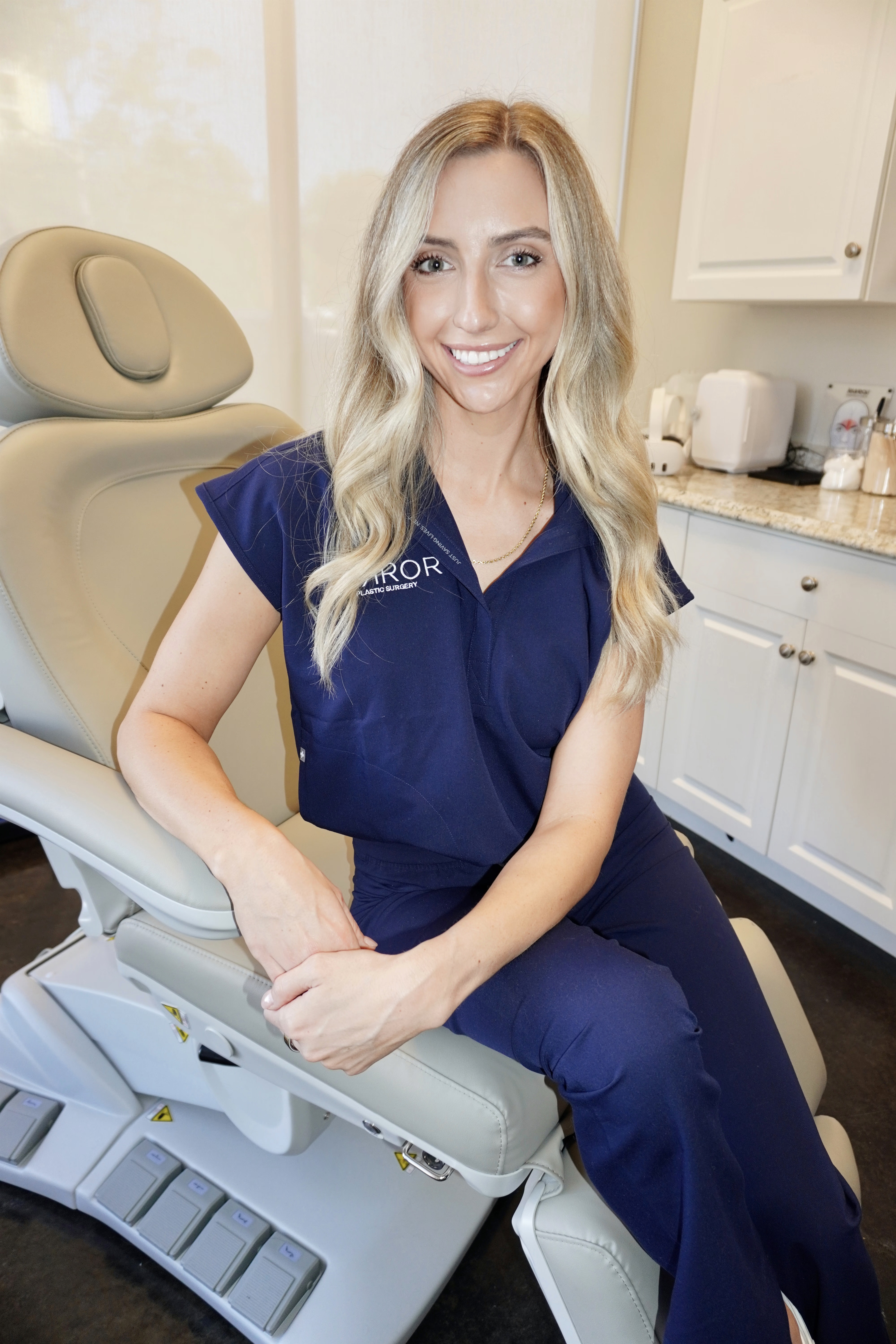
Ellie began her career at a high-end medical spa in Boston and developed deep experience in skin physiology and aesthetic assessment before pursuing NP credentials. That dual background, combining esthetician training with advanced nursing practice, helps her align aesthetic goals with clinical science. Her style centers on education. She explains the physiology behind each recommendation in plain language, tells patients when a service is not yet necessary, and maintains concierge-level access throughout each protocol.
At Mirror Plastic Surgery, Ellie works under the medical directorship of Dr. Akash Chandawarkar, MD, a Harvard-educated, Johns Hopkins-trained plastic surgeon with fellowship training at Manhattan Eye Ear and Throat Hospital and medical innovation training at Stanford University. This physician-NP structure satisfies Florida’s protocol-agreement and medical-director oversight requirements while supporting high-touch patient care.
Work with Ellie to design your custom protocol under physician oversight.
Core Terms in Florida Peptide Compliance
- Complex peptide stack: A protocol that combines two or more compounded peptide products prescribed together to address several physiological targets at once, such as inflammation, tissue repair, and metabolic function.
- Good Faith Exam: A documented clinical evaluation performed by the prescribing practitioner before issuing a prescription. In Florida, this exam must come before the first dose and include diagnosis, treatment rationale, and a monitoring schedule.
- Category 2 peptides: The FDA’s “do not compound” classification for peptides it considers too risky to allow without further review. Removal from Category 2 does not automatically permit compounding.
- Medical director oversight: Active physician supervision of a med spa’s clinical operations, including protocol approval, chart review, and accountability for all prescribing under the practice’s protocol agreements.
How Mirror Plastic Surgery Structures a Compliant Workflow
A compliant peptide protocol at Mirror Plastic Surgery follows these high-level stages.
- Evaluation: A 30–60 minute consultation with Ellie covers medical history, current medications, and health goals. She screens for contraindications and documents informed consent.
- Lab review: Relevant panels, which may include thyroid, liver, kidney, diabetes markers, and hormone levels, are reviewed or ordered to establish a clinical baseline and identify root causes.
- Protocol design: Ellie selects a custom peptide stack based on evaluation findings and lab results. The protocol is written as a patient-specific prescription through a licensed compounding pharmacy.
- Administration instructions: Patients receive clear reconstitution and self-administration guidance, often with video demonstrations, to support safe and accurate use.
- Ongoing monitoring: Ellie offers direct concierge access by text and scheduled telemedicine visits, with follow-up lab review and protocol adjustments when clinically indicated.
2026 Regulatory Landscape for Peptides
Following the April Category 2 removals, the FDA’s Pharmacy Compounding Advisory Committee (PCAC) is scheduled to review seven of those peptides for 503A compounding eligibility on July 23–24, 2026. The agenda includes BPC-157, KPV, TB-500, and MOTS-C on July 23, and Emideltide (DSIP), Semax, and Epitalon on July 24. Five additional peptides removed from Category 2 are scheduled for PCAC review before the end of February 2027.
The PCAC did not recommend the peptides it reviewed in 2024, so the July 2026 outcome remains uncertain. GHK-Cu in topical form moved to the Category 1 list in a May 2026 FDA update, which allows pharmacies to compound it. Injectable GHK-Cu remains off-limits. Sermorelin remains compoundable because it sits outside Category 2 restrictions. Certain growth-hormone-type compounds remain restricted on the FDA’s Category 2 list.
Florida legislative activity adds another layer of change. Florida HB 1429 (2026), which died in the House Health Professions and Programs Subcommittee on March 13, 2026, would have created a licensure framework for medical spas. The bill did not pass, yet its introduction signals likely future efforts to regulate med spas more directly.
Decision-Making Considerations for Med-Spa Providers
Florida med-spa operators and medical directors should connect several key factors before launching or expanding peptide services. First, they must establish reliable sourcing. Batch testing, certificates of analysis, and pharmacy licensure documentation should be on file for every product administered.
That sourcing quality depends on a strong supervision structure. The physician-NP protocol agreement must stay current, site-specific, and actively maintained, not treated as a one-time document. Within that supervised framework, personalization becomes the clinical standard. One-size-fits-all protocols raise both clinical and liability risk, so individualized evaluation and lab review function as best practice and a compliance expectation.
Maintenance planning also matters. Patients need clear explanations that peptide benefits usually require ongoing use, and informed consent should describe what happens if therapy stops. Outcome variability rounds out the picture. Results differ across patients based on genetics, lifestyle, and adherence, so documentation of realistic expectations protects both patient and provider.1
Risks, Limitations, and Common Challenges
Use of investigational peptides outside registered clinical trials carries real uncertainties about product purity, sterility, and dosing consistency, especially when obtained from compounding pharmacies or unregulated suppliers. Side effects vary by compound and patient, and long-term safety data for most compounded peptides remain limited.
Regulatory uncertainty creates its own risk. The April 2026 Category 2 removals produced a transitional period in which several peptides are neither banned nor clearly approved for compounding, which creates a legal gray zone for early adopters. Even if the FDA reclassifies peptides to permit compounding, they remain unapproved drugs because most have not undergone rigorous human safety or efficacy trials.
Unsupervised online sourcing remains the most acute patient safety concern. Products purchased without a prescription from unverified vendors lack quality assurance, dosing validation, and clinical oversight. That combination has contributed to documented adverse events in the broader compounded drug market.
Correcting Common Misconceptions
Two misconceptions appear often among both patients and providers and need clear correction.
First, peptides are not FDA-approved drugs in the usual sense. The FDA regulates peptides as drugs or biologics. Approved peptides have been tested for safety and efficacy, while unapproved peptides remain investigational. Most peptides used in med-spa wellness protocols fall into the unapproved group, which explains the strict sourcing, supervision, and documentation requirements.
Second, not every licensed provider in Florida can independently prescribe and administer complex peptide protocols. Registered nurses, estheticians, and NPs who have not met autonomous-practice thresholds under Fla. Stat. §464.0123 all work within defined scope-of-practice limits. Peptides marketed online as “research chemicals” are typically not FDA-approved, and prescribing them exposes Florida healthcare providers to federal enforcement and state license sanctions.
Frequently Asked Questions
Can a nurse practitioner in Florida independently prescribe peptide protocols without a physician?
Most Florida NPs cannot prescribe independently. Florida law requires NPs to prescribe within a written protocol agreement with a collaborating physician unless they have met autonomous-practice thresholds under Fla. Stat. §464.0123, which include 3,000 clinical hours, no disciplinary action in five years, and specific graduate coursework. In a med-spa setting, a physician medical director must stay actively involved in protocol oversight regardless of the NP’s autonomous-practice status.
What documentation is required before a Florida med spa administers a peptide protocol?
Florida requires a good-faith examination by the prescribing practitioner, a documented clinical rationale that includes the diagnosis, treatment plan, and monitoring schedule, and a signed informed consent that covers risks, benefits, and alternatives. All of this must be completed before the first dose. Lab results relevant to the protocol should be reviewed or ordered as part of the pre-treatment evaluation. Every prescription must be patient-specific, and bulk stocking for general distribution violates 503A requirements.
Are BPC-157 and TB-500 legal to compound and administer in Florida as of mid-2026?
As of July 2026, BPC-157 and TB-500 sit in a transitional regulatory status. Both were removed from the FDA’s Category 2 restricted list effective April 23, 2026, yet that removal does not authorize compounding. They become eligible for 503A compounding only if the FDA’s Pharmacy Compounding Advisory Committee recommends them at the July 23–24, 2026 meeting and the FDA formally accepts that recommendation. Until that process concludes, administering these compounds in a Florida med spa carries meaningful regulatory risk, and providers should consult legal counsel before proceeding.
What is the difference between a 503A pharmacy and a 503B outsourcing facility for peptide sourcing?
A 503A pharmacy is state-licensed and compounds medications based on individual patient-specific prescriptions, and it cannot supply bulk product for general office use. A 503B outsourcing facility is FDA-registered, operates under cGMP standards, undergoes regular FDA inspections, and may supply compounded sterile products to healthcare facilities for office-administered use without patient-specific prescriptions. Florida also requires out-of-state 503B facilities to register with the Florida Board of Pharmacy and submit quarterly compounding logs before shipping to Florida patients. Med spas should obtain FDA registration copies, recent FDA-483 inspection summaries, and certificates of analysis from any 503B supplier.
Will peptide benefits disappear if a patient stops treatment?
In most cases, benefits fade after treatment stops.1 Peptide therapy functions similarly to other health maintenance plans. When the intervention ends, the physiological support it provided usually diminishes over time.1 For example, a peptide that manages systemic inflammation will likely see that inflammation return toward its prior state once discontinued.1 Maintenance protocols often help sustain outcomes achieved during active treatment.1 Ellie Pranckevicius discusses this with every patient at Mirror Plastic Surgery, sets realistic expectations, and designs protocols that match long-term goals rather than short-term results.
Summary: Choosing Safe, Compliant Peptide Care in Florida
Florida medical spas may offer complex peptide therapy protocols when prescriptive authority, medical-director oversight, good-faith examinations, compliant sourcing, and thorough documentation all align. The 2026 regulatory environment, shaped by the April Category 2 removals, the July PCAC review, and ongoing Florida legislative attention, makes staying current on federal and state requirements a core operational task. Patient safety and provider compliance work together in a well-structured practice.
Mirror Plastic Surgery’s model, which combines a board-certified FNP with ICU-level clinical training, physician medical director oversight, individualized lab-based evaluation, and sourcing from reputable licensed compounding pharmacies, shows how compliant, high-quality peptide care can function in daily practice.
Begin your lab-based peptide assessment at Mirror Plastic Surgery in St. Petersburg, Florida.
Disclaimer
The peptides discussed in this article are not FDA-approved drugs for the indications described. This content is for educational purposes and does not constitute legal or medical advice. Regulatory status for specific compounds may change following the FDA Pharmacy Compounding Advisory Committee’s July 2026 review. All peptide therapy at Mirror Plastic Surgery occurs under professional medical supervision in accordance with applicable Florida and federal regulations. Prospective patients and providers should consult qualified legal and clinical counsel before starting any peptide protocol.
1 Results may vary from person to person. Editorial content, before and after images, and patient testimonials do not constitute a guarantee of specific results.
Peptide therapy is intended for wellness and optimization purposes and is not prescribed to diagnose, treat, cure, or prevent disease unless specifically stated. Many peptides are not FDA-approved and may be used off-label. Some have limited long-term safety data, with a potential for unknown risks, complications, or desensitization with prolonged use.