
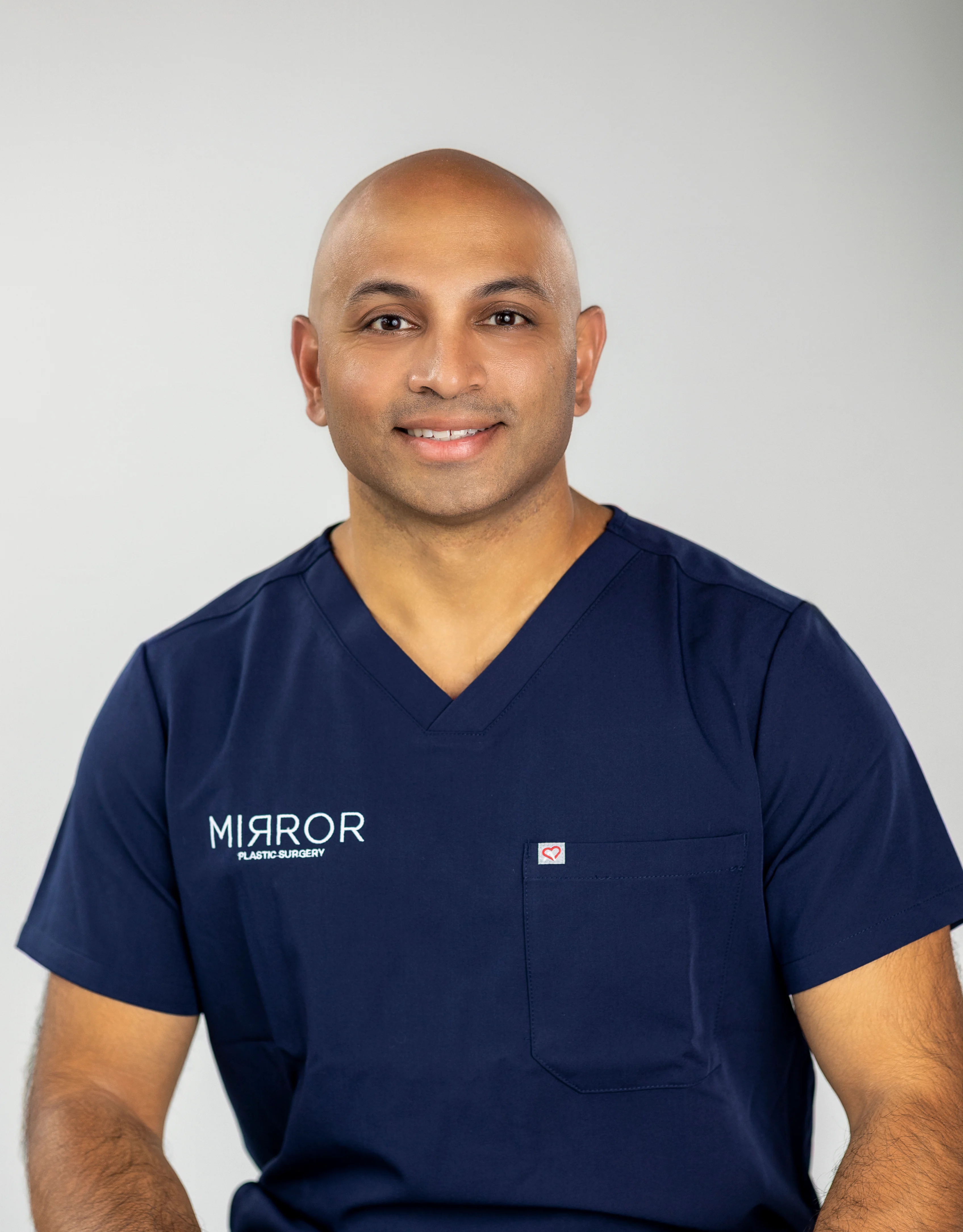
Written by: Dr. Akash Chandawarkar, Board Certified Plastic Surgeon, Mirror Plastic Surgery | Last updated: September 9, 2026
What Is a Concierge Aesthetic Injector?
A concierge aesthetic injector provides highly personalized, unhurried care with extended consultations and a low daily patient volume. At Mirror Plastic Surgery, consultations can last up to an hour, and the practice maintains a strict daily surgical cap to protect quality. The team focuses on your unique anatomy and goals, often performing a full-face assessment, and prioritizes safety and natural results over throughput.
This model contrasts with high-volume med spa care, where ten-to-fifteen-minute appointment slots and rotating injectors are the operational norm. In a concierge practice, the same physician evaluates you, plans your treatment, performs the procedure, and follows up. There are no handoffs and no assembly line.
Key Takeaways
- High-volume med spas often rush patients through 15-minute appointments, which can cause miscommunication, incomplete assessments, and results that age poorly.1
- A true concierge aesthetic injector limits patient volume, offers long consultations, performs full-face assessments, and personally manages every step of care.
- Extended consultations create space for emotional goal discussions, structured diagnostic evaluations, and treatment plans tailored to your anatomy instead of quick sales.
- Red flags include vague answers about credentials, pressure to book multiple areas, and marketing language without clear physician involvement or transparent pricing.
- Experience unhurried, physician-led care by booking a consultation with Ellie at Mirror Plastic Surgery.
Step 1: Why Long Consultations Protect Your Results
A rushed consultation is a clinical liability, not merely an inconvenience. A comprehensive aesthetic consultation follows a structured process that includes rapport-building, medical history review, physical examination, goals discussion, risk disclosure, and documented consent, a sequence that typically takes 45 to 60 minutes. Compressing that into fifteen minutes means something gets skipped, and the skipped step often relates to your safety.
Short consultations often produce miscommunication, incomplete facial assessments, and treatment plans built around what you requested rather than what your anatomy needs. A very short consultation may indicate insufficient evaluation or a sales-driven approach rather than genuine clinical care. A long consultation allows the injector to understand your emotional drivers, assess facial harmony across all zones, and build a plan that supports your long-term goals, not just the area you mentioned at check-in.1
At Mirror Plastic Surgery, consultations can last up to an hour and include a top-to-bottom assessment guided by the practice philosophy of safety first, function second, and aesthetics third. Dr. Akash uses symptom-based severity scales and structured diagnostic frameworks to evaluate each facial zone before recommending any treatment.
Step 2: The Concierge Injector Checklist
Use the following criteria to evaluate any provider you are considering:
- Low patient volume. The injector intentionally limits the number of patients seen per day. Mirror Plastic Surgery maintains a strict surgical cap to preserve focus and safety.
- Long initial consultations. The first visit is unhurried and comprehensive, not a fifteen-minute intake followed by immediate treatment.
- Full-face assessment. The provider evaluates the entire face, including structure, symmetry, and proportion across all zones, such as how the chin aligns with the lips and how the cheeks support the under-eyes.
- Physician-led care. A board-certified plastic surgeon or equivalent expert performs the injections instead of delegating them to non-physician staff.
- Transparent, area-based pricing. Costs are explained clearly by treatment area or plan, without vague per-unit packages that obscure the total.
- Supplier-neutral recommendations. The provider avoids commissions from specific brands and selects products based on your anatomy and goals. For example, Dr. Akash serves on advisory boards for Merz Aesthetics and Tiger Aesthetics, which gives him deep product knowledge without a financial incentive to favor one brand over another.
- Honest communication. The provider is willing to say when a treatment is unnecessary. Mirror Plastic Surgery exemplifies this, and Dr. Akash often advises patients against expensive services they do not yet need.
- Safety-first approach. The practice prioritizes natural results and complication prevention ahead of volume and revenue.
Step 3: Red Flags That Signal a Non-Concierge Model
The following warning signs suggest a provider does not follow a true concierge model:
- Fifteen-minute appointments or promotional “Botox party” events
- High-pressure sales tactics or discounts that require booking multiple areas in one visit
- No thorough facial assessment before treatment begins
- Inability to answer detailed questions about facial anatomy or injection technique
- Injections performed by non-physicians without advanced clinical training
- Vague or evasive answers about who performs the injections and what their credentials are
- Practices that call themselves concierge but still run high patient volumes, or provide access to a physician assistant or nurse practitioner rather than the physician the patient expected
Step 4: Evaluating Cost and Long-Term Value
Concierge injectable care usually carries a higher upfront cost than a high-volume med spa. That cost reflects more of the physician’s time, deeper anatomical expertise, a lower patient volume that allows genuine focus, and a safety infrastructure that high-volume practices rarely maintain.
The cost of a poor outcome, including asymmetry, over-treatment, and complication management, typically exceeds the savings from a cheaper provider. A board-certified plastic surgeon performing your injections brings a surgeon’s command of subdermal anatomy to every placement decision. Mirror Plastic Surgery states that injectable treatments are safer and more precise when performed by a physician with a surgeon’s command of facial and subdermal anatomy. That expertise reduces the probability of complications and the need for corrective treatment, both of which carry their own costs.1
In practical terms, the investment in concierge care pays for quality, safety, and peace of mind across your entire aesthetic journey, including follow-up and long-term planning.
Step 5: Questions To Ask During Your Consultation
Arrive at your consultation prepared with specific questions. Practitioners who welcome detailed questions, explain why they recommend one approach over another, and feel comfortable saying “this treatment is not right for you” are the ones worth trusting. Ask the following:
- How long is the initial consultation?
- How many patients do you see per day?
- Who performs the injections, and what are their credentials?
- Do you assess my whole face or only the area I mentioned?
- How do you decide which products to use?
- What is your approach to achieving natural results?
- Can you explain the risks and benefits in detail?
A provider who deflects, rushes, or gives vague answers to these questions reveals a great deal about their priorities.
Book a consultation with Ellie and bring your full list of questions. Dr. Akash’s extended appointments are designed for this level of conversation.
Step 6: What an Hour-Long Consultation Includes
A true concierge consultation functions as a structured clinical event, not a sales pitch. The consultation forms the foundation of the procedure rather than a brief preamble. At Mirror Plastic Surgery, the process begins with open-ended dialogue that surfaces the emotional drivers behind your desire for treatment. It then moves into a top-to-bottom physical assessment using structured diagnostic frameworks and symptom-based severity scales for conditions such as temporal hollowing.
A defensible consultation record documents the following: indication, suitability reasoning, baseline appearance, examination findings, photographs, options, risks, alternatives, patient questions, written information, consent stage, costs, and follow-up plan. Dr. Akash’s consultations produce this type of record. The result is a personalized, evidence-based treatment plan that prioritizes holistic well-being and reflects your unique anatomy instead of a templated menu of services.
This philosophy guides Dr. Akash’s sequencing, prioritizing foundational restoration before any volume augmentation. That approach helps prevent the “overdone” appearance that often results from isolated, single-area injections performed without a full-face framework.
Step 7: Safety, Risk, and Injector Expertise
Injectable treatments are medical procedures with real risks that directly relate to injector skill and anatomical knowledge. Injectable filler complications, including vascular occlusion, tissue necrosis, and vision loss, are documented in a 2025 review in the Journal of Craniofacial Surgery and are directly linked to injector technique and anatomical knowledge, with danger zones such as the glabella, nose, and nasolabial folds requiring precise knowledge of facial vascular anatomy.
Surveyed dermatologic surgeons reported that between 61% and 100% of the complications they treated originated at med spas. The same review found that skin-tightening complications reached 77% at med spas compared to 0% at physician-run offices.
Biostimulatory fillers like Radiesse, which Dr. Akash uses and advises on as a Merz Aesthetics advisory board member, are not reversible with hyaluronidase, which raises the bar on injector experience, patient selection, and consent. This reality explains why “more is better” and “one-size-fits-all” approaches in high-volume practices are clinically dangerous, not just aesthetically disappointing. A board-certified plastic surgeon brings the anatomical depth needed to avoid these errors from the outset.
Frequently Asked Questions
What Is an Aesthetic Concierge?
An aesthetic concierge is a medical professional or practice that offers highly personalized, low-volume aesthetic care with extended consultation times, direct physician access, and a focus on long-term relationships over transactional visits. The model prioritizes safety, anatomical expertise, and honest communication rather than appointment throughput. At Mirror Plastic Surgery, this means Dr. Akash Chandawarkar personally evaluates, plans, and performs every injectable treatment.
How Many Patients Does a Concierge Doctor See in a Day?
True concierge practices intentionally limit patient volume to protect the quality of care each patient receives. In primary care concierge models, patient panels are typically under 500, compared to 2,000 to 3,000 in traditional practices. In aesthetic medicine, this translates to a strict cap on daily appointments. Mirror Plastic Surgery follows this principle so that no appointment feels rushed and Dr. Akash’s full attention remains available before, during, and after every procedure.
What Are the Biggest Complaints About Concierge Medicine?
The most common criticisms involve cost and perceived exclusivity. Some patients and physicians argue that the model creates a tiered system in which access becomes a premium product. Proponents counter that many contemporary concierge programs target middle-income patients, that the membership fee covers access and time rather than replacing insurance for labs or specialist care, and that the quality of the physician-patient relationship strongly predicts treatment adherence and patient satisfaction. In aesthetic medicine, the higher cost of concierge care is often offset by fewer complications, fewer corrective treatments, and more durable results.1
Is a Concierge Med Spa Worth the Cost?
For patients who prioritize safety, natural results, and a personalized approach, concierge care often proves worthwhile. The higher upfront cost reflects more physician time, deeper anatomical expertise, and a lower risk of complications or revisions, all of which carry their own financial and physical costs when they occur. A board-certified plastic surgeon performing your injections offers a level of anatomical precision that a high-volume, non-physician injector cannot match. The value appears in the immediate result and in the complications you avoid and the corrective appointments you never need.1
How Do I Find a Concierge Aesthetic Injector Near Me?
Use the checklist in this guide as your roadmap. Look for providers who highlight low patient volume, long consultations, full-face assessments, and physician-led injections. Verify credentials through your state medical board’s public database and confirm that the physician who will perform your injections, not a delegated staff member, conducts your consultation. Ask direct questions about patient volume, product selection rationale, and complication protocols. A provider who answers clearly and without defensiveness demonstrates the transparency that defines genuine concierge care.
What Should I Expect During a Long Consultation?
Expect a comprehensive evaluation of your facial anatomy, a discussion of your goals and the emotions behind them, an explanation of treatment options and their risks, and a personalized plan built around your specific anatomy rather than a standard menu. At Mirror Plastic Surgery, this process can take up to an hour and includes a structured top-to-bottom assessment, the use of diagnostic frameworks and severity scales, baseline documentation, and an honest conversation about what is and is not necessary for your situation. You will leave with a clear understanding of the proposed plan and the clinical rationale behind every recommendation.
Your Path to Personalized, Safe Aesthetic Care
Finding a concierge aesthetic injector offering long, personalized consultations means choosing a clinical model designed to protect you through time, expertise, honest communication, and a safety-first philosophy that resists volume pressure.
Mirror Plastic Surgery embodies these principles in every appointment. Dr. Akash Chandawarkar’s surgeon-led, low-volume, extended consultation model reflects a practice built around the belief that every patient deserves unhurried, physician-led care grounded in deep anatomical knowledge and genuine transparency.
Disclaimer: Results may vary from person to person. Editorial content, before and after images, and patient testimonials do not constitute a guarantee of specific results.
1 Results may vary from person to person. Editorial content, before and after images, and patient testimonials do not constitute a guarantee of specific results.