
Written by: Dr. Akash Chandawarkar, Board Certified Plastic Surgeon, Mirror Plastic Surgery | Last updated: June 24, 2026
Key Takeaways
- A Brazilian Butt Lift is a highly individualized procedure that requires a detailed, anatomy-driven surgical plan rather than generic volume promises.
- Thorough preparation, including clear goals, medical history, and lifestyle details, helps you arrive ready for a productive consultation.
- Key disqualifiers such as insufficient donor fat, smoking, or certain medical conditions must be identified early to keep you safe and set realistic expectations.
- At Mirror Plastic Surgery, Dr. Akash uses ultrasound mapping, hour-long assessments, and a safety-first hierarchy to create a customized surgical blueprint for every patient.
- Ready to start your personalized plan? Book a consultation with Dr. Akash at Mirror Plastic Surgery today.
7-Step Checklist: How to Prepare for Your Personalized BBL Consultation
- Document your aesthetic goals. Collect reference images that show proportions you find natural and achievable, not filtered or heavily edited photos.
- Compile your full medical history. Include prior surgeries, current medications, supplements, and any history of blood clotting disorders or cardiovascular conditions.
- Record your weight history. Note any significant fluctuations, since these affect donor fat quality and long-term result stability.
- Note your lifestyle factors. Smoking status, exercise habits, and occupation, especially jobs with prolonged sitting, all influence candidacy and recovery planning.
- Prepare specific questions. Ask about donor site selection, fat processing technique, volume targets, and what happens if fat resorption is higher than expected.
- Identify red flags in advance. Treat it as a warning sign if a surgeon skips a physical exam, cannot explain their fat injection depth protocol, or performs more than two BBLs per day.
- Bring supporting documentation. Recent lab work, imaging from prior procedures, and a written list of goals and concerns streamline the consultation.
Stage 1: Self-Assessment and Realistic BBL Goal-Setting
Durable BBL results start with an honest look at your own anatomy. Skin elasticity, the quantity and distribution of donor fat, skeletal structure, and baseline gluteal muscle volume all shape what is achievable. A patient with limited subcutaneous fat in the abdomen, flanks, and thighs may not have enough donor material for a high-volume transfer. A patient with excellent donor sites but lax overlying skin may need a combined approach that improves skin quality along with volume.
Realistic goal-setting means seeing a BBL as a way to enhance your existing proportions rather than create an entirely new silhouette. Patients who focus on balanced proportions instead of a specific cup size or measurement consistently report higher satisfaction with long-term outcomes.1
Stage 2: Medical and Anatomical Reasons a BBL May Not Be Safe
Several medical and anatomical factors can make a BBL inadvisable or delay surgery. Active smoking impairs wound healing and fat survival. A board-certified plastic surgeon will typically require smoking cessation for a set period before and after surgery. Uncontrolled diabetes, active cardiovascular disease, and bleeding disorders each raise operative risk beyond acceptable thresholds.
Insufficient donor fat is one of the most common anatomical disqualifiers. When total body fat is too low, liposuction cannot yield enough viable adipocytes for meaningful augmentation. Forcing the procedure in that setting risks contour deformities at donor sites without delivering proportional gluteal enhancement. Severely lax gluteal skin can also undermine results because the tissue envelope cannot support transferred volume without additional lifting procedures.
Patients with a history of deep vein thrombosis or pulmonary embolism need individualized risk stratification before any elective body contouring surgery. Identifying these disqualifiers early requires a thorough consultation process that goes beyond surface-level screening. The American Society for Aesthetic Plastic Surgery has published safety advisories that stress fat must be injected into the subcutaneous layer, never into or below the gluteal muscle, to reduce the risk of fat embolism, the most serious complication associated with the procedure.
Stage 3: Inside Mirror Plastic Surgery’s Concierge BBL Consultation
At Mirror Plastic Surgery, the initial BBL consultation functions as an hour-long, top-to-bottom anatomical assessment. Dr. Akash evaluates donor site distribution using in-office ultrasound imaging, which maps subcutaneous fat depth across the abdomen, flanks, lower back, and thighs. This data guides which donor zones will yield the highest-quality fat and how much volume can be harvested safely without creating contour irregularities.
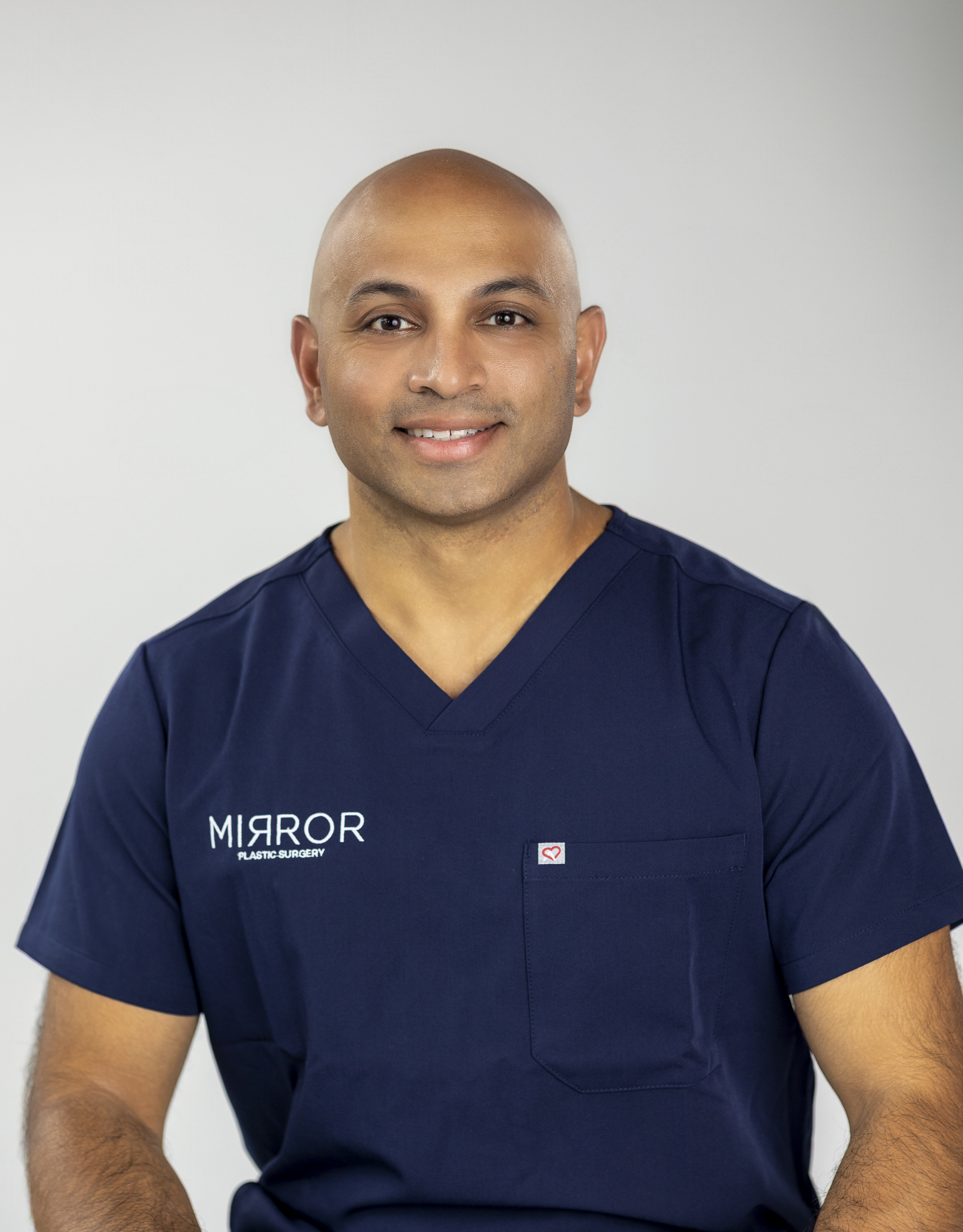
The consultation also includes a functional evaluation of gluteal anatomy. Dr. Akash assesses muscle volume, skin quality, and the relationship between the waist, hip, and buttock proportions. He then aligns goals with anatomy by explaining what your specific tissue can support and why. This level of transparency contrasts with high-volume practices where consultation time is compressed and anatomical nuance often gives way to speed.
Mirror Plastic Surgery limits surgical volume so the team can maintain this depth of attention before, during, and after each procedure. That structural choice supports longer consultations, detailed planning, and closer post-operative monitoring.
Stage 4: Turning Consultation Findings Into Your Surgical Blueprint
The data gathered during consultation, including ultrasound mapping, proportional analysis, goal documentation, and medical history, becomes a written surgical blueprint before you ever enter an operating room. This blueprint begins with donor site sequence, which determines which areas to harvest first based on fat quality mapping. That sequence then guides the liposuction technique, whether traditional, ultrasound-assisted, or laser-assisted, depending on tissue characteristics.
The chosen technique influences the fat processing protocol needed to preserve cell viability. Finally, the blueprint sets injection volume targets by gluteal zone and precise injection depth parameters that keep grafts in the safe subcutaneous plane.
The American Board of Plastic Surgery requires board-certified surgeons to demonstrate competency across the full spectrum of body contouring techniques. Dr. Akash’s Johns Hopkins residency and MEETH aesthetic fellowship provide the anatomical foundation to match each patient with the right technique instead of using a single default approach. At Mirror Plastic Surgery, low-volume, safety-optimized fat transfer with careful subcutaneous placement is the standard.
Stage 5: BBL Recovery Phases and Long-Term Maintenance
BBL recovery unfolds in clear phases. During the first two weeks, patients avoid direct pressure on the buttocks, use a specialized cushion when seated, and manage swelling and bruising at donor sites. Compression garments stay on continuously during this period to support tissue remodeling and reduce fluid buildup.
Weeks three through six mark a transition phase while transferred fat cells establish their blood supply. Fat resorption, the natural process where some transferred cells do not survive, occurs mainly during this window. Final volume usually stabilizes by three to six months after surgery, although individual variation occurs based on metabolic rate, activity level, and adherence to post-operative instructions.1
Long-term maintenance depends on weight stability because transferred fat cells behave like native fat. They shrink with weight loss and expand with weight gain. Significant weight loss after a BBL reduces the volume of transferred fat proportionally, while substantial weight gain can alter the distribution of results by expanding cells unevenly across the treated area. Patients who maintain a stable weight within a moderate range preserve their outcomes most effectively over time.1
Stage 6: Non-Surgical and Alternative Options When BBL Is Not Right
Some patients who want gluteal enhancement are not good surgical candidates, and Mirror Plastic Surgery’s philosophy of honest, unbiased communication means those patients receive clear guidance instead of a sales pitch. AlloClae, an adipose filler performed as an in-office minor procedure, provides structural volume and fat integration for patients who want modest enhancement without general anesthesia or a full surgical recovery. It works especially well for mild volume deficits or targeted hip dip correction.
Biostimulatory fillers and other fat transfer alternatives are available but do not match the structural longevity of a well-executed surgical BBL. Dr. Akash explains each option with its evidence base, limitations, and realistic outcome expectations so you can choose an approach that fits your goals and medical profile.
Key Factors to Compare When Choosing a BBL Surgeon
Surgeon credentials extend beyond basic board certification. Fellowship training in aesthetic surgery, especially at programs accredited by the Aesthetic Surgery Education and Research Foundation, signals advanced, focused training in body contouring beyond general plastic surgery residency. Dr. Akash completed his aesthetic fellowship at the Manhattan Eye, Ear and Throat Hospital, one of the most competitive programs in the country.
Facility accreditation is a non-negotiable safety marker. Accredited surgical facilities meet standardized requirements for equipment, staffing, and emergency protocols. Mirror Plastic Surgery operates within accredited facilities and uses board-certified physician anesthesiologists, not nurse anesthetists working without direct physician oversight.
Daily surgical volume is a meaningful proxy for the attention each patient receives because surgeon time and cognitive bandwidth are finite. Practices performing five to ten BBLs per day cannot provide the same pre-operative assessment depth, intraoperative focus, or post-operative monitoring that a one-to-two-surgery-per-day model affords. The difference is structural, not incidental, since a single surgeon cannot maintain hour-long consultation standards while managing multiple operating rooms.
Book a consultation with Dr. Akash and experience how a concierge surgical model feels from the first appointment forward.
Reader Checklist: Questions, Red Flags, and What to Bring
Questions to ask your surgeon: Ask which injection depth protocol they use and why. Confirm how many BBLs they perform per day. Discuss what happens if you experience higher-than-expected fat resorption. Verify that the surgical facility is accredited and ask who administers anesthesia.
Red flags to avoid: Be cautious with consultations shorter than 30 minutes that skip a physical examination. Question surgeons who cannot explain their fat injection depth rationale. Avoid practices that push package pricing or volume discounts. Walk away from any provider who cannot confirm facility accreditation or anesthesia credentials on request.
Documentation to bring: Bring a complete medication and supplement list, prior surgical records, recent lab work if available, a written goal summary, and reference images that show proportional, unfiltered outcomes.
Frequently Asked Questions
What disqualifies you for a BBL?
The disqualification factors discussed in Stage 2, including insufficient donor fat, active smoking, uncontrolled diabetes, cardiovascular disease, bleeding disorders, and a history of blood clots, are identified during the initial consultation through medical history review and physical examination. Each factor carries specific risk thresholds that guide whether surgery should be deferred, modified, or declined entirely. A thorough consultation with a board-certified plastic surgeon remains the only reliable way to determine candidacy based on your anatomy and health profile.
How painful is a BBL on a scale of 1 to 10?
Pain experience varies by individual, but most patients describe BBL discomfort as moderate, roughly a 4 to 6 out of 10 during the first week.1 Donor sites, or liposuction areas, usually feel more sore than the buttocks themselves. Many patients compare the sensation at donor sites to a deep muscle bruise. Prescribed oral medications manage discomfort, which typically decreases substantially by the end of the second week. Positioning restrictions, such as avoiding direct pressure on the buttocks, often cause more fatigue and inconvenience than pain from the surgical sites. By weeks three and four, most patients report manageable discomfort that does not significantly interfere with light daily activity.
How long do Brazilian butt lifts last?
Fat cells that survive the transfer process and establish a blood supply become permanent residents of the gluteal tissue. The fat that does not survive, usually reabsorbed within the first three months, does not return. Once the surviving fat stabilizes, typically by three to six months after surgery, results can last for many years if the patient maintains a stable weight.1 Significant weight loss reduces transferred fat volume proportionally, while significant weight gain can change distribution. Patients who keep their weight within a moderate range and follow post-operative protocols often report durable results at five and ten years.1 The longevity of a BBL therefore ties closely to lifestyle choices after surgery.
What is the cut-off age for a BBL?
There is no universal upper age limit for a BBL, but age-related factors strongly influence candidacy. Skin elasticity decreases with age, which affects how well the tissue envelope accommodates transferred volume and how smoothly it redrapes after liposuction. Older patients may also carry higher baseline cardiovascular or anesthetic risk that calls for additional pre-operative evaluation. On the lower end, most board-certified plastic surgeons defer elective body contouring until a patient is at least 18 and has reached physical maturity. Overall health status, tissue quality, and realistic goal alignment matter more than chronological age alone, and a thorough consultation evaluates all of these elements together.
What are revision rates for personalized BBL plans?
Revision rates for BBL vary widely based on surgical technique, fat processing quality, injection depth protocol, and patient adherence to post-operative instructions. Anatomy-driven, low-volume approaches that prioritize subcutaneous injection and precise spatial distribution of fat grafts tend to produce more predictable outcomes than high-volume transfers that push tissue capacity. Some patients experience higher-than-expected fat resorption even with excellent technique and may consider a secondary procedure to restore volume. At Mirror Plastic Surgery, the surgical blueprint created during consultation includes a frank discussion of expected resorption ranges and available options if results fall below your goals. Choosing a board-certified surgeon with dedicated aesthetic fellowship training and a low daily surgical volume remains one of the most reliable ways to reduce the likelihood of revision.
Conclusion: How Thoughtful BBL Planning Supports Long-Term Wellness
A personalized Brazilian Butt Lift plan functions as a medical process, not a product. That process starts with honest self-assessment, moves through rigorous anatomical evaluation, and ends in a surgical blueprint that reflects your unique tissue, proportions, and goals. Every stage requires time, expertise, and transparent communication that high-volume, assembly-line practices structurally cannot match.
Mirror Plastic Surgery’s concierge model, with the surgical volume limits established during consultation combined with hour-long assessments, ultrasound donor-site mapping, and a safety-function-aesthetics hierarchy, exists because Dr. Akash believes that the quality of the plan shapes the quality of the outcome. The training foundation described earlier, combined with two consecutive Newsweek America’s Best Plastic Surgeons recognitions, reflects a standard of care that sophisticated patients in the Tampa Bay area expect.
If you feel ready to move from research to a real, individualized plan, the next step is a conversation with someone who can evaluate your anatomy directly.
Book a consultation with Dr. Akash at Mirror Plastic Surgery in St. Petersburg, Florida, and begin building a BBL plan designed around you, not a template.
1 Results may vary from person to person. Editorial content, before and after images, and patient testimonials do not constitute a guarantee of specific results.