
Written by: Ellie Pranckevicius, FNP-BC, Aesthetic Nurse Practitioner & Aesthetic Injector | Facial Restoration & Regenerative Injectable Specialist, Mirror Plastic Surgery | Last updated: September 8, 2026
Key Takeaways
- Muscle repair unfolds in three overlapping stages: inflammation, regeneration, and remodeling, guided by immune cells, stem cells, and growth factors.
- Healing timelines range from a few days for micro-tears to three months or longer for severe tears, and age and health strongly affect recovery speed.1
- Evidence-based strategies such as 1.6–2.2 g/kg daily protein intake, 7–9 hours of quality sleep, strategic hydration, and active recovery help muscles heal more efficiently.1
- Medically supervised peptide therapies like BPC-157 and TB-500 may offer extra support for recovery once core lifestyle strategies are in place.1
The Science Of Muscle Repair: How Muscles Heal
Skeletal muscle makes up approximately 40–50% of total adult body mass, and its self-repair system is highly sophisticated. That repair happens across three overlapping phases.
Stage 1: Inflammation (0–72 Hours)
The inflammatory phase starts immediately after injury. Within 1–3 hours of injury, neutrophils move into the damaged area. They clear necrotic debris and secrete chemokines that recruit circulating monocytes. These monocytes then differentiate into macrophages.
Pro-inflammatory M1 macrophages clear necrotic material and activate satellite cells. Over time, they shift toward reparative M2 phenotypes that secrete trophic factors such as IGF-1 and IL-10. This timely M1-to-M2 transition is essential because macrophage depletion impairs regeneration.
Swelling, redness, and pain during this window are natural and necessary. They signal that the body’s repair machinery is active. The acute inflammatory response usually peaks 48–72 hours after injury and then gradually fades, with severity closely tied to the level of damage.
Stage 2: Regeneration (Days 3–6 Weeks)
As inflammation settles, muscle stem cells take the lead. Within 24 hours of injury, quiescent Pax7+ satellite cells activate and begin co-expressing Pax7 with myogenic regulatory factors such as MyoD and Myf5. This change commits them to the myogenic lineage.
By about 4–7 days post-injury, new myotubes that express embryonic myosin heavy chain appear. These early fibers start to contract, which shows that regeneration is underway.
Growth factors coordinate this entire process. HGF is one of the earliest signals that activates quiescent satellite cells. FGF-2 promotes satellite cell proliferation, and IGF-1 supports myoblast differentiation, survival, and hypertrophy. In contrast, TGF-β1 pushes repair toward scar formation by promoting fibroblast activation.
At the same time, new blood vessels grow into the repair site to deliver oxygen and nutrients. This angiogenesis is critical because regenerating tissue has high energy demands.
Stage 3: Remodeling (Weeks To Months)
The final maturation and remodeling phase lasts one to three weeks. During this time, new myotubes mature into functional muscle fibers. Additional myoblasts fuse with nascent myotubes and surviving injured fibers, and the extracellular matrix remodels to restore muscle architecture.
Controlled loading and progressive exercise during this window help new fibers organize properly. Skipping this step is a common reason athletes experience re-injury. For a deeper look at tissue regeneration at the cellular level, explore our overview of tissue regeneration and what supports it.
How Long Does Muscle Repair Take?
Muscle healing timelines vary based on injury severity, muscle group, age, and overall health. The ranges below reflect typical recovery windows.
- Micro-Tears (DOMS): Delayed-onset muscle soreness usually peaks at 24–72 hours and resolves within 2–5 days.
- Grade I (Mild Strain): Mild injuries often heal in about two weeks, with a median lay-off of roughly 13 days for minor partial tears.
- Grade II (Moderate Strain): Moderate injuries average about 32 days.
- Grade III (Severe Tear): Severe muscle tears typically take 3 months or longer to heal and may require surgical repair.
Age significantly affects muscle regeneration because satellite cell numbers and responsiveness decline, and IGF-1 levels drop. These changes are one reason a personalized, medically supervised recovery plan becomes more valuable in your 30s, 40s, and beyond.
What Helps Repair Muscles Quickly?
Several practical strategies have strong evidence for speeding muscle recovery.
- Prioritize Protein Intake: Aim for about 1.6–2.2 g/kg/day of protein during rehabilitation. Use the higher end if you are reducing activity or calories. Spread that intake across 3–5 meals of roughly 0.25–0.40 g/kg per meal. This pattern repeatedly stimulates muscle protein synthesis. For a 180-pound (82 kg) person, that works out to about 33 grams of protein per meal.
- Optimize Hydration: After exercise, rehydrate with about 125–150% of the fluid volume lost through sweat. Include sodium when sweat losses are heavy so your body retains the fluid you drink.
- Get Adequate Sleep: Growth hormone, which supports tissue repair and muscle development, is released mainly during deep sleep. The largest surge occurs during the first bout of slow-wave sleep. Most adults benefit from seven to nine hours of quality sleep per night.
- Incorporate Active Recovery: Active recovery at about 80% of lactate threshold clears lactate from blood faster than complete rest. A 15–20 minute walk, easy swimming, or light yoga increases blood flow to sore muscles without adding significant training stress.
- Consider Targeted Supplements: Creatine monohydrate (3–5 g/day maintenance) and omega-3 fatty acids (EPA+DHA at about 2–4 g/day) are context-dependent adjuncts. In the right setting, they may support recovery.
Key Vitamins For Muscle Repair
Vitamin D is one of the most impactful vitamins for muscle repair because its active form triggers the Akt/mTOR signaling pathway in muscle cells. This is the same pathway that protein and insulin activate to stimulate muscle protein synthesis. In supplementation studies, people taking 4,000 IU of vitamin D3 daily recovered maximum strength faster after muscle-damaging exercise.1
Vitamin C supports collagen synthesis and connective tissue integrity. However, very high doses of vitamin C and E around workouts can blunt muscle growth by reducing activity in key growth-signaling pathways. Moderate intake is a better fit for long-term progress.
What To Drink For Muscle Recovery
Water remains the primary recovery drink and supports circulation, cellular function, and nutrient delivery to healing tissue. Tart cherry juice is one of the few whole-food options with consistent evidence for reducing exercise-induced soreness. A common approach is two servings daily, starting several days before a hard training session and continuing for a few days afterward.
Protein shakes help you meet daily protein targets when whole-food intake falls short. They provide the amino acids your muscles need for repair and growth.
Advanced Muscle Repair: The Role Of Peptide Therapy
Peptides are short chains of amino acids that act as signaling molecules and direct cells to carry out specific tasks. These tasks include tissue repair, new blood vessel growth, and modulation of inflammation. For people who already have strong recovery habits and want additional support, medically supervised peptide therapy can be a next-level option.
BPC-157 (Body Protective Compound)
BPC-157 is a 15-amino-acid peptide derived from a gastric protein and has been studied extensively in preclinical models for soft tissue healing. BPC-157 appears to influence all three phases of muscle healing. It reduces excessive inflammatory infiltrate during the destruction phase, enhances angiogenesis during repair, and reduces fibrosis while improving fiber organization during remodeling.
In a 2008 rat crush injury model, muscles treated with BPC-157 showed faster healing at 72 hours.1
TB-500 (Thymosin Beta-4)
TB-500 is a synthetic fragment of thymosin beta-4, a peptide found in nearly every cell in the body. Thymosin beta-4 binds monomeric actin at a 1:1 ratio and prevents premature filament formation. This regulation of the cytoskeleton supports cell migration, adhesion, and tissue remodeling.
In rodent models of skeletal muscle injury, thymosin beta-4 sped up muscle fiber regeneration.1
Why Medical Supervision Matters For Peptides
The gray market for peptides carries serious safety risks. A 2024 JMIR analysis of gray-market injectable peptides found actual purity of only 7.7 to 14.37 percent against a claimed 99 percent. Every sample contained endotoxin, and roughly 59–64 percent failed basic visual quality checks.
Endotoxin contamination can cause fever, sepsis-like reactions, and serious organ injury. These complications arise from poor sourcing rather than the intended peptide effect.
Mirror Plastic Surgery follows a very different model. Peptide therapy at Mirror is led by Ellie Pranckevicius, FNP-BC, a board-certified Family Nurse Practitioner whose four years in the Neuroscience ICU at Tampa General Hospital built a deep clinical understanding of physiology and recovery. Every protocol starts with an in-depth consultation and may include comprehensive lab panels to uncover root causes and tailor treatment.
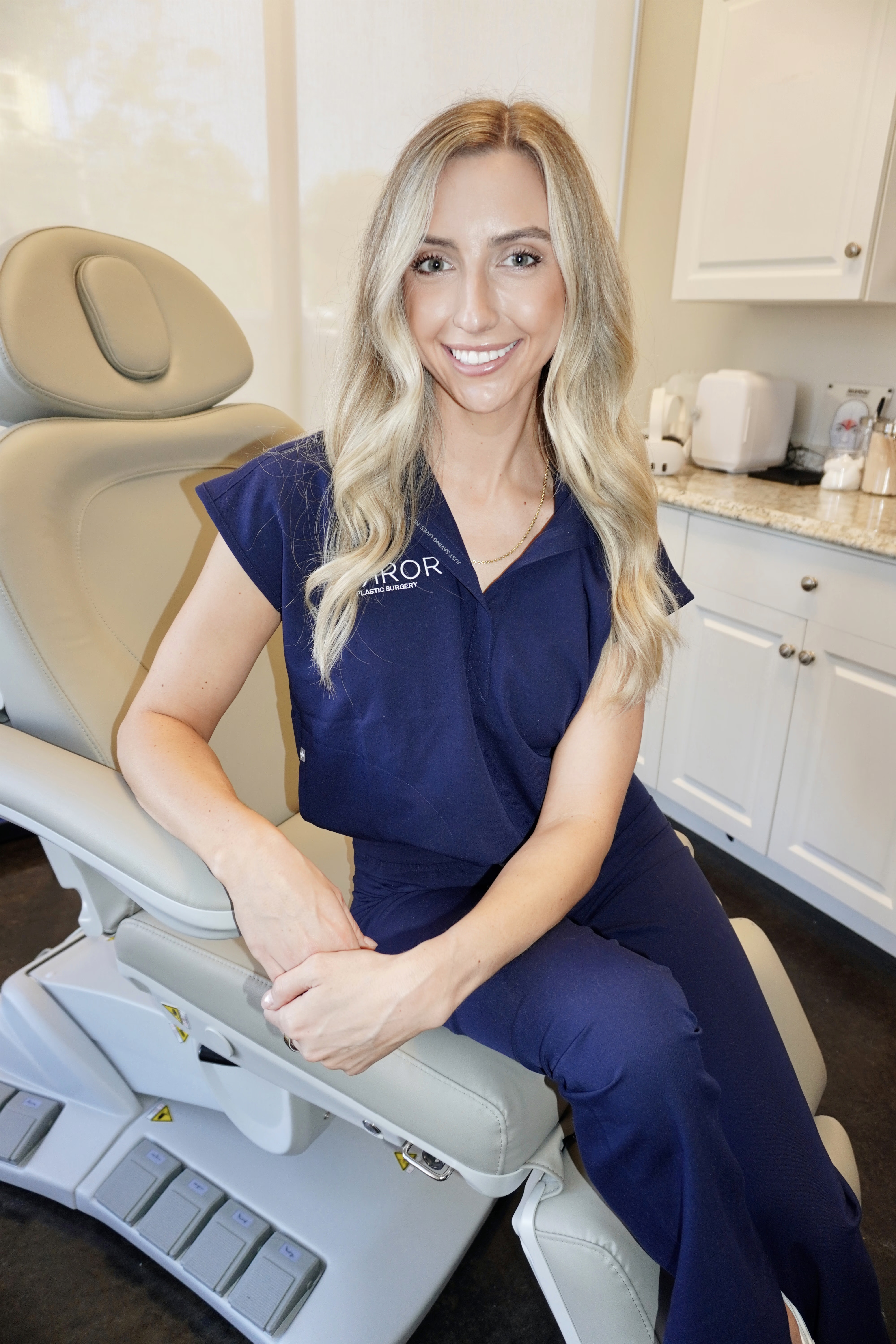
Peptides are sourced from reputable providers that use rigorous batch testing. Patients receive ongoing concierge support, including direct access to Ellie via text, throughout their protocol. While peptide therapy can support recovery, it does not replace proper medical evaluation for acute or severe injuries.
When To See A Doctor For A Muscle Injury
Most mild to moderate muscle injuries improve with appropriate self-care, yet some situations call for prompt medical evaluation. Seek professional care if you notice any of the following:
- Severe pain or an inability to bear weight on the affected limb
- A visible deformity or a popping sensation at the time of injury
- Numbness or marked weakness in the injured area
- No meaningful improvement after several days of home care
- Signs of infection, such as fever, spreading redness, or increasing warmth at the injury site
Large complete tears, injuries with tendon detachment, or cases with significant weakness, instability, or visible deformity require medical intervention. In severe cases, surgical repair may be necessary, and recovery can be supported with post-surgical protocols that focus on reducing inflammation and promoting healing.
Frequently Asked Questions About Muscle Repair
Can Damaged Muscles Be Repaired?
Skeletal muscle has a strong ability to regenerate. Satellite cells, which are specialized stem cells, activate in response to injury, proliferate, and fuse with damaged fibers to restore contractile function. For most Grade I and Grade II injuries, the body can achieve meaningful regeneration without surgery.
Severe injuries that remove a large volume of muscle tissue can overwhelm this system and lead to fibrosis and chronic functional loss. In those cases, advanced interventions such as surgical repair and carefully designed post-operative protocols may be needed to restore strength and mobility.
What Is The Fastest Way To Repair Muscle Damage?
The fastest recovery comes from supporting each stage of healing at the same time. As outlined above, that means hitting your daily protein target, protecting sleep, staying well hydrated, and using active recovery instead of total rest. Strategic supplements can add another layer of support.
Once these fundamentals are consistent, some people consider medically supervised peptide therapy, especially after major injuries or surgery. Any peptide plan should be overseen by a clinician who can assess your health, ensure quality sourcing, and monitor your response.
Which Vitamins Are Most Important For Muscle Repair?
Vitamin D plays a central role by supporting protein synthesis pathways in muscle and appears to help strength recover more quickly after hard training. Many active adults use a daily supplement, especially if they get limited sun exposure. Vitamin C contributes to collagen formation and connective tissue health, while magnesium, B vitamins, and zinc support energy production, amino acid handling, and cell growth during repair.
What Should I Drink For Muscle Recovery?
Water should be your baseline. After intense exercise, replace the fluids you lost through sweat and include some sodium so your body retains that fluid. Tart cherry juice can help reduce soreness around demanding training blocks, and protein shakes are useful when you need a convenient way to meet your protein goals.
Are Peptides Safe For Muscle Repair?
Peptides such as BPC-157 and TB-500 are not FDA-approved, and large human trials are still limited. Most of the evidence comes from animal and early-stage research. The greatest safety concern relates to product quality and contamination in gray-market sources.
Under medical supervision, with vetted compounding pharmacies, lab evaluation, and ongoing monitoring, the risk profile looks very different from self-injecting unverified products bought online. Anyone considering peptide therapy should work closely with a qualified clinician who can weigh potential benefits against known and unknown risks.
Conclusion: Building Your Muscle Repair Plan
Muscle repair is a multi-stage process, and your daily choices can meaningfully influence each phase. Consistent protein intake, quality sleep, smart hydration, and progressive loading form the foundation of effective healing.
For people who already have these basics in place and still want more support, medically supervised peptide therapy offers a science-informed option that prioritizes safety and personalization. At Mirror Plastic Surgery, Nurse Practitioner Ellie Pranckevicius, FNP-BC, leads a concierge peptide program that begins with an in-depth consultation, includes comprehensive lab analysis, and provides one-on-one guidance throughout your protocol.
Schedule A Personalized Peptide Consultation to explore a recovery plan tailored to your physiology, training demands, and long-term goals.
Disclaimer: Results may vary from person to person. Editorial content, before and after images, and patient testimonials do not constitute a guarantee of specific results.
Disclaimer: Peptide therapy is intended for wellness and optimization purposes and is not prescribed to diagnose, treat, cure, or prevent disease unless specifically stated. Many peptides are not FDA-approved and may be used off-label. Some have limited long-term safety data, with a potential for unknown risks, complications, or desensitization with prolonged use.
1 Results may vary from person to person. Editorial content, before and after images, and patient testimonials do not constitute a guarantee of specific results.
Peptide therapy is intended for wellness and optimization purposes and is not prescribed to diagnose, treat, cure, or prevent disease unless specifically stated. Many peptides are not FDA-approved and may be used off-label. Some have limited long-term safety data, with a potential for unknown risks, complications, or desensitization with prolonged use.