
Written by: Ellie Pranckevicius, FNP-BC, Aesthetic Nurse Practitioner & Aesthetic Injector | Facial Restoration & Regenerative Injectable Specialist, Mirror Plastic Surgery | Last updated: July 15, 2026
Key Takeaways for Safe Peptide Therapy
- Most medical spas do not provide the licensed clinician oversight, lab monitoring, and compliant sourcing needed for safe complex peptide protocols.
- Qualified prescribers hold active state licensure, require appropriate lab work before and during treatment, and use only licensed 503A or 503B compounding pharmacies.
- Ellie Pranckevicius, FNP-BC at Mirror Plastic Surgery, combines ICU-level clinical experience with dual aesthetics and nursing credentials in her peptide practice.
- Current U.S. regulations (as of July 2026) place many peptides in Category 1 or under active FDA review, so verified compliance is essential for every protocol.
- Patients seeking safe, personalized peptide therapy should schedule a consultation to confirm that every qualification standard is met.
What “Qualified” Medical Oversight Actually Requires
No board-certified specialty exists for peptide medicine, and there is no standardized curriculum or required continuing medical education specific to peptide prescribing. That regulatory gap makes the baseline non-negotiables more important, not less. Without specialty board oversight to enforce minimum competency standards, patients must verify each qualification element on their own.
A qualified peptide prescriber must meet all of the following criteria:
- An active, unrestricted state medical license (MD, DO, NP, or PA) verifiable through the state medical board, with no disciplinary actions on record
- Prescriptive authority in the state where the patient is physically located at the time of consultation, meeting the same standard of care as in-person prescribing
- Commitment to order and review appropriate laboratory work before starting and throughout treatment, rather than reacting only after problems appear
- Fulfillment of prescriptions exclusively through a licensed 503A or 503B compounding pharmacy, never through direct in-office dispensing from unregulated vendors
- A documented clinical rationale in the medical record, including a clear monitoring and follow-up plan
In most states, a med spa that administers prescription peptides must have a licensed physician serving as an active medical director, not a nominal figurehead, who establishes protocols, supervises clinical staff, reviews patient charts, and remains reachable for clinical questions. A medical director who signs off on protocols without active chart review does not meet this standard.
Evaluating whether a provider meets these criteria is the first step in any safe peptide decision. Schedule a consultation with Ellie to review your candidacy against this framework before committing to any protocol.
Ellie Pranckevicius: ICU Training Behind Every Peptide Protocol
Ellie Pranckevicius, FNP-BC, is the lead peptide practitioner at Mirror Plastic Surgery. She is a board-certified Family Nurse Practitioner who holds a Bachelor’s in Health Science from Boston University on the premedical track, a Bachelor’s and Master’s in Nursing from the University of South Florida, and four years of clinical experience in the Neuroscience ICU at Tampa General Hospital. That critical-care background, managing the most physiologically complex patients in a hospital setting, provides a depth of understanding of metabolic health, systemic physiology, and recovery capacity that is uncommon in wellness-focused prescribers.
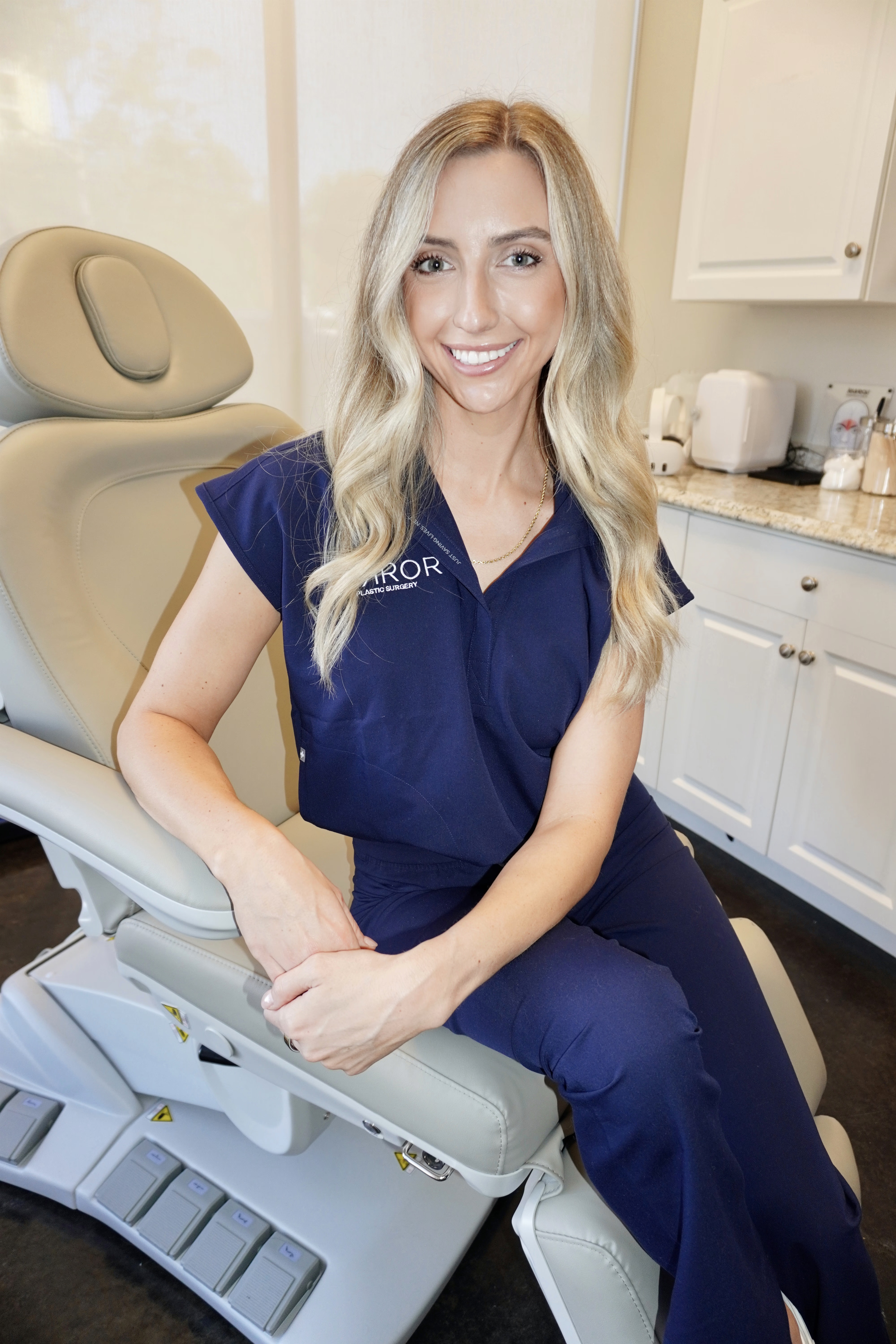
Before entering nursing, Ellie completed a rigorous aesthetics licensure program and began her career at a high-end medical spa in Boston, where she developed strong skills in skin physiology, aesthetic assessment, and client care. This dual foundation, esthetician training combined with advanced nursing credentials, means she evaluates peptide candidates through both an aesthetic lens and a clinical one at the same time.
For patients managing chronic inflammation, autoimmune conditions, weight, post-surgical recovery, or anti-aging goals, this combination directly shapes safer protocols. For GH-axis peptides such as sermorelin or ipamorelin, a legitimate provider must check IGF-1 and fasting glucose before starting therapy because GH secretagogues measurably affect insulin sensitivity. Ellie’s ICU background allows her to interpret those markers within a full metabolic context instead of viewing them in isolation.
When surgical integration is appropriate, Ellie’s work is complemented by Dr. Akash Chandawarkar, MD, a Harvard-educated physician, Johns Hopkins-trained plastic surgeon, and fellowship-trained aesthetic surgeon at Manhattan Eye Ear & Throat Hospital. This collaboration ensures that post-surgical peptide protocols align with the broader surgical plan.
Core Concepts: Peptides, Compounding, Testing, and Ongoing Monitoring
Peptides are short chains of amino acids that act as signaling molecules, directing specific physiological processes such as tissue repair, hormone release, immune modulation, and metabolic regulation. They differ from small-molecule drugs in their mechanism and from biologics in their size and synthesis pathway.
503A compounding pharmacies are regulated primarily by state pharmacy boards and prepare patient-specific prescriptions based on an individual order from a licensed prescriber. This pathway is required for practices without in-house prescribers, such as many med spas that rely on telehealth prescriber partnerships.
503B outsourcing facilities are FDA-registered and inspected under current Good Manufacturing Practice (cGMP) standards, and they are authorized to produce medications in bulk for office use. These facilities conduct potency and endotoxin testing and provide certificates of analysis showing purity levels typically exceeding 98%.
A Certificate of Analysis (COA) is the document that verifies a specific batch of compounded peptide meets safety standards. A legitimate COA must come from an independent ISO/IEC 17025-accredited laboratory and include at least 98% purity via HPLC, mass spectrometry identity confirmation, a heavy metals panel per USP <232>, endotoxin testing per USP <85>, moisture content, and a lot number traceable to the specific batch.
Concierge monitoring refers to ongoing, individualized clinical supervision rather than a one-time prescription. It includes initial lab assessment, scheduled rechecks, direct provider access between visits, and protocol adjustments based on objective data instead of subjective report alone.
Mirror Plastic Surgery’s Six-Step Peptide Care Workflow
Mirror Plastic Surgery follows a six-step workflow that ties together proper evaluation, safe sourcing, and continuous follow-up for peptide care. This structure helps patients see exactly how each safety standard shows up in real practice.
- Comprehensive consultation (30–60 minutes): Ellie reviews full medical history, current medications, and health goals. No protocol starts from a questionnaire alone.
- Initial laboratory assessment: A comprehensive panel drawn within 1–2 weeks before starting may include IGF-1, fasting glucose, fasting insulin, HbA1c, HOMA-IR, lipid panel, ALT, AST, GGT, total bilirubin, creatinine, eGFR, BUN, TSH, Free T3, Free T4, hsCRP, and CBC. Mechanism-specific additions are ordered based on the peptide class under consideration.
- Custom protocol creation: Peptide selection, dosing, timing, and stack composition are determined by lab results, medical history, and individual goals, not by a fixed menu.
- Sourcing from batch-tested pharmacies: All peptides come from reputable providers with documented batch testing, COAs, and verified supply chains.
- Remote or in-person delivery: The full process, from consultation through prescription and shipping, is available in St. Petersburg and Tampa or remotely across the United States, including Hawaii and Alaska.
- Ongoing concierge support: Patients have 24/7 direct access to Ellie via text for questions, refill requests, and protocol adjustments. Follow-up labs are required at 6–8 weeks, with ongoing monitoring every 3–6 months and individualized dosing changes based on results.
Current U.S. Regulatory Landscape for Peptides
Between late 2023 and early 2024, the FDA placed 19 peptides on Category 2 of its 503A bulk drug substances list, designating them as substances that raise significant safety risks and effectively prohibiting routine compounding under Section 503A of the Federal Food, Drug, and Cosmetic Act. The affected compounds included BPC-157, Thymosin Beta-4 (TB-500), KPV, GHK-Cu (injectable), and others widely promoted in wellness settings.
On April 15, 2026, the FDA announced removal of twelve peptides from the Category 2 list effective April 22, 2026, after original nominations were withdrawn. The FDA’s Pharmacy Compounding Advisory Committee is scheduled to review seven peptides for 503A eligibility at its July 23–24, 2026 meeting, with five more under review before February 2027.
Critically, removal from Category 2 is not final clearance. Substances must still meet specific criteria to be eligible for compounding under Section 503A, and the April 2026 change was not accompanied by new clinical safety or efficacy data.
For GLP-1 class peptides, the FDA’s formal resolution of semaglutide and tirzepatide shortages by early 2026 ended the legal safe harbor that had allowed 503A and 503B pharmacies to compound copies of these agents during declared shortages. Any compounded prescription now requires documented individualized medical necessity.
The regulatory picture as of July 2026 consists of three tiers that determine which peptides have clear pathways for prescribing and which remain in a gray zone. Understanding this hierarchy helps patients see which protocols carry regulatory certainty and which require extra caution:
- FDA-approved peptides (for example, semaglutide, tirzepatide, PT-141/bremelanotide) have specific indications and established safety profiles from large-scale trials.
- Category 1 compoundable peptides (for example, sermorelin, ipamorelin, CJC-1295, AOD-9604, Thymosin Alpha-1) require a physician prescription for legal compounding through a licensed 503A or 503B pharmacy.
- Peptides pending PCAC review (for example, BPC-157, injectable GHK-Cu) have regulatory status under active evaluation as of the July 2026 PCAC meeting.
Key Decision Checks Before You Start Peptides
Before engaging any provider for peptide therapy, confirm that they meet the five qualification criteria described earlier and that you can verify each one in practice.
- Clinician licensure: Verify the prescriber’s active state license through the state medical board. Once you confirm that their license is active and unrestricted, check any claimed board certifications at certificationmatters.org, since some providers list credentials they no longer hold or never received.
- Prescriptive authority: Confirm the prescriber holds independent or supervised prescriptive authority in your state for the peptide class being considered.
- Laboratory standards: Avoid any provider who initiates a protocol without appropriate lab work and a clear plan for repeat testing. A telehealth peptide provider that mandates labs, uses a compliant 503A or 503B pharmacy, employs a licensed prescriber, and monitors response is meaningfully safer than an in-person clinic issuing same-day protocols without clinical review.
- Sourcing transparency: The provider must be able to name the specific compounding pharmacy, confirm its 503A or 503B status, and provide a COA on request.
- Follow-up cadence: Initial treatment phases typically require clinic contact every 4–6 weeks for dose adjustments and side-effect monitoring, with most peptides requiring 2–3 dose escalations over 8–12 weeks before stable dosing is achieved.
- Geographic and remote delivery reach: Confirm the provider is licensed in your state and that their pharmacy partner is authorized to ship to your location.
Realistic Risks of Unsupervised or Under-Qualified Prescribing
Peptides obtained outside a qualified clinical framework carry real, documented risks. Analytic testing of peptide products sold on the gray market has shown variable purity levels and contamination concerns, which directly increase the chance of adverse outcomes.
Documented clinical safety signals across the peptide class include a halted clinical trial following a fatal cardiac event, case reports of melanoma and kidney dysfunction, and a documented death following intravenous administration. These events illustrate how product quality issues and poor oversight can translate into serious clinical harm.
Specific risks associated with under-qualified prescribing include:
- Inconsistent product quality: Independent laboratory testing of compounded semaglutide samples has revealed concentration variations and bacterial contamination in some samples.
- Absence of medical history screening: Absolute contraindications for GLP-1 receptor agonist peptides include personal or family history of medullary thyroid carcinoma, Multiple Endocrine Neoplasia syndrome type 2, and pregnancy or lactation, conditions that a questionnaire-only intake will not reliably identify.
- Lack of personalization: Critical knowledge gaps for investigational peptides include undefined optimal dosing regimens, unexplored effects of combination therapies, and lack of validated biomarkers for monitoring efficacy and safety. Without individualized lab data and structured follow-up, dosing becomes guesswork.
- Legal exposure for providers: Between 2025 and early 2026, state attorneys general in multiple jurisdictions pursued both physician-owned clinics and lay-owned med spas dispensing or administering Category 2 or research-grade peptides, with settlements reaching six figures and asset freezes.
These risks are not distributed equally. They concentrate in settings where clinical oversight is minimal, sourcing is unverified, and follow-up is absent. Learn how Mirror Plastic Surgery’s sourcing and monitoring standards address each of these risk categories directly.
Common Misconceptions About Medical Spas and Peptide Therapy
Misconception 1: All medical spas operate under identical clinical standards. They do not. Med spas offering peptide therapies operate at the intersection of three regulatory frameworks, state medical practice law, FDA drug compounding rules, and the Corporate Practice of Medicine doctrine, and compliance with all three varies significantly by practice. A med spa with an actively engaged, credentialed medical director who orders labs and reviews charts is categorically different from one where the medical director is only a name on a form.
Misconception 2: Peptides are primarily a weight-loss tool. The peptide class spans a wide range of physiological applications. Mirror Plastic Surgery’s protocols address systemic inflammation (BPC-157, TB-500), collagen and elastin production (GHK-Cu), energy and cellular anti-aging (NAD), gut microbiome inflammation (KPV), natural growth hormone stimulation (sermorelin/ipamorelin), metabolic and weight management (GLP-3R), sexual wellness (PT-141), anxiety and mood (Selank), and fertility support (Kisspeptin). Each application requires a different lab focus, a different monitoring cadence, and different contraindication screening.
Misconception 3: A peptide available online is equivalent to one sourced from a licensed compounding pharmacy. The FDA treats any peptide marketed for human injection as an unapproved, misbranded new drug regardless of “research use only” or “not for human consumption” labeling. The label does not change the risk profile of the product.
Frequently Asked Questions
Can medical spas prescribe peptides without a physician medical director?
In most U.S. states, a medical spa cannot legally administer prescription peptides without a licensed physician serving as an active medical director. The medical director must establish clinical protocols, supervise staff, review patient charts, and be reachable for clinical questions, not simply lend their name to the practice. In states with Corporate Practice of Medicine laws, such as Texas, California, and New York, lay-owned med spas face heightened enforcement risk when non-physician ownership influences clinical decisions. Nurse practitioners with full practice authority, like Ellie Pranckevicius at Mirror Plastic Surgery, can independently prescribe compounded peptides in states that permit it. In restricted-practice states, a collaborative physician agreement is required. The key variable is not the practice type but whether a qualified, actively engaged prescriber with verified licensure is directing care.
Are peptides obtained without lab monitoring or follow-up safe?
No. Lab monitoring is not optional for complex peptide protocols. It allows a provider to confirm that the protocol is working as intended and to detect adverse signals before they become clinical problems. Growth hormone secretagogues such as sermorelin and ipamorelin can transiently reduce insulin sensitivity and elevate IGF-1 into ranges associated with metabolic and cardiovascular risk if not monitored. GLP-1 class peptides carry contraindications that require screening before the first dose. Tissue repair peptides like BPC-157 and TB-500 lack established human safety data, so assessment of liver function and inflammatory markers represents a minimum prudent standard. A provider who initiates any peptide protocol without appropriate labs and a defined follow-up schedule is not meeting the standard of care, regardless of the setting.
What is the current regulatory status of commonly requested peptides?
As of July 2026, peptides fall into the three regulatory tiers described earlier: FDA-approved (semaglutide, tirzepatide, PT-141), Category 1 compoundable (sermorelin, ipamorelin, CJC-1295, AOD-9604), and pending PCAC review (BPC-157, injectable GHK-Cu). The key point is to verify the current status of your specific peptide molecule-by-molecule before starting, since the April 2026 Category 2 removals did not constitute FDA approval or a safety endorsement.
How much do results vary between individuals?
Results vary significantly between individuals.1 Factors including genetics, initial lab values, metabolic health, lifestyle, concurrent medications, and the specific peptide protocol all influence outcomes. What produces a measurable IGF-1 response in one patient may produce a different result in another with a different baseline hormonal profile.1 This variability explains why a personalized approach, beginning with comprehensive labs and medical history, produces more reliable outcomes than a fixed-dose, one-size-fits-all protocol.1 Mirror Plastic Surgery’s approach uses initial and follow-up lab data to distinguish a working protocol from one that requires adjustment, instead of relying solely on subjective patient report.
What maintenance is required to sustain benefits?
Most peptide protocols are structured as defined courses, typically 4–12 weeks, followed by reassessment rather than indefinite continuous use. This approach preserves receptor sensitivity and produces cleaner outcome data. Maintenance protocols are then designed based on the patient’s response, goals, and lab trends. For conditions such as chronic inflammation or metabolic dysregulation, ongoing low-dose maintenance may be appropriate. For anti-aging or recovery applications, cycling protocols are common. Stopping peptide therapy without a transition plan typically results in a gradual return toward baseline, similar to discontinuing any structured health intervention. Ellie works with each patient to define a realistic maintenance framework based on their specific protocol and long-term goals, with 24/7 direct access for questions between scheduled visits.
Making an Informed, Individualized Decision
Safe peptide therapy requires the full qualification framework to be in place at the same time. Patients need a licensed prescriber with verified credentials, appropriate lab analysis before and during treatment, sourcing from a licensed 503A or 503B compounding pharmacy with a verifiable COA, and documented ongoing supervision. The absence of any single element meaningfully increases risk.
Mirror Plastic Surgery’s model is built around each of these requirements. Ellie Pranckevicius holds active FNP-BC board certification, prescriptive authority, and four years of Neuroscience ICU clinical experience, which directly addresses the clinical risk of complex protocols. Every protocol begins with a 30–60 minute consultation and, where indicated, a comprehensive lab panel, which reduces the chance of missed contraindications. Peptides are sourced exclusively from reputable providers with batch testing and COA documentation, which mitigates product quality concerns. Patients have 24/7 direct text access to Ellie throughout their protocol, with telemedicine follow-up available across the United States, which supports early detection of side effects. Post-surgical peptide protocols are coordinated directly with Dr. Akash Chandawarkar when surgical recovery is part of the care plan, aligning peptide use with operative goals.
Qualified oversight for peptide prescribing remains relatively rare, which makes verification of a provider’s credentials and processes essential. The core issue is not whether medical spas can prescribe peptides. The core issue is whether the specific provider in front of you meets every element of the qualification framework described in this article.
Request a comprehensive evaluation at Mirror Plastic Surgery, including lab review, medical history assessment, and a personalized protocol built around your specific health goals and physiology.
1 Results may vary from person to person. Editorial content, before and after images, and patient testimonials do not constitute a guarantee of specific results.
Peptide therapy is intended for wellness and optimization purposes and is not prescribed to diagnose, treat, cure, or prevent disease unless specifically stated. Many peptides are not FDA-approved and may be used off-label. Some have limited long-term safety data, with a potential for unknown risks, complications, or desensitization with prolonged use.