
Written by: Ellie Pranckevicius, FNP-BC, Aesthetic Nurse Practitioner & Aesthetic Injector | Facial Restoration & Regenerative Injectable Specialist, Mirror Plastic Surgery | Last updated: August 7, 2026
Key Takeaways for Safe Peptide Use
- Approximately 42% of unregulated peptide products fail basic quality checks for identity, purity, and quantity, so vendor verification is essential before purchase.
- A legitimate CoA is lot-specific, includes batch-matched identifiers, and is supported by HPLC chromatograms and mass spectrometry data from an accredited third-party lab.
- Red flags such as cryptocurrency-only payments, missing physical addresses, generic CoAs, or sales through Telegram channels strongly correlate with contaminated or mislabeled products.
- At-home testing remains limited; meaningful safety verification requires panels for endotoxin, heavy metals, residual solvents, and microbes that exceed most individual budgets.
- Mirror Plastic Surgery’s concierge peptide program, led by Ellie Pranckevicius, FNP-BC, removes these risks by handling verified sourcing, batch testing, and clinical oversight. Book a consultation to start a medically supervised protocol tailored to your lab results.
Ellie Pranckevicius, FNP-BC: Guiding Safe Peptide Protocols
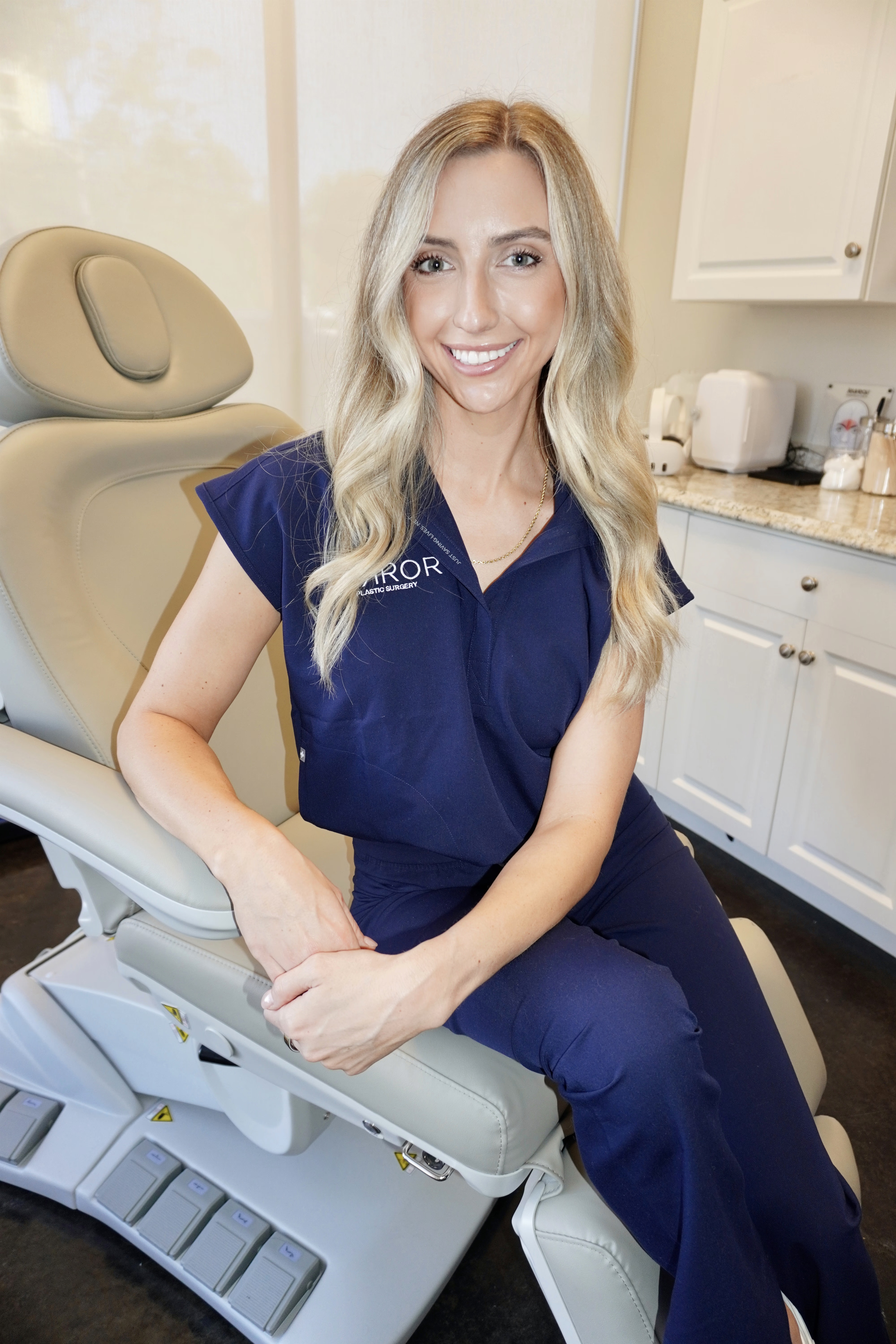
Ellie Pranckevicius is a board-certified Family Nurse Practitioner and the lead practitioner for peptide therapies at Mirror Plastic Surgery in St. Petersburg, Florida. She holds a Master’s in Nursing from the University of South Florida and spent four years in the Neuroscience ICU at Tampa General Hospital. In that role she managed complex patients and developed a strong command of physiology, metabolic health, and recovery.
Before earning her NP credentials, Ellie trained as an esthetician at a high-end Boston medical spa. That background gives her a dual perspective that connects aesthetic goals with clinical science. In her peptide practice, Ellie reviews lab panels, screens for contraindications, sources from batch-tested suppliers, and provides 24/7 concierge support throughout every protocol.
CoA, HPLC, and Mass Spectrometry in Plain Language
Three terms appear on every legitimate peptide quality document, and each one measures something different. Clear definitions help you separate real data from marketing language.
A Certificate of Analysis (CoA) records test procedures, acceptance criteria, and numerical results for a specific production batch. An authentic CoA lists the material name, batch number, each test performed, applicable acceptance limits, and actual numerical results, not just a vague “meets spec” statement. The two most important tests listed on any peptide CoA are HPLC and mass spectrometry.
High-Performance Liquid Chromatography (HPLC) separates a peptide sample into its component peaks and calculates purity as the ratio of the target peak area to the total integrated area of all detectable peaks. A study in the Journal of Peptide Science by Streuli et al. used an HPLC-UV method to determine peptide purity. UV detection at wavelengths sensitive to the peptide backbone is commonly used for universal peptide detection. Detection at 280 nm is selective only for tyrosine and tryptophan residues, and is not appropriate as a general purity assay.
Mass Spectrometry (MS) confirms molecular identity by comparing the observed molecular weight against the theoretical weight calculated from the amino acid sequence. ESI-MS is commonly used for smaller peptides and MALDI-TOF for larger peptides, with LC-MS/MS for sequence-level verification and an acceptance criterion of |observed − theoretical| less than 1 Da for standard peptides. HPLC and MS answer different questions and are not interchangeable. HPLC measures purity, and MS confirms identity.
Six-Step Workflow to Verify a Peptide Vendor
Step 1: Ask for a Lot-Specific CoA
A legitimate vendor issues a separate CoA for every production batch. The strongest batch-matched CoA is one where a unique batch or lot ID printed on the vial links directly to a publicly retrievable CoA for that exact batch, allowing an outside observer to reproduce the match without contacting sales. A vendor that offers only a generic or “typical” specification document without a batch identifier is not verifying the material being shipped.
Step 2: Confirm Third-Party Lab Accreditation
Independent third-party verification is the industry gold standard because the company that profits from high purity numbers should not also perform the measurement. ISO/IEC 17025:2017 accreditation confirms that a lab has documented quality systems, validated methods, regular external audits, and staff competency checks. Labs such as Colmaric Analyticals in St. Petersburg, Florida (Accreditation No. 86258) and Janoshik Analytical in Prague are commonly cited independent testing resources in 2026.
Step 3: Match the Batch Numbers by Hand
Lot-specific testing only works when the reported data correspond to the particular batch identified on the vial label, with matching lot numbers across the document, vial label, chromatogram, and mass report. Physically verify that the lot number on your vial matches the lot number on every page of the CoA. This single check catches many relabeled, repackaged, or counterfeit vials.
Step 4: Check HPLC Purity and MS Mass Values Together
Research-grade peptides typically require a minimum of 95% HPLC purity, with 98% or higher preferred for in vivo or serious research applications. However, a high purity number alone has little value without supporting evidence. A CoA that states only “purity ≥95%” without a chromatogram image cannot be independently verified, because the chromatogram is the visual proof that the stated percentage is real.
Mass spectrometry confirms molecular identity with an acceptable tolerance of ±0.5 Da for standard peptides. The CoA should show numerical values for observed and theoretical mass, not just a phrase like “consistent with target.” Together, the chromatogram and MS data show that the vial contains the right molecule at the stated purity.
Step 5: Spot Vendor Red Flags Early
Certain sourcing patterns strongly correlate with contaminated or mislabeled products. Red flags for illegitimate peptide vendors include cryptocurrency-only payment, no verifiable physical address, absence of a CoA or third-party testing documentation, and prices dramatically below licensed compounding pharmacy rates. Additional warning signs include:
- No named testing laboratory or signatory on the CoA
- Identical CoAs reused for different purchase dates
- Mass spectrometry stated only as “consistent with target” without numerical values
- A CoA dated more than 12 months before shipment
- Sales conducted exclusively through Telegram or anonymous forums
Step 6: Know What At-Home Testing Misses
Independent third-party testing is available to individual buyers and can still help. Janoshik Analytical offers HPLC purity and ESI mass spectrometry testing with a 5–10 business day turnaround and a public database for CoA verification by batch ID, and Finnrick provides free basic HPLC testing for U.S. residents. HPLC purity alone, however, does not address endotoxin load, heavy metals, residual solvents, or net peptide content.
Meaningful safety verification requires mass spectrometry identity confirmation, LAL endotoxin testing, ICP-MS heavy metals panel, residual solvent analysis, and microbial limit testing. That full panel quickly exceeds the cost and complexity most individual buyers can manage.
Online Purchases vs. Mirror Plastic Surgery Concierge Sourcing
| Factor | Unsupervised Online Purchase | Mirror Plastic Surgery Concierge Program |
|---|---|---|
| Batch Testing | Approximately 42% of unregulated products fail basic quality checks for identity, purity, or quantity | Peptides sourced from reputable suppliers with batch-specific CoAs and third-party testing before dispensing |
| Medical History Review | None. Without lab evaluation, symptoms like fatigue or weight gain may stem from thyroid dysfunction, insulin resistance, or other conditions rather than a peptide deficiency. | Comprehensive 30–60 minute consultation with Ellie Pranckevicius, FNP-BC, including review of medical history, current medications, and contraindication screening |
| Lab Panels | Not available. A 2024 FDA report documented hospitalizations from dosing errors with compounded injectable semaglutide where patients administered five to twenty times the intended dose. | Baseline and ongoing lab panels (CMP, CBC, lipid panel, IGF-1, HbA1c, hormone panels) ordered or reviewed as clinically indicated |
| Ongoing Oversight | None. Health Canada reports that unauthorized peptides may contain too much, too little, or none of the claimed active ingredient, with no professional monitoring adverse effects. | Direct 24/7 access to Ellie via text, telemedicine follow-up, and protocol adjustments based on lab results and patient response |
Book an appointment with Ellie to receive a personalized protocol built on verified sourcing and clinical oversight.
Pre-Treatment Labs and Realistic Results
Baseline bloodwork before starting peptides typically includes a Comprehensive Metabolic Panel, Complete Blood Count, Lipid Panel, and category-specific markers such as IGF-1 for growth hormone peptides, HbA1c and pancreatic enzymes for GLP-1 analogues, and a full hormone panel for hormonal peptides. Best practice includes a mid-protocol check at four to six weeks and a post-protocol assessment two to four weeks after stopping.
Medical supervision for peptides is especially important for individuals with a personal history of cancer, diabetes, thyroid disease, heart disease, kidney or liver disease, autoimmune conditions, pregnancy, or multiple concurrent medications. Results vary significantly between individuals based on genetics, diet, lifestyle, and the specific protocol used. A personalized evaluation is the only reliable way to determine whether a given peptide is appropriate and at what dose.
Quick Checklist: When to Walk Away
Reject any vendor or documentation that shows any of the following problems:
- Missing batch or lot number on the CoA or vial label
- No chromatogram image supporting the stated HPLC purity percentage
- Mass spectrometry result stated only as “consistent with target” without observed and theoretical mass values
- Cryptocurrency-only payment or no verifiable physical address
- Sales conducted exclusively through Telegram or anonymous channels
- Generic CoAs reused across multiple lots with no batch-specific identifier
- Products labeled “For Research Use Only – Not for Human Consumption” that are sold with explicit or implied injection instructions
- Claims of “clinically proven,” “safe,” or “approved” on unapproved products, which have no legal effect under medicines regulation
Frequently Asked Questions About Peptide Safety
Are peptides approved by the FDA?
Most peptides used in biohacking and wellness contexts are not FDA-regulated drugs. They are often sold under “for research use only” disclaimers, which do not grant legal exemption from safety requirements and do not indicate clinical approval. A small number of peptides, such as certain GLP-1 agonists, tesamorelin, and desmopressin, have received FDA approval for specific indications and are available through licensed compounding pharmacies under physician oversight. The main risk with peptides comes from unregulated sources with no quality controls, not from the peptide class itself. Mirror Plastic Surgery sources from reputable suppliers with batch testing and provides full medical supervision before, during, and after every protocol.
What happens if I stop taking peptides?
When a peptide protocol ends, the physiological effects it produced gradually diminish. For example, if BPC-157 was managing systemic inflammation, that inflammation is likely to return to its prior state once the peptide is discontinued.1 Growth hormone secretagogues such as Sermorelin or Ipamorelin stimulate natural GH production while in use, and that stimulation stops when the peptide is no longer administered.1 Many patients transition to a lower-dose maintenance protocol rather than stopping abruptly. Ellie Pranckevicius reviews each patient’s lab markers and clinical response to determine the right maintenance or cycling strategy for their specific protocol.
Will everyone see the same results with peptides?
Outcomes from peptide therapy vary significantly between individuals.1 Genetics, baseline lab values, diet, lifestyle, concurrent medications, and the specific peptide stack all influence results. One patient may experience measurable improvements in inflammatory markers within weeks, while another on an identical protocol may respond more gradually.1 This variability is the reason Mirror Plastic Surgery conducts a comprehensive evaluation, including medical history and lab panels, before building a custom protocol. A one-size-fits-all approach to peptide dosing ignores the biological differences that determine whether a protocol succeeds or falls short.
What is the difference between supervised and unsupervised peptide use?
Unsupervised use means purchasing peptides from an online vendor without a medical evaluation, lab review, or professional oversight. In that scenario, the buyer has no reliable way to confirm product identity, purity, sterility, or appropriate dosing for their health profile. Supervised use through a clinic like Mirror Plastic Surgery means a board-certified practitioner reviews your medical history and lab results, screens for contraindications, sources from batch-tested suppliers, establishes a personalized protocol, and monitors your response over time. Supervised use substantially reduces the risks of dosing errors, drug interactions, contaminated products, and unrecognized adverse events.
What contaminants are found in unregulated peptide products?
Documented contaminants in gray-market peptide products include bacterial endotoxins (lipopolysaccharide from Gram-negative bacteria), heavy metals such as lead, cadmium, and arsenic, residual organic solvents including TFA and acetonitrile, microbial contamination from bacteria and fungi, and particulate matter such as fibers, glass, and plastic. Beyond contamination, mislabeling is common. Some vials contain a different peptide, a degradation product, or no active ingredient at all. These are documented findings from regulatory agencies including Health Canada, Medsafe, and the TGA, as well as independent testing laboratories analyzing thousands of samples annually.
Conclusion and Next Steps with Mirror Plastic Surgery
Verifying peptide source and purity in 2026 requires more than trusting a vendor’s marketing page. Strong verification includes a lot-specific CoA with a matching batch number on the vial, HPLC purity at or above 98% supported by a full chromatogram, mass spectrometry identity confirmation with numerical observed-versus-theoretical mass values, and testing conducted by an ISO 17025-accredited or otherwise independent laboratory. Many online vendors fail at least one of these criteria, and approximately 42% of unregulated products fail basic quality checks entirely.
Mirror Plastic Surgery’s concierge peptide program, led by Ellie Pranckevicius, FNP-BC, manages verified sourcing, batch documentation, pre-treatment lab panels, personalized protocol design, and ongoing clinical oversight so that patients in the St. Petersburg and Tampa Bay area receive the standard of care this class of therapy requires.
Book an appointment with Ellie to begin with a comprehensive evaluation and a protocol built on verified, batch-tested peptides under full medical supervision.
1 Results may vary from person to person. Editorial content, before and after images, and patient testimonials do not constitute a guarantee of specific results.
Peptide therapy is intended for wellness and optimization purposes and is not prescribed to diagnose, treat, cure, or prevent disease unless specifically stated. Many peptides are not FDA-approved and may be used off-label. Some have limited long-term safety data, with a potential for unknown risks, complications, or desensitization with prolonged use.