
Written by: Ellie Pranckevicius, FNP-BC, Aesthetic Nurse Practitioner & Aesthetic Injector | Facial Restoration & Regenerative Injectable Specialist, Mirror Plastic Surgery
Key Takeaways
- GHK-Cu levels naturally decline by over 60% between ages 20 and 60, which correlates with reduced skin elasticity, slower wound healing, and changes in hair follicle cycling.
- Clinical studies show topical GHK-Cu can increase collagen production by 60–70%, reduce wrinkle depth by up to 35%, and improve skin firmness and density within 8–12 weeks of consistent use.1
- Evidence for hair growth is less robust than for skin, yet GHK-Cu may enlarge hair follicles by up to 46% and prolong the growth phase, especially as an add-on to proven treatments like minoxidil.1
- Copper peptides should not be layered with high-strength vitamin C, strong acids, benzoyl peroxide, or retinoids in the same step, because these ingredients can destabilize the peptide complex.
- Professional supervision ensures safe, personalized protocols and high-quality sourcing, which is essential for effective and safe use.
The Science Behind Copper Peptides (GHK-Cu)
GHK-Cu functions as a signaling molecule rather than a simple nutrient. It binds to specific cell surface receptors on fibroblasts, activating collagen gene transcription, including COL1A1 and COL3A1, while also reducing MMP-1-mediated collagen degradation, which creates a net anabolic effect on collagen density.
GHK-Cu increases collagen I and III synthesis by 60–70% in cultured human fibroblasts at nanomolar concentrations, a result confirmed across multiple independent laboratories.1 A 2026 review in Dermatological Reviews by Sarbaziha and Goldberg identifies GHK-Cu as one of the most clinically relevant peptides in regenerative aesthetic dermatology, highlighting its versatile administration routes, favorable safety profile, and broad therapeutic potential.
GHK-Cu also modulates the expression of over 4,000 human genes, roughly one-third of known gene networks, by upregulating collagen synthesis, antioxidant defense, DNA repair, and anti-inflammatory signaling while downregulating genes linked to inflammation, oxidative stress, and tissue breakdown. This broad gene regulation underscores how central GHK-Cu can be in tissue repair and remodeling.
Copper binding is essential for GHK-Cu’s activity. Copper-free GHK shows less than 20% of the collagen-stimulating activity of the full GHK-Cu complex. GHK-Cu is structurally distinct from collagen peptides, which mainly provide amino acid building blocks, and from growth factors, which are larger signaling proteins. At approximately 340 Da, GHK-Cu is a small molecule that acts as a master regulator of tissue repair.
Skin Benefits of Copper Peptides Backed by Clinical Evidence
The skin benefits of GHK-Cu are among the most reproducible findings in the peptide literature. Across multiple clinical trials, the most consistent outcomes are increased collagen production, reduced wrinkles, and improved firmness and elasticity.
- Collagen and elastin production: Clinical reviews report that topical GHK-Cu at 0.1–1% applied once or twice daily produces measurable improvements in skin density, thickness, firmness, and elasticity over roughly 8–12 weeks.1
- Wrinkle reduction: A 2015 randomized, double-blind, vehicle-controlled study of 71 women found a 35% mean reduction in wrinkle depth and a 67% improvement in skin elasticity, compared to 4% and 9% in the vehicle-only control group.1
- Skin firmness and density: A 12-week trial of 67 women aged 50–59 with photodamage showed statistically significant improvements in skin laxity, clarity, and firmness, with ultrasound imaging confirming a measurable increase in dermal density.1
- Wound healing and barrier repair: Animal wound healing models show 40–50% faster wound closure and significantly higher collagen deposition at injury sites with topical GHK-Cu treatment.1
- Pigmentation support: GHK-Cu helps regulate pigmentation pathways and supports more even skin tone, which makes it relevant for concerns like melasma and a core component of Mirror Plastic Surgery’s Glow Stack protocol.
Head-to-head comparisons with other actives help clarify where GHK-Cu fits. In a thigh biopsy study, GHK-Cu increased collagen production in 70% of treated women, compared to 50% with vitamin C cream and 40% with retinoic acid.1 Effects are measurable yet moderate, and consistent use for 8–12 weeks is usually required before visible results appear.
Discuss your skin goals with Ellie to see whether a GHK-Cu protocol fits your needs.
Can Copper Peptides Help Hair Growth? Evidence and Expectations
Evidence for GHK-Cu in hair health is promising, although it remains less extensive than the data for skin. A key 1993 study by Uno and colleagues found that topical GHK-Cu increased hair follicle size by up to 46% in animal models and prolonged the anagen growth phase.1
The mechanisms behind these findings are well characterized. GHK-Cu acts on hair follicles through several documented pathways:
- Activation of Wnt/beta-catenin signaling in dermal papilla cells, which orchestrate the follicle growth cycle
- Reduction of androgen receptor gene expression in follicular cells, which offers a complementary mechanism to direct DHT blockade
- Downregulation of pro-inflammatory cytokines including TGF-beta, which promotes follicle miniaturization
- Stimulation of VEGF to promote blood vessel formation around follicles
Topical application is the better-studied delivery route for hair. Injectable GHK-Cu currently lacks strong comparative evidence showing superior hair outcomes over well-formulated topical application.
Realistic expectations help prevent disappointment. GHK-Cu does not directly block DHT, the primary driver of androgenetic alopecia, so it mainly addresses downstream consequences like inflammation, poor vascularization, and oxidative stress rather than the upstream hormonal driver. It usually works best as an adjunct to proven treatments like minoxidil and finasteride. Most responders notice results between 3–6 months of consistent use, and a full 90-day minimum trial is recommended before judging efficacy.1
How to Use Copper Peptides: A Step-by-Step Guide
Proper application technique directly affects results. For topical skin use, follow this sequence:
- Patch test first. Apply a small amount to the inner forearm or behind the ear for 24–48 hours to check for sensitivity before applying to the face.
- Apply to clean, slightly damp skin. Copper peptides absorb best on freshly cleansed skin, so allow about 1–5 minutes before layering other products.
- Use appropriate concentrations. Most effective topical products range from 0.05% to 2% GHK-Cu. Higher concentrations do not produce proportionally greater results and may increase irritation risk.
- Start with 2–3 applications weekly. Gradually increase to daily use if skin tolerates it well, and reduce frequency if irritation occurs.
- Apply in the evening or separate from conflicting actives. For injectable forms, always work with a qualified medical provider who can determine appropriate dosing and administration.
For scalp and hair use, apply topical GHK-Cu to the scalp 5–7 days per week, ideally in the evening, and allow 4–6 hours of contact time for dermal absorption. To improve penetration, consider microneedling at 0.5–1.0 mm depth 12–24 hours before GHK-Cu application, which can increase dermal penetration from less than 15% to 40–60% and help the peptide reach follicle stem cells in the bulge region.
Injectable GHK-Cu protocols at Mirror Plastic Surgery are personalized based on medical history, lab results, and specific goals, and they are never self-administered without supervision.
What Should You Not Layer with Copper Peptides?
Copper peptides can be inactivated or destabilized by several common skincare ingredients. Avoid combining GHK-Cu with the following in the same application step:
- High-strength L-ascorbic acid (vitamin C): L-ascorbic acid can reduce active Cu²⁺ to inactive Cu⁺, which destabilizes the copper-peptide complex. A 2022 study found that applying L-ascorbic acid immediately before GHK-Cu increased transepidermal water loss by 40% and delayed barrier recovery compared to separating applications by eight hours or more. Therefore, to avoid this interaction, use vitamin C in the morning and copper peptides in the evening.
- Strong AHAs and BHAs: If you use exfoliating acids, apply them first, wait 15–20 minutes for skin pH to normalize, then apply copper peptides, or alternate nights entirely.
- Benzoyl peroxide: Benzoyl peroxide can oxidize the peptide complex and is a known incompatibility for copper peptide formulations.
- Retinoids in the same step: Retinol products are often formulated at pH 4–5, while copper peptide serums are stable at pH 5.5–7. Applying them back-to-back without a wait period temporarily depresses skin surface pH into a range that may reduce peptide stability. Use one in the morning and one at night, or alternate evenings.
Gentle, encapsulated vitamin C derivatives and barrier-supporting ingredients like hyaluronic acid, niacinamide, and glycerin are generally safe to layer with GHK-Cu. Professional guidance at Mirror Plastic Surgery helps patients build safe, effective routines without ingredient conflicts.
Copper Peptides vs. Retinol: Choosing the Right Role in Your Routine
Retinol and GHK-Cu work through fundamentally different mechanisms, so they often complement each other. Retinol is converted to retinoic acid in the skin, which switches on collagen genes, suppresses MMPs that degrade collagen, and normalizes cell turnover. GHK-Cu activates copper-dependent crosslinking enzymes and inhibits MMP-1 collagenase through matrikine signaling rather than nuclear receptor activation.
On the evidence side, retinol holds a larger body of data. Retinol is backed by multiple independent human randomized controlled trials confirming dermal collagen synthesis increases and visible wrinkle reduction, whereas copper peptide evidence comes mostly from smaller trials. Tolerability often favors GHK-Cu. Copper peptides are gentle, cause no retinization or photosensitivity, and suit sensitive or reactive skin, while retinol commonly causes dryness, flaking, and redness during initial use.
The thigh biopsy study showing GHK-Cu increased collagen in 70% of treated women versus 40% for retinoic acid, with significantly less irritation, illustrates this difference in tolerability. Retinol remains the evidence-based standard for photoaging and acne. Copper peptides serve as excellent complementary or alternative options for those who cannot tolerate retinoids, are pregnant, or want additional antioxidant and repair support. Many patients use both, with retinol at night and copper peptides in the morning, treating them as complementary rather than competing actives.
Side Effects, Downsides, and Safety Considerations
GHK-Cu has a strong safety record, yet understanding its downsides supports informed use.
Common side effects reported in clinical studies include:
- Mild irritation: A 2023 safety review analyzing 12 clinical studies involving 512 participants found that the most common side effects were transient redness in 4.2% of participants and mild itching in 2.8%, with no systemic side effects consistently reported.
- “Copper peptide uglies”: Temporary breakouts or rough texture during the first 2–3 weeks can occur because GHK-Cu accelerates breakdown of old tissue faster than the skin can rebuild, and this typically resolves within 4–6 weeks.
- Contact dermatitis: This reaction is rare but possible, especially in sensitive individuals, so patch testing is recommended before regular use.
Contraindications include:
- Wilson’s disease or other copper metabolism disorders
- Active malignancy, due to GHK-Cu’s pro-angiogenic effects via VEGF pathway activation
- Pregnancy and breastfeeding, because safety data remain insufficient
- Known copper allergy or hypersensitivity
A typical 2 mg dose of GHK-Cu contains approximately 0.3 micrograms of copper, which is far below the 900-microgram daily dietary requirement, and the copper is complexed and less bioavailable as free copper, which reduces toxicity risk. Systemic copper toxicity from topical use has not been reported in clinical literature.
A significant practical risk involves product quality. A 2014 analysis of ten commercial GHK-Cu serums found peptide purity ranging from 42% to 96%. Copper content varied between 0.3 ppm and 8 ppm, despite identical label claims. Sourcing quality products from reputable providers with batch testing, as Mirror Plastic Surgery does, directly mitigates this risk.
Why Professional Supervision Matters for Peptide Therapy
The unregulated online peptide market presents real risks that extend beyond product quality alone. Injectable GHK-Cu lacks FDA approval, large human safety trials, and standardized dosing protocols, and it is sold as an unregulated research chemical with unquantified risks of copper accumulation, sterility issues, and immune reactions. Clinical supervision turns a peptide protocol into a structured treatment instead of a gamble, especially for injectable routes where compounding quality and dosing uncertainty are real variables.
Mirror Plastic Surgery’s peptide therapy program, led by Ellie Pranckevicius, FNP-BC, addresses these concerns directly. Ellie is a board-certified Family Nurse Practitioner with esthetician training and advanced nursing expertise, including four years in the Neuroscience ICU at Tampa General Hospital. Her dual background in aesthetics and critical care helps her understand both the aesthetic goals clients want to achieve and the clinical science required to get there safely.
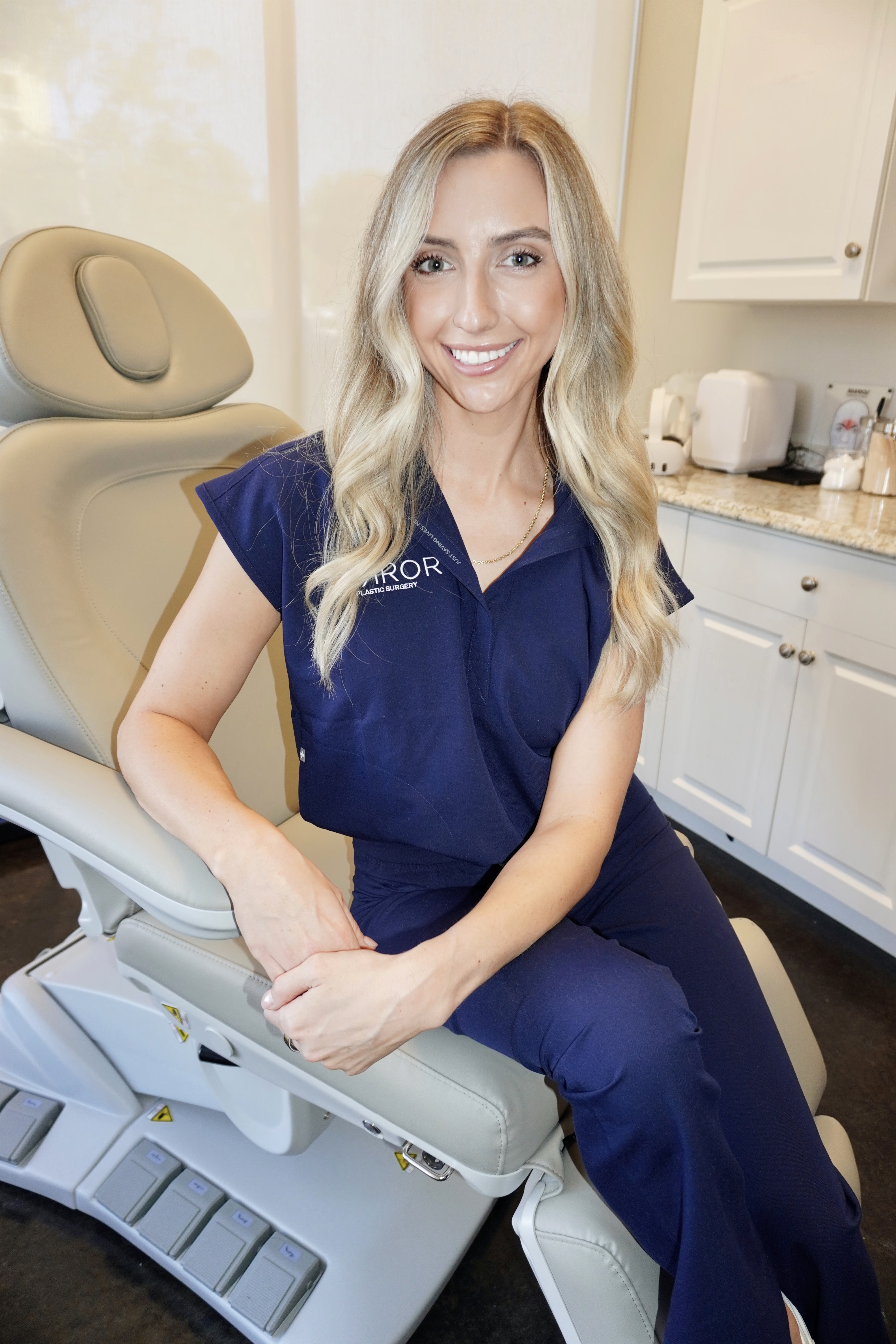
The Mirror Plastic Surgery approach to GHK-Cu and peptide therapy includes:
- A comprehensive 30–60 minute consultation reviewing medical history, health goals, and relevant lab results
- Personalized protocols tailored to individual physiology and objectives, instead of one-size-fits-all approaches
- Peptides sourced from reputable providers with rigorous batch testing and certificates of analysis
- Concierge support with direct access to Ellie via text for questions, refill requests, and ongoing guidance
Ellie’s educational, transparent approach means she will tell clients when a treatment is unnecessary and prioritize long-term results over short-term revenue. GHK-Cu can also be combined with complementary peptides such as BPC-157 and TB500 in Mirror Plastic Surgery’s Glow Stack, a protocol that targets systemic inflammation, melasma, and collagen and elastin production simultaneously.
Frequently Asked Questions
What are the downsides of copper peptides?
The main downsides of copper peptides include potential mild skin irritation, with redness and itching affecting roughly 5% of users in clinical studies, and temporary breakouts or rough texture during the first 2–3 weeks of use as the peptide accelerates tissue remodeling. A significant practical downside is the risk of purchasing degraded or low-quality products from unregulated online sources, where purity can vary dramatically from label claims. Copper peptides also require consistent use for 8–12 weeks before visible results appear, and they do not replace proven hair loss treatments like minoxidil or finasteride. Individuals with Wilson’s disease, copper metabolism disorders, active malignancy, or known copper allergy should avoid GHK-Cu entirely.
Can copper peptides help hair growth?
Some studies suggest copper peptides may promote hair follicle proliferation, support the 46% follicle enlargement seen in animal models, and prolong the anagen growth phase. The 2018 shampoo study reported comparable improvements in hair density to minoxidil 5% over 6 months, although it was a single industry-associated trial. The mechanisms are well characterized, including Wnt/beta-catenin activation, reduced androgen receptor gene expression, downregulated inflammatory cytokines, and VEGF stimulation for improved follicle blood supply. Evidence for hair remains less robust than for skin, and GHK-Cu does not block DHT, the primary driver of pattern baldness. It usually works best as part of a comprehensive approach that may include minoxidil and finasteride rather than as a standalone treatment.
How long does it take for copper peptides to work for hair?
Most clinical studies showing measurable effects on hair ran for 3–6 months. Due to hair follicle cycling biology, visible density changes typically require at least one full growth cycle, which is roughly 3–4 months. A full 90-day minimum trial is recommended before judging efficacy, and most responders notice results between 3–6 months of consistent use. Results before 12 weeks of twice-daily use are unlikely. Combining topical GHK-Cu with scalp microneedling can improve penetration and may accelerate the timeline, yet realistic expectations remain essential.
What should you not layer with copper peptides?
Avoid combining copper peptides with the following in the same application step:
- High-strength L-ascorbic acid (vitamin C), and instead use vitamin C in the morning and copper peptides in the evening
- Strong AHAs and BHAs, and instead apply acids first, wait 15–20 minutes for pH to normalize, then apply copper peptides, or alternate nights
- Benzoyl peroxide, which can oxidize and degrade the copper-peptide complex
- Retinoids in the same step, and instead separate by time of day or alternate evenings due to pH incompatibility
Gentle, encapsulated vitamin C derivatives, hyaluronic acid, niacinamide, and glycerin are generally safe to layer with GHK-Cu.
Is copper peptide better than retinol?
Neither ingredient is universally superior, because they work through different mechanisms and serve different roles in a skincare routine. Retinol has a substantially larger evidence base with multiple large randomized controlled trials and FDA approval for certain indications, and it remains the evidence-based standard for photoaging and acne. Copper peptides are generally gentler, cause no retinization or photosensitivity, and provide antioxidant properties that suit sensitive or reactive skin. The thigh biopsy study showing GHK-Cu increased collagen in 70% of treated women versus 40% for retinoic acid, with significantly less irritation, highlights this tolerability advantage. Many patients use both in a complementary routine, with retinol at night and copper peptides in the morning. Professional guidance helps determine the optimal approach based on individual skin type, tolerance, and goals.
Conclusion: Moving Toward Evidence-Based Peptide Therapy
Copper peptides (GHK-Cu) offer scientifically validated benefits for skin rejuvenation, including collagen stimulation, wrinkle reduction, and barrier support, with promising but less robust evidence for hair health. Results usually require consistent use over 8–12 weeks for skin and 3–6 months for hair, product quality varies widely across the unregulated market, and certain contraindications must be screened before use.
Realistic expectations, clear usage protocols, and reliable sourcing determine whether you see measurable results or wasted effort. Professional medical supervision turns peptide therapy into a safe, personalized treatment protocol grounded in your individual physiology, health history, and goals.
Mirror Plastic Surgery offers concierge-level peptide care in the St. Petersburg and Tampa Bay area, with comprehensive lab analysis, personalized GHK-Cu and peptide stack protocols, and ongoing support from Ellie Pranckevicius, FNP-BC. Whether you are exploring GHK-Cu for skin rejuvenation, hair health, or as part of a broader anti-aging strategy, the starting point is a conversation with a qualified provider who can assess your needs honestly.
Ready to explore whether copper peptide therapy fits your skin and hair goals? Schedule your copper peptide consultation with Ellie at Mirror Plastic Surgery.
Disclaimer: Copper peptides are not FDA-regulated for most therapeutic indications. Results vary between individuals based on genetics, lifestyle, product quality, and protocol adherence. This article is for educational purposes only and does not constitute medical advice. Always consult a qualified healthcare provider before beginning any peptide therapy.
1 Results may vary from person to person. Editorial content, before and after images, and patient testimonials do not constitute a guarantee of specific results.
Peptide therapy is intended for wellness and optimization purposes and is not prescribed to diagnose, treat, cure, or prevent disease unless specifically stated. Many peptides are not FDA-approved and may be used off-label. Some have limited long-term safety data, with a potential for unknown risks, complications, or desensitization with prolonged use.