

Written by: Ellie Pranckevicius, FNP-BC, Aesthetic Nurse Practitioner & Aesthetic Injector | Facial Restoration & Regenerative Injectable Specialist, Mirror Plastic Surgery
Key Takeaways for Fair-Skinned Patients
- Diode laser at 808–810 nm delivers stronger long-term hair reduction than IPL for Fitzpatrick I–II skin with dark hair, as shown in the 2026 NCT06179186 trial.
- Professional diode laser usually takes 6–8 sessions spaced 4–6 weeks apart to reach about 80–90% permanent hair reduction, while IPL generally needs 3–5 sessions for similar short- to mid-term results.1
- Diode laser offers higher follicle selectivity and a lower risk of post-inflammatory hyperpigmentation than IPL for fair-skinned patients, although early sessions can feel more intense.1
- At-home IPL devices use lower energy and broadband light and lack real-time cooling and monitoring, so they cannot match professional diode laser outcomes.
- Booking a consultation with Ellie at Mirror Plastic Surgery gives you a personalized diode laser plan grounded in 2026 clinical evidence.
How Diode Laser Behaves on Fitzpatrick I–II Skin
Diode laser at 808 nm reaches the depth of the hair bulb with high melanin selectivity and limited absorption by surrounding epidermal tissue. Because fair skin contains little epidermal melanin, Fitzpatrick I–III patients can tolerate fluences of 25–40 J/cm² with low risk of epidermal injury. The single wavelength concentrates energy on the follicle instead of spreading it across multiple chromophores.
IPL uses a broadband output of 500–1200 nm, which is less follicle-selective. IPL devices are suitable only for Fitzpatrick skin types I–III and carry a higher risk of post-inflammatory hyperpigmentation outside that range because more energy reaches the epidermis. In the 2026 NCT06179186 trial, diode laser produced greater hair-count reduction than IPL at the 30-week follow-up.1
A 13-RCT network meta-analysis (n = 652) confirmed significant hair-count reduction with diode laser at three and six months.1 Evidence beyond six months remains more limited for IPL than for diode, alexandrite, and Nd:YAG lasers.
Session Counts and Timelines for Lasting Reduction
Session counts differ meaningfully between diode laser and IPL because each technology interacts with follicles in a distinct way. Diode laser targets follicles only during the anagen, or active growth phase, when only 15–30% of hairs in a given body area are active. Multiple sessions are therefore required with any light-based technology.
Professional diode laser typically requires 6–8 sessions spaced 4–6 weeks apart to reach about 80–90% permanent hair reduction.1 IPL usually needs 3–5 sessions spaced 4–8 weeks apart for roughly 80% hair reduction.1 Fitzpatrick types I–III often reach their target clearance with diode laser in 6–7 sessions.1
Body area and hair characteristics influence how many sessions you personally need. Recommended intervals between diode laser sessions are:
- 4 weeks for face and neck
- 4–5 weeks for underarms and bikini
- 5–6 weeks for legs and arms
- 6–8 weeks for back and chest
After initial diode laser clearance, periodic maintenance sessions help sustain results over time. Patients with hormonal factors such as PCOS or perimenopausal changes may request touch-ups more often.
Comfort, Cooling, and Side Effects in Real Life
Pain scores differ between diode laser and IPL, especially in early sessions. In the 2026 NCT06179186 trial, perceived discomfort was higher with 810 nm diode laser than with 690 nm-filter IPL. Diode-laser discomfort was shorter in duration and occurred mainly during the first two of four monthly sessions.
This difference reflects how each device delivers energy. IPL’s broad spectrum produces more surface heat because stray wavelengths are absorbed by the skin instead of the follicle, while diode’s single ~800 nm wavelength directs energy more precisely to the follicle. Professional diode systems offset this with integrated sapphire contact cooling. The Venus Velocity 800 nm diode laser uses sapphire contact cooling that keeps skin temperature near 5°C, monitored a thousand times per second, and most patients describe the sensation as a warm flick.
Adverse events also show distinct patterns. In the 2026 trial, erythema occurred more often with IPL, especially in sessions one and two. Perifollicular edema and superficial carbonization appeared more often with diode laser. All events were transient, resolved within 30 days, and required no medical intervention. Exploratory analysis by Fitzpatrick type I–IV showed no consistent pattern of higher adverse-event frequency for either modality.
Why At-Home IPL Falls Short on Fair Skin
Professional diode laser delivers focused energy to follicular melanin, which supports fewer sessions than IPL for comparable reduction. At-home IPL devices operate at the lower end of the IPL energy range, or below it, and use consumer-grade outputs that cannot match clinical settings.
Clinical studies show that IPL can reduce hair significantly after multiple sessions, but results vary with device quality, operator technique, and skin–hair contrast. At-home devices add more variability through inconsistent contact pressure, self-applied technique, and the absence of real-time skin-temperature monitoring. Long-term hair reduction beyond six months is well supported for diode laser, while IPL has less long-term data. For fair-skinned adults who want durable results, at-home IPL does not match professional diode laser.
Costs, Maintenance, and What Results to Expect
Diode laser’s higher per-session efficacy usually shortens the initial treatment course. Because each diode session disables a larger share of active follicles, patients reach their target clearance in fewer total visits than they would need with lower-efficacy options.
When this efficiency combines with lower annual maintenance needs, professional diode laser often becomes more cost-effective over several years than a longer IPL course that requires more visits. After initial diode laser clearance, periodic maintenance sessions are typically recommended. Hormonal factors such as PCOS and perimenopause can stimulate new follicle activity and increase maintenance frequency for some patients.
Realistic expectations mean viewing “permanent hair reduction” as a lasting, noticeable drop in hair count and shaft thickness. Complete removal of every follicle is not a typical or guaranteed outcome.
Who Should Avoid Diode Laser or IPL?
Diode laser and IPL share several absolute contraindications. Both modalities should be avoided in the following situations:
- Pregnancy and breastfeeding
- Recent sun exposure, sunburn, or very tanned skin
- Active skin lesions or recent scars
- Photosensitizing medications, including certain antibiotics and oral retinoids
- Suspicious moles or history of skin cancer
- Seizure tendency
Diode laser also has modality-specific absolute contraindications:
- Active tanning or sun exposure within 2–4 weeks
- Oral isotretinoin use within the prior 6 months
- Personal history of melanoma or dysplastic nevi
- Lack of wavelength-specific eye protection (OD >5 at 800–810 nm)
Relative contraindications for diode laser include a history of keloid scarring, history of cold sores (HSV) in the perioral area, and tattoos or permanent makeup in the treatment zone.
Quick Comparison for Fair-Skinned Patients
| Modality | Efficacy at 30 Weeks | Typical Sessions (Fitzpatrick I–II) | Comfort / Downtime |
|---|---|---|---|
| Diode Laser (810 nm) | Higher hair-count reduction than IPL at 30 weeks | Course usually completed in the mid–single digits | Higher pain scores but brief; transient perifollicular edema; all events resolved within 30 days |
| IPL (690 nm filter) | Lower hair-count reduction than diode laser at 30 weeks | Fewer sessions in many protocols, with more variability in long-term durability | Lower pain scores; more surface erythema in early sessions; all events transient |
What Fair-Skinned Patients Report After Treatment
Patients who complete professional diode laser courses often notice a clear drop in hair density after the second or third session. Many describe the most dramatic change between sessions four and six. The sensation is usually described as a rubber-band snap or warm flick during the first two sessions, with discomfort easing as hair density falls. This pattern matches the 2026 trial, which found that pain scores decreased significantly over the four-session course for both modalities.
Patients who start with at-home IPL and then move to professional diode laser often say that at-home results plateaued after several months. Regrowth returned faster than they expected. Maintenance needs vary: patients with hormonal fluctuations tend to need touch-ups sooner, while those with stable hormones often require less frequent maintenance. Many rate results from professional diode laser as more consistent, which aligns with the 2026 trial’s finding that participant satisfaction favored diode laser over IPL (p = 0.005).
Matching Body Area and Hair Type to Diode Protocols
Hair coarseness, density, and location all shape the ideal treatment plan. The following framework applies to Fitzpatrick I–II patients with dark hair.
- Coarse, dense hair (bikini, underarms, lower legs): Coarse, dense areas such as the bikini line may need 8–10 diode laser sessions.1 Diode’s high fluence and follicle selectivity make it the preferred option.
- Fine hair (arms, upper lip): Fine hair on areas like the arms may respond in 4–6 diode sessions.1 The 755 nm wavelength in triple-wavelength diode systems has high melanin affinity and works well for fine, light-coloured hairs and superficial follicles on lighter skin tones.
- Large surface areas (back, chest): Larger diode spot sizes (12 mm × 12 mm to 15 mm × 15 mm) can cut per-session treatment time by 50–70%. This makes large-area treatment practical without increasing the total number of sessions.
- Hormonally sensitive areas (face, chin): Hormonal shifts can activate new follicles over time. Some patients with PCOS or perimenopausal changes request periodic touch-ups, so ongoing access to a provider matters.
Deciding Between At-Home and In-Clinic Treatment
The following decision path helps fair-skinned adults see when professional oversight is essential.
- Fitzpatrick I–II skin with dark, coarse hair: If this describes you, diode laser is usually suitable. If not, a provider assessment is needed before choosing any modality.
- Contraindications present: Review the contraindication list above. If any apply, including recent sun exposure, photosensitizing medications, or suspicious lesions, seek professional evaluation before treatment.
- At-home IPL plateau: If you have used at-home IPL for six months or longer without reaching your reduction goal, professional diode laser is indicated. At-home IPL operates at lower fluence than clinical devices and cannot match professional outcomes.
- Hormonal or sensitive areas: If the target area is hormonally sensitive, or you have a history of PCOS or other hormonal changes, professional oversight with ongoing monitoring is safer than self-directed at-home treatment.
- Highest documented long-term reduction: Professional diode laser achieved greater hair-count reduction than IPL at 30 weeks.1 Choose professional diode laser if you want the strongest documented long-term reduction.
Why Provider Expertise Matters at Mirror Plastic Surgery
Choosing the right modality, fluence, pulse duration, and session interval works best when based on your individual anatomy rather than a generic template. At Mirror Plastic Surgery in St. Petersburg, Florida, non-surgical treatments are led by Ellie Pranckevicius, FNP-BC, an Aesthetic Nurse Practitioner with a dual background in esthetics and advanced nursing. Her four years in the Neuroscience ICU at Tampa General Hospital give her a deep understanding of skin and tissue physiology that informs every plan.
The practice follows a concierge medicine model, so consultations can last up to an hour. During that time, Ellie performs a top-to-bottom assessment of your skin type, hair characteristics, hormonal history, and contraindication profile before making any recommendation.
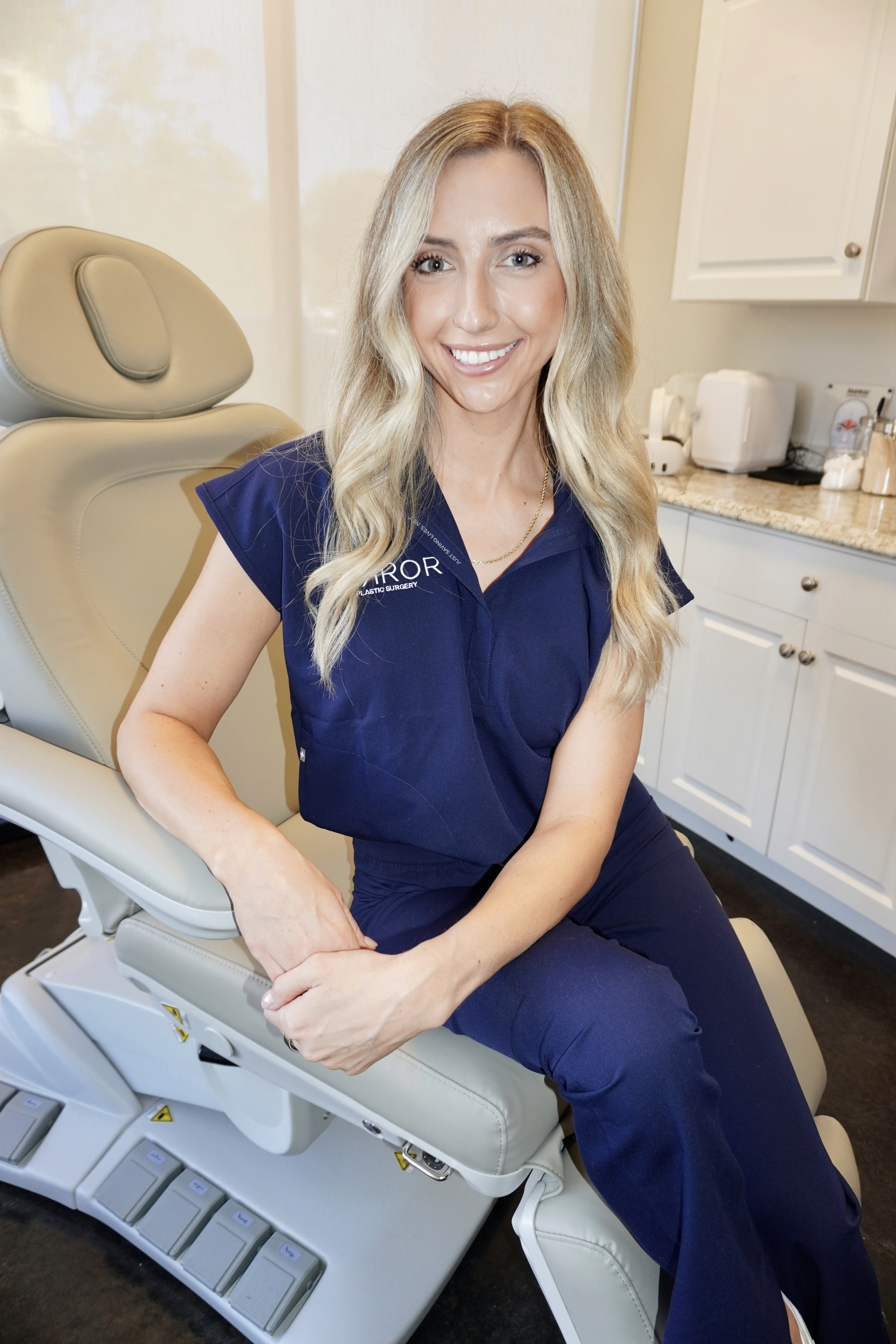
This level of individualized planning separates evidence-based professional care from high-volume or at-home approaches. For Fitzpatrick I–II patients in the Tampa Bay area who want an efficient, safe path to long-term hair reduction, a structured consultation is the right starting point.
Frequently Asked Questions
Is diode laser hair removal safe for very fair skin (Fitzpatrick I)?
Yes. Fitzpatrick I skin contains very little epidermal melanin, so the laser’s energy is absorbed mainly by the hair follicle instead of the surrounding skin. This low epidermal melanin competition allows providers to use higher fluences with a reduced risk of surface injury. Professional diode systems with integrated sapphire contact cooling protect the epidermis further by keeping skin surface temperature near 5°C during treatment. A thorough pre-treatment assessment that reviews medications, recent sun exposure, and skin history confirms that no contraindications are present before you proceed.
How does diode laser compare to at-home IPL for fair skin with dark hair?
Professional diode laser and at-home IPL devices work very differently. Professional diode systems deliver a single, precise 808–810 nm wavelength at high fluences with real-time cooling and operator-controlled settings. At-home IPL devices use lower fluences, rely on broadband light with less follicle selectivity, and lack the consistent energy output and cooling of medical-grade equipment. Clinical evidence shows that professional diode laser achieves superior hair-count reduction at 30 weeks, which at-home IPL devices do not match. For fair-skinned adults who have plateaued with at-home IPL or who want the most efficient route to durable reduction, professional diode laser is the evidence-supported choice.
How many diode laser sessions will I need, and how long do results last?
Most Fitzpatrick I–II patients reach their target clearance in 6–7 diode laser sessions. Intervals vary by body area, with about 4 weeks for the face and neck, 4–5 weeks for underarms and bikini, and 5–6 weeks for legs and arms. After the initial course, periodic maintenance sessions usually sustain results. Patients with hormonal factors such as PCOS or perimenopause may need touch-ups sooner.
The exact session count for any individual depends on hair density, coarseness, body area, and hormonal profile. A qualified provider evaluates these factors during a comprehensive consultation and then recommends a tailored plan.
How should I prepare for a diode laser hair removal session?
Preparation for diode laser hair removal starts with avoiding sun exposure and tanning for at least 2–4 weeks before each session. Your provider may ask you to stop photosensitizing medications, such as certain antibiotics or oral retinoids, according to medical guidance. Shave the treatment area about 24 hours before your appointment.
Do not wax or pluck, because those methods remove the follicle that the laser needs to target. After each session, avoid sun exposure, apply SPF 50+ sunscreen, and skip heat exposure such as saunas for 48 hours. Your provider will review a full medical history questionnaire before treatment to identify any individual contraindications.
Why is a professional consultation important before starting laser hair removal?
A professional consultation allows a qualified provider to review your Fitzpatrick skin type, hair characteristics, hormonal history, medication list, and any contraindications before recommending a protocol. This individualized assessment determines the right wavelength, fluence, pulse duration, and session interval for your anatomy. These parameters cannot be safely self-selected.
The consultation also identifies patients who should delay or modify treatment, such as those with recent sun exposure, active skin conditions, or photosensitizing medications. At Mirror Plastic Surgery, consultations can last up to an hour and are designed to give you a clear, honest picture of what treatment involves, what results are realistic, and how to maintain them long term.
Disclaimer
Disclaimer: Results may vary from person to person. Editorial content, before and after images, and patient testimonials do not constitute a guarantee of specific results.
1 Results may vary from person to person. Editorial content, before and after images, and patient testimonials do not constitute a guarantee of specific results.
