

Written by: Ellie Pranckevicius, FNP-BC, Aesthetic Nurse Practitioner & Aesthetic Injector | Facial Restoration & Regenerative Injectable Specialist, Mirror Plastic Surgery
Key Takeaways
- The most predictable age range for laser hair removal is usually 20–30, when hormones are more stable.1 Treatment can still begin after puberty with appropriate medical review.
- Puberty activates new hair follicles, so teens under 18 often see less durable results and need written parental consent and endocrinologist input when hair growth is excessive.1
- PCOS patients benefit from laser hair removal when it is coordinated with hormonal treatment and planned as a long-term management strategy with more sessions and maintenance.1
- All patients should expect touch-up sessions over time, and those who start in adolescence usually face higher lifetime costs because suppression periods are shorter.1
- Schedule your personalized consultation at Mirror Plastic Surgery to choose the right timing and plan for your skin type, hair color, and hormonal profile.
How Laser Hair Removal Works on Hair and Skin
Laser hair removal uses selective photothermolysis. The laser targets melanin pigment in the hair follicle, heats it, and disrupts the follicle’s ability to grow hair. Because the process depends entirely on melanin, white, blond, or gray hair cannot be effectively treated, since those hairs do not contain enough pigment for the laser to recognize.
Hair grows in three phases: anagen (active growth), catagen (transition), and telogen (resting). Laser treatment works only during the anagen phase. This timing explains why multiple sessions spaced 4–8 weeks apart are required to reach follicles as they cycle into growth. Hormonal activity influences how many follicles sit in the anagen phase at a given time, so hormonal stability becomes a central factor in treatment planning. This hormonal consideration becomes especially important when evaluating younger patients, whose hormones are still changing.
Laser Hair Removal at 14: When It May and May Not Make Sense
Current evidence does not show that laser hair removal at age 14 causes direct physical harm, yet most clinicians advise against routine treatment at this age. During peak puberty, usually 12–14, androgen-driven activation of new hair follicles, called reverse miniaturization, can continue into early adulthood.1 Follicles that are dormant during treatment may activate later and produce new terminal hair, which weakens long-term results.1
Experts report no formal age restrictions for laser hair removal and find that methods are generally safe and well tolerated in children. For boys, full physical maturity often arrives later than for girls. For girls, clinicians usually recommend medical review after menstrual cycles have stabilized before moving ahead with treatment.
Some adolescents fall into an exception group. Teens who experience significant psychological distress, bullying, or medical conditions such as hypertrichosis or pseudofolliculitis barbae may be considered for treatment. These cases require written parental consent and the presence of a legal guardian. Any adolescent under 18 with excessive, diffuse hair growth should see an endocrinologist first, because this pattern can signal a hormonal disorder that laser alone cannot correct.
Book a consultation with Ellie to receive a detailed, individualized assessment before making treatment decisions for yourself or a family member.
PCOS and Laser Hair Removal: What Timing Really Means
Polycystic ovary syndrome (PCOS) affects an estimated 70–80% of women with PCOS with hirsutism, driven by elevated androgens that steadily convert fine vellus hairs into coarse terminal hairs. Because the hormonal driver remains active, laser hair removal manages the symptom rather than eliminating it permanently.1
The clinical data on session counts for PCOS patients is consistent across several sources:
- A Glasgow Royal Infirmary study by McGill et al. evaluated alexandrite laser hair removal in 38 women with PCOS using six treatments.
- A 2024 systematic review in JAMA Dermatology examined laser and light therapies for hirsutism in women with PCOS.
- Combining diode laser with oral contraceptives or metformin produced greater hair reduction and longer-lasting results than laser alone1 in a randomized trial of 150 women with PCOS.
PCOS also carries a specific risk. Paradoxical hypertrichosis can occur in PCOS patients treated with facial alexandrite laser, so this possibility should be reviewed during consultation. For darker skin phototypes (Fitzpatrick IV–VI), the 1064-nm Nd:YAG laser is a safe and effective wavelength because its longer wavelength passes through epidermal melanin and reaches the deeper hair bulb.
Touch-Ups and Long-Term Maintenance Expectations
Most patients, regardless of age, will need some level of long-term maintenance. Three biological factors drive post-treatment regrowth: hair growth cycles where only some follicles are active, hormonal shifts that wake up dormant follicles, and partial follicle damage that allows finer hair to return.
Patients who start treatment during adolescence usually face a higher maintenance burden.1 In pediatric patients, hair suppression often lasts for a shorter period instead of producing long-term reduction, which raises lifetime cost when treatment begins early.1 Adults with stable hormones typically need occasional touch-up sessions on stable-hormone areas and more frequent sessions on hormone-sensitive areas such as the face or bikini line.1
Major hormonal changes, including pregnancy, perimenopause, menopause, or new medications, often increase the need for maintenance sessions and can raise lifetime treatment costs.1 Building these possibilities into the plan creates a more realistic long-term strategy.
How Ellie Builds a Laser Hair Removal Plan
A thorough pre-treatment evaluation follows a clear sequence. First, hormonal status is reviewed, including menstrual regularity, known diagnoses such as PCOS, and medications that affect androgen levels. Hormonal stability shapes both timing and how durable results are likely to be.
Next, Fitzpatrick skin type is classified to select the safest laser wavelength and fluence settings and to lower the risk of pigmentation changes. With device parameters in place, hair color and density in each target area are evaluated. Areas with enough pigmented hairs are good laser candidates, while areas with fewer pigmented hairs often need a combined laser and electrolysis plan.
Ellie then reviews sun exposure history and any photosensitizing medications, since avoiding sun before treatment and using sunscreen is standard protocol. Finally, she discusses realistic session counts, maintenance schedules, and long-term cost expectations based on the person’s hormonal profile and treatment areas.
Current Devices and PCOS-Focused Treatment Trends
FDA-cleared devices such as the Candela GentleMax Pro, calibrated using Fitzpatrick Scale settings, represent a current standard for safe, effective treatment across skin types. For adolescents with thinner, more sensitive skin, diode lasers with contact cooling systems such as Alma Soprano ICE or Lumenis LightSheer are often recommended, because lower-energy SHR modes reduce discomfort while maintaining results.
Pairing laser hair removal with medical androgen management has become a key best practice for PCOS patients. After a series of laser sessions, patients with PCOS usually see substantial hair reduction.1 The most stable long-term outcomes appear when laser treatment is coordinated with an endocrinologist and dermatologist who manage the underlying hormonal condition.1
Age-Related Scenarios to Review Before Treatment
The following table summarizes four clinically important age-related scenarios, with guidance drawn from current research:
| Scenario | Readiness Indicators | Key Limitations | Recommended Approach |
|---|---|---|---|
| Teen (under 18) | Consistent hair growth patterns for at least one year; teen personally driving the decision | Androgen-driven follicle activation can continue after puberty; results are often less durable | Written parental consent required; dermatologist or endocrinologist review recommended |
| PCOS (any age) | Stable menstrual cycle; hormonal management in place with prescribing clinician | Multiple initial sessions are typical; paradoxical hypertrichosis risk with facial alexandrite laser | Combine laser with oral contraceptives or spironolactone per 2023 International PCOS Guideline; coordinate with endocrinology |
| Post-40 with graying hair | Substantial proportion of hairs in treatment area remain pigmented | As explained earlier, depigmented gray and white hairs lack the melanin needed for laser targeting | Begin treatment while most hair is still pigmented; plan combined laser-plus-electrolysis for gray hairs |
| Teen consent (legal) | Parental or legal guardian written consent obtained; medical review completed | Minors cannot independently provide informed consent; a legal representative must sign all documentation | Endocrinologist evaluation required if diffuse hair growth is present; treatment deferred unless a clear medical or psychological indication exists |
Risks, Limitations, and Tradeoffs to Discuss
Laser hair removal has a well-studied risk profile that should be reviewed before treatment:
- Temporary side effects such as redness, perifollicular edema, and mild discomfort are common across age groups and usually resolve within a few days.
- Pigmentation changes, including temporary darkening or lightening of the skin, occur more often in patients with sun-damaged or variably pigmented mature skin, which makes pre-treatment sun avoidance and SPF use essential.
- Paradoxical hypertrichosis, where laser stimulation triggers growth in surrounding vellus hairs, is a documented risk, especially in PCOS patients treated with facial alexandrite laser.
- Current evidence shows no link between properly performed laser hair removal and accelerated wrinkles or skin thinning, because the treatment targets hair follicles rather than collagen structures.
- Laser hair removal does not permanently stop hormonally driven hair growth. Ongoing androgen production will continue to recruit new follicles over time, regardless of session count.
Misconceptions Patients Often Bring to Consultation
- Misconception: Laser hair removal is permanent after one course of treatment. In reality, laser hair removal does not guarantee permanent hair removal and usually requires periodic maintenance treatments1 after the initial series.
- Misconception: Any age is equally suitable for treatment. Starting during active puberty often produces less durable results because androgen-driven follicle activation can continue into early adulthood and can replace treated follicles with newly activated ones.1
- Misconception: Laser hair removal works on all hair colors. As explained earlier, no increase in machine power or number of sessions can overcome the physical limitation of treating fully gray or white hair, which lacks the melanin the laser requires.
- Misconception: PCOS patients cannot benefit from laser hair removal. After a planned series of laser sessions, PCOS patients often see significant hair reduction, although ongoing maintenance remains necessary because hormonal activity continues.1
- Misconception: Laser hair removal affects reproductive health. The laser beam targets hair follicles in the skin and does not affect internal organs, lymph nodes, or the reproductive system.
Comparing Laser Hair Removal and Electrolysis
Some patients are not ideal candidates for laser hair removal because of hair color, hormonal profile, or age. In these situations, electrolysis is the primary alternative. Electrolysis is FDA-cleared for permanent hair removal regardless of hair color because it destroys the follicle with electrical current rather than relying on melanin absorption. This approach makes electrolysis the appropriate choice for fully gray or white hair, which reflects the melanin limitation discussed above.
For PCOS patients with darker skin tones, laser wavelength selection becomes a key clinical decision. Nd:YAG (1064 nm) lasers are often preferred for medium to darker skin tones because they penetrate deeper and reduce the risk of pigmentation changes compared with alexandrite or IPL devices. At-home IPL devices are not recommended for coarse PCOS facial hair, since low fluences often fail to reach the 70°C threshold for follicular necrosis and may induce paradoxical hypertrichosis.
Book a consultation with Ellie at Mirror Plastic Surgery in St. Petersburg to receive a personalized, anatomy-based assessment of which approach fits your hair type, skin tone, and hormonal profile.
Frequently Asked Questions
Is laser hair removal safe for teens after puberty?
Laser hair removal is generally considered safe for teens after puberty from a direct tissue-safety standpoint. The laser targets the hair follicle and does not affect internal organs or reproductive health. The main concern is durability of results, because androgen-driven follicle activation can continue into early adulthood and can activate new follicles after treatment. As noted earlier, the procedure itself is well tolerated across age groups from a tissue-safety perspective, and written parental consent for anyone under 18 is standard. Teens with diffuse or excessive hair growth should see an endocrinologist before treatment, since this pattern may signal an underlying hormonal condition that needs medical care first.
How many sessions do PCOS patients typically need?
PCOS patients usually need more initial laser hair removal sessions than individuals without hormonal conditions to see significant hair reduction. Clinical studies, including the Glasgow Royal Infirmary cohort mentioned earlier, show that initial treatment often involves six or more sessions. After the first course, most PCOS patients require ongoing maintenance at regular intervals for both facial and body areas, sometimes indefinitely, depending on how well hormones are controlled. Combining laser treatment with oral contraceptives or anti-androgen medications such as spironolactone has produced greater hair reduction and longer-lasting results than laser alone in clinical trials. The realistic goal for PCOS patients is long-term management and easier maintenance, not a one-time permanent fix.
Does laser hair removal work on gray hair after 40?
Laser hair removal is largely ineffective on fully gray or white hair because the treatment relies on melanin in the hair shaft to absorb laser energy and generate heat that disables the follicle. As explained earlier, depigmented hairs lack the melanin needed for laser targeting, and no increase in machine power or number of sessions can change that. For patients over 40 with mixed pigmented and gray hair, laser treatment can still reduce pigmented hairs while leaving gray hairs unchanged. Areas where a substantial proportion of hairs remain pigmented are usually good laser candidates, and areas with mostly gray hair are better suited to a combined laser-plus-electrolysis plan. Electrolysis remains the only FDA-recognized method of permanent hair removal that works equally well on gray, white, and pigmented hair. Patients over 40 who are considering laser hair removal benefit from starting while more hairs are still pigmented, since ongoing graying steadily reduces the number of follicles the laser can treat.
What maintenance is required long-term?
After an initial series of sessions, most patients with stable hormones experience a major reduction in hair growth, and any returning hair is usually finer, lighter, and slower-growing.1 Long-term maintenance for stable-hormone areas such as the legs, arms, or back often means occasional touch-up sessions. Hormone-sensitive areas such as the face, chin, and bikini line usually need touch-ups more frequently. Major hormonal shifts, including pregnancy, perimenopause, menopause, or new medications that affect androgen levels, often increase maintenance needs and can raise lifetime treatment costs. Patients who begin treatment during adolescence usually face a higher maintenance burden, with shorter suppression intervals than adults with stable hormones. Planning for long-term maintenance from the beginning creates more realistic expectations.
When should someone seek specialist evaluation?
Specialist evaluation is recommended before starting laser hair removal in several situations. Adolescents under 18 with diffuse or excessive hair growth should see an endocrinologist first, since this pattern may indicate PCOS, hirsutism, or another hormonal disorder that requires medical treatment in addition to any cosmetic plan. Women of any age with suspected or diagnosed PCOS should coordinate laser hair removal with both a dermatologist and an endocrinology team to align timing and combine treatment with hormonal management. Patients over 40 with significant gray hair should receive an in-person review of their pigmented-to-gray hair ratio, Fitzpatrick skin type, and hormonal status before committing to a laser-only plan. Anyone taking hormone-altering medications, including oral contraceptives, anti-androgens, or hormone replacement therapy, should share this during consultation, since medication timing can affect outcomes and session schedules. At Mirror Plastic Surgery, Ellie Pranckevicius performs a comprehensive, top-to-bottom assessment that addresses all of these factors before recommending a treatment plan.
Choosing the Right Time to Start Laser Hair Removal
The best age to start laser hair removal is a clinical decision shaped by hormonal maturity, hair and skin characteristics, medical history, and long-term goals. For many people, ages 20–30 offer the most hormonal stability and the most predictable, durable results. Teens can be evaluated individually once puberty is well advanced, with appropriate consent and medical review. PCOS patients benefit from a coordinated, multidisciplinary approach that combines laser treatment with hormonal management. Patients over 40 with graying hair gain the most by acting while a meaningful proportion of hair remains pigmented and planning electrolysis for depigmented follicles.
At Mirror Plastic Surgery in St. Petersburg, Florida, every non-surgical aesthetic assessment begins with a careful evaluation of the whole patient, not just the treatment area. Ellie Pranckevicius brings advanced nursing expertise and esthetic training to each consultation so that recommendations reflect anatomy, physiology, and clear, evidence-based guidance.
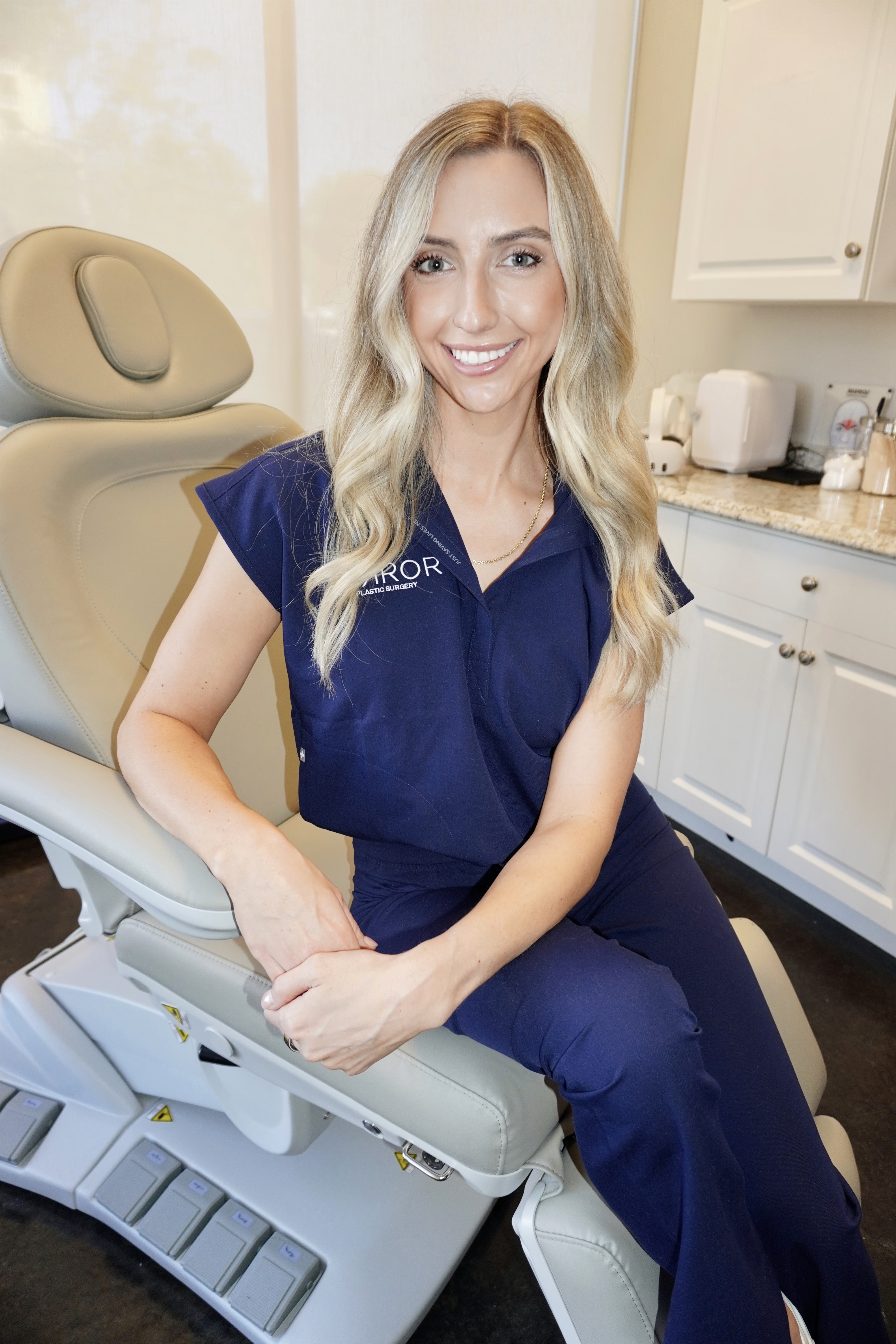
Book a consultation with Ellie to receive a personalized laser hair removal assessment tailored to your hormonal profile, skin type, and long-term aesthetic goals.
Disclaimer: Results may vary from person to person. Editorial content, before and after images, and patient testimonials do not constitute a guarantee of specific results.
1 Results may vary from person to person. Editorial content, before and after images, and patient testimonials do not constitute a guarantee of specific results.
