

Written by: Dr. Akash Chandawarkar, Board Certified Plastic Surgeon, Mirror Plastic Surgery
Key Safety Steps Before Choosing Your BBL Surgeon
- ABPS certification is the only ABMS-recognized credential for plastic surgeons and requires a minimum six-year accredited residency plus written and oral examinations.
- Subcutaneous-only fat injection with real-time intraoperative ultrasound guidance is the single most important safety measure that eliminates the primary cause of fatal pulmonary fat embolism.1
- Procedures must be performed in AAAASF, AAAHC, or Joint Commission-accredited facilities that maintain emergency equipment, ACLS-trained staff, and hospital transfer agreements.
- Surgeons should limit BBL volume to three or fewer cases per day to reduce fatigue-related errors. Mirror Plastic Surgery restricts its schedule to one to two surgeries daily.
- Verify every credential and technique detail directly, then book a consultation with Dr. Akash at Mirror Plastic Surgery to confirm your candidacy with a Harvard-MIT and Johns Hopkins-trained, ABPS-certified surgeon.
How ABPS Board Certification Protects BBL Patients
ABPS certification functions as a strict safety filter for BBL patients. The board requires medical school, a minimum six-year plastic surgery residency covering reconstruction, microsurgery, craniofacial, and aesthetic surgery, and both written qualifying and oral certifying examinations that include a year-long operative case log review.
The American Board of Cosmetic Surgery (ABCS) is not recognized by the ABMS and accepts candidates from varied primary residencies such as oral surgery or otolaryngology. This lack of standardization is compounded by the fact that the term “cosmetic surgeon” is not legally protected in most U.S. states, so any MD or DO may use it regardless of specialty training. To cut through this confusion and verify legitimate ABPS certification, patients should check certificationmatters.org or abplasticsurgery.org directly.
Use the following checklist to systematically verify each safety credential before scheduling your consultation.
| Verification Item | What to Confirm | Where to Verify | Status |
|---|---|---|---|
| ABPS Certification | Active, not lapsed | certificationmatters.org | ☐ Confirmed |
| State Medical License | Active in state of surgery | Florida Board of Medicine | ☐ Confirmed |
| Facility Accreditation | AAAASF, AAAHC, or Joint Commission | Accreditation body registries | ☐ Confirmed |
| Ultrasound Guidance | Real-time intraoperative use | Ask surgeon directly | ☐ Confirmed |
| Subcutaneous-Only Injection | Fat placed above gluteal fascia only | Ask surgeon directly | ☐ Confirmed |
| Daily Case Volume | Three or fewer BBLs per day | Ask surgeon directly | ☐ Confirmed |
| Hospital Privileges | Active at accredited hospital | Ask surgeon directly | ☐ Confirmed |
Subcutaneous Injection Guidelines That Lower BBL Risk
The single most consequential safety variable in Brazilian butt lift surgery is injection depth. The 2022 joint ASPS/ASAPS/ISAPS Practice Advisory mandates fat placement exclusively in the subcutaneous plane above the gluteal muscle fascia and prohibits intramuscular injection, which is the primary mechanism of fatal pulmonary fat embolism.
Studies indicate that intramuscular techniques are associated with higher mortality rates.1 Adoption of subcutaneous-only guidelines, especially when combined with ultrasound guidance, can substantially reduce risk.1
Current ASPS/ASERF technique standards require the following:
- Blunt-tipped cannulas with a diameter of 4 mm or larger
- Real-time intraoperative ultrasound guidance with the surgeon holding the probe
- Injection only while the cannula is in continuous motion, angled parallel to the back without downward inclination
- Prohibition of Luer-Lock syringes and roller pump technique for volumes exceeding 200 mL per buttock
- Use of single-hole cannulas only
Florida HB 1471 (effective July 2023) requires real-time intraoperative ultrasound guidance to ensure subcutaneous-only gluteal fat injection. Beyond the surgeon’s technique, the facility itself must meet strict safety standards to support emergency response and maintain sterile conditions.
How to Confirm Your BBL Facility Is Properly Accredited
BBL procedures should take place in an accredited surgical facility that enforces clear safety rules. These facilities must maintain emergency resuscitation equipment, hospital transfer agreements, and strict sterility protocols. AAAASF accreditation requires that all operating physicians are board-certified and that staff are trained in Advanced Cardiac Life Support (ACLS).
A review of medical examiner records in South Florida identified fatal BBL pulmonary fat embolism cases, the majority of which occurred at high-volume clinics where fat was injected in violation of safety guidelines. Patients can verify a facility’s accreditation status directly through the AAAASF or AAAHC registries before scheduling surgery.
Each accreditation body focuses on slightly different settings, so patients should understand what they are checking:
- AAAASF (American Association for Accreditation of Ambulatory Surgery Facilities) focuses on office-based and ambulatory surgery centers.
- AAAHC (Accreditation Association for Ambulatory Health Care) evaluates a wide range of outpatient centers, including surgical facilities.
- The Joint Commission primarily accredits hospitals and larger health systems that may include surgical suites.
- State-licensed Ambulatory Surgical Center (ASC) status confirms that the facility meets state regulatory standards for outpatient surgery.
Essential Questions to Ask Your BBL Surgeon
| Topic | Question to Ask | Safe Answer | Red Flag |
|---|---|---|---|
| Certification | Are you ABPS-certified? | Yes, verifiable at certificationmatters.org | ABCS only, or evasive answer |
| Injection Depth | Do you inject exclusively in the subcutaneous plane? | Yes, above the gluteal fascia only | Mentions intramuscular placement |
| Ultrasound Guidance | Do you use real-time intraoperative ultrasound? | Yes, surgeon-held probe throughout injection | No, or only pre-operative use |
| Daily Case Volume | How many BBLs do you perform per day? | Three or fewer per Florida Board of Medicine regulation | Five or more per day |
| Facility | Is the surgical facility AAAASF, AAAHC, or Joint Commission accredited? | Yes, with verifiable accreditation number | Office suite with no accreditation |
| Hospital Privileges | Do you hold active hospital privileges? | Yes, at an accredited local hospital | No hospital privileges |
Why Dr. Akash’s Training Sets a BBL Safety Benchmark
Dr. Akash, referred to throughout Mirror Plastic Surgery as Dr. Akash, holds active ABPS certification and trained at several of the most rigorous institutions in American medicine. He completed his medical degree through the Harvard-MIT Division of Health Sciences and Technology, graduating from Harvard Medical School with Honors. His seven-year integrated plastic and reconstructive surgery residency at Johns Hopkins University included rotations at the Johns Hopkins Hospital, the R Adams Cowley Shock Trauma Center, and the Curtis National Hand Center.
He subsequently completed an aesthetic surgery fellowship at the Manhattan Eye, Ear and Throat Hospital (MEETH), one of the most competitive programs in the country for advanced body contouring and facial rejuvenation training. He also completed the Stanford University Biodesign Innovation Fellowship, which trains physician-innovators to develop clinical technology solutions.
Dr. Akash has been named to Newsweek’s America’s Best Plastic Surgeons list for two consecutive years. Mirror Plastic Surgery limits its schedule to one to two surgeries per day, ensuring the full clinical team’s attention is on each patient before, during, and after the procedure. The Florida Board of Medicine caps BBL procedures at three per surgeon per day to reduce fatigue-related errors in plane verification, and high-volume practices performing five to ten surgeries daily operate well above this threshold.
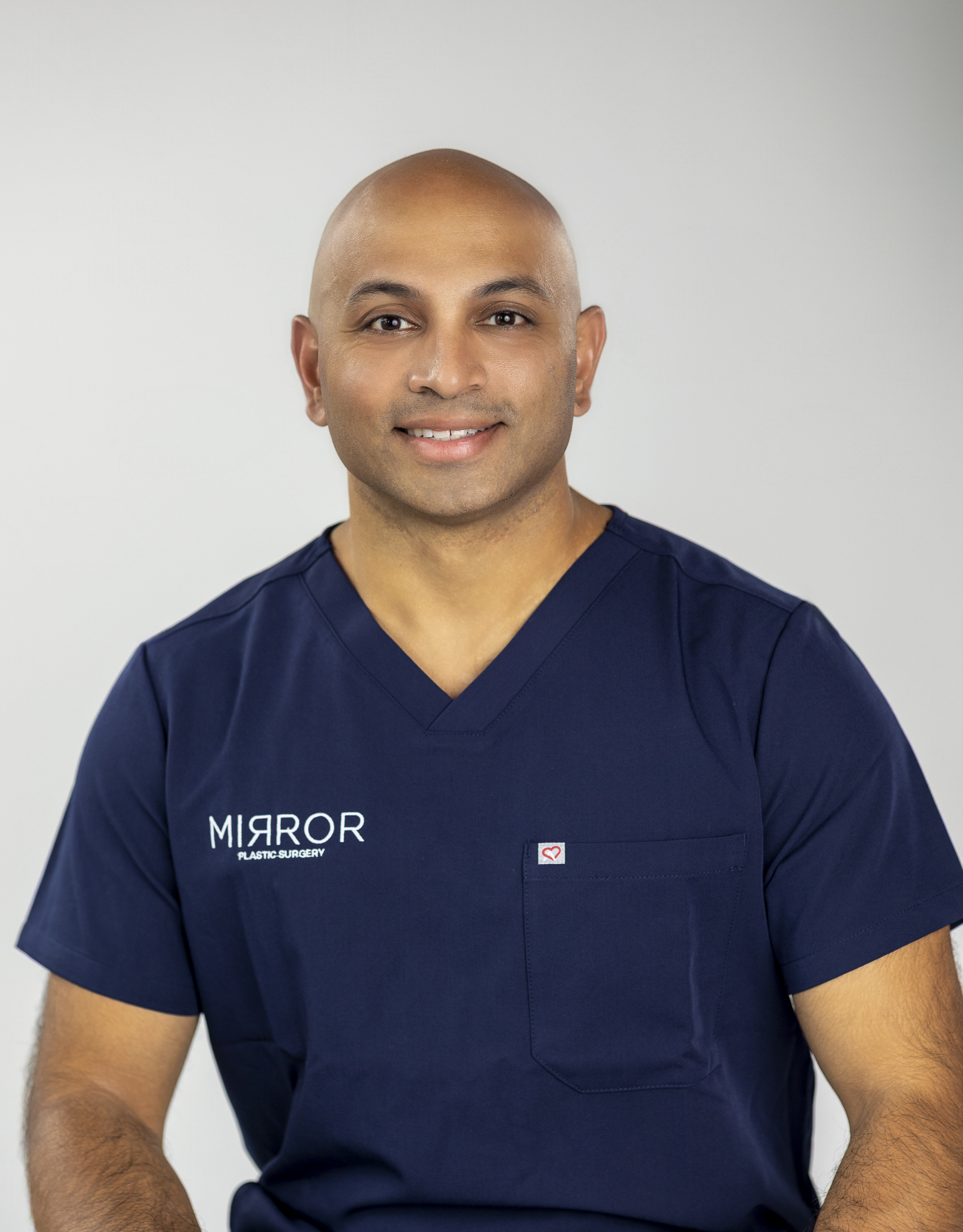
Book a consultation with Dr. Akash at Mirror Plastic Surgery’s St. Petersburg, Florida location to review your anatomy, goals, and candidacy in a one-hour, concierge-model appointment.
Common Misconceptions About Choosing a BBL Surgeon
The most prevalent misconception is that ABCS certification is equivalent to ABPS certification. As noted earlier, the ABCS differs fundamentally from ABPS in both recognition and training pathways. This distinction matters because patients may see “board-certified” in marketing materials and assume ABPS-level plastic surgery training when that may not be the case.
A second misconception is that dramatic before-and-after photographs indicate surgical safety. Photographic results reflect aesthetic choices, not injection depth, facility standards, or complication rates. Many fatal BBL cases from South Florida medical examiner reviews occurred at high-volume clinics, many of which market aggressively with imagery. Credential verification and technique confirmation remain the only reliable safety indicators.
Frequently Asked Questions
What is the difference between ABPS and ABCS certification for a BBL surgeon?
ABPS (American Board of Plastic Surgery) is the only plastic surgery certifying board recognized by the American Board of Medical Specialties, the governing body for all legitimate U.S. medical specialty boards. As detailed earlier, ABPS certification requires comprehensive residency training and rigorous examination. This standardized pathway ensures that a BBL surgeon has broad reconstructive and aesthetic experience before offering gluteal fat transfer.
ABCS (American Board of Cosmetic Surgery) is not ABMS-recognized and accepts candidates from a range of primary residencies, including oral surgery and otolaryngology, with training requirements that differ significantly from the ABPS pathway. For a procedure as technically demanding as Brazilian butt lift, where injection depth directly determines mortality risk, ABPS certification is the appropriate credential to verify.
How much does subcutaneous-only injection reduce BBL mortality risk?
Studies have shown that the injection plane significantly affects BBL safety. Intramuscular injection has been associated with increased mortality risk. Adoption of subcutaneous-only injection along with ultrasound guidance can help reduce this risk.1 No confirmed BBL deaths have occurred when fat remained exclusively in the subcutaneous plane.1
What facility accreditation should I require before scheduling a BBL?
The procedure should be performed in an accredited surgical facility or in a state-licensed ambulatory surgical center. Each of these bodies mandates emergency resuscitation equipment, Advanced Cardiac Life Support (ACLS)-trained staff, hospital transfer agreements, and strict sterility protocols. Patients can verify accreditation status directly through each body’s online registry using the facility’s accreditation number. A surgeon who cannot provide that number, or who operates in an unaccredited office suite, represents a meaningful safety risk. Florida law requires that BBL procedures be performed with real-time intraoperative ultrasound guidance under HB 1471, effective July 2023.
Why does daily case volume matter for BBL safety?
Surgeon fatigue has been directly linked to a disproportionate number of fatal BBL complications occurring later in the surgical day, when depth perception and tactile awareness degrade. Florida regulation caps BBL procedures at no more than three cases per surgeon per day for this reason. Data from safety surveys confirm that surgeons performing three or fewer BBLs per day have lower complication rates than those performing higher volumes.1 Mirror Plastic Surgery limits its schedule to one to two surgeries per day, a model that ensures the full clinical team’s focus remains on each individual patient throughout the entire perioperative period.
Conclusion and Next Steps for a Safer BBL
Selecting a board-certified Brazilian butt lift surgeon requires a structured verification process. Patients should confirm active ABPS certification through the ABMS registry, verify that the surgeon uses subcutaneous-only fat injection with real-time intraoperative ultrasound guidance, confirm that the procedure will be performed in an accredited facility, and ask directly about daily case volume. Each of these factors has a documented, quantifiable effect on patient outcomes.1
Dr. Akash at Mirror Plastic Surgery in St. Petersburg, Florida meets every criterion on this checklist. His Harvard-MIT, Johns Hopkins, and MEETH training, combined with Mirror Plastic Surgery’s one-to-two-surgeries-per-day concierge model, accredited surgical facility, and ultrasound-guided subcutaneous technique, represents a clear safety standard for BBL in the Tampa Bay region. He has been recognized on Newsweek’s America’s Best Plastic Surgeons list for two consecutive years.
Book a consultation with Dr. Akash at Mirror Plastic Surgery, located at 780 4th Ave S, St. Petersburg, FL 33701, to receive a thorough, one-hour anatomical assessment and a personalized treatment plan built around your safety, function, and aesthetic goals.
1 Results may vary from person to person. Editorial content, before and after images, and patient testimonials do not constitute a guarantee of specific results.
